









Introduction
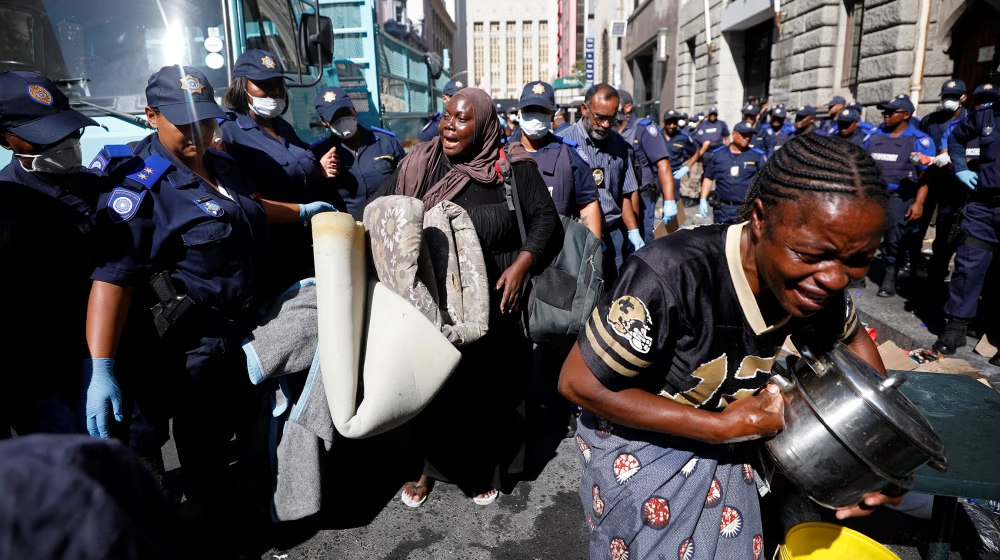
Agitations against foreign migrants, especially those from other African nations, have resurfaced in South Africa in recent months. These tensions, which have been erupting periodically resurfaced since the end of apartheid, and the emergence of black majority rule are once again hitting the headlines due to their intensity and regional implications. Protests in major urban centres such as Johannesburg and Pretoria have increasingly targeted undocumented migrants, with demonstrators accusing them of putting pressure on jobs, public services, and security systems (cnn.com ; reuters.com). Such sentiments are not occurring in a vacuum but are rooted in broader socio-economic challenges, including persistently high unemployment, inequality, and limited access to basic services.
The current wave of animosity is indicative of a pattern in which economic grievances are directed towards foreigners, frequently leading to harassment, displacement and in some cases violence. At least 130 Nigerians have reportedly requested repatriation from South Africa due to growing protests and concerns about worsening conditions (reuters.com). In addition, incidents of intimidation and targeted attacks against migrants have been documented in provinces such as KwaZulu-Natal and the Eastern Cape, prompting condemnation from international bodies, including the United Nations, which warned that such acts threaten social stability and democratic values (iol.ca.za).
South Africa is home to approximately 2.4 million migrants, about 4 percent of its population are engaged in informal economic activities (theexchange.africa). Historically, xenophobic violence has led to significant human and material losses. For instance, in 2008, xenophobic attacks in South Africa resulted in over 1,700 injuries, displacement of about 100,000 people and more than 60 deaths (theexchange.africa). Similar occurences have happened in 2015 and more recently at the end of the past month where mobs have again targeted individual foreigners from other african countries and foreign-owned businesses, often accusing them of “taking opportunities meant for locals” (theeastafrican.co.ke).
While not representative of all South Africans, the Human Sciences Research Council (HSRC) mentions that it has recorded the highest anti-immigrant sentiments since 2003. These agitations draw attention to underlying vulnerabilities that could continue to show themselves in sporadic episodes of xenophobic violence with consequences going beyond national boundaries if unattended.
Historical Perspective & Moral Contrast
The wave of xenophobic sentiment in South Africa significantly contrasts its historical ties with the African continent, especially during the apartheid struggle. Various African countries provided critical support to liberation movements like the African National Congress (ANC). This assistance included safe havens for exiled activists and mobilizing international pressure against apartheid (antiarpatheidlegacy.org.uk). Nations such as Ghana and Nigeria were particularly influential as they played visible roles like contributing financially and politically to the anti-apartheid cause and advocating for sanctions and global isolation of the regime. Despite a shared history of Pan-African solidarity advocating for collective resistance, post-apartheid South Africa has seen escalating xenophobic violence toward foreign African nationals, since 1994 (Ochogwu et al., 2025), marking xenophobia as a recurring phenomenon post-apartheid rather than an anomaly.
On the one hand, post-apartheid South Africa was envisioned as a “Rainbow Nation” promoting inclusivity, on the other hand it now faces increasing exclusionary practices based on nationality, particularly against African migrants (thecable.ng). The targeting of other African nationals show economic frustrations and a weakening shared African identity. The resurgence of xenophobic attacks profers a loss of historical memory, with perceptions of ingratitude towards the support from other African nations during apartheid (brandsouthafrica.com). The disconnect highlights a moral contradiction and illustrates the tension between South Africa’s legacy of continental solidarity and its contemporary struggles with diversity and migration, ultimately undermining both social cohesion and the ideals of African unity essential to ending apartheid.
Reactions From Other Countries
The resurgence of xenophobic attacks and anti-migrant agitations in South Africa has prompted significant concern from various African nations. Governments have expressed that this renewed hostility endangers the safety of citizens and undermines the principles of African solidarity and regional cooperation.
Among the most vocal countries has been Nigeria, with history of strained diplomatic moments with South Africa during previous waves of xenophobic violence. With over a 130 Nigerians in South Africa reported to have requested voluntary repatriation following escalating anti-immigration protests in Johannesburg and Pretoria, the Nigerian government has summoned South Africa’s diplomatic representative in Abuja and condemned the attacks, demanding accountability for Nigerian citizens (apnews.com ; reuters.com). Discussions among the Nigerian senate have also put forward a motion to match South Africa boot for boot and not cry over losses resulting from the xenophobic attacks; a step to compel South Africa to protect the lives of Nigerians, others have also called for accountability.
Similarly, Ghana’s current Minister of Foreign Affairs summoned South Africa’s envoy and urged immediate intervention to prevent further escalation. Ghana also warned its citizens resident in South Africa to remain vigilant amid reports of increasing tensions, particularly in KwaZulu-Natal province. In condemning the incidents, Ghana emphasized that such attacks were inconsistent with the spirit of African solidarity recalling the support many African countries extended to South Africa during apartheid. South Africa in response condems circulating videos of xenophobic attacks as a sham. (bbc.com ; ecr.co.za ; gbcghanaonline.com).
Beyond West Africa, concerns about regional instability in South Africa have emerged in Botswana, where discussions reflect anxiety over xenophobic violence in South Africa. Despite a cautious diplomatic stance, there is increasing apprehension regarding the long-term implications for South African integration and mobility. The issue has also drawn attention from organizations like ECOWAS, which has called for an investigation into the attacks on West African nationals in South Africa (gbconline.com).
These recent attacks have attracted many statements from African leaders and commentators suggesting that xenophobic violence risks undermining efforts toward deeper regional integration under frameworks such as the African Union and the African Continental Free Trade Area. Many of such responses are often emotional and largely informal, nontheless, reactions to xenophobic violence in South Africa reveal significant impacts on perceptions of inter-African relations. This issue is increasingly recognized as a continental concern, highlighting its diplomatic, political, and moral implications for African unity and cooperation.
Implications for African Unity
A major implication of these current attacks that cannot be ignored is the undermining of the objectives of continental integration promoted by institutions such as the African Union and the African Continental Free Trade Area. These frameworks are built on principles of cooperation, mobility, and economic interconnectedness among African states. However, attacks targeting African migrants create fear and mistrust, discouraging cross-border movement and weakening confidence in regional integration efforts (gna.org.gh).
Secondly, the situation has also exposed tensions between national economic pressures and continental identity. In South Africa, anti-migrant protests have largely been driven by frustrations over unemployment, inequality, and access to public services. While these concerns are rooted in domestic socio-economic realities, the tendency to direct anger toward African migrants has increasingly been viewed across the continent as a rejection of Pan-African ideals (reuters.com).
Furthermore, recurring attacks in South Africa risk damaging diplomatic relations among African nations. While diplomatic efforts have prevented major disputes, the violence has led to public frustration and social media outcry against xenophobia, viewed as a betrayal of African unity. The moral authority of Pan-Africanism is also questioned, as historical solidarity during South Africa’s apartheid struggle clashes with the current xenophobic violence (au.int)
In addition, the persistence of xenophobic tensions threatens long-term cooperation under emerging continental initiatives. Efforts to strengthen African economic integration, including free trade and labor mobility, depend heavily on mutual trust among member states. If African migrants increasingly face hostility, discrimination, or insecurity in host countries, governments may become more cautious about deeper integration measures (reuters.com).
Lessons for Other African Countries
One key takeaway is that migration should not merely be viewed as a domestic law and order problem but requires comprehensive regional policy frameworks. Unrest in South Africa has led countries like Ghana to advocate for this issue at the African Union, emphasizing that ongoing violence against African migrants threatens continental integration and free movement principles. Poor migration management and weak institutional oversight foster conditions for misinformation and public backlash as documented in Nyere & Sibanda (2026), noting that migration in South Africa is increasingly viewed through a “securitised” lens, depicting migrants as economic and national security threats, which has fueled public hostility and negative anti-migrant rhetoric (ghanaianwatch.com).
South Africa’s xenophobic tensions stem from socio-economic issues like high unemployment, inequality, and urban poverty. These challenges lead to narratives blaming migrants for economic insecurity, although evidence shows migrants often benefit local economies. Other African nations facing job competition amid economic strain should implement inclusive economic development and job creation policies to prevent scapegoating of migrants. Addressing economic inequality is crucial, as frustrations can lead to hostility toward migrant communities, which are often unjustly blamed for unemployment and crime. With South Africa’s unemployment exceeding 30%, thus intensifying anti-immigrant sentiments, other countries may similarly need to bolster economic inclusion to mitigate such tensions (reuters.com).
Futhermore, there is a need for proactive communication strategies to combat misinformation and promote positive narratives around migration in South Africa. Fake or manipulated social media content has intensified tensions and misinformed fears about migrants’ impacts on the job market and public services. Other African nations should focus on public education and media literacy, emphasizing the contributions of intra-African migration and clarifying the differences between undocumented and legally resident migrants. The rise of xenophobic rhetoric, fueled by misinformation, threatens social cohesion and undermines confidence in Pan-African unity, necessitating that governments and civil society actively promote responsible communication and reinforce collaboration among African populations (myjoyonline.com ; reddit.com).
Also, the South African situation reveals a disparity between formal migration frameworks and their actual implementation. Despite existing regional protocols like the SADC Protocol and AU initiatives, inconsistent enforcement leads to perceptions of impunity and insecurity. African states should harmonize national laws with regional commitments to ensure migrants access legal status, dispute resolution, and protection from discrimination. The experience also warns against vigilante groups taking on migration enforcement, as highlighted by the African Commission on Human and Peoples’ Rights (ACHPR), which stressed that immigration enforcement should remain with authorized state institutions to uphold the rule of law and social stability (achpr.au.int ; gna.org.gh).
South Africa’s case shows that migration related tensions should be viewed not only as social or economic issues but also as security concerns. Nemakonde et al., (2026) has argued that xenophobic violence constitutes a “human security threat” because it undermines social stability, weakens trust in institutions, and increases the risk of recurring communal violence. This is important for other African countries, especially those with rapidly growing urban populations and increasing regional migration flows. Effective responses therefore requires coordinated approaches involving economic policy, migration management, community engagement, and security institutions.
Conclusion
The xenophobic tensions in South Africa highlight significant issues for the African continent, primarily driven by domestic economic strains and unemployment. These attacks against fellow Africans threaten regional cooperation and undermine Pan-Africanism by fostering division instead of solidarity. To combat these challenges, African nations must collaboratively address migration issues, promote social cohesion, and counteract hostility towards foreign nationals. Failure to resolve these tensions could jeopardize trust among African states and the vision for a unified Africa.
References
Brand South Africa. (2015). Our African bonds defy borders.
Dratwa, B. (2024). Xenophobia: A pervasive crisis in post-apartheid South Africa. Georgetown Journal of International Affairs. Available online: https://gjia. georgetown. edu/2024/05/26/xenophobia-a-pervasive-crisis-in-post-apartheid-south-africa/(accessed on 20 March 2025).
Eboh, C. At least 130 Nigerians seek repatriation from South Africa after protests, Abuja says. reuters.com. May 6, 2026. https://www.reuters.com/world/africa/least-130-nigerians-seek-repatriation-south-africa-after-protests-abuja-says-2026-05-04/
gbcghanaonline.com/general/xenophobic-ablakwa/2026/2/?utm_
ghanaianwatch.com/2026/05/07/ghana-escalates-xenophobia-crisis-to-african-union-as-fresh-attacks-in-south-africa-spark-continental-alarm
https://brandsouthafrica.com/30432/government-services/our-african-bonds-defy-borders/ Accessed 7 May, 2026.
https://gna.org.gh/2026/05/ghana-seeks-au-intervention-over-xenophobic-attacks-in-south-africa
https://gna.org.gh/2026/05/south-africa-rejects-xenophobia-claims-as-ghana-pushes-au-action
https://www.bbc.com/news/articles/cx21g3vl63zo
https://www.ecr.co.za/news/news/ghana-raps-south-africa-over-xenophobic-incidents
Nemakonde, L. D., Kunguma, O., & Belle, J. A. (2026). Reframing xenophobic violence as a human security threat: Integrating social conflict into disaster risk governance in South Africa. African Security Review, 1-19.
Nyere, C., & Sibanda, S. (2026). The Securitization of African Immigrants in South Africa. Frontiers in Political Science, 8, 1719953.
Ochogwu, E., Abdul, S.U., & Luka, R.C. Xenophobic Attacks on Nigerians in South Africa and Their Implication for Nigeria-South Africa Diplomatic Relations: An Exploratory Study, 2008-2024. International Journal of Research and Innovation in Social Science (IJRISS). 10.47772/IJRISS.2025.908000077 (https://rsisinternational.org/journals/ijriss/articles/xenophobic-attacks-on-nigerians-in-south-africa-and-their-implication-for-nigeria-south-africa-diplomatic-relations-an-exploratory-study-2008-2024/?categories%5B0%5D=international-relations)
The Cable. (2026). South Africa’s xenophobia: A crisis of identity and accountability.https://www.thecable.ng/south-africas-xenophobia-a-crisis-of-identity-and-accountability/ Accessed 7 May, 2026.
theeastafrican.co.ke/tea/news/southern-africa/xenophobic-attacks-strain-south-africa-ties-with-african-peers-5443918