








Introduction
The Organization of Petroleum Exporting Countries (OPEC) since its inception in 1960 serves as the primary mechanism through which the price of oil is controlled, via the assignment of production quotas for members based on a combination of economic and geopolitical factors. Current members of OPEC include Algeria, Congo, Equatorial Guinea, Gabon, Iran, Iraq, Kuwait, Libya, Nigeria, Saudi Arabia and Venezuela. OPEC accounts for over 35% of global crude oil production and 50% of global oil exports[1]. Prior to the United Arab Emirates (UAE) official departure from the syndicate on the 1st of May 2026.
On the other hand, OPEC+ , which was formed in 2016 operates as a wider informal alliance that provides the cartel greater global influence. The current members of OPEC+ are Azerbaijan, Bahrain, Brunei, Kazakhstan, Malaysia, Mexico, Oman, Russia, South Sudan and Sudan. The inclusion of OPEC+ increases the cartels control to over 50% of global crude oil production.
This article will examine the motivating factors behind UAE’s decision to leave OPEC and the implications it may have across the African continent.
Politics As Usual?
As a founding member of OPEC and the second largest oil exporting nation in the world, Saudi Arabia has long enjoyed a leadership role within the organization. Historically regarded as a compliant member, the UAE’s desire to operate independently of OPEC suggests the decision to be part of a broader strategy that may be as much about oversight as production.
With tensions between the UAE and Saudi Arabia intensifying as both sides seek to establish their dominance and ideals across the Gulf. The UAE’s departure from the Saudi led OPEC enables them to operate solely in their economic interests, independent of any Saudi oversight and unrestricted by any OPEC quota limits.
The tremendous volatility across all markets and its disruptions to trade routes due to the war in Iran, presented the UAE with the ideal political and diplomatic springboard to exit OPEC. Indeed, the chaotic environment enables the UAE to market its decision borne solely out of economic interests in response to extenuating factors. Instead of a political decision directly aimed at weakening Saudi Arabia’s influence across global oil markets.
Prior to their departure, the UAE was the third largest non-sanctioned oil producer as seen in figure 1[2]. And more importantly the UAE historically jockeyed with Iraq for second place in terms of members of OPEC with effective spare capacity as seen in figure 2 [3].
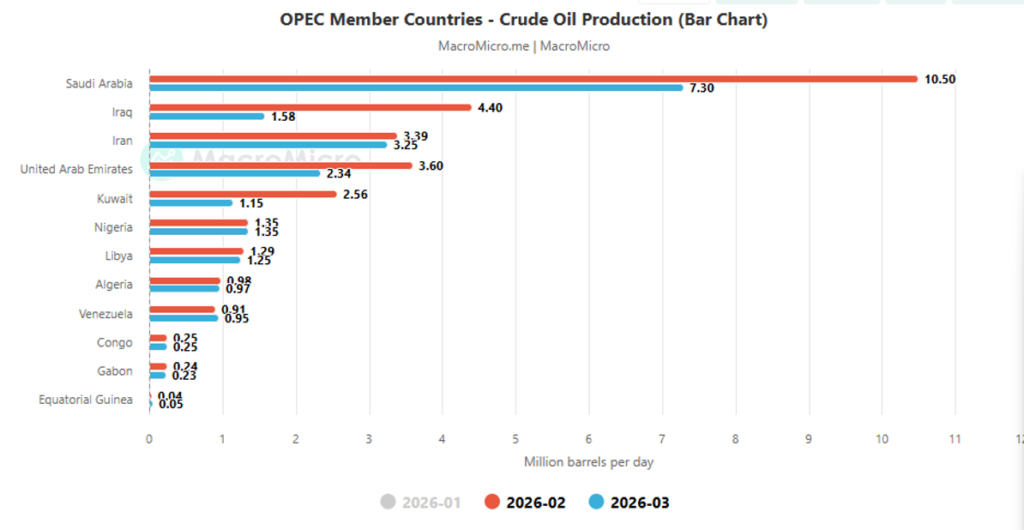
Figure 1 – OPEC Member Countries Crude Oil Production 02/2026 to 03/2026
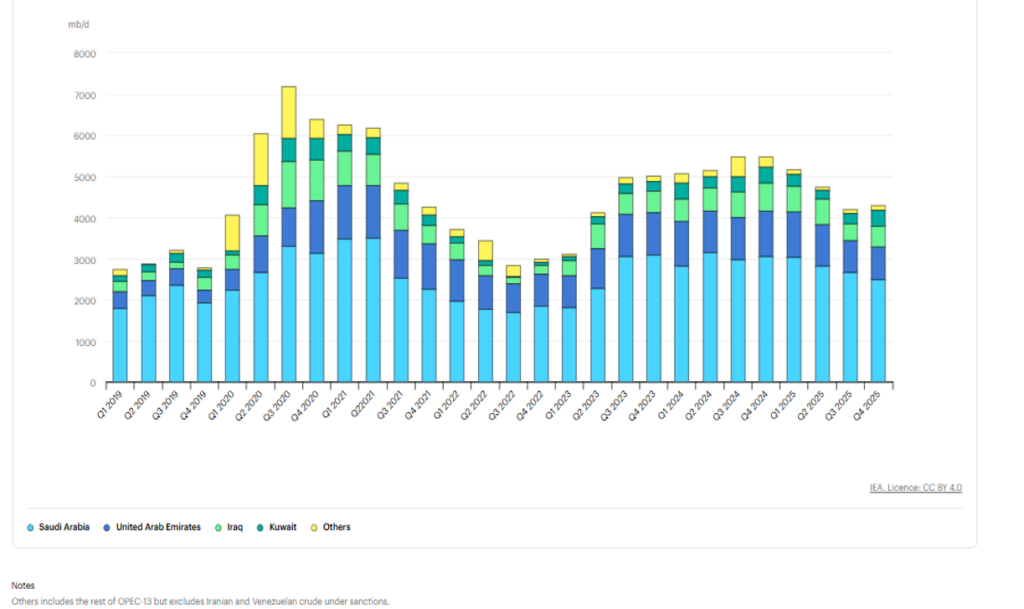
Figure 2 – OPEC Effective Spare Capacity 2019 to 2025
Defined by the US Energy Information Administration (EIA) ‘as the volume of production that can be brought online within 30 days and sustained for 90 days’[4]. Spare capacity is an integral source of OPEC’s power as the ability of OPEC to respond in a timely manner to unforeseen events. Depends entirely on their spare production capacity with a handful of members possessing the spare capacity significant enough to counteract such events.
Despite the Energy Minister of the UAE Suhail Al Mazrouei’s recent assurances that the decision to leave OPEC was a sovereign strategic decision and not a political move[5]ideally timed to have a minimal impact on price and members of OPEC[6]. It is key to note the political accomplishments such a decision has achieved.
At this critical period for global oil markets due to the war in Iran, the UAE’s decision will certainly be welcomed by their western allies. And will continue to burn through their oil reserves at a record pace in desperate need of an increase to global production levels and the reopening of the Strait of Hormuz. Despite officially producing more oil than it consumes since 2021[7] the US will also be pleased with the UAE’s decision to leave what it considers to be a group more aligned to Russian interests than its own.
There remains a strong desire across most governments for the energy prices to be as low as possible. With high energy prices for a prolonged period historically resulting in high inflation stifling global growth as seen in figure 3[8]. Eroding consumers purchasing power and pressuring central banks globally to increase interest rates to curtail inflationary factors
Nevertheless, the Federal Reserve (FED) may be reluctant to increase interest rates given the ongoing liquidity crisis within the private credit sector. This would trigger further repricing of private credit while increasing borrowing costs in a market already constrained for liquidity.
President Trump continues to echo that his administration is not concerned with the impact of inflation on the average US consumer[9]. However, there’s a strong desire across the Republicans for energy prices to remain within politically palatable levels as we approach mid-term elections in November 2026. Therefore, it’s greatly in their interest for the UAE to operate at maximum capacity to mitigate energy driven rising inflation.
Subsequently, the UAE’s not only commitment but tangible actions towards increasing oil production will undoubtedly garner the Emirates’ political goodwill and leverage among its western allies particularly in Washington.
Demonstrating their importance and allegiance amid such a challenging landscape may allow the Emirates’ to subtly cement their position as the most reliable Arabian ally. Potentially garnering further support for their pursuit of dominance across the Islamic world.
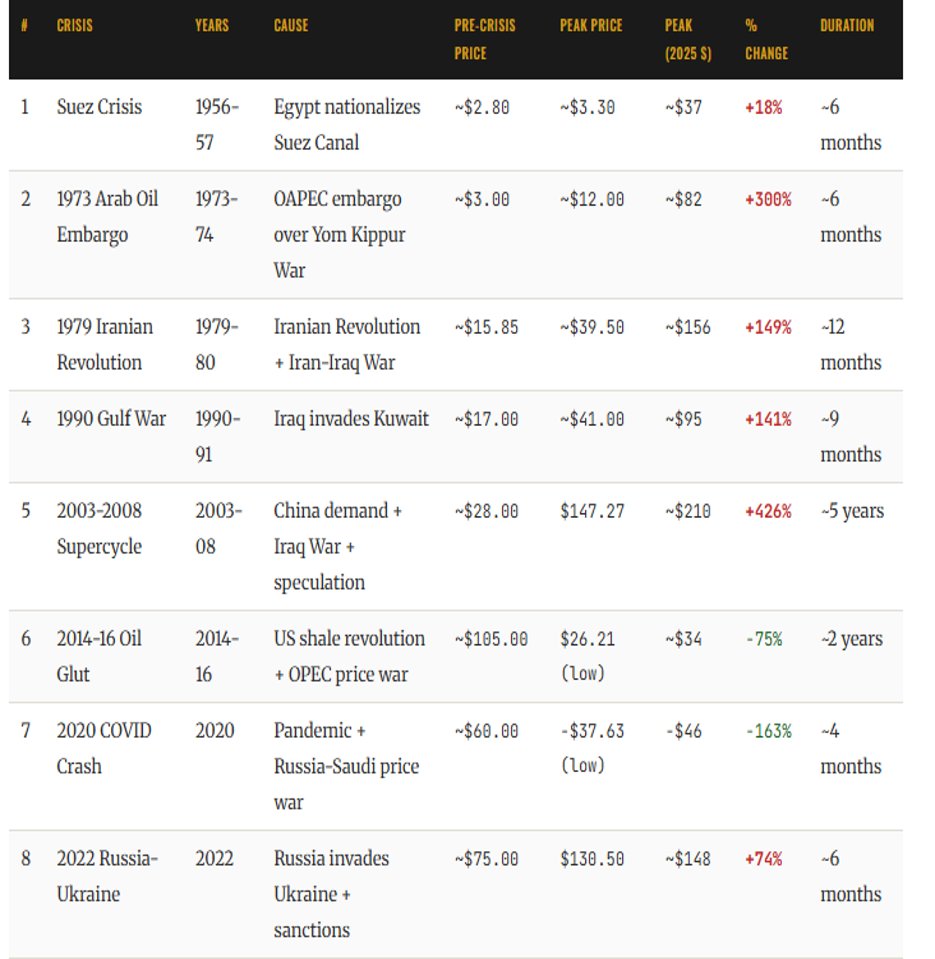
Figure 3 – Oil Crises’ 1956 to 2022
Economic Interests?
There continues to be growing efforts across the Gulf Cooperation Council (GCC) to diversify their economies into one more robust and less dependent on oil revenues to finance governments obligations and initiatives. With GCC sovereign wealth funds continuing to increase their influence and achieve their diversification objectives through tremendous investments and financing across global financial markets particularly within the US.
The UAE continues to pursue its ‘We the UAE 2031”[10] intiative. With the Emirates’ seeking to establish a leadership role within the global artificial intelligence (AI) arms race and data centers. By accelerating their digital transformation and playing a greater role across international trade and financial markets[11].
The UAE’s recent request of forming a currency swap line with the US Treasury and Federal Reserve highlights their desire to further develop their financial markets and institutions. While also easing liquidity pressures across the Emirates due to the negative impact of the war in Iran on the level of tourism in the UAE and the disruption to partial trade routes as seen in figure 4[12]. It is key to note the UAE’s popularity among tourists not only as a premier holiday destination but for health tourism, valued to be worth $628.9m in 2023 with projections to almost double to $1.26 bn by 2030 prior to the war in Iran[13].
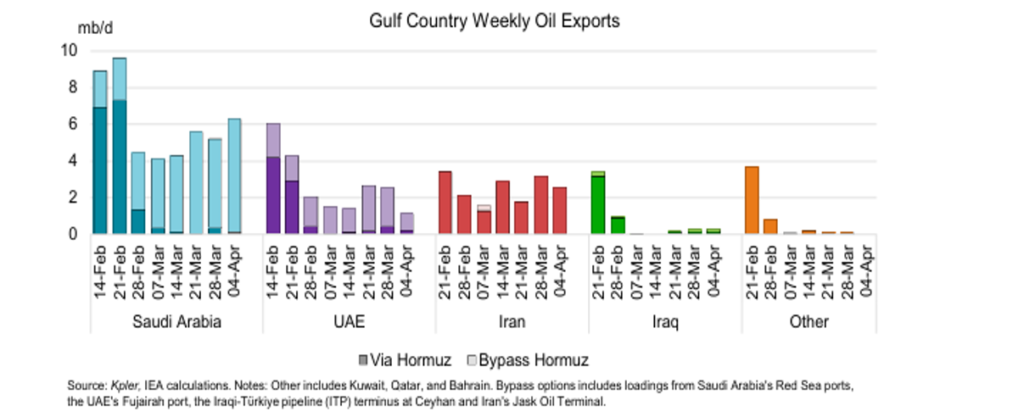
Figure 4 – Gulf Country Weekly Oil Exports 14/02 to 04/04
Bloomberg’s introduction of a Murban Crude Index Oil Index provides investors and speculators globally with another vehicle through which to invest in Murban crude. With production of Murban crude limited to Abu Dhabi and distributed via the Abu Dhabi National Oil Company (ADNOC), the Emirates continue to expand their role within global financial markets. Therefore, it is arguably imperative to limit policy induced price volatility by limiting production decisions solely to the UAE, ensuring complete alignment with the UAE’s comprehensive interests. As the UAE can leverage its smaller population compared to Saudi’s[14] by leveraging the speed of its social and economic transition.
Africa Must Wake Up?
With six out of the eleven current OPEC members residing in the African continent, a weaker OPEC on the surface may translate to a reduction in Africa’s influence on global energy markets. However, the UAE’s exit requires the cartel to restructure not only it’s production strategy but internal hierarchy. Presenting an opportunity to influence the re-calibration of what has historically been a Gulf focused cartel closer to their own continental interests.
As in the latest OPEC+ production changes for May 2026 the first since the UAE’s departure, the cartel elected to increase total production by 206,000 bpd. With Algeria being the only African nation to be allocated an increase in production via OPEC+[15]. Historically due to the lack of infrastructure, terrorist activity, political and financial risk there has been a tendency to rely on Gulf nations. To execute production policy changes in a reliable and timely manner with some African nations failing to reach their preexisting quota limit.
While these headwinds continue to be a challenge to development across Africa, one can certainly argue that the risk profile of the Middle East has increased significantly since the war in Iran commenced with consistent attacks on oil fields across the Gulf. Subsequently, the narrowing in risk profiles across the regions if matched with a domestic push by African nations to accelerate the development of their energy infrastructure lends African members the foundation on which to reasonably and diplomatically broker higher production quotas.
It is imperative for these nations, particularity, Libya, Sudan, South Sudan, Congo and Nigeria’s development strategy to not only value advancements in infrastructure but also creating a secure environment for investors.
Angola’s departure from OPEC in January 2024 was driven by desires to boost its oil production, growing frustrated at how misaligned the cartel had become versus Angola’s sovereign interests[16]. While Egypt maintains a relationship with OPEC+ operating largely as an observer in strategy discussions it remains an unofficial member.
Ghana’s recent expansion of the Tema Oil Refinery (TOR) plant is a promising step in the right direction[17] with President Mahama announcing plans for the plant to commence refining Ghanaian crude in June 2026[18]. For the largest oil producing African nations currently operating outside the OPEC, now may be the time to capitalise on OPEC’s urgent quest to regain market share. However, the lack of investment and security instability has significantly contributed to the decline in crude oil production across the continent as seen below in figure 5[19]. Operating under OPEC with more stringent methods may serve best when attempting to develop infrastructure to internationally recognised standards.
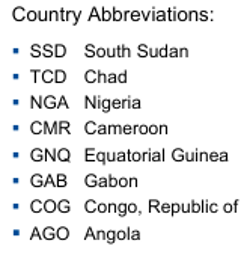
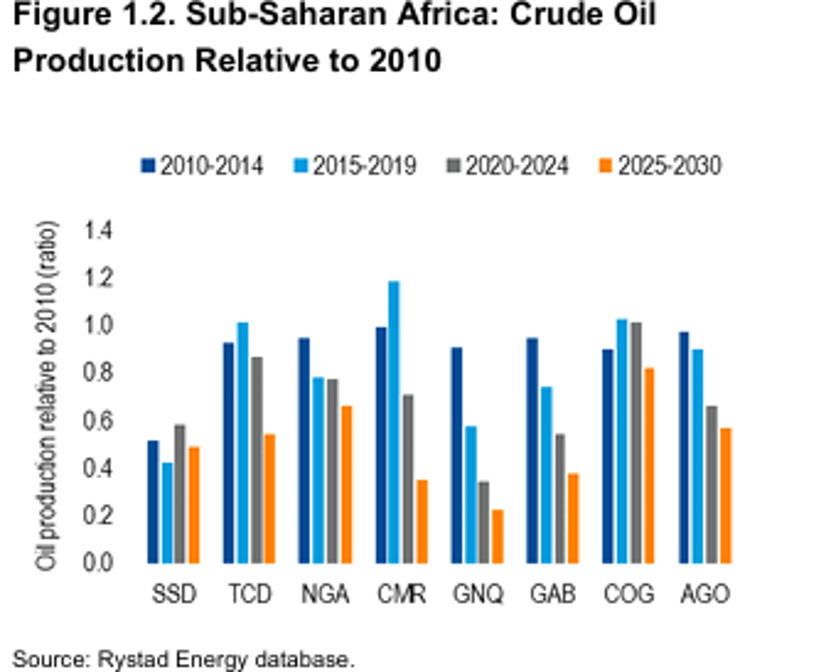
Figure 5 – Sub Saharan Africa; Crude Oil Production Relative To 2010
The UAE’s desire to operate at full capacity will surely put downward pressure on price levels despite their declaration of being committed to price stability upon their exit. Therefore, it is critical for the African coalition within OPEC to advocate for any attempts to maintain high prices via cuts to production to offset the oversupply by the UAE to be absorbed by more economically resilient and developed members such as Saudi Arabia to avoid potentially catastrophic holes in their fiscal budgets.
Policy Recommendations
- Strengthen Fiscal Resilience in Oil-Dependent Economies
African oil exporters such as Nigeria, Algeria, Libya and Republic of the Congo should reduce their dependence on oil revenues by;
- Expanding non-oil tax bases
- Strengthening sovereign wealth and stabilisation funds
- Implementing fiscal rules linked to long-term oil price assumptions
- Reducing budget exposure to short-term oil price fluctuations.
Invariably, a UAE exit could weaken OPEC cohesion, increasing oil price volatility and fiscal risk.
- Accelerate Economic Diversification
Governments should invest oil revenues in;
- Manufacturing
- Agriculture
- Digital industries
- Renewable energy
- Logistics and transport infrastructure.
Ultimately, diversified economies are less vulnerable to external oil market shocks.
- Enhance Regional Energy Cooperation
The African Union and the African Petroleum Producers’ Organisation should;
a. Coordinate energy policies
b. Promote cross-border energy infrastructure
c. Facilitate regional petroleum reserves
d. Encourage knowledge sharing among oil producers.
Collective action can mitigate the effects of global market disruptions.
- Develop Strategic Petroleum Reserves
African countries, particularly net oil importers such as Ghana and Kenya, should establish or expand strategic petroleum reserves.
Strategic reserves provide a buffer against supply disruptions and sudden price spikes
- Attract Energy Investment Through Regulatory Reforms
Governments should;
- Improve transparency in licensing
- Simplify investment procedures
- Strengthen legal protections for investors
- Promote public-private partnerships
If the UAE redirects investment following an OPEC exit, African producers could attract new capital into upstream and downstream sectors.
Conclusion
Tangible rewards such as a significant increase in $4bn allocated for Africa under the Strategic Framework 2030[20] OPEC’s Fund for International Development provides one means for the cartel to cement their commitment to Africa’s development.
While the wider cold war between the UAE and Saudi Arabia provides a myriad of not only opportunities but challenges to be carefully considered and navigated. With a military base established in Somaliland following a 2017 agreement with the UAE, highlighting their expansion across Africa.
Of great concern to Saudi Arabia who also consider control over the horn of Africa vital to their security, resulting in the signing of a military alliance with Somalia in February 2026 [21] to counteract the UAE’s growing influence.
An integral element in determining the success of OPEC’s African nations may be their willingness to operate as a sub coalition within the group. Their individual risk profiles may allow the syndicate to counter any requests with greater ease. Significantly, non-OPEC or even oil producing nations should aim to seize the opportunity to procure further foreign investment as the Gulf states intensify their battle for dominance over the Islamic world.
References
- U.S. Energy Information Agency. (2026) What drives crude oil prices: Supply OPEC What drives crude oil prices: Supply OPEC – U.S. Energy Information Administration (EIA)
- MacroMicro. (2026). OPEC member countries – crude oil production (barchart) OPEC Member Countries – Crude Oil Production (Bar Chart) | MacroMicro
- International Energy Association. (2026). OPEC effective spare capacity, 2019-2025 OPEC effective spare capacity, 2019-2025 – Charts – Data & Statistics – IEA
- Azernews. (2026). UAE says OPEC, OPEC+ exit was a sovereign strategic decision, not political move UAE says OPEC, OPEC+ exit was sovereign strategic decision, not political move
- CNBC. (2026). United Arab Emirates to leave OPEC May 1, energy chief says still committed to oil price stability United Arab Emirates to leave OPEC May 1, energy chief says committed to price stability
- US Energy Information Administration. (2026) U.S. energy facts – imports and exports – U.S. Energy Information Administration (EIA)
- DaveManuel (2026). Every oil crisis in modern history: what caused them, what they cost, and how governments responded Every Oil Crisis in History: Causes, Costs & Responses
- Fortune. (2026) ‘I love inflation’: Trump is ‘not concerned’ about inflation hitting 4% for the first time since 2023. ‘The numbers were great’ ‘I love the inflation’: Trump is ‘not concerned’ about inflation hitting 4% for first time since ’23 | Fortune
- We The UAE 2031. (2026) We the UAE 2031 Vision We the UAE 2031 Vision — WE THE UAE 2031
- United Arab Emirates Ministry of Finance. (2025) Ministry of Finance launches 2027 – 2029 budget cycle with flexible vision focused on sustainability, efficiency, and artificial intelligence Ministry of Finance launches 2027–2029 budget cycle with flexible vision focused on sustainability, efficiency, and artificial intelligence | Ministry of Finance – United Arab Emirates
- International Energy Agency. (2026) Oil market report Oil Market Report
- Gupta, A. (2024). How oil rich nations are reinventing their economies – a lesson in diversification by the UAE.IOSR Journal of Humanities and Social Science. volume 29, issue 9, series 15, p54 -62. F2909155462.pdf
- OPEC. (2025) 2025 OPEC annual statistical bulletin asb-2025.pdf
- OPEC. (2026) Saudi Arabia, Russia, Iraq, UAE, Kuwait, Kazakhstan, Algeria and Oman adjust production and reaffirm commitment to market stability Organization of the Petroleum Exporting Countries
- Al Jazeera. (2023). Angola to leave OPEC over disagreement on oil production quotas Angola to leave OPEC over disagreement on oil production quotas | OPEC News | Al Jazeera
- Business Insider Africa. (2026) Ghana’s Tema refinery plans major upgrade, capacity set to reach 45,000bpd Ghana’s Tema refinery plans major upgrade, capacity set to reach 45,000 bpd | Business Insider Africa
- Graphic Online. (2026). TOR to refine Ghanaian crude oil from June 2026 – President Mahama TOR to refine Ghanaian crude oil from June 2026 – President Mahama – Graphic Online
- International Monetary Fund. (2021) Sub-Saharan African oil exporters: the future of oil and imperative of diversification IMF COVID-19 Special Series, Sub-Saharan African Oil Exporters: The Future of Oil and the Imperative of Diversification
- International Monetary Fund. (2025) Regional economic outlook Middle East and Central Asia statistical appendix regional-economic-outlook-middle-east-central-asia-may-2025-statistical-appendix.pdf
- S&P Global. (2025) Low oil prices to pound the economies of Mideast, African producers: report Low oil prices to pound economies of Mideast, African producers: report | S&P Global
- OPEC Fund. (2026) OPEC fund for international development Strategic Framework – OPEC Fund for International Development
- DW. (2026). What’s behind Somalia – Saudi Arabia military deal? What’s behind Somalia-Saudi Arabia military deal?
[1] What drives crude oil prices: Supply OPEC – U.S. Energy Information Administration (EIA)
[2] OPEC Member Countries – Crude Oil Production (Bar Chart) | MacroMicro
[3] OPEC effective spare capacity, 2019-2025 – Charts – Data & Statistics – IEA
[4] What drives crude oil prices: Supply OPEC – U.S. Energy Information Administration (EIA)
[5] UAE says OPEC, OPEC+ exit was sovereign strategic decision, not political move
[6] United Arab Emirates to leave OPEC May 1, energy chief says committed to price stability
[7] U.S. energy facts – imports and exports – U.S. Energy Information Administration (EIA)
[8] Every Oil Crisis in History: Causes, Costs & Responses
[9] ‘I love the inflation’: Trump is ‘not concerned’ about inflation hitting 4% for first time since ’23 | Fortune
[10] We the UAE 2031 Vision — WE THE UAE 2031
[11] Ministry of Finance launches 2027–2029 budget cycle with flexible vision focused on sustainability, efficiency, and artificial intelligence | Ministry of Finance – United Arab Emirates
[15] Organization of the Petroleum Exporting Countries
[16] Angola to leave OPEC over disagreement on oil production quotas | OPEC News | Al Jazeera
[17] Ghana’s Tema refinery plans major upgrade, capacity set to reach 45,000 bpd | Business Insider Africa
[18] TOR to refine Ghanaian crude oil from June 2026 – President Mahama – Graphic Online
[19] IMF COVID-19 Special Series, Sub-Saharan African Oil Exporters: The Future of Oil and the Imperative of Diversification
[20] Strategic Framework – OPEC Fund for International Development