






1. Introduction: The Velocity Paradox
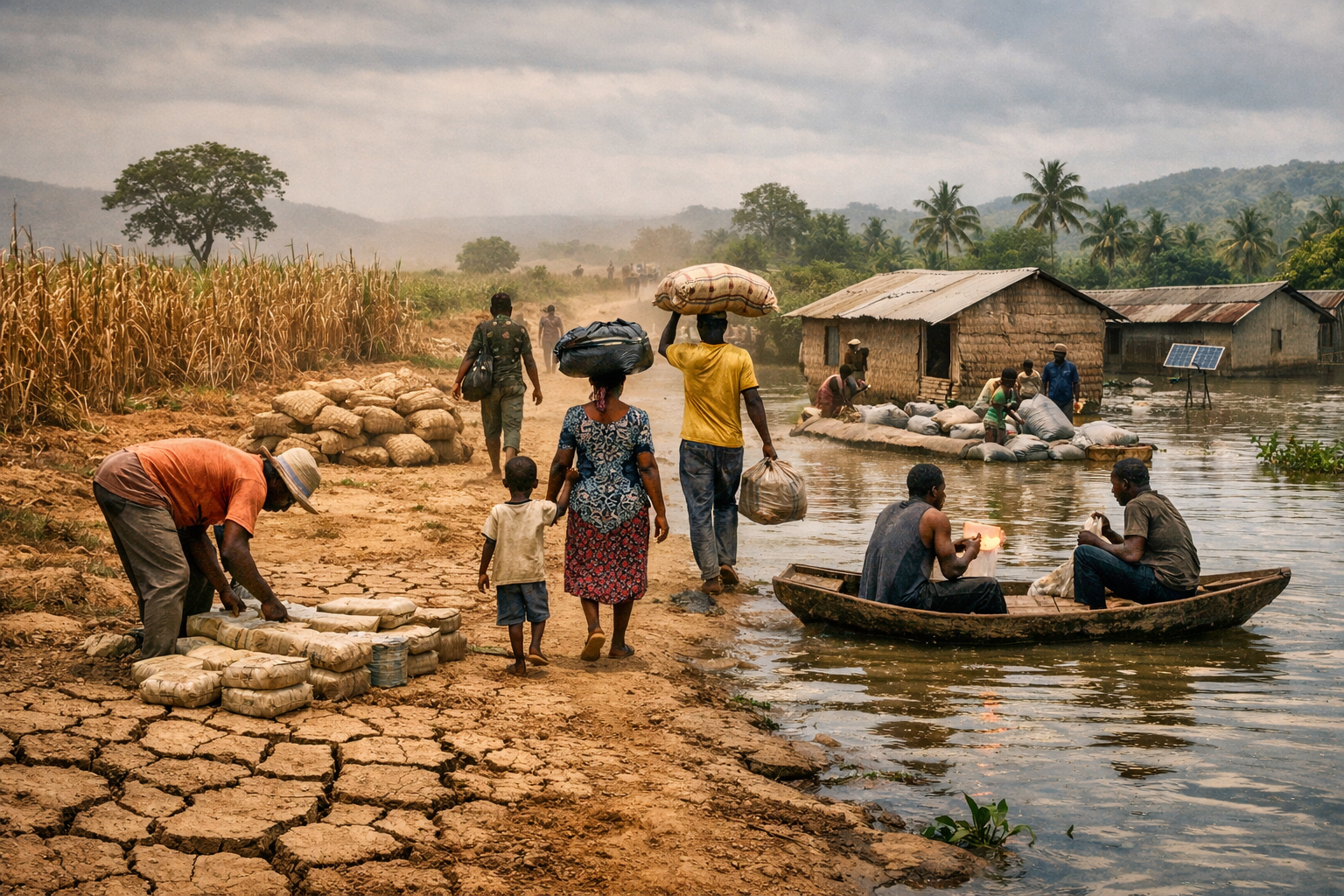
Security practitioners are trained to respond to the acute (the sudden attack, the abrupt coup, the rapid) outbreak of violence. Climate change confounds this orientation because its security implications accumulate through slow-onset processes that rarely trigger emergency thresholds until cascading tipping points are reached. By the time climate-driven insecurity becomes unmistakably visible, the structural conditions enabling it have been decades in the making and are not readily reversible.
Ghana’s global positioning makes this paradox particularly acute. The country is among the smallest contributors to global greenhouse gas emissions, yet it is disproportionately exposed to the physical and security consequences of climate disruption. Communities across
West Africa already experience the climate crisis’s effects acutely through droughts, floods, hunger, disease, displacement, and escalating resource competition (Climate Reality Project, 2023). Ghana’s combination of a large rural population dependent on rain-fed agriculture, a densely settled and low-lying coastline, growing urban centres, and proximity to the Sahel’s escalating instability creates compounding vulnerabilities that warrant urgent security attention.
Ghana has long been one of the most peaceful countries on the African continent, with strong government institutions, a tradition of peaceful transfer of power, a vibrant civil society, and steady economic growth (CDA Collaborative, 2023). These assets constitute a genuine resilience buffer. But recent climate impacts are actively exacerbating existing, largely latent conflict drivers. These include governance disputes, farmer-herder tensions, rural-to-urban migration, and resource competition doing so across multiple simultaneous fronts.
2. The Climate Threat Landscape in Ghana
2.1 Rising Temperatures and Agricultural Disruption
Under high emissions scenarios, the number of dangerously hot days per year in West Africa is projected to increase to 140 days by the 2060s more than one-third of the calendar year (Climate Reality Project, 2023). For a country where agriculture employs approximately 40 percent of the workforce and accounts for a significant share of rural livelihoods, this trajectory constitutes a structural economic and social security threat. Heat stress, erratic rainfall, and increased drought frequency are already reducing agricultural yields, degrading food quality, and disrupting planting calendars across Ghana’s farming communities.
The UN Food and Agriculture Organisation warned in May 2026 that neglect of sustainable agriculture could trigger food crises in Ghana, with illegal mining (galamsey) and climate change identified as twin threats confronting the rural economy. The UN Working Group described galamsey as ‘the most acute, rapidly expanding and politically charged environmental emergency’ facing the country, with mercury contamination of rivers and farmland destruction compounding climate-driven agricultural stress (Ghana News Agency, 2026). Food insecurity does not remain a humanitarian issue for long; historically, it is one of the most reliable antecedents of civil conflict.
2.2 Farmer-Herder Conflict: The Northern Fault Line
Northern Ghana is a microcosm of the dynamics driving farmer-herder conflicts across the West African drylands conflicts that have become markedly more frequent and violent since the early 1990s (Stiftung Wissenschaft and Politik, 2023). Low availability of fodder and water, driven by rising temperatures and erratic rainfall, has intensified competition for land and water resources, forcing herders to alter their mobility patterns and encroach on agricultural land. In Gushegu district alone one of northern Ghana’s primary conflict hotspots between 2016 and 2022, local records documented 102 cases of farmer-herder conflicts and 17 cases of rape involving herders as perpetrators and victims (SWP Policy Brief, 2023).
During the dry season, transhumant herders primarily from the Fulbe ethnic group migrate from the Sahelian zone and neighbouring countries into Ghana in search of pasture and water. These seasonal movements are driven partly by climate change, partly by conflict displacement, and partly by market forces (CDA Collaborative, 2023). The result is a recurring collision between agricultural and pastoral land-use claims that local governance mechanisms are increasingly unable to manage. Climate change does not create this conflict, but it intensifies the resource scarcity that animates it.
A 2024 report by the Centre for Strategic and International Studies (CSIS) identified farmer-herder conflict in northern Ghana as one of four primary conflict sources, noting that armed groups could exploit livelihood grievances for recruitment mirroring dynamics already observed in the central Sahel (CSIS, 2024). The clandestine nature of galamsey in Ghana’s forests was further identified as providing an additional recruitment and revenue pathway for extremist organisations.
2.3 Coastal Erosion, Displacement, and Urban Stress
Ghana’s 539-kilometre coastline, home to the majority of the country’s economic infrastructure and several of its most densely populated cities, faces escalating threats from sea-level rise and coastal erosion. The historical rate of coastal erosion along Ghana’s coastline has been estimated at 1.13 metres per year, with the western section experiencing 1.86 metres per year (Global Shield, 2024). Conservative projections estimate that over a 20-year period, more than 13,000 people will be permanently displaced by coastal inundation, rising to over 33,000 over 50 years, and over 157,000 by 2100 (Global Shield, 2024).
Rising sea levels threaten historic coastal towns including Keta, Ada, Accra, and Takoradi. Salinisation is contaminating freshwater reserves and farmlands, threatening the livelihoods of fishing communities. Research conducted in the Volta Delta region of Ghana found that planned relocation the government’s primary adaptation response negatively impacts the well-being, anxiety levels, and social identity of displaced persons (Abu et al., 2024). Displaced coastal populations migrating into already-stressed urban centres generate pressures on housing, services, and social cohesion that have well-documented pathways to urban insecurity.
2.4 Climate, Migration, and Extremist Recruitment
The CSIS conflict prevention analysis published in October 2024 identified Ghana’s proximity to violent extremists operating in the Sahel primarily Jama’at Nusrat al-Islam wal-Muslimin (JNIM) as a fourth and escalating conflict source. Armed groups exploit existing grievances, and climate-driven livelihood losses provide compelling recruitment narratives. As seen in the central Sahel, natural resource extraction including illegal mining is a lucrative source of both revenue and recruits for extremist organisations (CSIS, 2024). Displacement from northern Ghana to urban centres in the south creates populations of young, economically marginalised, and grievance-laden individuals who constitute a primary target demographic for radicalisation.
3. The Intelligence and Policy Gap
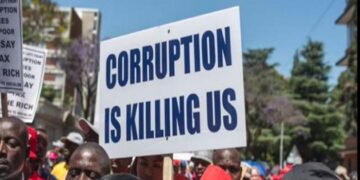
Despite the well-documented convergence of climate drivers and security risks, Ghana’s security architecture has not yet systematically integrated climate change as a threat variable into national security assessments, intelligence tasking, or operational planning. A 2023 assessment by CDA Collaborative Learning Projects and Chemonics International, based on a country visit and stakeholder workshops, found that although Ghana has a well-established environmental governance regime and an ambitious climate mitigation plan, corruption, governance issues, and budgetary constraints have rendered these largely ineffective in practice, and that the connections between climate and conflict systems had not yet been integrated into policy and programming (CDA Collaborative Learning Projects & Chemonics International, 2023). The same report recommended developing and strengthening early warning and response systems and the emergency capacity of institutions (such as the National Disaster Management Organisation) implying that these systems are not yet calibrated to the slow-onset indicators, such as rainfall anomalies and water stress, that the literature identifies as leading signals of climate-driven insecurity (CDA Collaborative Learning Projects & Chemonics International, 2023).
At the regional level, the ECOWAS Regional Climate Strategy and Action Plan (2022–2030), formally adopted by ECOWAS member states in Accra in 2022, and the African Union Climate Change and Resilient Development Strategy and Action Plan (2022–2032) provide continental and regional frameworks for climate action (ECOWAS Commission, 2022; African Union, 2022). The AU strategy itself calls on security institutions to adopt a climate-sensitive approach to better prevent and address conflicts linked to climate change, a position consistent with the African Union Peace and Security Council’s 2021 stance (European Parliamentary Research Service, 2022). Translating these frameworks into Ghana’s national security planning, however, remains incomplete. A transboundary example is the REWarD–Volta River Basin initiative, launched in April 2023 by Benin, Burkina Faso, Côte d’Ivoire, Ghana, Mali, and Togo to reverse ecosystem and water degradation across the Volta Basin, financed by the Global Environment Facility at just over $7.1 million over five years and implemented by the UN Environment Programme and the International Union for Conservation of Nature (United Nations Environment Programme, 2023). With the basin’s population projected to grow from 29 million to 68 million people by 2046, this level of funding raises a real question about whether transboundary environmental cooperation in the basin is resourced to match the scale of the challenge.
CDA Collaborative Learning Projects and Chemonics International’s assessment concludes that, given Ghana’s strong institutions promoting social cohesion and its existing regulatory framework for climate adaptation, the country is well positioned to address climate impacts and conflict together if the co-benefits of climate and conflict prevention are carefully considered (CDA Collaborative Learning Projects & Chemonics International, 2023). That same assessment found that this integration had not yet occurred at the time of writing; a finding that directly supports this article’s broader argument that the institutional depth required across climate, development, security, and intelligence planning has not yet matched the pace of the threat.
4. Policy Recommendations
First, Ghana’s National Security Council should formally integrate climate change as a Category A security threat within national security strategy documents, with dedicated intelligence tasking, annual threat assessments, and operational planning implications. Second, Ghana’s early warning systems operated through the National Disaster Management Organisation and security services should incorporate climate-sensitive indicators including drought indices, food security alerts, displacement flows, and resource conflict reporting. Third, targeted rural development programming in northern Ghana’s climate-stressed districts should be explicitly designed to reduce the grievance environment that extremist organisations exploit. Fourth, Ghana should develop and fund a National Coastal Resilience and Climate Displacement Strategy that addresses the social security dimensions of coastal population movement, not merely the physical infrastructure of sea defences. Fifth, Ghana should use its platform as a regional anchor state to advocate for climate-security integration within ECOWAS planning frameworks, particularly given the ECOWAS institutional challenges created by the Alliance of Sahel States withdrawals.
5. Conclusion
The slowness of climate change as a security threat is precisely what makes it dangerous in the context of institutions calibrated to respond to acute crises. Ghana’s stability is a genuine asset, but it is not a permanent condition but rather a policy achievement that must be actively sustained against accelerating pressures. Climate change is the thread being pulled that, if left unaddressed, will gradually unravel the social, economic, and institutional fabric that Ghana’s security rests upon. The most certain security crisis Ghana faces is the one it has the most time to prevent but only if it starts now.
References
Abu, M., Heath, S. C., Adger, W. N., Codjoe, S. N. A., Butler, C., & Quinn, T. (2024). Social consequences of planned relocation in response to sea level rise: impacts on anxiety, well-being, and perceived safety. Scientific Reports. https://doi.org/10.1038/s41598-024-53277-9
African Union. (2022, June 28). African Union climate change and resilient development strategy and action plan (2022–2032). https://au.int/en/documents/20220628/african-union-climate-change-and-resilient-development-strategy-and-action-plan
Amani Africa. (2025, March 5). Climate Change: Challenges to Peace and Security in Africa. Retrieved from https://amaniafrica-et.org/climate-change-challenges-to-peace-and-security-in-africa/
CDA Collaborative Learning Projects & Chemonics International. (2023, August). Climate change and conflict in Ghana. https://www.cdacollaborative.org/wp-content/uploads/2023/08/Climate-and-Conflict-in-Ghana.pdf
CDA Collaborative Learning Projects. (2023). Climate Change and Conflict in Ghana. Retrieved from https://www.cdacollaborative.org/publication/climate-change-and-conflict-in-ghana/
Centre for Strategic and International Studies (CSIS). (2024, October 11). Conflict Prevention, Climate Change, and Why Ghana Matters Now. Retrieved from https://www.csis.org/analysis/conflict-prevention-climate-change-and-why-ghana-matters-now
Climate Reality Project. (2023, June 28). How the Climate Crisis is Impacting Ghana. Retrieved from https://www.climaterealityproject.org/blog/how-climate-crisis-impacting-ghana
ECOWAS Commission. (2022). ECOWAS regional climate strategy and action plan (2022–2030). Directorate of Environment and Natural Resources. https://www.climatestrategy.ecowas.int/images/documentation/2022_Action_Plan__-_ECOWAS_Regional_Climate_Strategy_2022-2030_EN.pdf
European Parliamentary Research Service. (2022). The African Union’s first climate strategy [Briefing]. European Parliament. https://www.europarl.europa.eu/RegData/etudes/BRIE/2022/738201/EPRS_BRI(2022)738201_EN.pdf
Ghana News Agency. (2026, May). Neglect of sustainable agriculture could trigger food crises in Ghana – UN warns. Retrieved from https://gna.org.gh/2026/05/neglect-of-sustainable-agriculture-could-trigger-food-crises-in-ghana-un-warns/
Global Shield Against Climate Risks. (2024). Gap Analysis Report: Contribution to the Global Shield against Climate Risks – Ghana. Retrieved from https://www.globalshield.org/wp-content/uploads/2024/01/2024-01-16_GS-ICP-Ghana_Gap-Analysis_Final.pdf
Institute for Security Studies (ISS Africa). (2023, June 20). Rising tides threaten low-lying coastal West Africa. Retrieved from https://issafrica.org/iss-today/rising-tides-threaten-low-lying-coastal-west-africa
Institute for the Study of Violent Groups / Tony Blair Institute for Global Change. (2024, November 28). From Crisis to Conflict: Climate Change and Violent Extremism in the Sahel. Retrieved from https://institute.global/insights/geopolitics-and-security/from-crisis-to-conflict-climate-change-and-violent-extremism-in-the-sahel
Stiftung Wissenschaft und Politik (SWP). (2023). Farmer-herder conflicts in northern Ghana amid climate change: causes and policy responses (Policy Brief). Berlin: SWP. Retrieved from https://www.swp-berlin.org/en/publication/policy-brief-09-farmer-herder-conflicts-in-northern-ghana-amid-climate-change
United Nations Environment Programme. (2023, April 28). West African countries unite to reverse Volta Basin degradation. https://www.unep.org/gef/news-and-stories/press-release/west-african-countries-unite-reverse-volta-basin-degradation
United Nations Security Council. (2025, April 3). Press Release SC/16036: Efforts to Address Root Causes of Conflict, Mitigate Impact of Climate Change in West Africa, Sahel Must Be Supported. Retrieved from https://press.un.org/en/2025/sc16036.doc.htm
World Bank Climate Change Knowledge Portal. (2024). Ghana – Sea Level (Historical). Retrieved from https://climateknowledgeportal.worldbank.org/country/ghana/sea-level-historical