







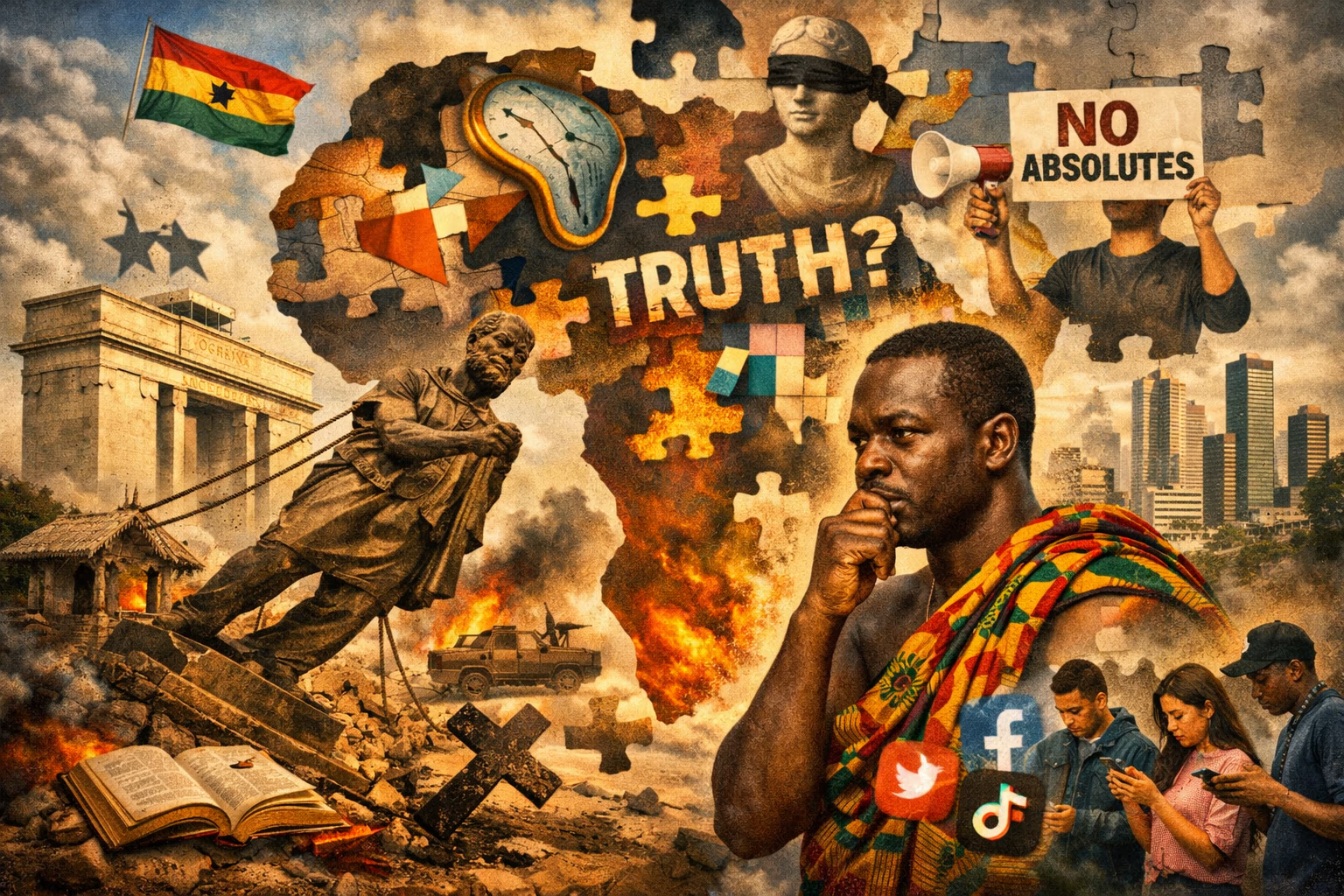
The contemporary world is increasingly shaped by competing truths, fragmented identities, and growing distrust in institutions (Van der Meer & Hameleers, 2026). Across politics, education, media, religion, and governance, societies are witnessing the weakening of shared moral frameworks and collective social values. At the center of many of these intellectual and cultural transformations lies postmodernism, a philosophical and social movement that emerged primarily in the twentieth century as a critique of Enlightenment rationality, universal truth claims, and dominant grand narratives (see Allmendiger 2009).
Postmodernism challenges the idea that there is a single objective reality or universally accepted truth. Instead, it argues that knowledge is socially constructed, shaped by language, culture, power, and historical context (see Foucault, 1980; Lyotard, 1979). Thinkers associated with postmodernism emphasise plurality, diversity, difference as well as skepticism toward absolute authority. This intellectual movement became influential in sociology, literature, politics, media studies, cultural studies, gender studies, and postcolonial scholarship. In many respects, postmodernism, which emerged from critical theory contributed positively to sociological imagination by exposing hidden systems of domination, questioning colonial assumptions and giving voice to marginalised groups previously excluded from dominant narratives.
However, despite these contributions, postmodernism has also generated serious intellectual, political, and social concerns. Excessive relativism and radical skepticism toward truth and authority may weaken the foundations necessary for social order and collective development. When societies abandon shared truths and common moral standards, public discourse may become fragmented, institutions may lose legitimacy, and individuals may struggle to distinguish between fact and opinion. In such contexts, conspiracy theories, misinformation, identity conflicts as well as distrust in governance structures can flourish. These concerns become particularly important within developing societies such as Ghana, where social cohesion, institutional trust, and collective development remain essential for national stability.
African societies historically emphasised communalism shared moral responsibility, and collective identity. Traditional African systems of governance and social organization often depended on common ethical frameworks, respect for authority, and collective obligations toward the community. The growing influence of postmodern thought, especially through globalisation and digital media, may therefore create tensions between communal social structures and highly individualistic or relativistic worldviews.
This study critically examines the dangers of postmodernism in contemporary society, with specific attention to its implications for developing societies and the Ghanaian context. The study argues that while postmodernism offers valuable tools for critiquing oppression and dominant power structures, its rejection of objective truth and universal social foundations may unintentionally contribute to cultural fragmentation, institutional distrust, moral confusion, and developmental challenges.
The paper further explores how postmodernism influences politics, media, education, governance, and identity formation in contemporary Ghana. Particular attention is given to how excessive relativism may affect social stability, weaken national cohesion, and complicate the pursuit of collective development goals. Ultimately, the study seeks to contribute to ongoing debates concerning the future of African societies in an era increasingly defined by competing truths, fragmented identities, and declining institutional legitimacy.
Postmodernism and the Rejection of Objective Truth
One of the central characteristics of postmodernism is its rejection of universal truth claims. Postmodern thinkers like Micheal Foucault and Lyotard argue that truth is not fixed or objective but is shaped by culture, language, power, and historical circumstances (Foucault, 1980; Lyotard, 1979). According to this perspective, which emerged from Roland Barthes ‘The Death of the Author’, there is no single authoritative interpretation of reality. Instead, multiple truths exist simultaneously depending on one’s social position and experience (Derrida, 1997). While this perspective has helped challenge oppressive systems and dominant ideologies, it also creates important societal risks. If all truth becomes relative, societies may struggle to establish shared standards for morality, governance, justice as well as accountability. The rejection of objective truth may produce confusion regarding what constitutes evidence, fact, or ethical responsibility.
In contemporary society, this phenomenon is increasingly visible through the spread of misinformation and conspiracy theories. For instance, social media platforms allow individuals to create and circulate competing narratives regardless of factual accuracy (Chen et al., 2023; (Denniss & Lindberg, 2025). In many cases, emotional appeals and personal beliefs become more influential than verified information. This weakens rational public discourse and makes democratic consensus increasingly difficult. Within the Ghanaian context, the spread of misinformation during elections, public health crises, and social conflicts demonstrates how competing truth claims can undermine social stability. Citizens increasingly distrust official information from governments, academic institutions, and media organizations, preferring alternative narratives circulated through digital spaces like Tiktok and YouTube. When institutional truth loses authority, social fragmentation becomes more likely.
Identity Politics and Cultural Fragmentation
Postmodernism also strongly emphasises identity, difference, and personal experience. It challenges and deconstructs fixed categories related to culture, gender, ethnicity, and social belonging (Deleuze & Patton, 2004; Derrida, 1997). While this has empowered marginalised communities and expanded debates on representation and inclusion, excessive focus on identity politics may weaken collective national consciousness. African societies traditionally emphasised communal identity over radical individualism (Adeate, 2023; Mbiti, 1969; Rodney, 1972).
Concepts such as family, kinship, collective responsibility, and communal solidarity historically formed the basis of social organization (Adjei-Cudjoe & Insuah, in press). However, postmodern identity politics increasingly prioritises individual expression and fragmented social identities over shared national or communal values (Kurzwelly et al., 2023). Within Ghana, political tribalism, online polarisation, and identity-centered public discourse seen in perceptions such as NDC-Ewe versus NPP-Akan alignments and the Shatta Movement versus Bhim Nation rivalry, increasingly reflect these tensions. Social media has amplified divisions by creating spaces where people engage primarily with those who share similar beliefs and identities. This weakens social cohesion and reduces opportunities for collective dialogue and national unity. The danger is not diversity itself, but the possibility that excessive fragmentation may erode the shared social foundations necessary for peaceful coexistence and national development.
Postmodernism, Media, and the Crisis of Information
The rise of digital media represents one of the most significant environments through which postmodern ideas operate in contemporary society. Postmodernism challenges traditional authority structures, including mainstream media institutions that once controlled public narratives and information dissemination. Today, social media platforms allow anyone to become a producer of information. While this democratisation of communication has expanded freedom of expression, it has also created an environment where misinformation spreads rapidly and objective verification becomes increasingly difficult. The distinction between truth and performance has become blurred. Political discourse is often driven by emotional reactions, viral content, and symbolic gestures rather than evidence-based reasoning.
Public debates increasingly reward visibility and outrage rather than intellectual depth and factual accuracy. In Ghana and many other African societies, social media has transformed political communication and public opinion formation. Rumors, fake news, manipulated videos, and misinformation frequently circulate during elections and national controversies. This weakens public trust and creates social tensions. The postmodern suspicion toward objective truth contributes to this crisis because it encourages skepticism toward expertise, institutions, and established knowledge systems. When all perspectives are treated as equally valid regardless of evidence, societies may struggle to defend truth against manipulation and propaganda.
Distrust in Institutions and Governance
Another major consequence of postmodernism is the weakening of institutional legitimacy. Postmodern thought, especially the works of Michel Foucault, often views institutions as instruments of domination and control rather than neutral structures serving the public good. Governments, universities, religious bodies, courts as well as traditional authorities are therefore subjected to continuous suspicion and critique. While institutional accountability is necessary in democratic societies, excessive distrust can become socially destabilising (Butzlaff & Messinger-Zimmer, 2020
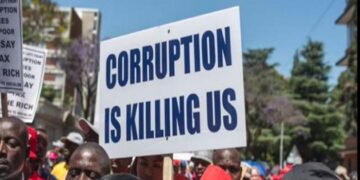
When citizens lose confidence in institutions entirely, governance becomes difficult. Public cooperation declines, civic responsibility weakens, and conspiracy thinking increases. In many developing societies, institutions are already vulnerable due to corruption, political instability, and limited resources (Chamma, 2025). The growing influence of radical skepticism may therefore intensify existing governance challenges.
In Ghana, public distrust toward political institutions, the judiciary, media organisations, and law enforcement agencies has become increasingly visible in public discourse. Citizens often perceive institutions as politically biased, corrupt, or ineffective. Social media further amplifies these perceptions by creating environments where institutional failures receive widespread visibility. The danger emerges when distrust becomes absolute. Societies require some level of institutional legitimacy to maintain order, enforce laws, coordinate development, and sustain democratic governance. Without trust, collective action becomes difficult.
Postmodernism and African Development
Development requires collective vision, long-term planning, institutional coordination, and shared national goals. However, postmodernism’s rejection of universal narratives may complicate development efforts in African societies. Many postmodern thinkers criticise concepts such as “progress,” “modernization,” and “development” as Western-centered narratives imposed on non-Western societies. While this critique exposes important colonial assumptions embedded within development discourse, it may also weaken confidence in collective developmental projects altogether.
African societies face significant developmental challenges including poverty, unemployment, infrastructural deficits, inequality, and governance instability. Addressing these issues requires coordinated national planning and shared social commitment. Excessive relativism may weaken the ability of societies to unitearound common developmental objectives. Furthermore, postmodernism’s emphasis on fragmentation and localised truths may undermine the collective discipline necessary for national transformation. Development often requires sacrifice, social responsibility, and institutional coordination, values that may conflict with highly individualistic and anti-foundational worldviews. This does not mean African societies should reject critical thought or pluralism. Rather, it suggests the need for balance between critical intellectual engagement and the preservation of shared social foundations necessary for national cohesion and development.
Postmodernism has played a significant role in shaping contemporary intellectual and cultural discourse. Its critique of domination, colonialism, exclusion, and authoritarianism has contributed positively to academic scholarship and social awareness. By challenging rigid structures and dominant narratives, postmodernism created space for marginalised voices and alternative perspectives.
However, this study has argued that excessive relativism and radical skepticism toward truth, morality, and institutions may produce serious social consequences. The rejection of objective truth can weaken public discourse, encourage misinformation, and undermine shared moral standards. The fragmentation of identity may weaken national cohesion, while distrust in institutions can destabilise governance systems and reduce public confidence in democratic structures. Within the Ghanaian and broader African context, these concerns are particularly important because social cohesion, communal identity, and institutional legitimacy remain central to national development and stability.
While African societies must continue to question oppressive structures and colonial legacies, they must also preserve the collective values and institutional trust necessary for social order and development. Ultimately, the challenge is not whether societies should embrace or reject postmodernism entirely. Rather, the challenge is how to maintain critical intellectual freedom while preserving shared truths, moral responsibility, institutional legitimacy, and collective social purpose in an increasingly fragmented world.
Reference
Adeate, T. (2023). Mbiti on Community in African Political Thought: Reconciling the “I” and the “We”. Phronimon. https://doi.org/10.25159/2413-3086/12205
Adjei-Cudjoe & Insusah (forthcoming). Circular Futures: Remembering African Socialism as Identity and Political Resource in the 21st Century. African Identities.
Allmendinger, P. (2009). Planning Theory. Palgrave.
Barthes, R. (1977). The Death of the Author. In Image-Music-Text (Translated by Stephen Heath, pp. 142-148). Fontana.
Butzlaff, F., & Messinger-Zimmer, S. (2020). Undermining or defending democracy? The consequences of distrust for democratic attitudes and participation. Critical Policy Studies, 14(3), 249–266. https://doi.org/10.1080/19460171.2019.1584120
Chamma, D. D. (2025). Corruption, political instability, climate change and economic growth in Sub-Saharan African countries. Cogent Economics & Finance, 13(1). https://doi.org/10.1080/23322039.2025.2570791
Chen, S., Xiao, L., & Kumar, A. (2023). Spread of misinformation on social media: What contributes to it and how to combat it. Computers in Human Behavior, 141, 107643. https://doi.org/10.1016/j.chb.2022.107643
Denniss, E., & Lindberg, R. (2025). Social media and the spread of misinformation: Infectious and a threat to public health. Health Promotion International, 40(2). https://doi.org/10.1093/heapro/daaf023
Derrida, J. (1997). Deconstruction in a Nutshell. New York: Fordham University Press.
Foucault, M. (1980). Power/Knowledge: Selected Interviews and Other Writings, 1972-79, (Ed. Colin Gordon). New York: Pantheon.
Kurzwelly, J., Pérez, M., & Spiegel, A. D. (2023). Identity politics and social justice. Dialectical Anthropology, 47(1), 5-18. https://doi.org/10.1007/s10624-023-09686-9
Lyotard, J.-F. (1979) Introduction: The Postmodern Condition: A Report on Knowledge. Manchester University Press, Manchester.
Rodney, W. (1972). How Europe Underdeveloped Africa. Verso Books.
Van der Meer, T. G., & Hameleers, M. (2026). Science and the crisis of trust. Current Opinion in Psychology, 67, 102202. https://doi.org/10.1016/j.copsyc.2025.102202