








Introduction
Every day, Ghanaians share videos, photographs, voice notes and eyewitness accounts of suspicious activities on social media. Within minutes, these observations spread across WhatsApp groups, Facebook pages, X timelines and radio discussions. Citizens are clearly paying attention. They are seeing things and saying things. These observations quickly circulate in community discussions, indicating heightened vigilance among citizens and begging the question, “Are these concerns being reported to the authorities, or are they merely debated online?”. This online dialogue often lacks inquiry into whether or not reports have been made to law enforcement.
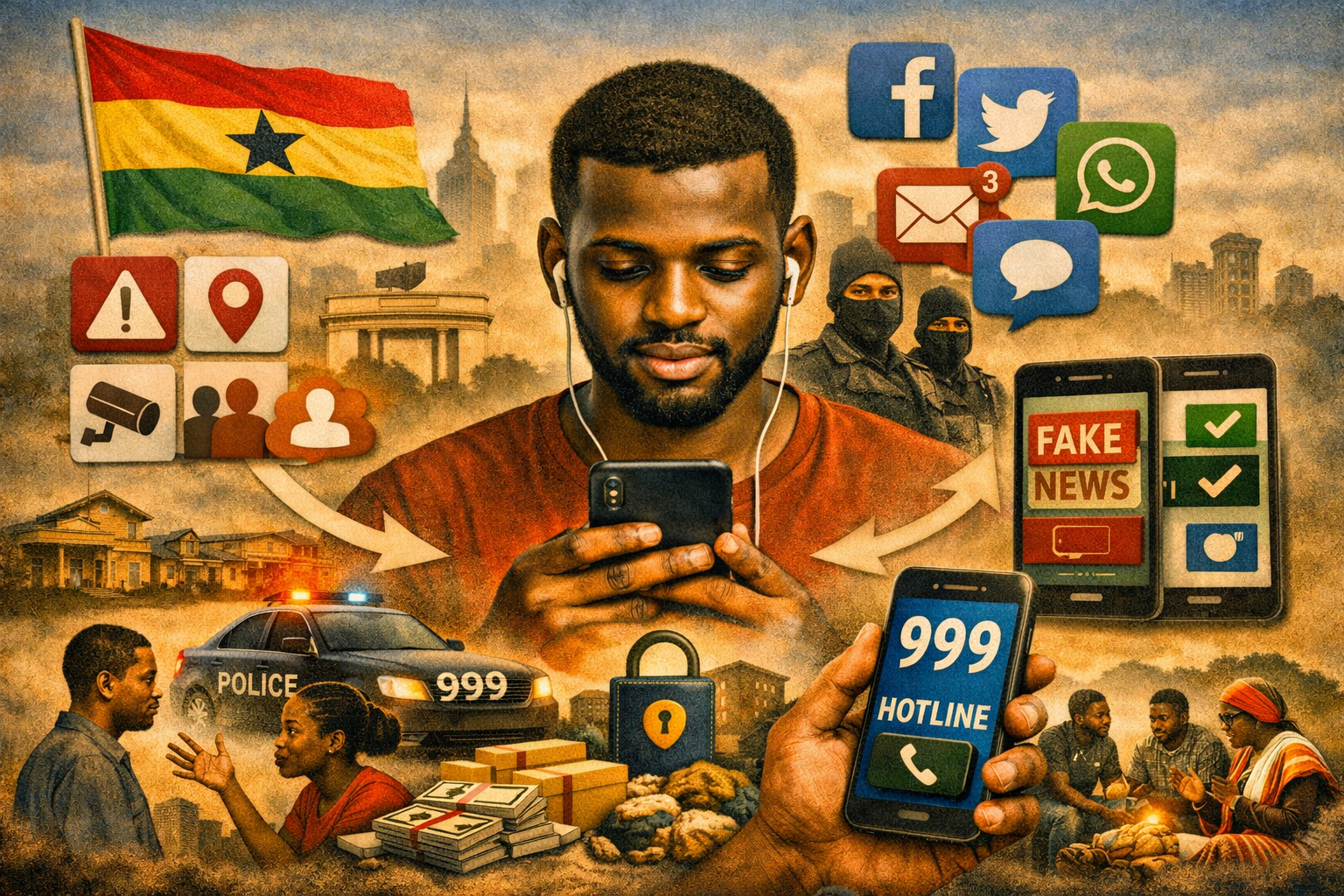
“See Something, Say Something” has become a very recognisable public awareness slogan in recent Ghanaian history. Since its launch by the then Ministry of National Security in May 2022, the campaign has been repeated on radio, television, social media platforms, billboards, and community outreach programs across the country. The objective of the campaign was simple; to encourage citizens to remain vigilant and report suspicious persons, activities, or behaviours to security agencies. Additionally, citizens were provided with the toll-free emergency number 999 to facilitate prompt reporting of security concerns.
The campaign emerged at a time when security analysts and government officials were expressing concerns about the growing threats of terrorism in the West African region. There was news of many violent extremist attacks in neighboring countries heightening fears that instability could spill across borders, thus, it was part of Ghana’s broader efforts to prevent terrorism and violent extremism with an ‘all hands-on deck’ approach.
After four years of its inception, “See Something, Say Something” has shifted from its original purpose, the slogan now appears in political discussions, social media, and almost any issue of public concern. In urban areas like Accra, residents actively discuss crime and suspicious activities, showing a heightened awareness of safety issues. With the widespread use of smart devices and social media, have Ghanaians become conversationalists spreading information or better reporters of security concerns? To secure national security, actionable information must reach authorities for effective response and risk assessment.
When A Security Campaign Became a Catchphrase
The then Ministry of National Security launched the campaign with a clear message; encouraging Ghanaians to report suspicious activities that could pose threats to national security. The initiative recruited well-known public figures, entertainers, and media celebrities to serve as ambassadors in order to increase public awareness. Unquestionably, the campaign successfully became recognised publicly in a short period of time. The slogan itself was simple, memorable, and easy to adapt to different contexts. Now, the slogan is frequently employed in conversations unrelated to national security. Politicians invoke the phrase when encouraging citizens to expose corruption, civil society groups employ it to promote accountability, social media users use it to encourage whistleblowing on public misconduct, radio hosts reference it when discussing governance, sanitation, road safety, environmental issues, and public service delivery rather than a call for security reporting.
This evolution is not necessarily negative. In many respects, it reflects growing public acceptance of the broader principle that citizens have a responsibility to speak up when they observe wrongdoing or matters of public concern. There is however, a distinction between adopting a slogan and fulfilling its original purpose. It needs to be looked at, where citizens go first when they come across actions they truly believe to be suspicious and if they are assisting security authorities in creating actionable intelligence or simply contributing to the growing cycle of public opinion.
Growing Security Conversations
Accra and many other cities in the country is in transition. As Ghana’s political, commercial, and administrative capital, it continues to attract people from every region of the country. Accra also attract citizens of neighboring states seeking economic opportunities, education, and improved living conditions. This rapid urban growth has transformed the city into one of West Africa’s most dynamic urban centers. However, it has also introduced new governance and security challenges that increasingly occupy public discussion (Gaisie etal., 2019).
Across neighborhoods, market centers, transport terminals, residential areas, and online forums, conversations about security have become more frequent. People regularly express concerns about crime, public disorder, abandoned structures, suspicious activities, unregulated commercial operations, and the movement of unfamiliar and transient individuals within their communities.
These dynamics are prevalent in many cities especially Accra. As a result, citizens encounter environments where they perceive security risks and feel compelled to develop their own methods of monitoring and assessing threats (UN-Habitat, 2022). Citizens are paying attention to their surroundings. They notice changes in neighborhood demographics. They observe activities that appear unusual. They share information with friends, family members, and online networks. In many respects, this heightened awareness aligns with the spirit of the See Something, Say Something campaign. Being aware alone does not necessarily contribute to effective security management.
This distinction is important because perceptions of insecurity differ from actual security threats. Studies show that, community members often possess valuable local knowledge that security agencies may not have. On the other hand, security agencies possess the authority and resources required to investigate concerns and determine whether they constitute genuine threats. Residents’ feelings of safety are influenced by crime rates, trust in institutions, social cohesion, neighborhood conditions, and law enforcement visibility. Low confidence in formal reporting leads citizens to seek information informally. Thus, security issues encompass how societies interpret risks, relying on the flow of credible information between citizens and security agencies (Sowatey & Atuguba, 2014; Marfo et al., 2021; Nweke & Francis, 2024 ; Okoro et al., 2024). This is where the conversation surrounding security challenges intersects directly with the objectives of the See Something, Say Something campaign.
Why People Don’t Report
There is widespread awareness among citizens concerning security issues but they do not report what they see to the appropriate authority and a primary reason is the lack of trust and confidence in law enforcement institutions. When individuals believe their reports will not be addressed effectively, they are less inclined to use formal reporting systems. Citizens are more willing to cooperate with security agencies perceived as fair and effective, showing the link between public trust and engagement with law enforcement efforts (Boateng, 2018).
Another aspect is the fear of reprisal. Studies on community policing in Ghana found that, many residents worry their identities may be exposed after reporting criminal or suspicious activities, potentially putting them at risk of reprisals from those being reported (Gyamfi, 2022). Similar findings indicate that concerns about whistleblower protection can discourage citizens from sharing information with the police, even when they believe it could improve community safety (Hevi et al., 2022).
The surge of smartphones and social media has transformed information sharing. Concerning security issues, sometimes information surface on social media platforms before reaching law enforcement agencies. Other times, users prefer visibility on socials rather than informing the authorities. While these channels enhance public awareness and involvement, they cannot replace formal reporting systems. These media can effectively disseminate information, but it also facilitates the spread of misinformation and unverified claims. Consequently, viral content may not accurately constitute security threats.
Intelligence is most effective when information is collected, verified, analyzed, and acted upon by the appropriate authorities, security outcomes improve when citizens report concerns directly to law enforcement instead of relying on informal networks (Hevi et al., 2022; Sowatey & Atuguba, 2014). While informal communication such as WhatsApp discussions may spark conversation, official reports enable investigations and interventions.
The Risk Of Not Reporting And What Can Be Done
One of the unintended consequences of the digital age is that, information now travels faster than verification, leading to the proliferation of rumors and misinformation about security issues. This is concerning given the rising threat of violent extremism from the Sahel region, where terrorist activities are ongoing. False information can incite panic, erode public trust, and distract attention from real security threats.
Research indicates that misinformation proliferates during uncertain times, impacting community perceptions of risk and security responses (Vosoughi, Roy & Aral, 2018). When citizens rely on rumors over verified sources, it hampers the quality of intelligence for security agencies. This leads to delayed and distorted information which in turn undermines effective problem-solving.
For the See Something, Say Something campaign to achieve its original purpose, awareness must be accompanied by action. Citizens have a responsibility to report suspicious activities through official channels rather than relying exclusively on social media or informal networks. To add, there is the need to avoid spreading unverified claims that may create unnecessary fear or stigmatise innocent individuals (Nweke & Francis, 2024). Timely reporting allows security agencies to verify information, assess risks, and respond appropriately.
Communities play a vital role as local participation improves information sharing and strengthens collective resilience against crime and other security threats (Marfo et al., 2021). Community leaders, resident associations, religious institutions, and local organizations can help promote responsible reporting and discourage misinformation.
Security agencies must continue building public trust by engaging local participation. When people believe that law enforcement agencies are reputable, fair, and responsive, they are more inclined to collaborate with them (Hevi et al., 2022). Public confidence increases when reports receive timely attention and when citizens believe their concerns are taken seriously.
Conclusion
Ultimately, reclaiming the significance of See Something, Say Something requires moving beyond awareness to participation. The campaign’s success will not be measured by how often the slogan is used, but by how effectively citizens, communities, and authorities work together to transform observations into actionable intelligence.
References
Boateng, F. D. (2018). Institutional trust and performance: A study of the police in Ghana. Australian & New Zealand journal of criminology, 51(2), 164-182.
Gaisie, E., Kim, H. M., & Han, S. S. (2019). Accra towards a city-region: Devolution, spatial development and urban challenges. Cities, 95, 102398.
Ghana Broadcasting Corporation, “Ghana Launches Anti-Terrorism Campaign as National Security Minister Dispels Fear and Panic,” May 2022. (https://www.graphic.com.gh/news/general-news/see-something-say-something-campaign-launched.html)
Graphic Online. “Sefa Kayi, Nana Aba, Others Are ‘See Something, Say Something’ Ambassadors,” May 2022. (https://www.graphic.com.gh/entertainment/music/sefa-kayi-dzifa-bampoe-nana-aba-and-other-appointed-ambassadors-of-see-something-say-something-campaign.html)
Gyamfi, G. D. (2022). Exploring public trust in policing at a community in Ghana. Security Journal, 35(4), 1249.
Hevi, S. S., Ketemepi, G. E., Dorkoo, C., & Wuttor, A. (2022). Community policing experience, public trust in the police, citizens’ psychological safety and community well-being in Ghana. Safer communities, 21(2), 123-136.
Marfo, S., Gyader, G., & Opoku, S. K. (2021). Promoting urban security through community participation: evidence from Wa, Ghana. Journal of Planning and Land Management, 2(1), 13-21.
Nweke, O. C., & Francis, S. (2024). The use of technology in community policing in Ghana: Tools, applications, challenges and recommendations. International Journal of Research in Business and Social Science, 13(8), 139-150.
Oborn, P. Urbanisation: the coming decade will be make or break for cities and the planet. Executive Report, 32.
Okoro, J. P., Bagson, E., & Derbile, E. K. (2024). Exploring the scale and scope of community policing in North-Western Ghana. Journal of Planning and Land Management, 3(2), 27-36.
Sowatey, E. A., & Atuguba, R. A. (2014). Community policing in Accra: The complexities of local notions of (in) security and (in) justice. In Policing and the politics of order-making (pp. 74-90). Routledge.
Vosoughi, S., Roy, D., & Aral, S. (2018). The spread of true and false news online. science, 359(6380), 1146-1151.