








Introduction
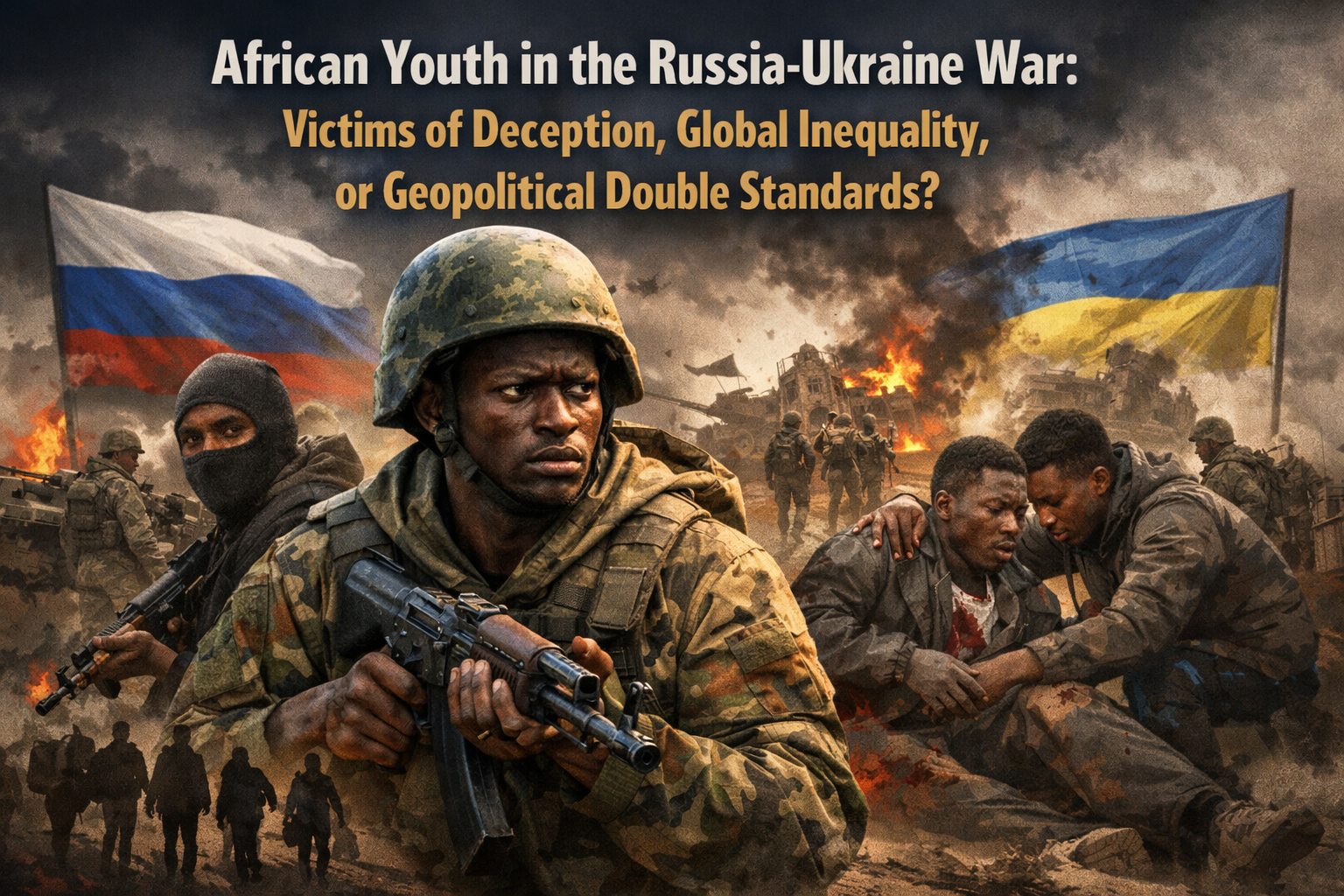
The growing reports of African youth being recruited into Russia’s war effort in Ukraine have generated outrage across the continent. Investigative reports, parliamentary testimonies, and leaked recruitment databases suggest that thousands of young Africans have been lured to Russia through promises of employment, education, sports opportunities as well as high-paying jobs, only to allegedly find themselves trapped in military service, hazardous drone factories, or frontline combat zones (see Africa Centre for Strategic Studies, 2026; Lewis & Cock, 2026). The human cost has been devastating as families across Ghana, Kenya, South Africa, Egypt and other African countries have reported cases of death, disappearance, trauma, exploitation, and abandonment. While these revelations deserve serious attention and condemnation, a deeper and more uncomfortable question must also be asked: why is the global conversation framed almost exclusively around Africans fighting for Russia? Are Africans not also fighting for Ukraine? And why does international outrage appear selective depending on which side recruits foreign fighters? The Russia-Ukraine war has increasingly become a global conflict drawing in actors from multiple regions. Reports indicate that foreign nationals from Europe, Latin America, Asia, North America, and Africa have joined both the Russian and Ukrainian sides for ideological, economic, political, or survival reasons. Ukraine itself openly created the International Legion for Territorial Defense on 27th February 2022, inviting foreigners worldwide to join its military struggle against Russia (Petkova, 2022).Western governments and media outlets often celebrated foreign volunteers fighting for Ukraine as defenders of democracy and freedom (see (Wordsworth, 2025). In contrast, Africans recruited into Russian forces are largely portrayed only as victims, mercenaries, or disposable bodies (see Africa Centre for Strategic Studies, 2026). This contradiction again raises important ethical and geopolitical questions: Is the issue truly about foreign recruitment, or is it about who is recruiting? If poor Africans fighting for Russia are described as evidence of manipulation and trafficking, how are Africans or other foreign nationals fighting for Ukraine framed? Are they volunteers, freedom fighters, or victims of global inequality as well? These questions do not excuse Russia’s actions. Rather, they challenge the selective morality and uneven media framing surrounding the war. This article therefore seeks to critically examine the recruitment of African youth into the Russia-Ukraine war beyond simplistic geopolitical narratives. It argues that while allegations of deception, coercion, and exploitation linked to Russian recruitment deserve serious scrutiny, a balanced analysis must also interrogate the structural inequalities, unemployment crises, migration pressures, and global power politics that make African youth vulnerable to foreign military recruitment in the first place. The article further questions the selective international framing of foreign fighters in the conflict and calls for a more nuanced understanding of African agency, geopolitical competition, and the socio-economic conditions shaping participation in external wars.
African Agency, Global Inequality, and the Politics of Recruitment
Many African recruits reportedly travelled to Russia expecting civilian jobs, educational opportunities, or professional training, only to later find themselves pressured into signing military contracts written in Russian. Others allegedly had their passports confiscated, salaries withheld, or were threatened with violence if they refused deployment. Survivors have also described experiences of racial abuse, inadequate training, dangerous frontline assignments, and severe casualties (see Africa Centre for Strategic Studies, 2026). These allegations point to broader concerns regarding exploitation, coercion, labor abuse, and possible violations of international law and anti-trafficking conventions. However, framing the issue solely as a story of “Russian manipulation” risks obscuring the deeper structural conditions within Africa that make such recruitment networks possible in the first place. Why are so many African youth willing to leave their countries for uncertain opportunities abroad? Why do promises of military salaries, foreign citizenship, or factory jobs become attractive enough to risk death in a distant war? These questions point toward broader crises of unemployment, inequality, corruption, weak institutions as well as economic insecurity affecting many African societies. In this sense, the vulnerability being exploited is not created by external actors alone but is also connected to longstanding domestic governance failures and global economic inequalities that continue to shape the lives and aspirations of African youth. According to Boampong & Mouthaan (2025), for many young Africans, migration itself has become a survival strategy. Across the continent, graduates struggle to find jobs, public institutions are weakened by corruption and patronage, and economic mobility remains inaccessible to millions (see Sumberg, 2021). Under such conditions, foreign recruitment networks flourish because they prey on desperation, blocked aspirations as well as the global inequalities that structure African economies. Russia may be exploiting this vulnerability, but it did not create it alone.
Moreover, the geopolitical context cannot be ignored. African states have long served as arenas for competition among external powers including Russia, the United States, China, France, Turkey, and European Union states. Foreign military presence, security partnerships, resource extraction, and political influence campaigns are not unique to Russia. Western powers themselves have historically recruited foreign fighters, intervened militarily, and shaped conflicts across Africa and the Middle East in ways that have also produced displacement, instability, and exploitation. The current outrage over Russian recruitment therefore risks appearing hypocritical if broader patterns of global power politics are ignored. Another important issue concerns African agencies. Much of the discourse portrays Africans merely as passive victims manipulated by global powers. While deception clearly exists in many cases, not all recruits may fit this narrative. Some may knowingly join foreign militaries for financial reasons, ideological beliefs, adventure, or hopes of citizenship and mobility. Others may see participation as no different from joining private military companies, security industries, or foreign armies that have historically recruited globally. A balanced analysis must therefore avoid both romanticising and infantilising African actors.
At the same time, the evidence of coercion, trafficking, and abuse remains deeply troubling and demands urgent policy responses. African governments must strengthen labor migration oversight, monitor suspicious recruitment networks, regulate foreign employment agencies, and expand economic opportunities for young people. Regional institutions such as ECOWAS must also coordinate investigations into transnational trafficking syndicates operating across borders. The larger danger is that African youth are becoming expendable bodies within global geopolitical struggles that do not fundamentally serve African interests. Whether recruited by Russia, Ukraine, or any other foreign actor, the underlying tragedy remains the same: economic vulnerability is transforming young Africans into instruments of wars they did not create. A balanced analysis requires rejecting simplistic binaries. Condemning deceptive recruitment practices linked to Russia should not require silence about foreign recruitment on the Ukrainian side or broader Western geopolitical interests. Likewise, criticising Western double standards should not excuse possible human rights abuses committed by Russian actors. A truly critical African perspective must interrogate all forms of external exploitation while also confronting the domestic governance failures that leave African youth vulnerable in the first place. The central question therefore is not only why Russia is recruiting Africans. The deeper question is why so many African youth feel compelled to gamble their lives in foreign wars at all.
Conclusion and Way Forward
The recruitment of African youth into the Russia-Ukraine war reflects more than external manipulation alone. It exposes deeper structural crises across many African societies, including unemployment, inequality, corruption, weak institutions, and limited economic opportunities that push many young people toward risky migration and foreign recruitment networks. While allegations of deception, coercion, and exploitation linked to Russia deserve serious attention, balanced analysis also requires critical examination of broader geopolitical interests, selective international narratives, and the global inequalities that make African youth vulnerable in the first place. Ultimately, the growing involvement of Africans in foreign conflicts highlights the urgent need for stronger governance, economic opportunities, and regional protection mechanisms to prevent young people from becoming expendable actors in geopolitical struggles that do not fundamentally serve African interests.
Moving forward, African governments must strengthen labor migration regulations, improve oversight of recruitment agencies, and intensify investigations into trafficking syndicates operating across borders. Regional institutions such as the African Union and Economic Community of West African States should coordinate intelligence sharing, monitoring, and legal frameworks aimed at protecting African citizens from deceptive foreign recruitment networks. Greater diplomatic engagement is also necessary to ensure accountability for abuses committed against African nationals abroad. However, long-term solutions ultimately depend on addressing the structural conditions that make African youth vulnerable in the first place. Expanding employment opportunities, strengthening educational systems, promoting transparent governance, and investing in inclusive economic development are essential to reducing the desperation that drives risky migration and participation in foreign conflicts. Unless these deeper socio-economic challenges are confronted, African youth will remain vulnerable to exploitation within geopolitical struggles that do not fundamentally serve African interests. The central issue is not only why external powers are recruiting Africans into foreign wars. The deeper and more urgent question is why so many African youth feel compelled to risk their lives in conflicts far removed from their own societies in search of dignity, opportunity, and survival.
Reference
Africa Centre for Strategic Studies (2026). Russia’s Deceptive War Recruitment Scheme Ensnares Thousands of Young Africans. africacenter.org. May 21, 2026. https://africacenter.org/spotlight/russia-deceptive-war-recruitment-ensnares-africans/
Boampong, M., & Mouthaan, M. (2025). Confronting mainstream migration narratives in Ghana: everyday youth aspirations as part of a decentring agenda. Journal of Ethnic and Migration Studies, 51(18), 4760–4779. https://doi.org/10.1080/1369183X.2025.2544090
Lewis, D., & Cocks, T. (2026).African nations tiptoe around recruitment of citizens by Russian networks. www.reuters.com. May 21, 2026.
Petkova, M. (2022). Ukraine’s foreign legion joins the battle against Russia. www.aljazeera.com. May 21, 2026. https://www.aljazeera.com/news/2022/3/14/russia-ukraine-war-international-legion-foreign-fighters
Sumberg, J., Fox, L., Flynn, J., Mader, P., & Oosterom, M. (2021). Africa’s “youth employment” crisis is actually a “missing jobs” crisis. Development Policy Review, 39(4), 621-643. https://doi.org/10.1111/dpr.12528
Wordsworth, A. (2025). The extraordinary story of the foreign volunteers fighting for Ukraine. uk.news.yahoo.com. https://uk.news.yahoo.com/extraordinary-story-foreign-volunteers-fighting-061500336.html