






The Ideological Shield: State Control of Religion and the “Vacuum” Theory
Series: Lessons from the Black Decade (Part 4 of 5)
Introduction
Military force can eliminate a terrorist, and intelligence infiltration can dismantle a physical network, but neither kinetic action nor espionage can kill an idea. If the socioeconomic disparities and ideological conditions that produce insurgents remain intact, the state is simply mowing the grass. The roots remain untouched, and the threat will inevitably regrow with the next generation.
In the previous instalments of this series, we analysed how the Algerian state utilised strategic political amnesty (Part 2) and aggressive intelligence infiltration (Part 3) to physically break the Armed Islamic Group (GIA). However, the ultimate guarantor of Algeria’s long-term resilience—the reason the country did not collapse back into civil war during the turbulence of the 2011 Arab Spring—was its sweeping post-war campaign to reclaim the national ideological narrative. The Algerian state came to a stark realisation: the civil war was not ignited simply by a stolen election in 1991. The fire was lit because, throughout the 1980s, the government had allowed a dangerous, dual “vacuum” to develop across the country—a vacuum in both state service delivery and religious authority.
As the jihadist threat currently spread, executing a slow, methodical creep southward from the central Sahel (Mali, Burkina Faso, and Niger) toward the Gulf of Guinea, Coastal West African states are standing at the edge of a cliff. Nations such as Ghana, Côte d’Ivoire, Benin, and Togo must urgently look to Algeria’s historic strategy of building an “Ideological Shield.” This fourth instalment delves deeply into the mechanics of the “vacuum theory,” exploring how terrorists exploit the absence of the state, and details the comprehensive, sometimes controversial, methods Algeria utilised to nationalise its religious marketplace and inoculate its population against violent extremism.
The Genesis of the Vacuum: The Retreat of the State
To understand how a secular, socialist-leaning republic like Algeria produced one of the most violent Islamist insurgencies of the 20th century, one must examine the socio-economic collapse of the 1980s. Following its independence from France in 1962, the ruling National Liberation Front (FLN) derived its legitimacy from two pillars: its revolutionary credentials as the liberator of the nation, and its ability to provide a robust social welfare state funded by hydrocarbon revenues.
By the mid-1980s, both pillars crumbled. The generation coming of age had no memory of the liberation war; the FLN’s revolutionary rhetoric rang hollow to the youthful population facing massive unemployment. In 1986, the global price of oil collapsed, all of a sudden, the Algerian state lost the revenue required to maintain its sprawling subsidies for food, housing, and healthcare.
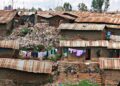
The state was forced to retreat, reducing its presence from the rapidly expanding, impoverished urban peripheries—the banlieues—surrounding Algiers, Oran, and Constantine. These sprawling concrete slums became populated by the Hittistes (derived from the Arabic word for “wall”)—a lost generation of unemployed young men who spent their days leaning against walls with no economic prospects, no social mobility, and deep resentment toward the corrupt elites in the capital. The state had abandoned them, creating a massive vacuum of governance, opportunity, and hope.
The Insurgent as a Service Provider: Rebel Governance
Jihadist insurgencies rarely begin with a sudden influx of heavily armed fighters demanding immediate regime change. They begin quietly, methodically, by exploiting the very vacuums the state leaves behind.
In Algeria, the Islamic Salvation Front (FIS), before it was banned and its remnants formed armed groups, thrived in these neglected areas not simply by preaching religious fundamentalism, but by providing tangible civic order. Where the municipal government failed to provide basic sanitation, FIS activists organised neighbourhood garbage collection. Where state health clinics lacked medicine or doctors, Islamist charities set up free dispensaries. When a devastating earthquake struck the Tipaza region in 1989, FIS relief trucks and volunteers arrived on the scene before the slow, bureaucratic state emergency services could mobilise.
This phenomenon is known as rebel governance. By stepping into the void, the Islamists purchased immense local loyalty. They were not viewed primarily as religious radicals, but as the only effective, uncorrupted administrators in the country.
We are witnessing this exact phenomenon replicated with chilling precision in the Sahel today. Groups like Jama’at Nusrat al-Islam wal-Muslimin (JNIM) embed themselves in rural Mali and Burkina Faso not just through violence, but by establishing themselves in some cases as service providers through the regulation of residents’ behaviour, service provision, and the control of local finances and economies. In regions where state courts are agonizingly slow, hopelessly corrupt, or entirely absent, JNIM provides swift, decisive arbitration for land and grazing disputes. They regulate the cutting of trees, police banditry, and provide a brutal but predictable form of order. Terrorists do not just bring guns; they bring governance. When the state is absent, the population will accept governance from anyone—even from extremists.
The Ideological Vacuum and the Rise of the “Volunteer Imams”
Simultaneous to the socio-economic withdrawal, the Algerian state committed a fatal strategic error in the cultural domain: it abandoned the regulation of religious space.
Throughout the 1970s and 80s, as the FLN focused on socialist industrialisation, it viewed religion as a secondary, private matter. Consequently, the state failed to train enough official imams or build enough state-sanctioned mosques to accommodate the booming population.
This created an ideological vacuum that external actors were eager to fill. The 1980s saw a massive influx of foreign funding, primarily from the Gulf states, aimed at building unofficial, makeshift mosques in the garages and basements of the Algerian banlieues. Concurrently, hundreds of young Algerians travelled to Afghanistan to fight the Soviets. When these “Afghan-Arab” veterans returned, they brought with them not just combat experience, but a hardened, militant interpretation of Salafi-Jihadism that was entirely alien to North Africa’s traditional religious fabric.
These returning fighters and radicalised youth became “volunteer Imams.” Because the state had no regulatory framework to stop them, they simply took over the pulpits of the unregulated neighbourhood mosques. The mosque was transformed from a place of spiritual reflection into a highly politicised recruitment centre. The sermon (khutbah) shifted from matters of personal piety to blistering critiques of the state’s corruption, demands for the implementation of strict Sharia, and eventually, calls for armed jihad against the “apostate” government. The state had lost control of the national narrative.
The Algerian Counter-Offensive: Nationalising the Sacred
Following the darkest years of the civil war, the Algerian state realised that military victory over the GIA would be fleeting if the ideological infrastructure that produced them remained intact. The government initiated a massive, top-down, and unapologetically authoritarian project to “nationalise the sacred” and build an impenetrable ideological shield.
This strategy rested on two primary pillars: strict institutional control and the aggressive promotion of a state-sanctioned religious identity.
1. Institutional Control and the Ministry of Religious Affairs:
The state essentially placed the entire religious sector under national security protocols. The Ministry of Religious Affairs and Endowments was vastly expanded and empowered. Its mandate was clear: eliminate the “volunteer imam” phenomenon entirely.
Today, every mosque in Algeria must be registered with the state. Imams are no longer independent actors; they are salaried civil servants trained in state-run theological institutes. The Ministry dictates the broad themes of the Friday sermons to ensure they conform to state guidelines, focusing heavily on social cohesion, national unity, and the rejection of extremism. Officials quietly monitor mosques to ensure compliance. If an imam deviates into political agitation or extremist rhetoric, he is swiftly removed from his post, and often arrested. The physical space of the mosque was successfully reclaimed by the state.
2. The Promotion of “Algerian Islam”:
Institutional control was the defensive measure; the offensive measure was ideological. The state needed an authentic counter-narrative to the “imported” Salafist-Jihadism that had fuelled the war. The government deliberately resurrected and heavily sponsored what it termed “Algerian Islam”—a religious identity rooted in the Maliki school of jurisprudence and the deep-seated traditions of North African Sufism.
- The Maliki School: Historically dominant in North and West Africa, the Maliki madhhab is characterised by its pragmatism, its incorporation of local customs (‘urf), and its traditional deference to state authority. The Algerian government heavily subsidised Maliki scholarship to present it as the only authentic, indigenous form of Islam, framing the Salafism of the GIA as a foreign, corrupting import from the Middle East.
- The Revival of Sufism: Sufism, with its mystical practices, veneration of saints, and hierarchical lodge (zawiya) structures, is inherently anathema to Salafi-Jihadists, who view it as heretical as GIA frequently assassinated Sufi leaders during the war. Post-war, the Algerian state poured huge sums into rebuilding Sufi zawiyas. The state co-opted the influential Sufi brotherhoods (Tariqas), turning them into powerful allies who preached ascetism, spiritual introspection, and loyalty to the state, providing a culturally resonant bulwark against radicalisation.
Nowhere is this strategy more physically manifest than in the construction of the Djamaa el Djazaïr (The Great Mosque of Algiers). Completed recently, it is the third-largest mosque in the world, boasting the tallest minaret on the globe. This megaproject was not built merely for prayer; it is a monumental, multi-billion-dollar architectural statement of geopolitical intent. It houses a massive state-run theological library and research institute. It stands as a physical declaration of the Algerian state’s absolute, uncontested sovereignty over the country’s religious identity, dwarfing any underground movement that might seek to challenge it.
The Mirror Effect: Vulnerabilities in Coastal West Africa
Monitoring the security indicators across the Gulf of Guinea, the historical parallels to 1980s Algeria are flashing red. Coastal West African states—specifically Ghana, Togo, Benin, and Côte d’Ivoire—are highly vulnerable to the exact vacuums that created the Algerian catastrophe.
The Socio-Economic Vacuum (The North-South Divide):
There is a stark, historic developmental disparity between the wealthy, politically dominant coastal capitals (Accra, Lomé, Cotonou, Abidjan) and the arid, impoverished northern savannas that border the Sahel. These northern borderlands suffer from higher rates of poverty, lower educational attainment, and a severe lack of state infrastructure.
This economic marginalisation creates a highly receptive audience for jihadist recruiters crossing over from central Sahel. If JNIM can offer a disenfranchised northern youth a steady salary, a sense of belonging, and a motorcycle, the abstract concept of national loyalty to a distant coastal capital will easily shatter.
Recommendations
The window for preventative action in the Gulf of Guinea is closing rapidly. To prevent the Sahelian insurgency from finding fertile ground in coastal states, governments must urgently implement a modern adaptation of the Algerian ideological shield, tailored to democratic norms.
1. Accelerate “Civil-Military” Development and State Presence:
Security in the northern borders cannot be measured solely by the deployment of forward operating bases and special forces battalions. The state must “occupy” these vulnerable zones with aggressive, highly visible governance.
- Actionable Step: Initiatives like the Gulf of Guinea Northern Regions Social Cohesion (SOCO) project—a $450 million World Bank-funded program aimed at improving regional infrastructure and economic opportunities—must be seriously prioritised and shielded from bureaucratic corruption. The state must build the paved road, the functioning medical facilities, and the reliable water boreholes faster than the insurgents can exploit their absence. State presence must mean service, not just surveillance.
2. Implement Transparent Auditing of Religious Funding:
Coastal democracies cannot and should not adopt Algeria’s authoritarian control over all religious speech. However, freedom of religion does not equate to a free pass for foreign intelligence operations or extremist indoctrination.
- Actionable Step: States must establish robust, transparent financial intelligence mechanisms to audit foreign donations directed toward the construction of religious centres, NGOs, and schools. Governments must enforce strict curricula standards for all private religious schools to ensure they align with national educational goals and do not preach intolerance or sectarian hatred. If a foreign entity wishes to build a school, the state must control what is taught inside it.
3. Rapid Dispute Resolution Mechanisms:
Since insurgents exploit local grievances (particularly land and water disputes) to gain a foothold, the state must neutralise these friction points.
- Actionable Step: Establish mobile, highly responsive, and culturally sensitive state-backed mediation units in the northern territories. If the state can resolve a grazing dispute fairly and quickly, JNIM is robbed of its primary mechanism for infiltrating a community.
Conclusion
The Black Decade taught Algeria a brutal, indelible lesson: a state that surrenders its socio-economic responsibilities and its ideological narrative will inevitably have to fight for its physical survival. By aggressively filling the vacuums of governance and religious authority, Algeria built a firewall that, despite its authoritarian nature, has largely kept the terror of the Sahel from rebounding back across its borders.
Coastal West Africa still has time to build its own shield, but it must act with the urgency of a nation at war, even before the first shots are fired. The defence of Accra, Lomé, and Abidjan does not begin at the border outposts; it begins in the classrooms, the local clinics, and the neighbourhood places of worship.
In the fifth and final instalment of this series, Part 5: The Coastal Shield, we will synthesize these historical lessons into a comprehensive, actionable strategic framework for the Gulf of Guinea, focusing heavily on the critical importance of regional intelligence sharing, avoiding the “Sovereignty Trap” of relying on non-regional foreign partners, and the future of regional framework like the now dormant Accra Initiative.
References
- Action on Armed Violence. (2017). National C-IED Initiatives: North Africa – Algeria. AOAV.
- Ashour, O. (2009). The De-Radicalization of Jihadists: Transforming Armed Islamist Movements. Routledge.
- Boubekeur, A. (2008). Salafism and Radical Politics in Postconflict Algeria. Carnegie Endowment for International Peace.
- Davis, H. (1992). Taking Up Space in Tlemcen: The Islamist Occupation of Urban Algeria. Middle East Research and Information Project.
- International Crisis Group. (2000). The Algerian Crisis: Not Over Yet. ICG Africa Report No. 24.
- International Crisis Group. (2004). Islamism, Violence and Reform in Algeria: Turning the Page. Middle East Report N°29.
- Kapil, A. (1990). Algeria’s Elections Shows Islamist Strength. Middle East Research and Information Project.
- Kuyu, C., Klingelschmitt, N. & Batamack, M. E. (2018). Contribution du dialogue interreligieux à la pacification en Afrique de l’Ouest. Institut Afrique Monde.
- Mohammad, A. A., Binian, M. A.J (2025). The Civil War in Algeria (Black Spring) and the Libyan Position on It. Mustansiriyah Journal of Humanities
- Muedini, F. (2015). Sponsoring Sufism: How Governments Promote “Mystical Islam” in Their Domestic and Foreign Policies. Palgrave Macmillan.
- Nsaibia, H., Beevor, E. & Berger F. (2023). Non-State armed group and illicit economies in West Africa: Jama’at Nusrat al-Islam wal-Muslimin (JNIM), Global Initiative Against Transnational Organized Crime and ACLED, October 2023. WATHI
- Sakhviel, V. (2019). Moderate Islam in the Maghreb: How US foreign policy shapes Islamist contention. Brookings.
- Tao, J. M. (2022). Reflections on Failed Democratization and Civil War in Algeria. Oxford Political Review.
- Verges, M. (1995). “I Am Living in a Foreign Country Here”. Middle East Research and Information Project.
- Walther, O. J., & Miles, W. F. (2018). African Border Disorders: Addressing Transnational Extremist Organizations. Routledge.