







Since gaining independence in March 1957, Ghana has implemented numerous development policies aimed at promoting economic growth, reducing poverty, modernising infrastructure, and improving the living conditions of its citizens. Successive governments have introduced industrialisation programs, poverty reduction strategies, urban renewal initiatives, educational reforms, agricultural modernisation policies, and decentralisation frameworks intended to accelerate national development (see Bashiru, 2026; Biritwum, 2022). Despite these efforts, however, many Ghanaians continue to experience unemployment, poor infrastructure, housing deficits, inequality, inadequate healthcare as well as limited economic opportunities. The persistence of these developmental challenges raises important questions regarding the effectiveness of development policies in Ghana: Why have decades of planning and policy interventions failed to produce equitable and sustainable development outcomes for the majority of citizens? Why do the benefits of development often appear concentrated among political and economic elites while ordinary citizens continue to struggle with poverty and exclusion?
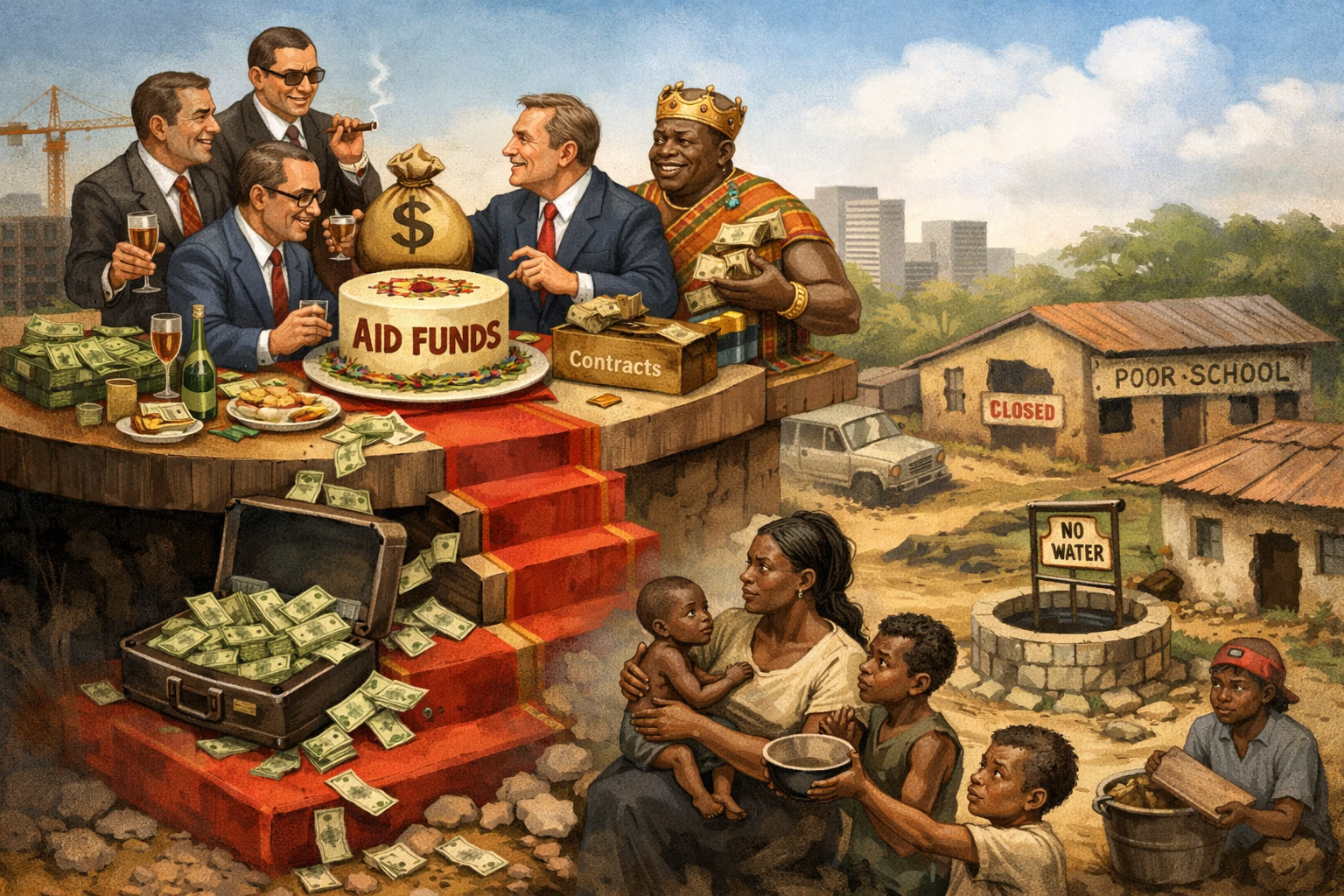
One important explanation lies in the concept of elite capture. In many developing societies, including Ghana, elite capture has become deeply embedded within governance structures and development processes. Political patronage, corruption, clientelism, and unequal access to state resources often shape how development projects are designed and implemented. Public resources intended for national development may therefore disproportionately benefit individuals with political connections and economic influence rather than marginalised communities. This issue is particularly visible in urban development, land administration, public procurement, infrastructure distribution, and access to economic opportunities. In many Ghanaian cities, luxury developments coexist alongside informal settlements lacking basic services such as sanitation, drainage, roads, and healthcare facilities. Large-scale development projects frequently benefit elite neighborhoods while low-income communities experience neglect, displacement, and exclusion.
This article critically examines how elite capture contributes to the failure of development policies in Ghana. It is explored how political and economic elites influence policy implementation, control access to resources and opportunities, and shape urban and national development trajectories in ways that reinforce inequality. It further investigate the implications of elite capture for governance, social justice, and sustainable national development.
Elite capture occurs when individuals or groups with political, economic, or social power dominate decision-making processes and redirect public resources toward their own interests (Lauermann & Mallak, 2023). These elites often include politicians, business leaders, senior bureaucrats, traditional authorities, and influential individuals connected to state institutions (Walsh-Führing, 2018). Development policies are usually presented as instruments for improving the welfare of citizens. However, in practice, the implementation of these policies may be manipulated by elites who possess greater access to information, political networks, and institutional power. As a result, resources intended for public development are often diverted toward private accumulation. Elite capture operates through multiple mechanisms. These include corruption, political patronage, nepotism, manipulation of public procurement systems, land grabbing, selective infrastructure distribution, and unequal access to state opportunities (Boateng et al., 2024; Fisayo et al., 2023; US Institute of Peace, 2023). In many cases, elites influence which regions receive development projects, who benefits from government contracts, and which communities are prioritised within urban planning processes. Within the Ghanaian context, elite capture is often linked to broader postcolonial governance structures inherited from colonial administration. Colonial systems concentrated political and economic power within small administrative and privileged groups (Grant & Yankson, 2003). Although Ghana achieved political independence, many structural inequalities remained embedded within governance institutions and development systems. As a result, postcolonial development often reproduced systems where state power became a tool for elite accumulation rather than broad-based transformation.
Elite Capture and Urban Development in Ghana
One of the clearest manifestations of elite capture in Ghana is visible within urban development. Cities such as Accra and Kumasi reveal significant spatial inequalities shaped by political and economic power. High-income areas often receive better roads, drainage systems, electricity, sanitation, and security infrastructure compared to low-income and informal settlements (Ablo, & Bertelsen, 2022). Wealthier neighborhoods continue to experience rapid infrastructural improvements while poorer communities struggle with flooding, overcrowding, poor sanitation, and environmental vulnerability due to the implementation of planned shrinkage (Adjei-cudjoe, 2025). Urban planning decisions are frequently influenced by elite interests. Valuable urban land is often acquired by politically connected individuals and private developers for commercial and luxury residential projects (Boateng et al., 2024). Meanwhile, low-income communities may face eviction or displacement in the name of urban modernisation (Gillespie, 2015). This pattern reflects what many urban critical scholars describe as unequal urban citizenship, where access to urban resources and services depends heavily on class position and political influence (see Harvey, 2008; Marcuse, 2009). Informal settlements are frequently criminalised or neglected despite housing large segments of the urban population (Adjei-cudjoe, 2025). The issue of land administration also demonstrates elite capture. In Ghana, access to land is shaped by complex relationships involving chiefs, politicians, private developers, and state institutions. Wealthy individuals often acquire land more easily due to financial power and political connections, while ordinary citizens face legal insecurity and exclusion. Urban development tends to reinforce existing social inequalities rather than reduce them.
Political Patronage and corruption
Political patronage represents another major mechanism through which elite capture undermines development in Ghana. In many cases, access to jobs, contracts, scholarships, and other development opportunities depends less on merit and more on political affiliation, personal networks, and social connections. During our field interviews, some participants alleged that individuals seeking recruitment into the security services or access to state scholarships were asked to pay huge sums of money before being considered, while political and social elites reportedly submitted preferred lists of candidates for such positions. These practices reinforce perceptions that access to state opportunities is shaped by influence and wealth rather than fairness and competence. Successive governments often distribute resources through partisan networks in order to maintain political loyalty and electoral support. Consequently, development projects may be allocated strategically to politically significant regions, constituencies, or groups rather than according to objective developmental needs. This creates several problems. It weakens institutional efficiency, deepens inequality, and undermines public trust in governance institutions. The politicisation of public employment and access to state opportunities also contributes significantly to youth frustration and unemployment. An online survey conducted by CISA analysts involving 500 young people revealed that a significant majority of respondents (85%) believe that success in Ghana increasingly depends more on political connections and social networks than on competence, hard work, or academic achievement. This perception reflects growing public frustration with systems of patronage and exclusion that shape access to opportunities within the state and broader society. Consequently, confidence in meritocracy, democratic fairness, and the legitimacy of public institutions continues to weaken among many young people. In this context, political patronage transforms development from a national project aimed at collective advancement into a mechanism for political survival, elite consolidation, and the reproduction of power.
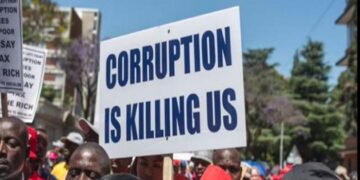
In addition, corruption remains one of the most significant drivers of elite capture in Ghana. Public funds allocated for infrastructure, healthcare, education, and social services are often diverted through inflated contracts, procurement irregularities, embezzlement, and other forms of financial mismanagement. As a result, development resources frequently fail to reach their intended beneficiaries, undermining the effectiveness of public policies and national development programmes. Evidence of this pattern is visible across many parts of the country. A field assessment across Ghana’s sixteen regions reveals numerous examples of abandoned projects, poorly executed infrastructure, deteriorating public facilities, and incomplete state interventions. In some communities, schools, roads, hospitals, and sanitation projects remain unfinished despite substantial financial allocations. Such outcomes reflect deeper structural weaknesses within governance systems and public sector accountability. Corruption also discourages investment and weakens economic productivity. When public institutions are perceived as corrupt, investor confidence declines and governance legitimacy suffers. Corruption within elite networks is often protected by political influence and institutional weakness. Individuals implicated in major corruption scandals may avoid accountability due to their connections within political and economic systems. This creates a cycle where elites continue accumulating wealth while development outcomes remain limited for ordinary citizens.
Implications for National Development
Elite capture poses serious challenges for sustainable national development. Development cannot succeed when state resources are systematically redirected toward private accumulation rather than public welfare. Elite capture undermines policy effectiveness because development initiatives are shaped by elite interests rather than public needs. It weakens institutional trust and democratic legitimacy. It deepens inequality and social exclusion, limiting social mobility and economic participation. The long-term consequence is developmental stagnation. Societies characterised by extreme inequality and institutional distrust often struggle to achieve inclusive growth and social stability. In Ghana, addressing elite capture is therefore essential not only for economic development but also for democratic consolidation and national cohesion.
To address elite capture and improve development outcomes in Ghana, several measures are necessary: First, state institutions responsible for accountability and anti-corruption enforcement must be strengthened and insulated from political interference. To add, transparency within public procurement and development planning processes should be improved to reduce opportunities for corruption and favoritism. Again, citizen participation in development decision-making should be expanded, particularly at local government and community levels. Fourth, urban planning policies should prioritise inclusive development that addresses the needs of low-income and marginalised communities rather than primarily serving elite interests. Furthermore, political patronage systems should be reduced through merit-based public sector recruitment and institutional reforms that strengthen professionalism within state institutions.Finally, civic education and public awareness campaigns should encourage citizens to demand accountability and actively participate in governance processes.
Despite decades of independence and numerous development initiatives, many development policies in Ghana have failed to produce equitable and sustainable outcomes for ordinary citizens. This study has argued that elite capture represents one of the major factors contributing to these failures.Political and economic elites frequently shape development policies and resource distribution in ways that prioritise private accumulation over public welfare. Through corruption, political patronage, urban inequality, and institutional manipulation, elites often control access to opportunities and development benefits while marginalised populations remain excluded.The consequences extend beyond economic inequality. Elite capture weakens public trust, undermines democratic legitimacy, and slows national development. Addressing these challenges therefore requires institutional reform, accountability, transparency, and inclusive governance structures capable of ensuring that development serves the broader interests of society rather than a privileged minority. Sustainable development in Ghana will depend not only on economic growth but also on the ability of the state to resist elite domination and promote equitable access to resources, opportunities, and social progress.
Reference
Ablo, A. D., & Bertelsen, B. E. (2022). A SHADOWY ‘CITY OF LIGHT’: Private Urbanism, Large‐Scale Land Acquisition and Dispossession in Ghana. International Journal of Urban and Regional Research, 46(3), 370-386. https://doi.org/10.1111/1468-2427.13085
Adjei-Cudjoe, B. (2025). A game theory approach to insecure slum and urban governance in Accra: Analyzing stakeholder dynamics in Old Fadama. Journal of Urban Affairs, 1–19. https://doi.org/10.1080/07352166.2025.2523328
Bashiru, M. (2026). Shaping Education in Ghana: A Historical and Policy Analysis of Key Reforms. In: Ashraf, M.A., Tsegay, S.M. (eds) Education Policies and Practices in the Global South, Volume One. Exploring Education Policy in a Globalized World: Concepts, Contexts, and Practices. Springer, Singapore. https://doi.org/10.1007/978-981-95-3268-1_7
Boateng, F. G., & Klopp, J. M. (2024). Urbanization, Legacies of Elite Capture, and Multi-Dimensional Exclusions in Ghana: Towards Just Housing and Neighborhood Policies in African Cities. Urban Forum, 35(4), 499-528. https://doi.org/10.1007/s12132-024-09515-4
Britwum, A. O. (2022). Post-Independence Development Planning in Ghana and Tanzania: Agriculture, Women and Nation-building. Africa Development / Afrique et Développement, 47(1), 105–134. https://www.jstor.org/stable/48645755
Fisayo, D. P., Nte, N., Adejoke, A. A., & Ayoola, O. R. (2023). Elite Capture Syndrome and Anti-Corruption Control in Nigeria: The Economic and Financial Crimes Commission and The Independent Corrupt Practices Commission in Perspective. International Journal of Business, Humanities, Education and Social Sciences (IJBHES), 5(2), 144-152. https://doi.org/10.46923/ijbhes.v5i2.282
Gillespie, T. (2015). Accumulation by urban dispossession: struggles over urban space in Accra, Ghana. Transactions of the Institute of British Geographers, 41(1), 66–77. http://www.jstor.org/stable/24583184
Grant, R., & Yankson, P. (2003). Accra. Cities, 20(1), 65-74. https://doi.org/10.1016/s0264- 2751(02)00090-2
Harvey, D. (2008). The Right to the City. New Left Review, 53, 23-40.
Lauermann, J., & Mallak, K. (2023). Elite capture and urban geography: Analyzing geographies of privilege. Progress in Human Geography, 47(5), 645-663. https://doi.org/10.1177/03091325231186810
Marcuse, P. (2009). From critical urban theory to the right to the city. City, 13(2–3), 185–197. https://doi.org/10.1080/13604810902982177
US Institute of Peace. (2023). What the Lens of Elite Capture Reveals: Corruption, Power Competition, and the Politics of Elite Capture. In Elite Capture and Corruption of Security Sectors (pp. 11–14). US Institute of Peace. http://www.jstor.org/stable/resrep47379.10
Walsh-Führing, M. (2018). Bureaucratic Elites. In: Farazmand, A. (eds) Global Encyclopedia of Public Administration, Public Policy, and Governance. Springer, Cham. https://doi.org/10.1007/978-3-319-31816-5_694-1