








Introduction
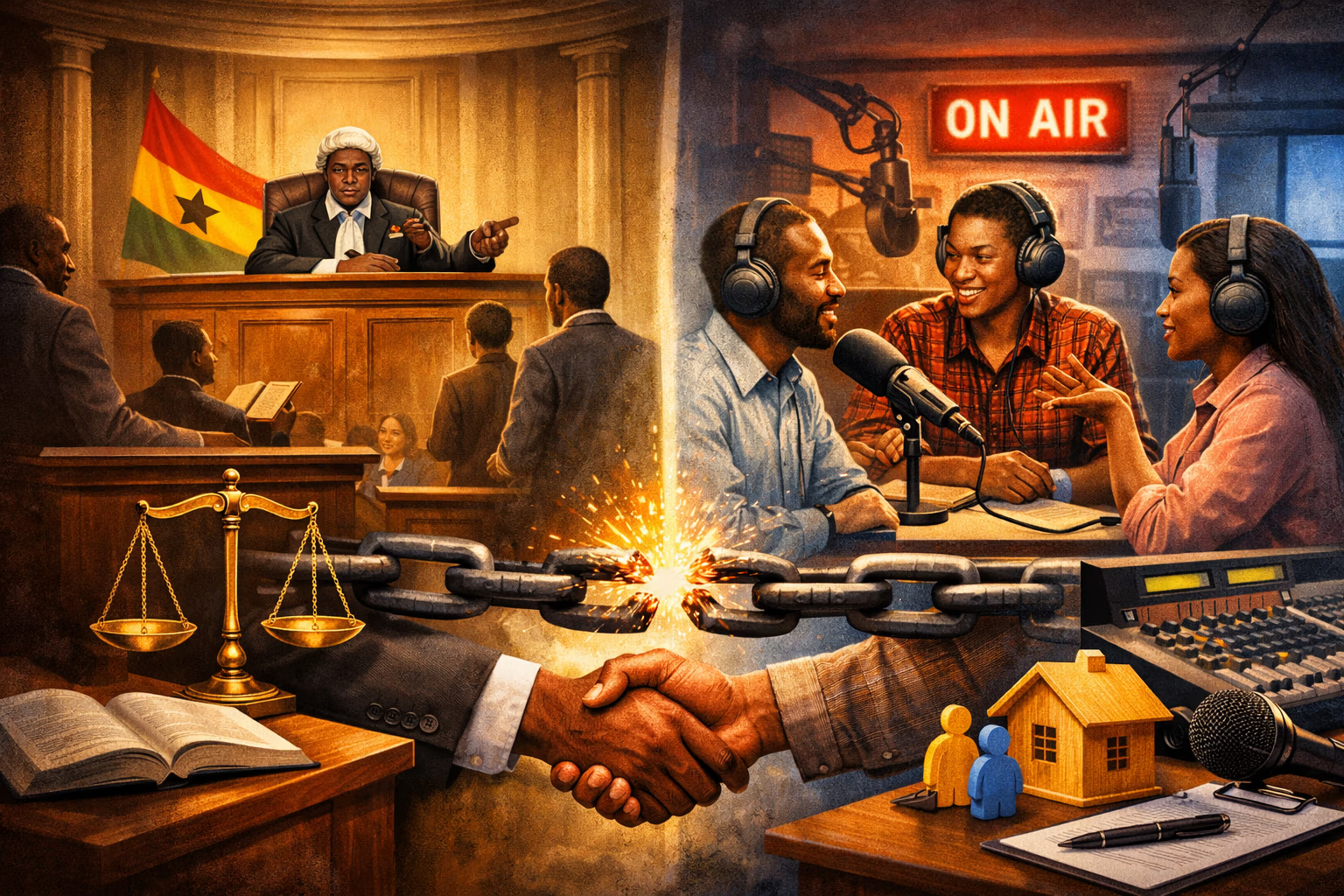
In recent years, Ghana has witnessed the emergence and growing popularity of what many citizens informally describe as “radio courts.” These are media platforms where social disputes, family conflicts, marital disagreements, inheritance issues, and interpersonal tensions are publicly discussed and mediated through radio and television programs. Among the most prominent of these platforms are the programs hosted by Aunty Naa on Oyerepa FM and Oheneni Adazoa on Sompa TV. These women have become influential public mediators who intervene in domestic disputes, family disagreements, marital conflicts, and social grievances.
The rise of these “radio courts” reflects a changing social landscape in which citizens increasingly seek justice and mediation outside formal judicial institutions. While the Ghanaian judicial system remains constitutionally mandated to administer justice, many ordinary people appear to perceive media mediation platforms as more accessible, affordable, and readily responsive to their needs. This phenomenon became particularly visible following the widely discussed case involving former Ghana national football team player Edwin Gyimah, whose family allegedly took control of his property. According to public discussions, intervention through Aunty Naa’s program reportedly enabled him to regain access to his house within a few weeks. The incident generated intense online discussions. On 11 April 2026, DotseBlogs made a TikTok post questioning why many Ghanaians prefer media mediation over the courts. The post stated: “Ghana has courts, lawyers and a whole judicial system but some people would rather settle their marriage on Aunty Naa’s show and we have questions.” On 16 April 2026, another post by the same blog added: “Ghana built courts to deliver justice. Instead they deliver adjournments. So people went to Aunty Naa.”
Despite the increasing popularity of these media mediation platforms, there remains limited scholarly and policy discussion on what their rise means for governance, public confidence in state institutions, and security analysis. Much attention has been given to judicial reform in Ghana, yet little focus has been placed on why citizens increasingly prefer informal public mediation spaces over formal legal institutions. In this article, the author examines the rise of radio-based dispute resolution in Ghana through a social media analysis of public reactions under DotseBlogs’ TikTok posts. The article seeks to understand what these public responses reveal about trust in Ghana’s judiciary, the social perception of justice, and public awareness of Alternative Dispute Resolution (ADR). It further explores the implications of this phenomenon for institutional legitimacy, governance as well as social stability.
Methodology: Social Media Analysis of DotseBlogs’ TikTok Posts
In this article, we adopted a qualitative social media analysis approach. Data for the study were drawn from public comments posted under TikTok publications made by DotseBlogs on 11 April and 16 April 2026 concerning the intervention of Aunty Naa in the Edwin Gyimah family property dispute. Social media analysis is increasingly recognised as an important methodological tool within intelligence and security studies because digital platforms provide direct access to public perceptions, grievances, frustrations, and institutional attitudes. Online comment sections often serve as spaces where citizens freely express opinions that may not emerge through official surveys or formal interviews. We analysed the comments under the post thematically. The analysis focused on recurring issues such as distrust in the judiciary, concerns about corruption and cost, perceptions of delay in justice delivery, accessibility barriers, and public understanding of Alternative Dispute Resolution (ADR). Although we acknowledge that media comments cannot fully represent the views of all Ghanaians, they provide important insight into public sentiment and emerging societal trends regarding institutional trust and dispute resolution.
Results and Discussion
Lack of Trust in the Law Courts
One of the most dominant themes emerging from the comments was declining public trust in Ghana’s judicial system. Many users expressed frustration over delays in court proceedings and questioned the efficiency of the legal system. One commenter stated: “Aunty Naa is far better than the courtroom.”Another user remarked: “Had it not been Aunty Naa, the court would’ve used about 3 years to settle this simple civil case.” These comments suggest that many citizens perceive media mediators as more effective and responsive than formal courts. The speed with which Aunty Naa reportedly handled the Edwin Gyimah issue was repeatedly contrasted with the lengthy processes associated with litigation. Another comment directly criticised the judiciary: “Ghana courts need to do better in delivering justice.” Similarly, another respondent wrote: “Do we have a judiciary system in Ghana? Oh I see.”
These comments indicate not merely frustration but also a deeper erosion of confidence in the institutional capacity of the courts. Public trust is central to the legitimacy of any justice system. When citizens increasingly believe that justice can be achieved more efficiently through media personalities than through formal courts, it signals broader institutional challenges. Another critical comment stated: “The courts now are biased, no money no case and it is also expensive and again the case will be delayed for so many years.”
This reflects public perceptions that justice is influenced by wealth and social status. Whether accurate or not, such perceptions can significantly weaken confidence in democratic institutions and undermine faith in the rule of law. The issue of adjournments also emerged strongly. One user commented: “Some of the adjournments mean see me in chambers.” This statement reflects public suspicion regarding judicial corruption and unofficial negotiations outside formal legal procedures. Such perceptions, even when unverified, can damage institutional credibility and fuel public distrust. From an intelligence and security perspective, weakening trust in legal institutions may create conditions where citizens increasingly bypass state structures in favor of informal mechanisms of justice and conflict resolution.
The Cost of Justice and Economic Barriers
Another important issue identified in the comments concerns the financial burden associated with litigation. Several users described the courts as expensive and inaccessible for ordinary citizens.One commenter wrote: “I regret sending my case to court, I will never again, I spend a lot.” This reflects how legal processes may impose financial and emotional strain on litigants. Court fees, lawyer fees, transportation, repeated adjournments, and long waiting periods can make formal justice difficult for low-income individuals. The perception that media mediation platforms provide quicker and cheaper solutions contributes significantly to their popularity. Unlike formal courts, radio mediation platforms are perceived as less bureaucratic and more approachable.
For many citizens, especially vulnerable groups, affordability shapes access to justice. When people believe they cannot financially sustain litigation, they are more likely to seek alternative mechanisms that appear more practical and immediate. This issue also highlights broader inequalities within justice delivery systems. Access to justice should not depend on one’s financial capacity. Yet the comments suggest that many citizens perceive the courts as spaces that favor those with economic resources.
Lack of Public Education on Alternative Dispute Resolution (ADR)
Another theme emerging from the comments concerns limited public understanding of Alternative Dispute Resolution (ADR). While some users demonstrated awareness of ADR mechanisms, others appeared unfamiliar with legal alternatives outside formal court litigation. One user explained:“In Ghana law, there’s something called ADR (alternative dispute resolution). It grants the use to take our issues to Oyerepa.”Another added: “There are some lawyers who advise some clients to use ADR for some cases rather than wasting money on litigations.” These comments demonstrate that some sections of the public understand that dispute resolution can occur outside courtroom judgments. ADR mechanisms such as mediation and arbitration are legally recognised in Ghana and are designed to reduce pressure on the courts while promoting faster settlement of disputes. However, another comment highlighted a major accessibility problem: “You think going to court is easy, we have some people who don’t know where to start from.” This suggests that many citizens lack legal literacy and may not fully understand available legal pathways. The popularity of radio mediation platforms may therefore partly stem from their simplicity and familiarity. Media hosts communicate in local languages, explain issues in understandable terms, and create environments that appear less intimidating than formal legal institutions. The challenge for state institutions is therefore not only judicial reform but also public education. Citizens need greater awareness regarding ADR processes, legal rights, and accessible justice mechanisms.
The Rise of Media Personalities as Informal Justice Actors
The findings also reveal how media personalities are increasingly becoming influential social mediators. Public trust in figures such as Aunty Naa reflects the growing social authority of media actors in Ghanaian society. One user commented:“Aunty Naa has gained credibility.”Another stated: “In a week Aunty Naa saved Edwin from depression.” These comments suggest that media mediators are not viewed merely as entertainers but as socially responsive actors capable of producing emotional support, accountability, and practical outcomes. This development aligns with traditional African systems of communal conflict resolution, where respected individuals mediated disputes within communities. However, unlike traditional systems, radio mediation occurs within highly publicised digital and media spaces where disputes become public spectacles. While these platforms may help resolve conflicts quickly, they also raise ethical and institutional concerns regarding privacy, confidentiality, emotional exploitation, and procedural fairness.
Recommendations
First, Ghana’s judicial system must prioritise reducing delays in court proceedings. Frequent adjournments contribute significantly to public frustration and weaken confidence in the legal system. Again, there is a need to strengthen public education on Alternative Dispute Resolution (ADR). Many citizens remain unaware of legal mediation and arbitration processes that can provide affordable and timely dispute resolution outside full courtroom litigation. Third, the judiciary should improve public accessibility by simplifying legal procedures and expanding community-based ADR centers where citizens can easily seek mediation services. Policymakers and media regulators should develop ethical guidelines for media-based dispute resolution programs to ensure that vulnerable individuals are protected from humiliation, misinformation, and emotional exploitation. Finally, state institutions should pay attention to public sentiment expressed on social media platforms. Online discussions increasingly provide insight into public trust, governance concerns, and institutional legitimacy.
Conclusion
The rise of radio and television mediation platforms in Ghana reflects broader societal concerns regarding justice delivery, institutional trust, and access to dispute resolution. Public reactions under DotseBlogs’ TikTok posts reveal widespread frustration with judicial delays, high litigation costs, and perceived inequality within the formal legal system. At the same time, the popularity of Aunty Naa and similar media personalities demonstrates the public demand for justice systems that are accessible, timely, affordable, and socially responsive. Citizens appear increasingly attracted to platforms that provide quick intervention, emotional engagement, and understandable processes. Nevertheless, the growing reliance on media mediation should not be viewed simply as entertainment or isolated public behavior. It is a significant indicator of changing public attitudes toward state institutions and governance structures in Ghana. For intelligence and security analysts, these developments highlight the importance of institutional trust in maintaining democratic legitimacy and social stability. When citizens increasingly prefer informal mechanisms over formal state institutions, it signals the need for reform, responsiveness, and renewed public engagement. Ultimately, the popularity of “radio courts” is not merely about media influence. It is a reflection of deeper questions concerning justice, governance, accessibility, and public confidence in contemporary Ghana.