








Youth radicalisation into terrorism and violent extremism has emerged as one of the most urgent global security challenges of the past decade, according to the Global Terrorism Index 2026. Across ideological, geographic, and socio-political contexts, young people, particularly those aged 15 to 25, and in some cases as young as eight, are increasingly being recruited, indoctrinated, and mobilised by extremist networks. What distinguishes the current wave of radicalisation is not only its scale but its speed. Processes that once unfolded over months or years now occur within weeks or even days, driven by digital technologies, algorithmic amplification, and the strategic exploitation of adolescent vulnerabilities. This has created what counter-terrorism practitioners describe as an “acceleration gap”: the widening disparity between the pace of radicalisation and the ability of states to detect and disrupt it (Global Terrorism Index [GTI], 2026).
A Global Surge in Youth Extremism
Globally, data since 2022 indicates a sharp rise in youth involvement in terrorism-related activities. In Europe and North America, minors accounted for 42 per cent of all terror-related investigations in 2025, representing a threefold increase since 2021 (GTI, 2026). Similar patterns are evident across intelligence jurisdictions, with increasing numbers of minors being arrested, investigated, or referred to counter-radicalisation programmes. This trend coincides with broader shifts in terrorism itself, particularly the rise of lone-actor attacks and ideologically fluid extremism. Young individuals are especially susceptible to these developments due to developmental factors such as identity formation, impulsivity, and a heightened need for belonging and recognition. The compression of the radicalisation timeline, combined with the psychological volatility of adolescence, has significantly elevated the risk of rapid mobilisation into violence.
The Youth Profile
At the structural level, youth radicalisation is shaped by a complex interplay of psychological, social, and environmental factors. There is no single profile of a radicalised youth; rather, vulnerability emerges from overlapping pressures including social isolation, family dysfunction, socio-economic marginalisation, and mental health challenges. Empirical studies suggest that over 87 per cent of radicalised minors have experienced neglect or psychological abuse, while 77 per cent have faced abandonment prior to radicalisation (GTI, 2026). Many exhibit low levels of prior criminality, indicating that their pathways into extremism are less rooted in traditional criminal networks and more in acute developmental crises and the search for identity and meaning. The concept of “significance quest” is central here: adolescents experiencing identity diffusion are particularly receptive to extremist narratives that offer clear moral frameworks, a sense of belonging, and the promise of personal importance (GTI, 2026).
Regional Divergence in Drivers of Radicalisation
While these underlying vulnerabilities are globally consistent, the drivers that translate them into violent extremism vary significantly by region. In Western contexts, youth radicalisation is largely driven by digital alienation, ideological convergence, and socio-political polarisation. Young individuals often construct hybrid or “composite” extremist identities, blending elements from jihadist propaganda, far-right ideologies, conspiracy theories, and online subcultures. In contrast, sub-Saharan Africa presents a markedly different landscape, where structural conditions such as poverty, unemployment, weak governance, and state violence play a far more decisive role.
Sub-Saharan Africa: Structural Drivers and Recruitment Realities
In sub-Saharan Africa, youth radicalisation is deeply embedded in socio-economic realities. The region accounts for over half of all terrorism-related deaths globally, with the Sahel experiencing a tenfold increase in fatalities since 2007 (GTI, 2026). Unlike in Western contexts, ideological commitment is often secondary. A United Nations Development Programme study found that only 17 per cent of recruits cited religion as their primary motivation, while a significant proportion pointed to economic deprivation, lack of job opportunities, and experiences of state violence as key drivers (GTI, 2026). For many young people, extremist groups function as alternative governance structures, offering employment, security, and social identity in environments where the state has failed to deliver basic services. This dynamic is further exacerbated by demographic pressures, as the region’s rapidly growing youth population faces limited access to education and formal employment.
The Rise of the Modern Radicalisation Pathway
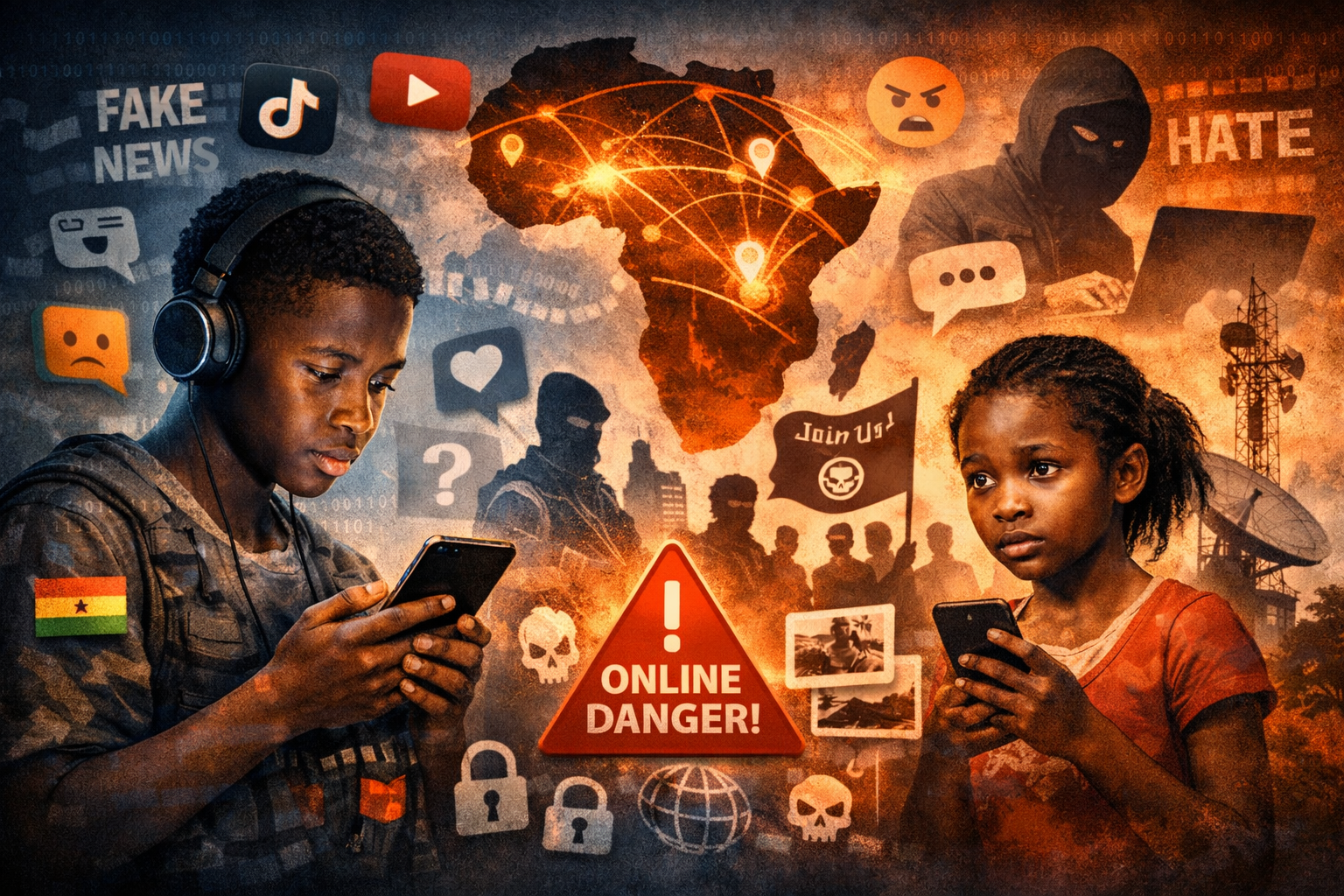
Despite these regional differences, the most transformative and concerning development in youth radicalisation globally—and increasingly in Africa—is the emergence of the modern radicalisation pathway. This pathway is fundamentally digital, decentralised, and accelerated, reshaping how extremist ideologies are disseminated and internalised. It begins on mainstream, algorithm-driven platforms such as TikTok, Instagram, Facebook, and YouTube, where engagement-based recommendation systems inadvertently expose users to progressively extreme content. Young individuals who interact with controversial or emotionally charged material are quickly drawn into a content ecosystem that normalises violence and glorifies extremist actors (GTI, 2026).
From Algorithms to Echo Chambers
Once initial interest or vulnerability is detected, the radicalisation process transitions to encrypted messaging platforms such as Telegram, Signal, or Wire. These platforms serve as insulated echo chambers where dissent is suppressed and ideological narratives are reinforced through peer validation and constant exposure. This shift marks a critical inflection point: the movement from passive consumption of extremist content to active ideological commitment and, in some cases, operational planning. The decentralised nature of this process allows for peer-to-peer radicalisation, with young people not only consuming but also producing and disseminating extremist content in formats that resonate with their peers, including memes, short videos, and gamified narratives (GTI, 2026).
Gaming and the Gamification of Extremism
A particularly alarming dimension of the modern pathway is the integration of online gaming and gaming-adjacent platforms into recruitment strategies. Multiplayer environments and communication platforms such as Discord, Twitch, and gaming servers provide fertile ground for building social connections with isolated youth. Recruiters exploit these spaces by forming relationships under the guise of shared interests, gradually introducing ideological content and normalising violent narratives. In some cases, extremist communities have developed custom game modifications and simulation environments where users role-play violent scenarios, effectively rehearsing real-world attacks in virtual settings. The incorporation of competitive elements—such as “scoreboards” that glorify mass attackers—further reinforces these behaviours by tapping into familiar reward systems associated with gaming culture (GTI, 2026).
Speed, Adolescence, and the Risk of Rapid Mobilisation
The modern radicalisation pathway is also characterised by its speed and unpredictability. The time between initial exposure and mobilisation has decreased dramatically, with some cases progressing from online engagement to attack planning within weeks. This acceleration is particularly dangerous for adolescents, whose cognitive development—especially in areas related to impulse control and long-term decision-making—is not yet fully mature. As a result, young individuals can move rapidly from grievance to action without the moderating influence of offline social structures or timely intervention by authorities.
Africa’s Emerging Digital Convergence
In the African context, the digital pathway is increasingly intersecting with existing structural vulnerabilities. While traditional drivers such as poverty and state fragility remain dominant, expanding internet access and smartphone penetration are introducing new vectors of radicalisation. Youth who were previously recruited through local networks or economic incentives are now also exposed to transnational extremist narratives online. This convergence of material deprivation and digital exposure creates a hybrid threat environment in which local grievances are amplified and reframed within global ideological frameworks.
Addressing Youth Radicalisation in Africa’s Digital Age
1. Building Predictive, Intelligence-Led Counter-Radicalisation
African intelligence services must move beyond reactive, incident-driven approaches toward anticipatory and predictive models of threat detection. This requires sustained investment in Open-Source Intelligence (OSINT) capabilities to monitor publicly available digital spaces, alongside targeted Signals Intelligence (SIGINT) operations conducted within clear legal frameworks. Advanced data analytics, including AI-assisted tools, should be deployed to identify behavioural anomalies such as rapid ideological shifts, online clustering, and escalation in violent rhetoric. The overarching aim is to close the “acceleration gap” by developing early-warning systems that detect risk trajectories before individuals transition from passive exposure to active mobilisation (United Nations Office of Counter-Terrorism, 2020; International Crisis Group, 2021; NATO Strategic Communications Centre of Excellence, 2019).
2. Establishing Targeted Digital Traffic Monitoring Frameworks
Governments should collaborate with Internet Service Providers (ISPs) to design intelligence-led traffic monitoring systems that prioritise precision and legality over indiscriminate surveillance. By focusing on metadata—such as traffic frequency, timing, and clustering—authorities can identify patterns of engagement with known extremist domains without immediately accessing content. This should be complemented by dynamic watchlists of flagged websites, encrypted channel entry points, and propaganda file signatures, enabling real-time detection of high-risk activity. Anomaly detection systems can further identify sudden spikes or coordinated behaviour, allowing for targeted intervention while minimising infringements on civil liberties (European Union Agency for Cybersecurity, 2021; Global Network Initiative, 2020; OECD, 2022).
3. Formalising Public–Private Cybersecurity Partnerships
Effective counter-radicalisation in the digital space depends on structured and institutionalised collaboration between governments and private sector actors. African states should establish formal coordination mechanisms that bring together intelligence agencies, national cybersecurity authorities, ISPs, telecommunications providers, and global technology companies. These partnerships should facilitate the real-time sharing of anonymised data on emerging trends, coordinated responses to extremist content, and joint tracking of cross-platform radicalisation pathways. To ensure sustainability and legitimacy, such cooperation must be anchored in clear legal frameworks that define responsibilities, data protection standards, and oversight mechanisms (World Economic Forum, 2020; Tech Against Terrorism, 2021; African Union, 2022).
4. Developing National Cyber Threat Intelligence Fusion Centres
Governments should invest in centralised Cyber Threat Intelligence Fusion Centres capable of integrating data from multiple sources into actionable insights. These centres would aggregate intelligence from law enforcement, ISPs, and regional partners, enabling real-time mapping of digital radicalisation ecosystems. By identifying geographic hotspots, demographic trends, and evolving recruitment tactics, they can provide timely intelligence to both security agencies and policymakers. In doing so, these centres become the operational backbone of national counter-radicalisation strategies, bridging the gap between data collection and strategic response (Interpol, 2021; United Nations Office on Drugs and Crime, 2020; African Union Mechanism for Police Cooperation, 2022).
5. Strengthening Regional Intelligence Cooperation
Given the transnational nature of extremist networks, national-level interventions must be complemented by robust regional coordination. Mechanisms under the African Union and Economic Community of West African States should be strengthened to enable shared extremist databases, cross-border digital surveillance cooperation, and harmonised legal standards. Joint monitoring of recruitment pipelines and coordinated responses to emerging threats are particularly critical in high-risk regions such as the Sahel. Enhanced regional collaboration not only improves situational awareness but also prevents fragmentation in counter-terrorism efforts (Economic Community of West African States, 2020; African Union, 2014; Global Counterterrorism Forum, 2021).
6. Investing in Strategic Counter-Narratives and Digital Engagement
Governments must actively engage in the digital spaces where radicalisation occurs by developing credible and context-specific counter-narratives. This involves partnering with trusted local voices—including influencers, educators, and community leaders—to produce content that resonates with youth audiences on platforms such as TikTok and YouTube. Rather than relying on generic messaging, these narratives should directly address the socio-economic grievances, identity crises, and perceptions of injustice that extremist groups exploit. Effective digital engagement requires not only content production but also an understanding of platform algorithms and youth communication styles (United Nations Development Programme, 2017; Institute for Strategic Dialogue, 2020; UNESCO, 2018).
7. Implementing Early Intervention and Prevention Mechanisms
Preventative strategies should prioritise early identification and support for at-risk individuals before radicalisation pathways become entrenched. Governments can establish school- and community-based reporting systems, supported by training programmes that equip teachers, religious leaders, and social workers to recognise early warning signs. Digital literacy initiatives are equally important, helping young people understand how algorithms shape their online experiences and how extremist actors manipulate narratives. These measures should be embedded within broader youth development frameworks to ensure they are sustainable and socially accepted (United Nations Children’s Fund, 2021; Royal United Services Institute, 2019; United Nations Development Programme, 2017).
8. Addressing Structural Drivers of Radicalisation
Efforts to counter youth radicalisation will remain limited unless they are accompanied by meaningful action to address underlying structural conditions. Governments must prioritise job creation, skills development, and access to quality education, particularly in marginalised regions. Strengthening governance, improving public service delivery, and ensuring accountability for security force conduct are equally critical. Evidence from the United Nations Development Programme underscores that economic exclusion, state fragility, and experiences of injustice are among the most significant drivers of recruitment into extremist groups in Africa (United Nations Development Programme, 2017; World Bank, 2019; International Crisis Group, 2022).
9. Ensuring Legal Oversight and Protection of Civil Liberties
All counter-radicalisation measures, particularly those involving digital surveillance and data collection, must be grounded in clear legal frameworks and subject to independent oversight. Governments should define what constitutes extremist content, establish transparent thresholds for intervention, and create mechanisms for judicial or parliamentary review. Safeguarding privacy, freedom of expression, and due process is essential not only for ethical governance but also for maintaining public trust. Heavy-handed or opaque approaches risk exacerbating grievances and undermining the legitimacy of counter-terrorism efforts (Office of the United Nations High Commissioner for Human Rights, 2018; Freedom House, 2022; African Commission on Human and Peoples’ Rights, 2019).
Conclusion
Youth radicalisation in Africa is increasingly shaped by the convergence of structural vulnerabilities and rapidly evolving digital ecosystems. Addressing this challenge requires a holistic and adaptive response that integrates predictive intelligence, digital governance, socio-economic reform, and community-based prevention. Governments that successfully align these elements will be better positioned to counter an adversary that is decentralised, technologically agile, and deeply embedded in the social realities of young people.
References
Global Terrorism Index 2026 (2026) Global Terrorism Index 2026: Measuring the Impact of Terrorism. Sydney: Institute for Economics and Peace.
United Nations Development Programme (2017) Journey to Extremism in Africa: Drivers, Incentives and the Tipping Point for Recruitment. New York: UNDP.
United Nations Office of Counter-Terrorism (2020) Strategic Framework for Countering Terrorism and Preventing Violent Extremism. New York: United Nations.
International Crisis Group (2021) The Sahel: Addressing the Rise of Extremism through Intelligence Reform. Brussels: International Crisis Group.
NATO Strategic Communications Centre of Excellence (2019) Online Radicalisation and the Use of Artificial Intelligence in Countering Extremism. Riga: NATO StratCom COE.
European Union Agency for Cybersecurity (2021) Cybersecurity and Privacy in Digital Monitoring Systems. Brussels: ENISA.
Global Network Initiative (2020) Principles on Freedom of Expression and Privacy in the ICT Sector. Washington, DC: GNI.
OECD (2022) Digital Security Risk Management and Privacy Protection Frameworks. Paris: OECD Publishing.
World Economic Forum (2020) The Global Risks Report 2020. Geneva: WEF.
Tech Against Terrorism (2021) Platform Responses to Online Terrorist Content: Best Practices. London: Tech Against Terrorism.
African Union (2022) African Union Cybersecurity Strategy. Addis Ababa: African Union Commission.
Interpol (2021) Global Counter-Terrorism and Cybercrime Report. Lyon: INTERPOL.
United Nations Office on Drugs and Crime (2020) Handbook on Criminal Justice Responses to Terrorism. Vienna: UNODC.
African Union Mechanism for Police Cooperation (2022) Continental Intelligence Sharing Framework. Algiers: AFRIPOL.
Economic Community of West African States (2020) ECOWAS Counter-Terrorism Strategy and Implementation Plan. Abuja: ECOWAS Commission.
African Union (2014) Nouakchott Process on the Enhancement of Security Cooperation in the Sahel. Addis Ababa: African Union.
Global Counterterrorism Forum (2021) Memorandum on Good Practices for Countering Violent Extremism. The Hague: GCTF.
Institute for Strategic Dialogue (2020) Digital Counter-Extremism: Best Practices for Online Engagement. London: ISD.
UNESCO (2018) Youth and Violent Extremism on Social Media: Mapping the Research. Paris: UNESCO.
United Nations Children’s Fund (2021) Preventing Violent Extremism through Education. New York: UNICEF.
Royal United Services Institute (2019) Countering Radicalisation: A Guide for Practitioners. London: RUSI.
World Bank (2019) Pathways for Peace: Inclusive Approaches to Preventing Violent Conflict. Washington, DC: World Bank.
International Crisis Group (2022) Violence in the Sahel: Addressing Root Causes. Brussels: International Crisis Group.
Office of the United Nations High Commissioner for Human Rights (2018) Human Rights and Counter-Terrorism. Geneva: United Nations.
Freedom House (2022) Freedom on the Net 2022. Washington, DC: Freedom House.
African Commission on Human and Peoples’ Rights (2019) Guidelines on Human Rights and Counter-Terrorism in Africa. Banjul: ACHPR.