







Introduction
Pulic transport in Accra plays a vital role in facilitating movemnnet, supporting economic activities and connecting people to jobs and services. However the system has historically been dominated by informal operators perticularly “trotros” which are often unregulated and inefficient. To improve affordability, accessibility and effeciency, the Government of Ghana at different times introduced the Metro Mass Transit, Bus Rapid Transit (BRT) and more recently the Ayaalolo Bus System. They were designed to provide scheduled and modern trsnport services within Accra.
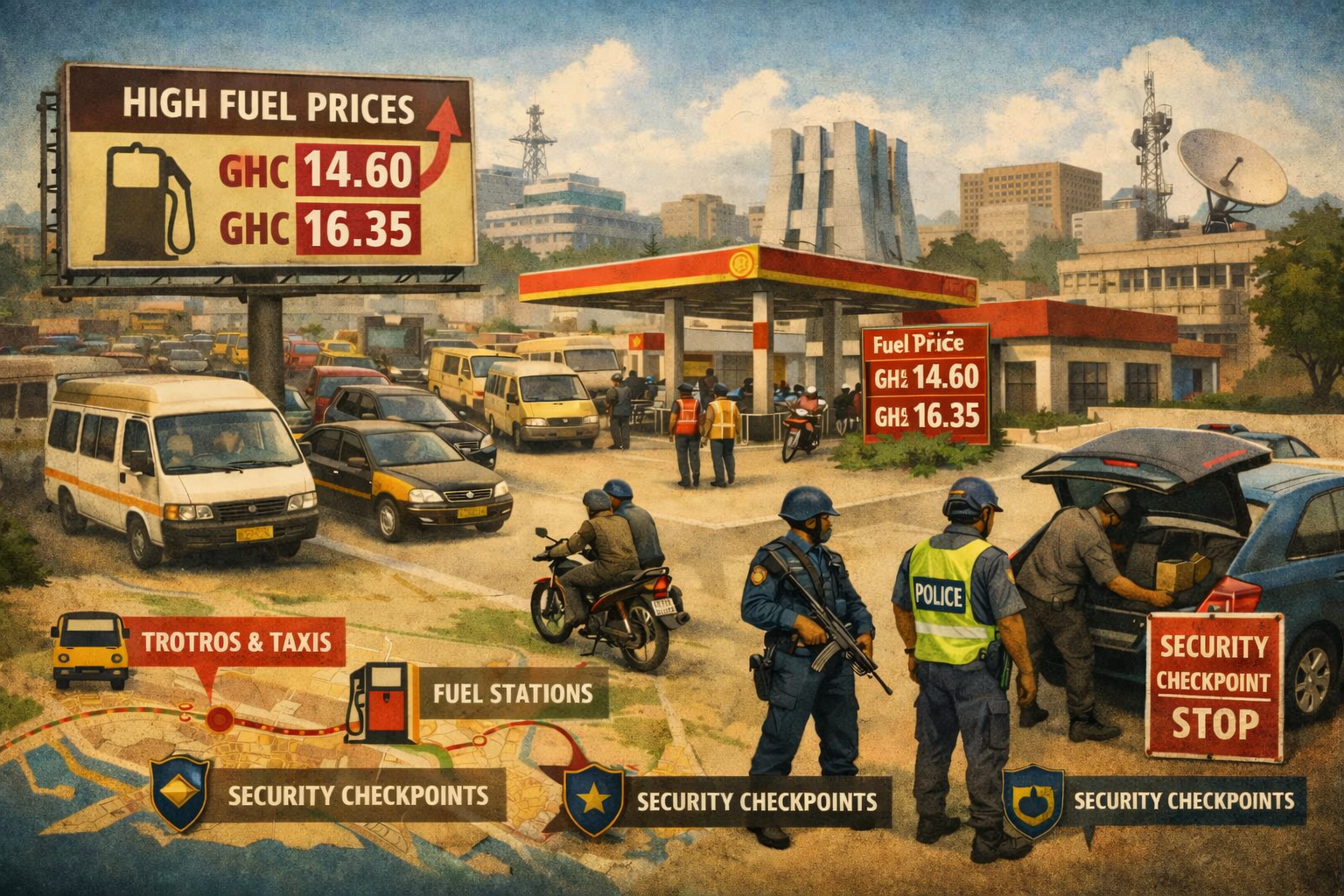
Unfortunately, commuting conditions in Accra have spiraled into long queues, extended waiting times, and growing uncertainty in accessing public transport, particularly during peak hours. Key transport departure points, including Kaneshie, Madina, Dodowa and Tema Station, have seen worsening commuting conditions due to rising fuel prices affecting urban mobility. The primary cause of this strain is among others a significant increase in fuel prices in early April 2026, with petrol up 15% and diesel nearly 19%, heightening operational costs for transport operators. Ghana’s dependency on imported refined petroleum leaves its transport market vulnerable to global disruptions, especially amid ongoing geopolitical tensions in the Middle East (reuters.com).
The effects of these increases have been immediate and visible within the urban transport ecosystem. Commercial transport unions, like the Ghana Private Road Transport Union (GPRTU), have previously warned of fare hikes and operational cutbacks in response to escalating costs, highlighting the fragile economics of public transport provision (newsghana.com,gh). Practically, there are fewer vehicles operating on key routes; some drivers reduce trips or temporarily withdraw services to avoid operating at a loss. The resulting gap in supply has increased congestion at terminals and bus stops disproportionately affecting low- and middle-income workers who rely on these systems for daily commuting (gbcghanaonline.com, reuters.com).
The Government of Ghana in response to reduced vehicle operations and congestion has announced a temporary fuel price reduction by suspending selected taxes and levies. The aim of this policy is to reduce commuter transportation expenses. To provide immediate relief, authorities are also using more Metro Mass Transit buses on crowded metropolitan routes, which have more affordable fares than private operators (newsghana.com,gh).
However, while these interventions signal a responsive policy approach, they show a deeper challenge; the interdependence between fuel pricing, transport availability, and urban productivity. Many workers in Accra rely on informal transport and mobility disruptions can severely impact punctuality, worker effeciency, and economic output. An illustrative example can be observed in densely populated commuter zones such as Kasoa-Accra, Ashaiman-Tema and Dodowa- Accra routes, where workers often depart as early as 4:00 a.m. yet arrive late due to transport shortages. Delays of one to two hours during morning commutes, now common, translate directly into lost productive time across both public and private sectors. In such contexts, the transport system becomes not only an economic concern but also an important component of human resource management and urban stability (gbcghanaonline.com).
This evolving situation raises important questions beyond immediate price relief; what is the extent to which fuel price adjustments stabilize public transport supply? will continued volatility further accelerate the shift toward informal alternatives such as okada and tricycles? And how do these dynamics reshape workforce productivity and urban order in Ghana’s capital?
The Rise of Okada and Tricycles as Alternatives
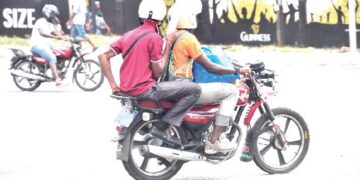
The rise of okada and tricycles in Ghana’s urban transport system is one response to the unreliability of formal public transport, particularly in cities like Accra. As traditional transport faces challenges such as increasing fuel costs, these informal options have become flexible and low-cost alternatives. Economic survival primarily drives this shift, especially for unemployment-stricken youth, as these modes offer accessible opportunities for income generation. Research highlights the significance of motorcycle and tricycle businesses in job creation and poverty alleviation, portraying their expansion as pivotal for urban economies beyond just mobility solutions (Hope, 2021).
From a commuter’s perspective, the efficiency and versatility of okadas and tricycles make them appealing. These smaller modes, in contrast to larger vehicles like buses and trotros, are able to access limited routes, negotiate congested roads, and offer “first-and-last-mile” connection. This makes them particularly valuable in areas where commuters face long waiting times or where traditional transport services are inconsistent. Before recent explosion of okadas and tricycles, Oteng-Ababio, (2012) among others showed that they were increasingly preferred for such short-distance and time-sensitive trips across many African cities.
The passage of the Road Traffic Amendment Bill (2025), which moves toward the legalization and regulation of commercial motorcycles and tricycles, signals a shift in policy from restriction to structured integration. Now, what was once considered a purely informal or even illicit sector is being repositioned as a legitimate component of the national transport framework (myjoyonline.com).
Notwithstanding, evidence suggests that these vehicles consume less fuel compared to traditional trotros, thereby enhancing economic activity particularly for drivers, traders and small businesses. Similarly, individual cases like small entrepreneurs acquiring tricycles to support their livelihoods, demonstrate how these modes contribute to household-level economic resilience (Jing et al., 2019 ; selfhelpinternational.org). There would likely be a continued shift toward informal transport alternatives, such as okada and tricycles, since these modes are more fuel-efficient and require lower startup and maintenance costs, making them more resilient under high fuel price conditions.
Given that transport via road accounts for over 90% of movement of people and goods in Ghana, disruptions in this sector have broad economic implications. Over time, this inefficiency may translate into declining work performance and reduced economic output, particularly in sectors that depend on strict time schedules.
As fuel prices fluctuate and formal transport systems contract, the resulting shift toward informal and weakly regulated mobility systems may unintentionally expand unmonitored economic spaces, thereby complicating urban security management and resource allocation.
Labor Composition, Informality and Security Concerns
An often-overlooked dimension of the rapid growth of okada and tricycle transport in Accra is the changing composition of the labor force within this sector. While these modes of transport are frequently framed as employment opportunities for economically vulnerable populations, observations suggest that a notable proportion of operators in key commercial corridors are non-Ghanaian nationals, reflecting broader patterns of cross-border informal labor mobility in West African urban economies (Abdulai, 2024).
The security implications of this labor structure are significant. First of all, the informality of the sector makes regulation, identification, and monitoring of operators difficult, especially in high-density urban zones.
Secondly, the presence of undocumented or transient operators irrespective of nationality raises concerns related to traceability in criminal incidents, law enforcement coordination, and urban surveillance limitations (Luther et al., 2025; Morgan, 2025).
On the other hand, the influx of foreigners puts more pressure on already insufficient jobs and social amenities thereby diluting the percentage of Ghanaians’ ability to secure safe and productive work as well as have access to social amenities (ibid, 2025).
Repercussions on Urban Systems
Beyond mobility, the ongoing stress on Accra’s transportation system made worse by growing fuel prices, has an impact on how urban systems, labor structures, and economic organization operate more broadly. These consequences are already showing up in the city’s policy discussions and behavioral adjustments.
First, a alikely outcome is the gradual transition to remote and hybrid work arrangements particularly in service-oriented industries. Organizations may implement flexible work arrangements to sustain productivity as commuting becomes more erratic and time-consuming. This is consistent with more general studies on urban mobility, which highlights how ineffective transportation systems can restrict employment opportunities and lower labor market participation, hence promoting alternative work arrangements (itf-oecd.org ; oecd.org).
Second, informal and paratransit services such as tricycles and okadas, will most likely keep growing. Research shows that in cities where formal systems are inadequate, paratransit naturally fills the gap by providing flexible, demand-responsive services . However, this expansion often occurs with limited regulation, raising concerns about safety, congestion, and long-term sustainability (Abass et al., 2025).
Behavioural adaptations at the household and organisational level are also expected. These may include a rise in carpooling to save personal transportation expenses,
increased dependence on institutional transportation systems (staff buses), and shifts toward private vehicle ownership, despite its contribution to congestion. Unfortunately, there is an increasing preference for private cars in Accra. While enhancing personal mobility, it causes systemic inefficiencies because a small number of car users take up a large portion of road space, which exacerbates congestion and diminishes transport efficiency (oecd.org).
Could the adoption of a staggered or 24-hour urban economy serve as a viable response to Accra’s growing transport challenges? As congestion and transport shortages persist, businesses may consider redistributing working hours into off-peak periods to ease commuting pressure and improve mobility efficiency. This raises key questions; would such a shift require strengthened nighttime transport systems and enhanced security presence, and can existing urban infrastructure adequately support a round-the-clock economic model?
What are the implications on urban order?
A key concern in such transport systems as the okada and tricycle, is the challenge of regulation and enforcement. Although newly repositioned into legal frameworks, they often have limited registration and weak identification systems, leading to high mobility that hinders effective monitoring by law enforcement. This situation results in urban surveillance blind spots, reducing the capacity of security agencies to track activities and respond to incidents, particularly in densely populated areas where riders can easily evade detection, complicating policing and weakening urban control mechanisms (cisanewsletter.com ; thebftonline.com).
Furthermore, the rapid growth of these transport modes has been associated with increased safety and crime-related risks. Reports highlight rising cases of accidents, rider misconduct, and disputes between passengers and operators, all of which place pressure on policing and judicial systems. These trends strain emergency response services and healthcare infrastructure, diverting resources that could be allocated to other public needs (cisanewsletter.com ; thebftonline.com).
Fragmented oversight and limited enforcement by local authorities contribute to an accountability gap, hindering consistent safety measures in the city. This situation enables rapid growth of informal systems, heightening the risk of disorder (ippgafricaa.org).
Transport-related stress and inefficiency can indirectly lead to urban instability. Issues like long waiting times and overcrowding contribute to resident frustration, potentially escalating into public dissatisfaction or unrest if not managed. Thus, transport systems are also important for social order (citinewsroom.com).
Conclusion
To address identified transport system and security challenges, the government will need to invest more in areas such as rail to decongest the roads, attempt dedicated bus lanes and modern electronic ticketing bus systems to reduce travel time and improve operational efficiency. Also, the government should coorporate with security institutions both private and governmnetal to enhance transport governance, deploy monitoring systems, closing gaps and stregthening urban security.
Accra’s transport challenges present a pivotal moment for the Government of Ghana, necessitating a careful balance between fuel pricing, urban mobility, and regulation to maintain economic productivity and social stability. Although recent measures to lower fuel costs provide temporary relief, they fail to tackle the systemic weaknesses in public transport and the increasing reliance on informal transport modes like okadas and tricycles. Unmanaged, these developments could exacerbate inefficiencies, harm workforce productivity, and complicate urban security.
References
Abass, A. S., Aljoufie, M., & Gbban, A. M. (2025). The role of paratransit in sustainable urban mobility: A scoping review. Research in Transportation Economics, 113, 101613.
Abdulai, A.G. (2024). Accra City Systems Report. African Cities Research Consortium.
HOPE, E. R. I. C. (2021). Should Ghana Legalize the Commercial Use of Motor Bikes and Tricycles as Means of Public Transport? A Case Study of Five Selected Regions in Ghana. Journal of Economics and Business. https://doi.org/10.31014/AIOR.1992.04.01.333
Jing, Y., Dzoagbe, N. E. K., Amouzou, E. K., & Ayivi, W. (2019). The impact of tricycle s on transportation and economic activities in Ghana, a case study of the H o municipality. International Journal of Economics, Commerce and Management, 7(12), 633-646.
Luther, V. A., Bandoh, D. A., & Addo-Lartey, A. A. (2025). Prevalence of motorcycle accidents and associated factors among road traffic accident victims in Accra, Ghana. Ghana Medical Journal, 59(1), 1.
Morgan, A. K. (2025). Prevalence and determinants of helmet use among commercial motorcyclists in rural Ghana: Afadzato South district in perspective. Transportation Research Interdisciplinary Perspectives, 34, 101739.
Oteng-Ababio, M. (2012). Virtue out of necessity? Urbanisation, urban growth and Okada services in Accra, Ghana. Journal of Geography and Geology.