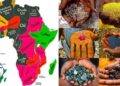



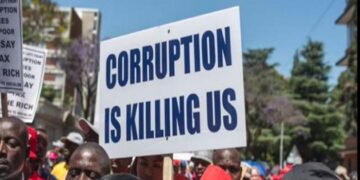





Gold is one of Ghana’s greatest economic assets, contributing significantly to GDP, exports, employment and foreign exchange. Yet weak governance of the gold economy, particularly illegal mining, cross-border smuggling, environmental degradation and the unequal distribution of benefits, creates conditions that violent extremist groups elsewhere in the region have already learned to exploit. Gold itself is not the threat. Poor governance of the gold economy is what transforms an economic asset into what security analysts, borrowing a term first developed in an entirely different field, call a threat multiplier.
That distinction matters because it changes where responsibility lies. Ghana is not vulnerable because it has gold. It is vulnerable to the extent that the institutions meant to govern who mines that gold, who profits from its sale, who monitors its movement across borders and who is included in the communities built around it, have not kept pace with the sector’s growth. This piece traces that argument in three steps. It sets out what gold has meant for Ghana’s economy and what its ungoverned edges have already cost the country. It borrows the threat multiplier concept from climate security literature to explain why weak resource governance amplifies existing vulnerabilities rather than creating new ones outright. And it argues that northern Ghana, sharing a porous and lightly governed border with an active insurgency in Burkina Faso, is the place where that amplification is most likely to become visible first.
THE ENGINE OF GHANA’S ECONOMY
Gold’s importance to Ghana is not a matter of dispute. It is the country’s largest single economic sub-sector, its contribution to gross domestic product rising from 7.97 percent in 2024 to 9.98 percent in 2025 as national output climbed nearly 23 percent to almost six million ounces, according to figures the Ghana Chamber of Mines presented at its 2026 annual general meeting (West Africa Weekly, 2026). Gold export earnings alone reached close to $20 billion in 2025, nearly double the previous year’s total, and drove the country’s overall export receipts to a record
$31.1 billion, according to Bank of Ghana data released in January 2026 (Ghana Gold Board, 2026a). That performance pushed Ghana’s trade balance into a surplus of roughly $13.6 billion and helped lift gross international reserves to a record $13.8 billion, providing the kind of macroeconomic stability that supports everything from the value of the cedi to the government’s capacity to service debt.
Much of that growth in 2025 came not from the large industrial mines that have historically dominated Ghanaian gold production, but from small-scale mining, which grew by nearly 64 percent year on year and, for the first time, overtook large-scale output to capture 52.4 percent of national production (West Africa Weekly, 2026). Part of that shift reflects the establishment of the Ghana Gold Board, a reform intended to formalize gold trading, bring artisanal output into official statistics and reduce smuggling. Formalization, in other words, is not a hypothetical policy option. Ghana has already demonstrated, in a single year, how much value can be recovered simply by bringing informal production into a regulated and taxable channel. This potential is undeniable, but it comes at a steep price that must be addressed
THE WEIGHT BENEATH THE WEALTH
The same informality that the Gold Board is beginning to correct on the trading side has, for two decades been degrading the physical country in ways that are far harder to reverse. As of May
2025, illegal mining had degraded 44 of Ghana’s 288 forest reserves and destroyed more than 5,252 hectares of forest cover, according to figures presented by Lands and Natural Resources
Minister Emmanuel Armah-Kofi Buah at a national dialogue on small-scale mining (Ali, 2025).
River turbidity levels in affected watersheds have been measured at more than 5,000 Nephelometric Turbidity Units, ten times the permissible limit of 500, with mercury and cyanide contamination compounding the damage to ecosystems and to the communities that depend on those rivers for drinking water (Ali, 2025). In January 2025, authorities were forced to shut down a water treatment plant on the River Bonsa in the Tarkwa-Nsuaem area for the second time in five months, cutting off a supply that serves more than 200,000 people, a direct illustration of galamsey’s costs to ordinary Ghanaians rather than an abstraction (Al Jazeera, 2025).
Land conflict follows a similar pattern. Communities in mining districts routinely dispute government allocation of concessions, arguing, often with justification, that the most valuable deposits go to large companies while local artisanal operators are left with marginal ground, a grievance that recurs across the region’s gold-mining economies and not just in Ghana (Institute for Security Studies, 2021). Youth unemployment compounds the problem. Ghana’s mining districts sit atop some of the country’s most valuable mineral wealth, While Chamber of Mines member companies employed just over 13,800 people in 2025, this formal sector represents only a tiny sliver of the workforce; hundreds of thousands more rely on artisanal and small-scale mining, the vast majority operating informally and without legal protections (West Africa Weekly, 2026). Weak state presence in these communities, limited policing, limited services, and licensing systems that remain slow and discretionary, means that this large informal workforce operates largely outside any framework of protection, taxation or accountability. Ghana’s gold has enriched the national balance sheet. It has not, in equal measure, enriched the districts where it is dug out of the ground.
That damage does not hold still while governance catches up, and the cost of delay is now measurable in fiscal terms. Restoring a single hectare of galamsey-degraded land costs the state an estimated $44,000 to $48,000, against a national reclamation bill of more than $264 million for the 5,500 hectares the Lands Ministry says still require restoration, a liability that grows with every month the underlying mining activity continues unchecked (News Ghana, 2026). The compounding effect runs beyond cost, roughly 35 percent of Ghana’s land area is already threatened by desertification, concentrated in the same northern savanna zones that host the country’s border with Burkina Faso and a share of its artisanal gold economy, where erratic rainfall, prolonged drought and land degradation are already straining farming and pastoralist livelihoods and intensifying competition over the fertile land that remains (Climate resilience assessment, 2026). Recent modelling of Ghana’s forest-savanna transition zone finds that mining-driven forest fragmentation and climate aridification now reinforce each other directly: fragmented forest holds less biomass and less moisture, leaving it more vulnerable to the next dry season, which in turn makes natural regeneration less likely without costly intervention (Effect of climatic aridity, 2026). This is the same logic that gives the threat multiplier concept its force in the climate security literature it borrows from. Each additional year of ungoverned extraction does not simply preserve today’s level of risk but raises the price of reversing the damage and narrows the amount of arable, defensible land available to precisely the communities this piece has already identified as northern Ghana’s core vulnerability.
BORROWING A CONCEPT FROM CLIMATE SECURITY
The term threat multiplier did not originate in resource governance or terrorism studies. It was coined in 2007 by the CNA Corporation’s Military Advisory Board, a group of retired United
States generals and admirals led by Sherri Goodman, to describe how climate change would interact with and intensify existing sources of instability, poverty, weak institutions, food and water insecurity, rather than causing conflict on its own (CNA Military Advisory Board, 2007). The insight behind the concept was precise and deliberately modest: climate change rarely creates a security threat from nothing. It takes fragile situations that already exist and makes them worse, faster, and harder to manage. The same logic applies with only minor adjustment to weakly governed resource economies, and gold in West Africa’s Sahelian borderlands is as clear a case as any.
Applied to gold, the concept produces a causal chain rather than a single cause. Expansion of the gold sector, where governance keeps pace, need not lead anywhere troubling. But where governance is weak, expansion tends to move along a fairly consistent path: gold discovery or expansion leads to weak formal oversight of who mines and trades it; weak oversight enables illegal mining and smuggling; illegal mining and smuggling create space for criminal networks and corruption to embed themselves in the trade; corruption and unequal benefit-sharing generate community grievances; unresolved grievances fall hardest on marginalized and unemployed youth; and marginalized youth, in border areas where an armed group is already active, become more susceptible to recruitment. Violent extremism, on this account, is not the direct product of gold. It is the last link in a chain that weak governance makes possible at every earlier stage.
Gold expansion → weak governance → illegal mining and smuggling → criminal networks and corruption → community grievances → youth marginalization → vulnerability to violent
extremist recruitment
This is not a theoretical chain. Research by the Institute for Security Studies has traced its operation across the Sahel’s gold-mining regions with some consistency. In Senegal’s Kédougou and Tambacounda regions, researchers found that gold mining creates precisely the conditions, weak state presence, informal economies and cross-border trafficking routes, that could allow violent extremist groups to expand into West Africa’s coastal states (Institute for Security Studies, 2022). In western Mali’s Kayes region, extremist groups have already tapped into artisanal gold mining to obtain the financial, logistical and operational resources needed to sustain attacks, partly by exploiting the same land-allocation grievances documented above (Institute for Security Studies, 2021). Across the wider Sahel, artisanal and small-scale gold mining, much of it unlawful, is estimated to account for roughly half of regional gold production, supporting the livelihoods of more than 1.8 million people even as violent extremist groups and armed bandits compete to control mining sites, tax miners directly, and use that control to recruit (Institute for Security Studies, 2025). A 2022 review of the sector similarly found that artisanal gold in Burkina Faso, estimated at up to 30 metric tonnes annually, is smuggled through under-taxed neighbouring markets, generating exactly the kind of opaque, low-oversight revenue stream that extremist financing depends on (Africa Defense Forum, 2022). None of this is unique to Ghana and that is precisely the point. Ghana is not immune to a mechanism that has already played out repeatedly, in the mining economies of its immediate neighbours.
WHY NORTHERN GHANA IS THE PRESSURE POINT
Northern Ghana is where this regional mechanism becomes a Ghanaian question rather than a neighbour’s problem. The country shares a roughly 600-kilometre border with Burkina Faso, a state that has lost control of more than half its territory to Jama’at Nasr al-Islam wal Muslimin (JNIM), the al-Qaeda-affiliated coalition driving the world’s fastest-growing insurgency. Ghana has not suffered a major attack, and no evidence currently shows the group operating inside the country’s gold sector. But Ghanaian and regional security officials increasingly describe the country’s Upper West and Upper East regions as a logistical rear base for the insurgency next door, a place where fighters cross to rest and resupply and on the account of one senior Ghanaian security official explaining the absence of attacks so far, avoid disturbing the very territory they depend on: “You won’t destroy where you sleep, would you?” (Lewis & Adombila, 2024).
Gold-rich border districts fit exactly this dynamic. Northern Ghana’s artisanal mining economy, concentrated around Wa, Tumu, Jirapa, Hamile and Bolgatanga, is smaller and less mechanized than the south’s, but it is informal in the same ways, and it overlaps closely with the same smuggling corridors, Hamile, Tumu and Paga among them, that already carry gold, fuel, cattle and diverted mining explosives across the border in both directions (Hunter & Ofosu-Peasah,
2025). A substantial share of northern Ghana’s gold output is already sold informally to Burkinabe buyers rather than through Ghanaian channels, in part because miners across the border have historically captured a noticeably larger share of the global spot price than their Ghanaian counterparts, a gap widened further by the cedi’s sharp depreciation against the CFA franc in recent years (Hunter & Ofosu-Peasah, 2025). That price and currency asymmetry gives northern Ghanaian miners a persistent financial incentive to route gold and with it, income, information and trust toward actors operating on the Burkinabe side of a border the state police’s only lightly.
This dynamic primarily affects populations navigating significant structural challenges in their relationship with central governance frameworks. Pastoralist and small-scale mining communities in the north experience persistent implementation gaps regarding national identification, livestock policy and regulatory consistency, highlighting a need for enhanced engagement beyond election cycles (Hunter & Ofosu-Peasah, 2025). While these communities maintain no inherent alignment with extremist movements, regional precedents suggest that marginalized cohorts within informal resource sectors often represent a governance opportunity. In the absence of robust formal protections and integrated oversight, these under-regulated corridors can become susceptible to external influence. Consequently, northern Ghana serves as a critical focal point where proactive policy interventions can address the preconditions of the threat multiplier chain before they escalate into broader security vulnerabilities.
GOVERNING THE THREAT MULTIPLIER
The policy response this argument points toward is not primarily military, and it does not require inventing new institutions. Ghana already has the architecture recognized by governance experts as the standard toolkit for converting mineral wealth into stable development: a functioning Extractive Industries Transparency Initiative (EITI) chapter, a sovereign minerals investment fund, a statutory revenue-sharing formula with subnational government, and an active land reclamation programme. What each currently lacks is scope, scale or a mandate specific to the risk this piece has documented. Four concrete extensions follow, aimed at reach and precision rather than new machinery.
First, the Ghana Extractive Industries Transparency Initiative (GHEITI), which scored 82.5 out of 100 against the 2019 EITI Standard in its most recent validation, currently reconciles company payments and government revenue primarily for large-scale mining and, since a more recent expansion, oil and gas (EITI, 2026). It does not yet systematically disaggregate and publish data on the informal, cross-border gold flows this piece has documented in the north, the 60 to 70 percent of northern output moving to Burkinabe buyers, or the financiers who currently operate under aliases and sit entirely outside any disclosure regime. Extending GHEITI’s reporting mandate, or building a parallel requirement into the Gold Board’s own licensing system, to capture beneficial ownership and buyer information for artisanal gold specifically in the five northern regions would convert an acknowledged data gap into a monitored one, addressing a fundamental principle of resource governance: revenue transparency is essential for accountability.
Second, the Minerals Income Investment Fund ( MIIF), Ghana’s sovereign minerals fund, posted a GH¢1.1 billion audited profit in 2025 and received GH¢5.39 billion in royalty income in the first half of 2026 alone (Minerals Income Investment Fund, 2026). A dedicated window within MIIF, sized at a fixed and published share of royalty income rather than left to annual discretion, and allocated specifically to reclamation and formalization support in the five northern regions, would address two critical gaps in the current arrangement: it would insulate a defined portion of mineral revenue from short-term political reallocation, and tie that revenue transparently to the districts bearing the environmental and security cost of extraction, rather than treating gold income as fully fungible with the general budget.
CONCLUSION
Gold is not a threat to Ghana. It is one of the country’s genuine strategic assets, and the record export earnings of 2025 are proof of what the sector can deliver when even partially formalized. The danger lies in what weak governance allows that asset to become: an amplifier of poverty, exclusion and criminal opportunity in precisely the districts least able to absorb those pressures, and precisely the districts that sit closest to an active regional insurgency. Ghana still has the advantage of time. No evidence today shows violent extremist groups embedded in the country’s gold economy. But the mechanism by which that could change is not hypothetical; it has already played out in Senegal, Mali and Guinea, in mining economies that looked, in their earlier stages, much like northern Ghana’s looks today. Whether Ghana converts that warning into durable governance, or waits for the threat multiplier to finish multiplying, is a policy choice the country is still in a position to make.
REFERENCES
Africa Defense Forum. (2022, August 15). Gold finances crime. ADF Magazine.
Al Jazeera. (2025, January 22). As gold prices surge, Ghana faces ‘looming crisis’ over illegal mining.
Ali, B. M. (2025, May 10). Ghana loses 44 forest reserves, over 5,252 hectares destroyed by
galamsey — Lands Minister. Graphic Online.
Citi Newsroom. (2026, July 15). 1,335 acres of galamsey-degraded land reclaimed in 2025 –
Lands Minister.
Climate resilience assessment and adaptation strategies for pastoralist and farming communities
in northern Ghana. (2026). Discover Sustainability.
https://link.springer.com/article/10.1007/s43621-026-02972-w
CNA Military Advisory Board. (2007). National security and the threat of climate change. CNA
Corporation.
Effect of climatic aridity on above-ground biomass, modulated by forest fragmentation and biodiversity in Ghana. (2026). Earth, 7(1). https://doi.org/10.3390/earth7010007
EITI. (2026). Ghana. Extractive Industries Transparency Initiative.
https://eiti.org/countries/ghana
Ghana Gold Board. (2026a, January 28). Ghana records US$20bn in gold export earnings in
2025; more than double 2024 level.
https://goldbod.gov.gh/ghana-records-us20bn-in-gold-export-earnings-in-2025-more-than
-double-2024-level/
Ghana Gold Board. (2026b, February 26). GoldBod, Lands Ministry to lead land reclamation
efforts in mining areas – Finance Minister.
HotDigitalOnline. (2026, June 18). GoldBod pumps GHS35m to reclaim galamsey-ravaged
forest.
https://www.hotdigitalonline.com/politics/goldbod-pumps-ghs35m-to-reclaim-galamsey-r avaged-forest
Hunter, M., & Ofosu-Peasah, G. (2025). Violent extremist threats to northern Ghana’s gold
sector. Global Initiative Against Transnational Organized Crime.
5.pdf
Institute for Security Studies. (2021, April 14). How western Mali could become a gold mine for
terrorists. ISS Africa.
https://issafrica.org/iss-today/how-western-mali-could-become-a-gold-mine-for-terrorists
Institute for Security Studies. (2022, February 23). Preventing violent extremism in Senegal:
Threats linked to gold mining. ISS Africa.
Institute for Security Studies. (2025, August 12). Unravelling the illicit economies that sustain
terrorism in the Sahel. ISS Africa.
Lewis, D., & Adombila, M. A. (2024, October 26). In Ghana, Sahel jihadis find refuge and
supplies, sources say. Reuters.
Minerals Income Investment Fund. (2026). MIIF posts GH¢1.1bn audited profit in 2025, achieves GH¢5.39bn royalty receipts in first half of 2026. https://miif.gov.gh/
News Ghana. (2026, February 6). Ghana faces US$264m bill to restore 5,500 hectares destroyed
by galamsey. https://www.newsghana.com.gh/ghana-faces-us264m-bill-to-restore-5500-hectares-destro yed-by-galamsey/
West Africa Weekly. (2026, June 11). Ghana’s gold output surges 23 percent to nearly 6 million
ounces in 2025 as small-scale miners take the lead.