







Introduction
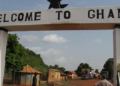
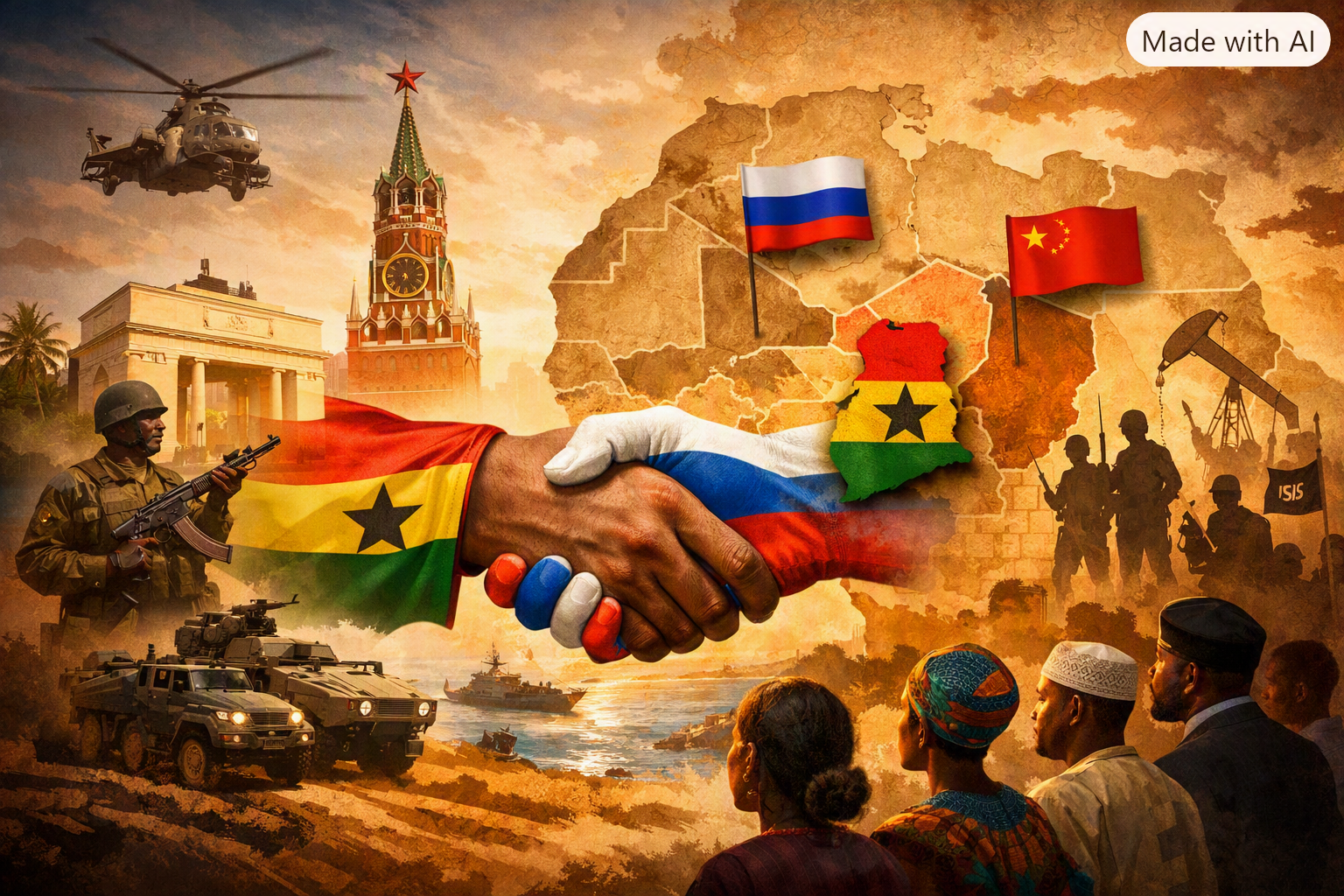
Ghana and Russia have taken another step towards strengthening bilateral relations with the signing of an agreement waiving visa requirements for holders of diplomatic and service passports. The agreement was signed in Moscow on 17 August 2026 during an official visit by Ghana’s Foreign Minister, Samuel Okudzeto Ablakwa, and represents an important development in Ghana–Russia relations. Importantly, however, the arrangement does not provide visa-free travel for ordinary Ghanaian or Russian passport holders; it applies specifically to diplomatic and service passport holders.
On its face, the agreement is a routine diplomatic instrument. Such arrangements facilitate official travel, consultations, negotiations and technical cooperation between governments. Yet the timing makes the agreement worthy of closer examination. Russia’s role in Africa has changed considerably over the past decade.
In West Africa, Moscow has developed particularly close security relationships with Mali, Burkina Faso and Niger and has expanded its engagement towards the coastal states. Russia has also reportedly sought closer security relations with the Economic Community of West African States (ECOWAS), potentially giving Moscow a formal channel of engagement with the organisation.
For Ghana, therefore, the question is not whether it should engage Russia. As a sovereign state, Ghana has every right—and indeed a strategic interest—in maintaining relations with all major powers. The more important question is what kind of relationship should Ghana develop with Russia and how can it maximise the benefits of that relationship without creating new forms of strategic dependence.
This question is particularly important because Ghana occupies a strategically sensitive position between the relatively stable coastal states of West Africa and an increasingly turbulent Sahel.
Russia’s Changing Role in West Africa
Russia’s engagement with Africa has evolved from the largely ideological relationships associated with the Soviet period into a more pragmatic and transactional form of geopolitical engagement. Contemporary Russian policy combines diplomacy, military cooperation, arms supplies, economic interests, energy cooperation and political influence.
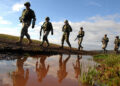
The transformation of the Wagner Group into the state-controlled Africa Corps is particularly significant. Russia has increasingly brought its African security activities under the authority of the Russian state, strengthening the connection between military cooperation and Moscow’s broader foreign-policy objectives. In the Sahel, Russian personnel and equipment have become important components of the security partnerships established with military-led governments.
Mali provides the clearest illustration. Following the deterioration of relations between the Malian military government and France and other Western partners, Russia became an important security partner. Similar patterns subsequently emerged in Burkina Faso and Niger.
This development has fundamentally altered West Africa’s strategic environment.
Russia is no longer merely an external actor with interests in Africa. It is becoming an embedded security partner in parts of West Africa.
What Does the Visa Agreement Actually Change?
It is important not to exaggerate the significance of the visa agreement.
The arrangement concerns diplomatic and service passport holders. It does not open Ghana’s borders to ordinary Russian citizens without visas.
Nevertheless, diplomatic and service passports are precisely the instruments used by governments to facilitate the movement of officials involved in international relations, security, economic negotiations and technical cooperation.
The agreement therefore reduces the administrative barriers to official Ghana–Russia engagement. This could produce several positive outcomes.
- First, it can facilitate more frequent diplomatic consultations.
- Second, it can support trade and investment negotiations.
- Third, it can facilitate technical and educational cooperation.
- Fourth, it can improve communication between government agencies.
- Fifth, it can support security dialogue at a time when Ghana faces a rapidly changing regional security environment.
- Sixth, Russian intelligence agents could come through Ghana enroute to other parts of West Africa without the scrutiny a visa process provides.
Ghana has had diplomatic relations with Russia since 1958 and the question to ask is why now? Ghana’s trade volumes with Russia are not significant in any way to engender the establishment of these waivers.
The Ghanaian Foreign Ministry has indicated that the Moscow engagement involves broader areas of cooperation.
The Mali Experience: A Warning and a Lesson
The Malian experience deserves particular attention. Russia’s security relationship with Mali has not produced the decisive stabilisation that its proponents initially anticipated. Indeed, the security environment remains highly challenging.
Moreover, Russian and Malian forces have faced serious allegations concerning civilian casualties and human-rights violations. Human Rights Watch reported in 2026 that an Africa Corps airstrike in Mali killed eight civilians, including three children, in an incident it described as unlawfully indiscriminate.
Russia and Ghana’s Strategic Autonomy
Ghana’s foreign policy should not be reduced to a choice between Russia and the West.
That would be strategically unnecessary and potentially dangerous. Ghana should instead pursue strategic diversification. It should maintain productive relationships with all countries.
This approach is particularly important in a changing international system characterised by intensified competition among major powers. Ghana can purchase fertiliser from Russia while maintaining strong relations with the United States. Such a policy would give Ghana greater bargaining power.
The ECOWAS Dimension
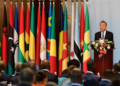
The reported Russian initiative to establish a security cooperation arrangement with ECOWAS adds another layer of significance. Russia has close security relations with Mali, Burkina Faso and Niger, all of which have withdrawn from ECOWAS and created the Alliance of Sahel States.
Moscow’s offer to facilitate dialogue between ECOWAS and the Sahel states could potentially be constructive. West Africa urgently needs mechanisms for restoring regional security cooperation because terrorism does not respect political boundaries. But Russia’s role should be approached carefully.
Moscow is not a neutral mediator in the regional security environment. It has developed close relationships with the very governments that have broken with ECOWAS. Consequently, Russia’s involvement could either help bridge the regional divide or provide Moscow with greater geopolitical leverage across both sides.
What Should Ghana Do?
The decision has already been taken and one cannot advice Ghana to change it. However, Ghana should take note of the following;
- Develop a coherent Russia strategy – Ghana needs a comprehensive national framework identifying areas where cooperation serves Ghana’s interests and areas requiring greater caution.
- Maintain security diversification – Ghana should avoid becoming dependent upon Russia—or any other foreign power—for military equipment, intelligence or security technology.
- Strengthen parliamentary oversight – Major agreements involving defence, natural resources, critical infrastructure or long-term financial commitments should receive appropriate institutional scrutiny.
- Protect strategic infrastructure – Particular attention should be paid to telecommunications, ports, energy systems, digital infrastructure, mining and other
- Strengthen intelligence capacity – The expansion of diplomatic and security relations makes professional counter-intelligence and information-security capabilities increasingly important.
Conclusion
The Ghana–Russia diplomatic and service passport visa-waiver agreement should neither be dismissed as routine nor interpreted as evidence that Ghana has chosen to join Russia’s geopolitical camp. Ghana should cooperate with Russia where cooperation advances Ghanaian interests, just as it should cooperate with the United States, China, Europe, India, Türkiye and others where such cooperation is beneficial.
The guiding principle should be that Ghana is open to all, dependent on none, and strategically loyal to its own national interests.
The visa agreement may ultimately prove to have been a relatively small diplomatic development. But if it becomes the foundation for deeper security, economic and technological cooperation, its importance will be considerably greater.
For Ghana, the challenge is not whether to engage or not to engage Russia. It is how to engage Russia without allowing engagement to become dependence, and without compromising Ghana’s democratic institutions, intelligence security or strategic autonomy.
References
Carnegie Endowment for International Peace. (2026). Russia in Africa: Examining Moscow’s influence and its limits. Carnegie Endowment for International Peace
Ghana Ministry of Foreign Affairs. (2026, August 19). Ghana and Russia sign visa waiver agreement for holders of diplomatic and service passports. Ghana Ministry of Foreign Affairs
Human Rights Watch. (2026). Russia’s Africa Corps kills Mali civilians in indiscriminate attack.
The Sentry. (2026, April 21). Russia doubles down in West Africa: New military deliveries, a Guinea maritime hub, and Africa Corps’ expanding footprint. The Sentry
Adegboyega, A. (2026, August 18). Russia says it will sign security deal with ECOWAS as it offers to bridge Sahel divide. Business Insider Africa.
Critical Threats Project. (2025, July 31). Russia, U.S. compete in West Africa. Critical Threats Project