






Introduction
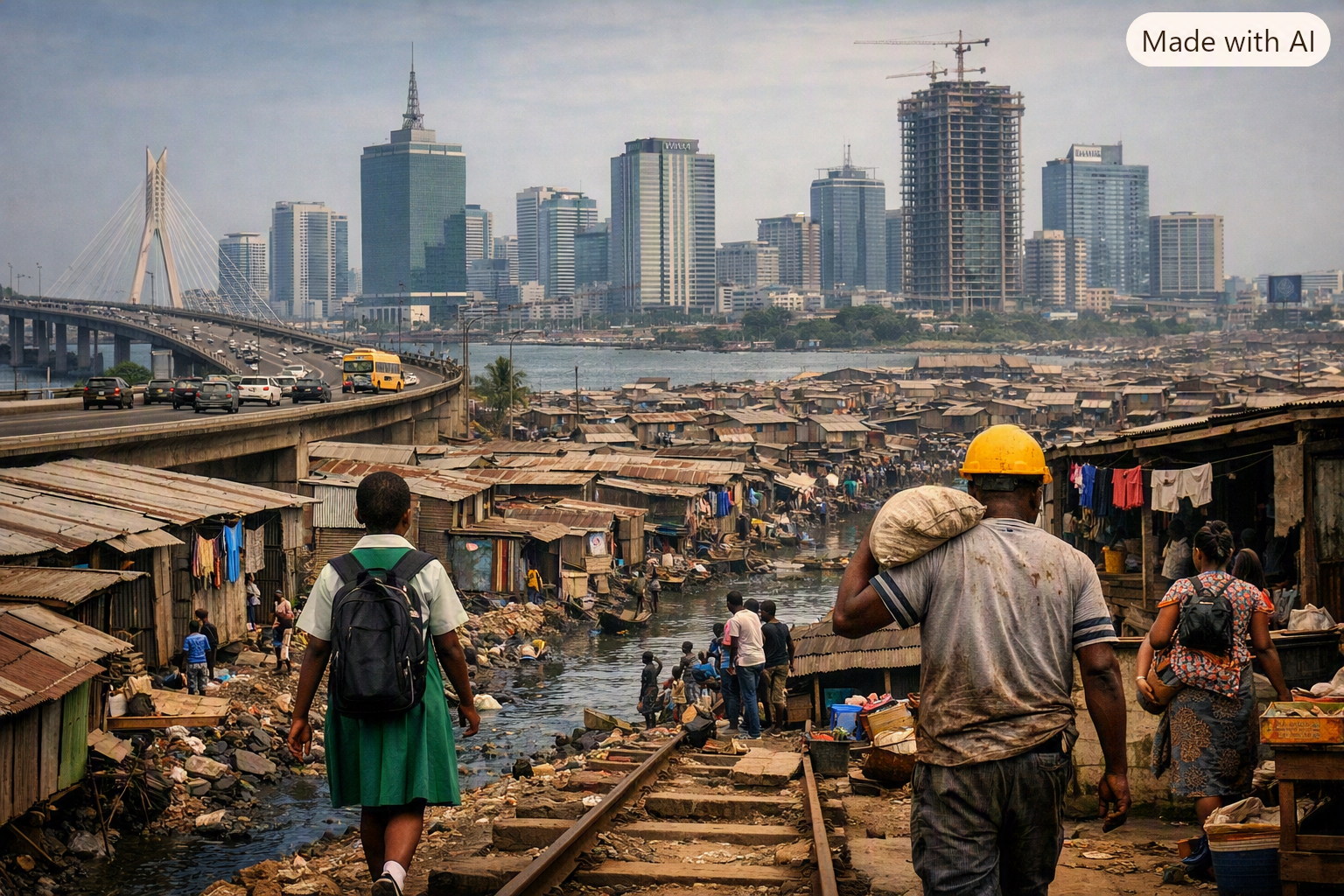
The contemporary world is characterised by deep social inequality and persistent economic crisis, with wealth and opportunities unevenly distributed while millions continue to experience poverty, unemployment and insecurity (Cheshmehzangi & Zou, 2025; Francis, 2020). These inequalities are particularly visible in cities, where extreme wealth and deprivation coexist in close proximity, making inequality an everyday and lived experience rather than simply a statistical difference in income (Kızılkan et al., 2026; Nagler, 2025; Adjei-Cudjoe, 2026).
This condition revives the classical Marxist question of class conflict. For Marx, inequality was rooted in the organisation of economic life and the relationship between those who controlled productive resources and those who depended on their labour (Beller, 2002; Donham, 2001). Class conflict therefore concerned the unequal organisation and distribution of wealth (Chambre & McLellan, 2026), contradictions that Marx associated with the possibility of revolutionary transformation (Berberoglu, 2019). History demonstrates how economic and political inequalities have contributed to revolutionary movements, including those in Russia, China and Latin America (Goldstone, 2014; Tripathi, 2024). In Venezuela, Hugo Chávez mobilised political support around the exclusion of poor citizens and the power of an entrenched oligarchic elite (Wilpert, 2021), while Ghana’s revolutionary periods under Jerry John Rawlings similarly drew upon grievances concerning corruption, economic injustice and privilege.
These examples do not suggest that inequality inevitably produces revolution. They nevertheless demonstrate that persistent economic deprivation can develop into social and political antagonism when people begin to interpret their circumstances as evidence of a system that privileges others. This concern is particularly relevant in African cities, where inequality remains pronounced (World Population Review, 2026) and Africa’s richest 1 percent controls a disproportionate share of wealth while millions remain economically vulnerable (Kamande & Hallum, 2025). Neoliberal urban development has further intensified the proximity between luxury consumption, land acquisition, displacement and extreme deprivation (Ablo & Bertelsen, 2022; Okwei et al., 2025).
Lagos represents this contradiction in an especially visible form. As one of Africa’s major commercial and cultural centres, the city contains conspicuous forms of wealth alongside large numbers of young people engaged in informal and precarious livelihoods. Expensive vehicles, gated communities, luxury homes and celebrity lifestyles exist alongside unemployment and economic marginalisation, with these contrasts further amplified through social media. This article does not portray poor people as criminals or romanticise confrontation with the wealthy. Rather, it examines what increasingly aggressive forms of street begging and informal extraction associated with some agberos reveal about the relationship between visible inequality, entitlement, insecurity and emerging class tension in Lagos. The central concern is that when economic deprivation becomes combined with the belief that visible wealth creates an obligation to give, begging can gradually be transformed into coercion, creating risks for both the wealthy and economically marginalised.
From Charity to Entitlement
Giving money to people experiencing poverty has traditionally been understood as an act of charity, in which the person giving remains free to decide whether to provide assistance. However, the relationship changes when asking becomes expectation, expectation becomes entitlement, and entitlement becomes coercion. A person who asks for money recognises the possibility of refusal, whereas a person who demands it assumes that another person’s resources create an obligation to give.
This distinction is important in understanding some of the videos and interviews circulating on TikTok concerning young men identified as agberos in Lagos. The material shows motorists being confronted and, in some cases, prevented from moving until money is given, with demands reportedly reinforced through intimidation. At this point, the interaction moves beyond charity towards a form of coercive extraction.
Other videos show young men clinging to vehicles, creating scenes that resemble a zombie-apocalypse film. The metaphor does not portray poor people as zombies; rather, it captures the disturbing image of ordinary urban mobility becoming unsafe and unpredictable. The vehicle, normally a symbol of mobility, comfort and wealth, becomes a temporary enclosure separating the driver from those outside who demand money and sometimes prevent it from moving.
Interview accounts add another dimension by suggesting that some of these young men may recognise the vehicles and locations of wealthy individuals and celebrities, particularly in affluent areas such as Lekki. If accurate, this raises the possibility that visible wealth is becoming increasingly identifiable and potentially targetable. The issue is therefore no longer simply begging, but the emergence of a perceived entitlement to the wealth of others: you have wealth; I am poor; therefore, you should give me money.
However, poverty does not automatically produce criminality or create an entitlement to another person’s property. Most economically marginalised people do not engage in coercion. Rather, the problem lies in the interaction between economic hardship, precarious livelihoods, youth marginalisation, political networks and weak institutional responses. Structural inequality does not determine individual behaviour, but it can shape the conditions within which deprivation may, in some cases, develop into entitlement and coercive forms of economic extraction.
When Inequality Becomes a Security Problem
Economic desperation may produce frustration, but the greater danger emerges when frustration develops into entitlement and entitlement into coercion. What may begin as the demand for money can therefore become a wider security problem, particularly when motorists are surrounded or prevented from moving. Fear, panic or attempts to escape such encounters could result in serious accidents, injuries or other emergencies.
The consequences are also psychological and social. If visibly wealthy individuals begin to perceive themselves as targets, they may increasingly rely on private security, avoid certain spaces and withdraw into more protected environments. This can deepen the social distance between rich and poor, creating a cycle in which the wealthy increasingly view the poor as threatening while economically marginalised groups perceive the wealthy as inaccessible. The zombie-apocalypse metaphor captures this sense of collapsing boundaries of safety, although the “zombie” is not the poor person but the social consequences of extreme inequality returning to confront privilege. Policing alone may therefore address the immediate behaviour without resolving the underlying conditions of poverty, unemployment and marginalisation.
A further concern is the political vulnerability created by economically marginalised young people. History shows that populations experiencing economic frustration can be mobilised around grievances concerning corruption, inequality and privilege, as illustrated in different ways by Ghana’s revolutionary periods under Rawlings and the populist politics of Hugo Chávez in Venezuela. The contemporary Lagos situation is clearly different, and there is no evidence that the young men involved constitute a revolutionary movement. Nevertheless, economic frustration can be exploited by politicians, criminal networks, extremist movements or populists who provide resources, protection, identity and a sense of belonging. The deeper danger, therefore, is not simply that inequality may produce anger, but that organised political or criminal interests may discover how to mobilise and direct that anger.
The Regional Impact: The Possibility of Security Contagion
The implications of this phenomenon may extend beyond Lagos and Nigeria. Lagos is one of West Africa’s most influential economic and cultural centres, and what happens within the city is increasingly visible across the region. This raises the possibility of what might be described as security contagion. The concern is not necessarily that insecurity will physically spread from Lagos into neighbouring countries. Rather, the behaviours, ideas and repertoires through which economic frustration is expressed may become visible, circulate and potentially be reproduced in other cities facing similar conditions of inequality and youth marginalisation.
This possibility is intensified by social media. The encounters discussed in this article do not remain confined to the streets of Lagos. Videos showing young men surrounding expensive vehicles, demanding money, preventing motorists from moving or confronting visibly wealthy individuals can circulate rapidly across TikTok and other digital platforms. Young people in Accra, Abidjan, Lomé, Cotonou and other West African cities can observe these encounters almost as they occur. The issue is therefore not simply the movement of people across borders, but the movement of images, ideas and possible forms of action.
The danger lies in the potential normalisation and imitation of particular repertoires of behaviour. A young person watching these videos does not automatically become violent, nor does economic hardship naturally produce coercive behaviour. However, where young people in other cities experience similar conditions of unemployment, exclusion and proximity to visible wealth, the practices observed in Lagos may resonate with frustrations that already exist. What is observed elsewhere can become imaginable locally. A behaviour that previously appeared unacceptable or unusual may gradually become recognised as a possible way of confronting economic exclusion or extracting resources from those perceived to possess excessive wealth.
In this sense, security contagion operates through imitation and adaptation. The precise behaviour may not be reproduced in exactly the same form. Young people in Accra, Abidjan or other West African cities may not identify themselves as agberos or replicate the specific practices associated with Lagos. Yet comparable forms of informal extraction may already exist in different urban contexts. In Accra, for example, some young people sometimes block roads or obstruct pedestrians in order to demand money. While this may differ from the specific practices observed in Lagos, the underlying logic can be similar: visible access to resources becomes a basis for demanding or extracting money, while economic frustration is expressed through direct confrontation with others. Social media can make such behaviour available as a repertoire, allowing it to be observed, discussed, modified and potentially adapted to different urban environments.
This is particularly important because many West African cities are already characterised by high levels of inequality, youth unemployment, precarious livelihoods and increasingly visible forms of luxury consumption. The structural conditions do not have to be imported from Lagos; they already exist in different forms across the region. What can travel, therefore, is the social expression of those conditions. Security contagion emerges when an existing condition of inequality encounters a visible and reproducible model of confrontation.
The concern should therefore not be interpreted as a prediction that Lagos will export insecurity across West Africa. Nor should it become an argument for viewing poor or unemployed young people as a regional security threat. The overwhelming majority of economically marginalised people do not engage in coercion or violence. The argument is instead that extreme inequality can produce similar social tensions across different cities, while digital communication can connect those tensions by allowing people to observe how others respond to them.
The wider danger is that inequality-driven insecurity may cease to be understood as an isolated local phenomenon. If the confrontation between economically marginalised young people and visibly wealthy citizens becomes increasingly normalised and digitally circulated, it could contribute to the development of a wider regional repertoire of insecurity. What begins on a street in Lagos may not remain a Lagos phenomenon if similar structural frustrations exist elsewhere and the methods through which those frustrations are expressed become visible and imitable.
Conclusion and Recommendations
The agbero phenomenon is ultimately a warning about the social consequences of extreme inequality. The problem begins with economic deprivation, but deprivation alone does not explain the phenomenon. The more troubling development occurs when deprivation is transformed into entitlement: when a young person begins to believe that the visible wealth of another person gives him a right to demand money from that person. When that demand becomes coercive, an ordinary act of begging becomes a threat to public safety.
The videos circulating from Lagos are disturbing because they make this transformation visible. Young men surrounding expensive cars, preventing them from moving, striking the glass and demanding money create an image that is both frightening and symbolically powerful. The scenes evoke the visual language of the zombie apocalypse not because poor people are zombies, but because they create an image of a city in which ordinary boundaries of safety appear to be breaking down. The danger should not be underestimated. Today it may be a motorist being forced to give money. Tomorrow it could be a serious accident, a death caused by panic, or the political mobilisation of vulnerable young men by people seeking power.
The appropriate response, however, cannot be to criminalise poverty or treat the entire lower class as a threat. The state must distinguish between legitimate informal livelihoods and coercive behaviour. Citizens must be protected from intimidation and extortion, but young people must also be provided with legitimate economic alternatives.
First, Lagos and the Nigerian government need stronger measures to create employment and livelihood opportunities for economically marginalised young people. Second, street-level coercion and intimidation should be dealt with firmly because poverty cannot justify violence against other citizens. Third, the role of political actors in mobilising economically vulnerable young men should receive greater scrutiny. Fourth, where drug use and addiction are present, appropriate prevention, rehabilitation and enforcement measures are required. Finally, the broader problem of inequality must be addressed through policies that expand economic opportunity and reduce the extreme distance between those at the top and those at the bottom.
The objective should not be to create a city where the rich hide from the poor or where the poor resent the rich. It should be to create a society in which wealth does not become a provocation and poverty does not become a justification for coercion. The deeper lesson from Marxist history is that economic inequality can become dangerous when it is transformed into class antagonism. Lagos does not need another revolution. What it needs is a stronger social contract capable of preventing inequality from becoming a source of permanent insecurity. The real warning is therefore not that the poor will become monsters. It is that a deeply unequal society can create conditions in which the rich begin to fear the poor, the poor begin to feel entitled to the wealth of the rich, and both groups gradually stop seeing each other as citizens of the same city.
Reference
Ablo, A. D., & Bertelsen, B. E. (2022). A Shadowy ‘City Of Light’: Private Urbanism, Large‐Scale Land Acquisition and Dispossession in Ghana. International Journal of Urban and Regional Research, 46(3), 370-386. https://doi.org/10.1111/1468-2427.13085
Adjei-Cudjoe, B. (2026). A game theory approach to insecure slum and urban governance in Accra: Analyzing stakeholder dynamics in Old Fadama. Journal of Urban Affairs, 48(6), 2070–2088. https://doi.org/10.1080/07352166.2025.2523328
Beller, J. (2003). The cinematic mode of production: towards a political economy of the postmodern. Culture, Theory and Critique, 44(1), 91–106. https://doi.org/10.1080/1473578032000110486
Berberoglu, B. (2019). The Marxist Theory of Social Movements, Revolution, and Social Transformation. In: Berberoglu, B. (eds) The Palgrave Handbook of Social Movements, Revolution, and Social Transformation. Palgrave Macmillan, Cham. https://doi.org/10.1007/978-3-319-92354-3_4
Chambre, H., & McLellan, D.T. (2026, August 6). Marxism. Encyclopedia Britannica. https://www.britannica.com/topic/Marxism
Cheshmehzangi, A., & Zou, T. (2025). The deepening divide: Understanding economic inequality and its global impact during COVID-19 crisis. In 101 inequalities amid the COVID-19 crisis and beyond (pp. 43–59). Springer. https://doi.org/10.1007/978-981-95-1308-6_3
Francis, M. (2020). Global structures of inequality and unequal distribution of wealth. In W. Leal Filho, A. M. Azul, L. Brandli, P. G. Özuyar, & T. Wall (Eds.), Decent work and economic growth. Encyclopedia of the UN Sustainable Development Goals. Springer. https://doi.org/10.1007/978-3-319-71058-7_10-2
Goldstone, J. A. (2014). Communist revolutions: Russia, China, and Cuba. Revolutions, 74-89. https://doi.org/10.1093/actrade/9780199858507.003.0007
Jessop, B. (1990). Mode of production. In J. Eatwell, M. Milgate, & P. Newman (Eds.), The New Palgrave: Marxian economics. Macmillan.
Kamande, A., & Hallum, C. (2025). Africa’s Inequality Crisis and the Rise of the Super-Rich. www.oxfam.org. August 19, 2026. https://www.oxfam.org/en/research/africas-inequality-crisis-and-rise-super-rich
Kızılkan, Y., Birinci, S., & Gürgen, O. (2026). Urban poverty and spatial injustice: Invisible limits of inequality. Cities, 175, 107143. https://doi.org/10.1016/j.cities.2026.107143
Nagler, P. (2025). Inequality in cities: Dimensions of urban inequality and mitigating strategies . www.ihs.nl. August 18, 2026. https://www.ihs.nl/en/news/inequality-cities-dimensions-urban-inequality-and-mitigating-strategies
Okwei, R., Bandauko, E., Adjaison, D., Adeetuk, L., Akyea, T., & Arku, G. (2025). Urban Informality, Housing Insecurity and “Bulldozer Urbanism” in Global South Cities: Evidence From Selected Slum Communities in Accra, Ghana. Growth and Change, 56(4). https://doi.org/10.1111/grow.70072.
Tripathi, D. (2024). Revolutions and Rebellions. In: The Impact of Wars on World Politics, 1775–2023. Contributions to International Relations. Springer, Cham. https://doi.org/10.1007/978-3-031-65842-6_5
Wilpert, G. (2021). Venezuela, Bolivarian Revolutionary Anti-imperialism, and Hugo Chávez (1954–2013). In: Ness, I., Cope, Z. (eds) The Palgrave Encyclopedia of Imperialism and Anti-Imperialism. Palgrave Macmillan, Cham. https://doi.org/10.1007/978-3-030-29901-9_335
World Population Review (2026) Gini Coefficient by Country 2026. worldpopulationreview.com. August 19, 2026. https://worldpopulationreview.com/country-rankings/gini-coefficient-by-country