









Introduction
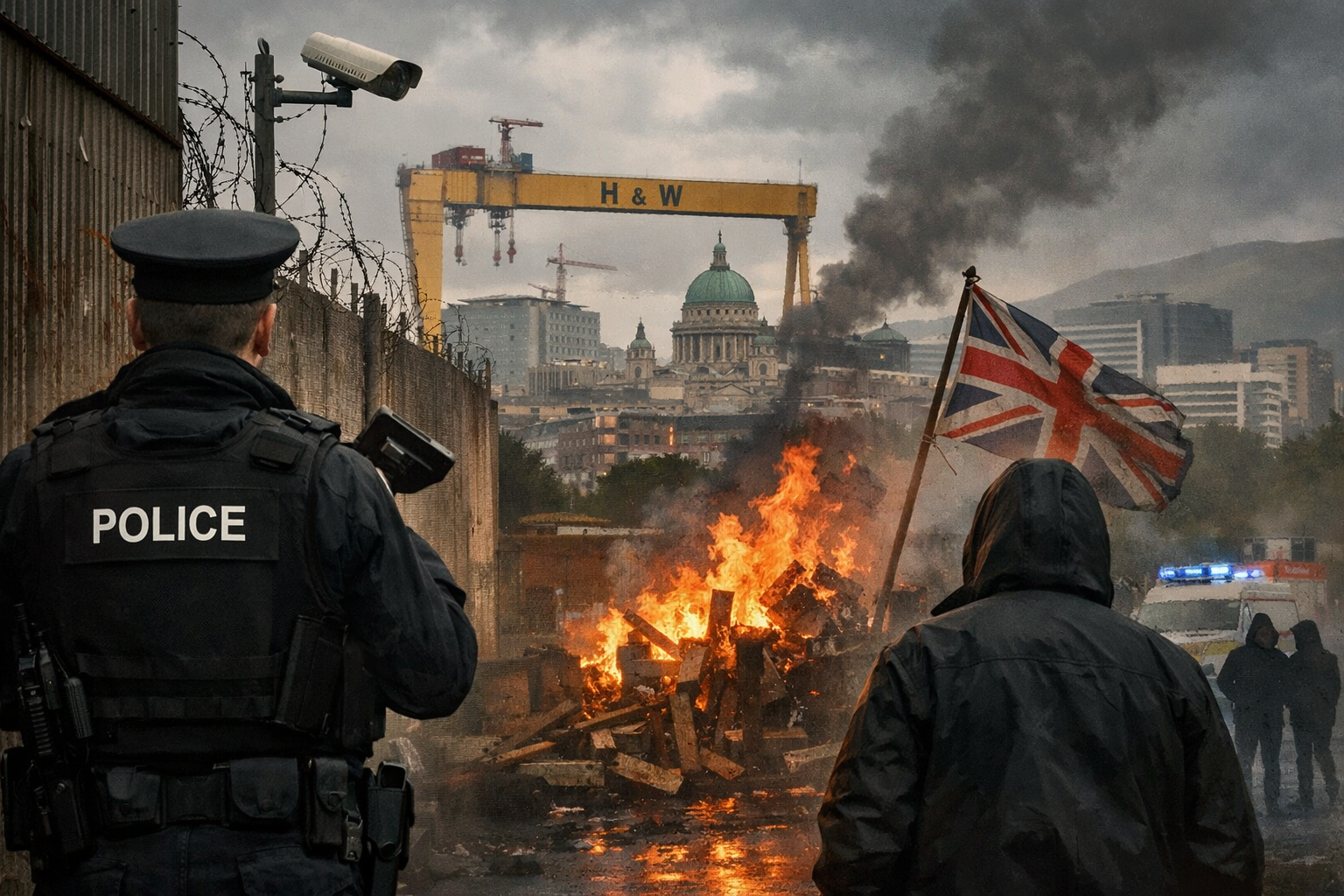
Belfast, the capital of Northern Ireland has recently seen unrest that has brought security, social cohesiveness, and political stability into the spotlight. Episodes of unrest sparked by a violent criminal act, followed by anti-immigration protests spread throughout the city, leading to property attacks, run-ins with the law, and increased anxiety among minority communities (reuters.com; apnews.com). The immediate occurrences have been widely covered as instances of public disruption, but they also raise more general concerns about how security threats change in post-violent conflict countries.
Belfast’s late twentieth century identity was heavily defined by the sectarian violence of the Troubles, a conflict claiming over 3,500 lives shaping the socio-political landscape for decades (McKittrick &McVea, 2002). The 1998 Good Friday Agreement marked a key shift towards peace and power-sharing, significantly reducing political violence (Mitchell et al., 2009). Belfast’s sectarian violence during ‘The Troubles’ (roughly 1969-1998) refers to the conflict between mainly unionist/loyalist Protestants and nationalist/republican Catholics in Belfast and across Northern Ireland from the late 1960s until the 1998 Good Friday Agreement. The thrust of the matter was that Unionists/loyalists (mostly Protestant) wanted Northern Ireland to remain part of the United Kingdom, while Nationalists/republicans (mostly Catholic) wanted Northern Ireland to unite with the Republic of Ireland. The conflict largely ended with the 1998 Good Friday Agreement, which established a power-sharing political system and created frameworks for cooperation between communities. It must be noted though that tensions and some segregation have remained with occasional violence occurring.
Despite progress, post-conflict societies like Northern Ireland face vulnerabilities due to social divisions and economic inequalities (Richmond, 2014). Recent unrest in Belfast shows a shift in tensions, now involving migration, identity, and misinformation, rather than solely sectarian issues. Digital platforms exacerbate grievances and challenge traditional security governance, expanding security concerns to include community protection and public trust in institutions (Lynch et al., 2014; Levi, 2016).
This piece examines recent unrest in Belfast through the human security lens by the UNDP; the approach emphasizes individual and community security over state security, focusing on protection from fear, violence, and instability (UNDP, 1994). The paper suggests that post-conflict security should be viewed as an ongoing, adaptive process that addresses both emerging threats and the legacies of past conflicts.
Belfast’s Post-Conflict Legacy
For nearly thirty years, Northern Ireland was engulfed in the Troubles, a violent ethno-nationalist conflict involving republican and loyalist paramilitary groups, British security forces, and political actors. Between the late 1960s and the signing of the Good Friday Agreement in 1998, more than 3,500 people were killed and tens of thousands injured, with Belfast serving as one of the principal theatres of violence (McKittrick &McVea, 2002).
The Good Friday Agreement in 1998 was a watershed moment, establishing power-sharing institutions and reforms that reduced political violence and fostered cooperation. Notably, the transformation of the Royal Ulster Constabulary into the Police Service of Northern Ireland aimed to build public trust and improve community relations in a divided society (Ellison & Smyth, 2000; Mitchell et al., 2009).
Despite significant progress in peacebuilding, that cannot be mistaken for a complete resolution of deep-rooted social divisions. In Belfast, issues such as residential segregation, contested identities, and “peace walls” continue to influence daily life, indicating that communal boundaries remain even after widespread violence has ceased (Bryne & Mallon, 2023; Kelly, 2024). Richmond (2014) shows that while formal peace agreements can halt organized violence, they do not necessarily resolve underlying grievances, mistrust, or social vulnerabilities that may later resurface.
Recent trends demonstrate that Belfast’s security challenges are evolving rather than diminishing; although sectarian violence has significantly decreased, discussions surrounding migration, identity, and social cohesion have gained prominence, reflecting broader European trends (Murphy, 2022).
Belfast Unrest and Emerging Security Threats
The disturbances in Belfast in June 2026 were sparked by a knife attack involving a Sudanese asylum seeker charged with attempted murder. Following this incident, protests escalated into widespread unrest characterized by vehicle fires, assaults on police, and significant damage to homes and businesses associated with migrants and minority communities. Reports reveal that some families fled their residences, leading to increased fear among ethnic minorities (reuters.com).
Beyond the immediate violence, the unrest indicates a notable shift in security challenges in Belfast. While past insecurity was primarily driven by sectarian conflicts between unionist and nationalist groups, current tensions are increasingly tied to migration issues, identity, and social belonging. Scholars have observed that migration is often ‘securitized’ in Western democracies, portrayed as a threat to public order and national cohesion, resulting in heightened political and social unrest (Hyusmans, 2006 ; Borbeau, 2011).
A feature of the Belfast unrest was the impact of digital communication in enhancing mobilization and amplifying grievances. Videos of the initial attack spread quickly online, and anti-immigration narratives proliferated on social media. Authorities had prior warnings about online discussions concerning potential targets (theguardian.com). This aligns with research on how digital platforms can foster rapid collective action and escalate polarization, turning localized issues into broader security crises (Lynch et al., 2014).
The unrest also affected minority communities, instilling fear and vulnerability, while public officials cautioned that violence could undermine Northern Ireland’s social cohesion (reuters.com). In contrast, large anti-racism demonstrations indicated substantial civic resistance to division, revealing conflicting public reactions to security. Overall, the current security issues in Belfast encompass more than traditional public order concerns, intertwining identity politics, digital mobilization, and community relations, thereby demanding adaptation in post-conflict societies to new forms of insecurity.
Understanding Crisis Through Human Security
The recent unrest in Belfast is looked at through the lens of human security, which prioritizes the safety of individuals and communities over state protection. Originating from the UNDP in 1994, this framework focuses on freedom from fear, want, and the right to live with dignity, making it particularly relevant in post-conflict contexts, where instability arises from not just violence but also social fragmentation and distrust in institutions.
First of all, personal security. Almost immediately, the unrest posed a challenge to personal security. Defined as protection from physical violence, intimidation and fear by the UNDP (1994), residents faced attacks on their homes, property damage, and personal safety threats, while migrant and minority communities reported increased anxiety about potential violence (reuters.com). For those not directly affected, perceptions of insecurity that could jeopardize community well-being and social stability can be lasting (Owen, 2004).
Secondly, the unrest exposed vulnerabilities in community security, which concerns protecting social identities, community relationships and collective wellbeing (UNDP, 1994). Belfast’s history shows how societal divisions can harm stability without large-scale violence. Targetting migrant communities during disturbances increases risks of deepening social tensions and eroding trust between groups. Studies suggest that social cohesion and interpersonal trust are essential for long-term peace and resilience in post-conflict societies (Richmond, 2014 ; Ginty, 2006).
A key feature of the unrest was the influence of digital communication on public reactions. The rapid online spread of videos, rumors, and anti-immigration sentiments fueled mobilization and public anger (reuters.com). While traditional human security frameworks often overlook information security, modern scholars acknowledge that misinformation and online manipulation pose threats to personal safety, social cohesion, and democratic governance (Floridi, 2014). In this, the unrest depicts the role of digital platforms as critical sites for contemporary security challenges.
Political security encompasses the safeguarding of individual rights and public trust in institutions (UNDP, 1994). Government responses, policing strategies, and political leadership are critical in managing unrest. In Belfast, authorities sought to restore order while fostering public confidence and protecting at-risk communities. In post-conflict settings, institutional trust is vital, as perceptions of bias or inadequate protection can hinder peacebuilding efforts (Richmond, 2014).
Lessons for Post-Conflict Societies
For post-conflict societies seeking to sustain peace in a complex security environment, a vital lesson is, peacebuilding is a continuous process, not a fixed achievement. While the Good Friday Agreement decreased political violence, ongoing social divisions and new tensions show that the absence of armed conflict does not eliminate insecurity (Ginty, 2006). Post-conflict societies must remain vigilant to evolving threats that can jeopardize social stability and community trust.
Another lesson concerns the changing nature of security threats. Contemporary challenges are often less likely to emerge from organized armed groups and more likely to arise from identity-based tensions, misinformation, political polarization, and social exclusion. As the Belfast unrest illustrates, local incidents can be rapidly amplified through digital platforms, transforming isolated events into wider crises with significant social and political consequences (Bennett & Livingston, 2018 ; Brym et al., 2018; Slavina & Brym, 2020). Security institutions must therefore develop the capacity to address both physical and informational dimensions of insecurity.
Research on peacebuilding shows that resilient communities are better equipped to withstand periods of tension and prevent escalation into violence (Richmond, 2014). The anti-racism demonstrations and community-led responses that emerged during the unrest suggests that civil society can play a role in countering division and promoting social solidarity. Strengthening community networks and fostering inclusive forms of civic engagement should thus remain central components of post-conflict governance.
There is a need for continued public trust in institutions.
Effective policing, transparent communication, and protecting vulnerable communities are needed for preventing unrest and deepening social fractures. In post-conflict contexts, institutions are evaluated on their ability to maintain order, their perceived fairness and legitimacy (Brezzi et al., 2021). Weak trust can politicize grievances, raising the risk of instability.
Implications for Ghana and West Africa
Northern Ireland differs significantly from countries in West Africa, however, the unrest shows that no country is immune to security threats that are fast evolving.
One clear lesson is that digital technologies, while expanding opportunities for communication, commerce, and democratic participation, can also facilitate the rapid spread of misinformation & wrong narratives capable of escalating local incidents into broader security crises (Bennett &Livingston, 2018). As internet penetration and social media usage continue to increase across West Africa, governments and security institutions must pay equal attention to the risks accompanying digital transformation.
Ghana has earned a reputation as one of Africa’s stable democracies. Unfortunately, it is challenged by political competition, ethnic narratives, and online misinformation. The situation is reminiscent of Belfast’s experience, highlighting that even robust democracies can be susceptible to unrest amplified by digital means. Security measures must evolve to include monitoring information environments and enhancing public resilience to misinformation (Brezzi et al., 2021).
Ghana’s security agencies should adopt a proactive approach. This can be done by fostering cooperation among various security, intelligence and regulatory bodies to tackle disinformation while respecting constitutional rights. Additionally, establishing rapid public communication systems is key for delivering accurate information during heightened tensions to mitigate the impact of misinformation (WHO, 2022).
Beyond that, building societal resilience should be a national priority alongside government action. Enhancing public education on digital literacy, fact-checking, and responsible social media use can help mitigate the spread of misinformation that may lead to violence. Key stakeholders, including community leaders, religious institutions, civil society, and the media, play vital roles in fostering social cohesion and countering harmful narratives. Informed citizens and resilient communities can resist manipulation.
Conclusion
The unrest in Belfast demonstrates that security challenges in the twenty-first century are no longer confined to conventional threats or fragile states. In an era where digital information can influence public behavior as powerfully as physical events, even mature democracies remain vulnerable to rapidly evolving forms of insecurity. For Ghana and other West African countries, the lesson is: safeguarding peace requires not only effective policing but also resilient institutions, responsible digital governance, and informed citizens capable of resisting misinformation and polarization. The best time to prepare for these challenges is before they become crises.
References
Bennett, W. L., & Livingston, S. (2018). The disinformation order: Disruptive communication and the decline of democratic institutions. European journal of communication, 33(2), 122-139.
Bourbeau, P. (2011). The securitization of migration: A study of movement and order. Routledge.
Brezzi, M., González, S., Nguyen, D., & Prats, M. (2021). An updated OECD framework on drivers of trust in public institutions to meet current and future challenges. OECD working papers on public governance, (48), 0_1-60.
Brym, R., Slavina, A., Todosijevic, M., & Cowan, D. (2018). Social Movement Horizontality in the Internet Age? A Critique of Castells in Light of the Trump Victory. Canadian Review of Sociology, 55(4).
Byrne, S., & Mallon, B. (2023). Introduction–Twenty-Five Years on And the Belfast/Good Friday Agreement: Some Critical Reflections. Razprave in Gradivo: Revija za Narodnostna Vprasanja, (90), 5-14.
Ellison, G., & Smyth, J. (2000). The crowned harp: policing Northern Ireland. Pluto Press.
Floridi, L. (2014). The fourth revolution: How the infosphere is reshaping human reality. OUP Oxford.
Ginty, R. (2006). No war, no peace. New York: Palgrave Macmillan.
https://apnews.com/article/belfast-stabbing-riot-racism-immigrants-5c0e74588be3473370ad360081401a54
https://www.theguardian.com/uk-news/2026/jun/11/police-warned-addresses-targeted-belfast-riots
Huysmans, J. (2006). The politics of insecurity: Fear, migration and asylum in the EU. Routledge.
Kelly, G. (2024). Everyday reconciliation in Northern Ireland: Gathering indicators of positive progress within hyperlocal communities in Northern Ireland.
Kittrick, D., & McVea, D. (2002). Making sense of the troubles: The story of the conflict in Northern Ireland. Bloomsbury Publishing USA.
Lynch, M., Freelon, D., & Aday, S. (2014). Syria’s socially mediated civil war. Universitäts-und Landesbibliothek Sachsen-Anhalt.
Murphy, M. C., & Evershed, J. (2022). Contesting sovereignty and borders: Northern Ireland, devolution and the Union. Territory, Politics, Governance, 10(5), 661-677.
Owen, T. (2004). Human security-conflict, critique and consensus: Colloquium remarks and a proposal for a threshold-based definition. Security dialogue, 35(3), 373-387.
Richmond, O. (2014). Failed statebuilding: intervention and the dynamics of peace formation. Yale University Press.
Slavina, A., & Brym, R. (2020). Demonstrating in the internet age: a test of Castells’ theory. Social movement studies, 19(2), 201-221.
UNDP, U. (1994). Human development report 1994: New dimensions of human security. New York. Retrieved December, 12, 2022.
World Health Organization. (2022). WHO guidance on research methods for health emergency and disaster risk management, revised 2022. World Health Organization.