








Introduction
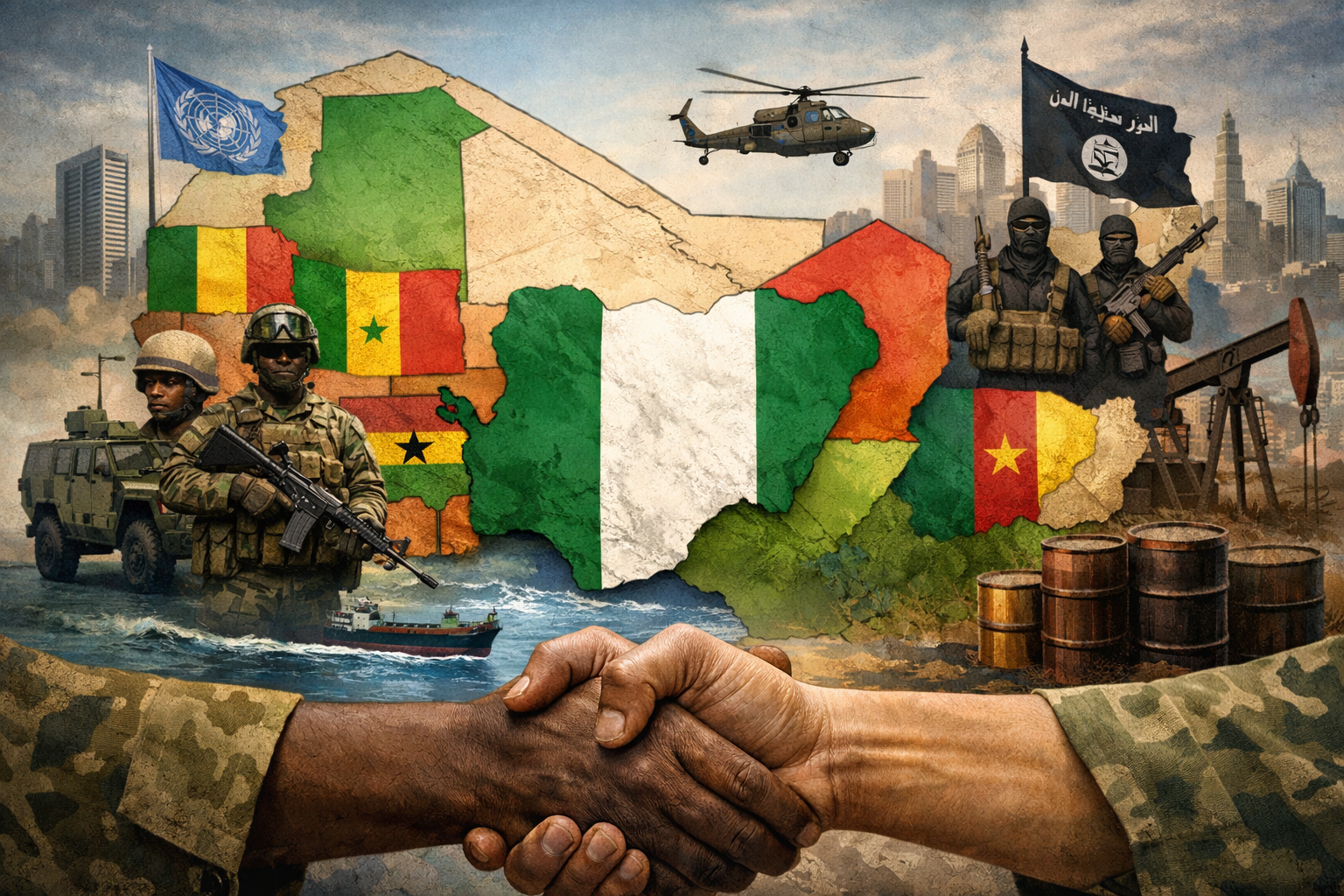
Nigeria’s importance to West Africa extends far beyond its national borders. As Africa’s most populous country and one of its largest economies, Nigeria has long served as a pillar of regional stability, economic integration, and security cooperation. Since independence in 1960, the country has played a leading role in peacekeeping operations, conflict resolution, and the advancement of regional institutions, particularly the Economic Community of West African States (ECOWAS).
Yet Nigeria’s history also reveals the dangers of political exclusion and instability. The country’s civil war (1967–1970), military rule, and recurring ethnic and regional tensions demonstrate how domestic crises can threaten national cohesion and generate wider regional consequences. As Nigeria approaches the 2027 general elections, concerns over political polarisation, economic hardship, insecurity, and electoral credibility have heightened fears that instability could once again reverberate across West Africa.
As Abang and Ademiluyi (2024) observe, political power in Nigeria has historically been unevenly distributed. Between independence and 2022, the northern regions occupied the presidency for approximately forty-two years, either under military or civilian administrations, while the southern regions collectively held power for about twenty years. Even within the South, political leadership has been concentrated largely in the South-West and South-South, leaving many in the South-East feeling politically marginalized. Such perceptions have fueled separatist sentiments and contributed to persistent tensions within the federation.
The implications of these tensions extend beyond Nigeria. The Nigerian Civil War, commonly known as the Biafran War, resulted in widespread displacement, regional migration, and an estimated one to three million deaths. The conflict remains a reminder that instability in Nigeria can quickly become a regional concern.
Nigeria’s Strategic Importance to West Africa
- Demographic and Economic Weight – Nigeria, with a population exceeding 220 million people, accounts for a substantial proportion of West Africa’s population and economic activity (World Bank, 2026). Its large consumer market, entrepreneurial sector, and labor force make it a critical driver of regional growth.
Nigeria’s economy influences trade, investment, banking, telecommunications, energy, and transportation across West Africa. Consequently, economic disruptions within Nigeria often produce ripple effects throughout the region. The 2019 closure of Nigeria’s land borders, for example, significantly affected trade flows and negatively impacted neighboring economies, particularly Benin and Ghana. (Al Jazeera, 2019).
- Security Leadership
Nigeria has historically been the backbone of regional peacekeeping and conflict management. Through the ECOWAS Monitoring Group (ECOMOG), it played decisive roles in ending conflicts in Liberia and Sierra Leone and has consistently contributed troops, funding, and leadership to regional security initiatives (Aworawo, 2019).
Today, Nigeria remains central to efforts aimed at combating terrorism, piracy, arms trafficking, organized crime, and violent extremism across West Africa. Its military capabilities and strategic location make it indispensable to regional security.
- Diplomatic Influence
Nigeria has been one of the principal architects of ECOWAS since its establishment in 1975. It has repeatedly used diplomatic engagement and political leverage to address constitutional crises and political instability within the region.
Examples include Nigeria’s leadership in restoring peace in Liberia and its support for ECOWAS efforts to ensure the peaceful transfer of power in The Gambia following the 2016 election defeat of President Yahya Jammeh. These interventions underscore Nigeria’s importance as a guarantor of regional order and democratic governance.
Why Nigeria Must Remain Intact
Nigeria’s unity is not merely a domestic concern; it is a regional strategic imperative.
First, the fragmentation of Nigeria would likely create significant security vacuums and embolden separatist movements elsewhere in West Africa. Given the country’s ethnic, religious, and geographic diversity, any serious threat to its territorial integrity could encourage instability beyond its borders. This is particularly worrying in the light of its fight against terrorist groups such as Boko Haram. Without a central authority to protect citizens, militant groups such as Boko Haram and separatist groups within areas such as the Niger Delta would create chaos.
Second, Nigeria’s economy serves as a major engine of regional commerce. Political turmoil could disrupt trade routes, discourage investment, weaken financial markets, and reduce economic growth across neighboring states.
Third, instability in Nigeria could trigger humanitarian crises. Large-scale violence or political breakdown could lead to mass displacement, placing pressure on countries such as Ghana, Benin, Niger, Chad, and Cameroon. Such developments would strain public services, increase security risks, and complicate regional development efforts.
The lessons of the Biafran War remain relevant. The conflict demonstrated how unresolved grievances, political exclusion, and ethnic polarization can escalate into large-scale violence with devastating humanitarian consequences.
The 2027 Elections: A Strategic Test
The 2027 general elections represent a critical test of Nigeria’s democratic resilience and national cohesion. Several factors increase the potential risks.
- Political Polarization & Instability – Political competition in Nigeria increasingly reflects ethnic, religious, and regional identities. While diversity is a source of strength, it can become a source of instability when political contests are perceived as zero-sum struggles for power and resources. Electoral violence or constitutional disputes could weaken democratic norms across West Africa at a time when ECOWAS is already grappling with coups, democratic backsliding, and governance challenges. Sampson Itodo, believes that while the majority of Nigerians are interested in voting in 2027, a substantial number …. believe their vote makes no difference and that electoral outcomes are predetermined….driven by a triangle of compromise involving security agencies, INEC, and the judiciary. This creates distrust in electoral outcomes and leads to violence.
- Economic Pressures – Persistent inflation, unemployment, poverty, and currency instability have increased public frustration. What is concerning is that economic hardship often magnifies political grievances and can heighten tensions during election periods.
- Security Challenges – The continued terrorist activities in the Northeast, banditry in the Northwest, separatist agitation in the Southeast, kidnapping, and communal violence in several regions. According to the Center for Strategic and International Studies (2023), elections in Nigeria frequently occur within an environment characterised by insecurity and non-state violence.
- Information Disorder – The growing influence of social media has increased the spread of misinformation, hate speech, and politically motivated disinformation. Such narratives can inflame tensions, undermine confidence in electoral institutions, and contribute to unrest.
Potential Regional Consequences of a Chaotic Election
A disputed or violent election in 2027 would likely have consequences extending well beyond Nigeria.
- Political Instability and Economic Disruption – Political uncertainty would likely discourage investment, reduce trade, and increase financial volatility. Given Nigeria’s central role in regional commerce, neighboring economies would inevitably feel the impact.
- Security Deterioration – Periods of political instability often create opportunities for extremist groups, insurgents, and criminal networks to expand their activities. Security forces preoccupied with internal unrest may struggle to address existing threats effectively.
- Humanitarian Pressures – Violence could generate large-scale displacement and refugee flows into neighboring countries, creating humanitarian and security challenges across the region. Given the current population of the country, the large scale dispersion of Nigerians across West Africa would be on a scale far beyond what the smaller nations can handle. It could be catastrophic.
- Weakening ECOWAS – Nigeria remains the dominant political and financial actor within ECOWAS. A major domestic crisis could diminish its ability to support peacekeeping operations, mediation efforts, and regional security initiatives at a time when the organization faces significant internal challenges.
Policy Recommendations
To reduce the risks associated with the 2027 elections, several measures are necessary:
- Ghana and other key ECOWAS nations must engage Nigeria and provide support to strengthen the independence, credibility, and transparency of electoral institutions. Additionally, the Nigerian citizens in ECOWAS countries must be engaged, prior, during and after the elections to ensure peace.
- Ghana and ECOWAS, must work to promote inclusive political dialogue and national reconciliation across regional, ethnic, and religious divides, and enhance voter education and improve public confidence in the electoral process.
- Nigeria as a country must work hard to counter misinformation, hate speech, and incitement through coordinated efforts on all media and technology platforms.
- ECOWAS must expand domestic and international election observation missions and strengthen preventive diplomacy through the African Union.
- Nigeria as a country must work to address longstanding grievances related to political inclusion, governance, and equitable development.
- Key Security and Intelligence organisations operating outside of governments must be consulted and involved to ensure peaceful long term election impacts in Nigeria.
Conclusion
Nigeria’s stability is inseparable from the stability of West Africa. Its demographic weight, economic influence, military capacity, and diplomatic leadership make it the region’s anchor state. The lessons of Nigeria’s history, particularly the Biafran War and decades of military rule, underscore the dangers of political exclusion, polarization, and institutional weakness.
The 2027 general elections therefore represent more than a domestic political contest. They are a strategic test of Nigeria’s unity, democratic resilience, and regional leadership. A peaceful and credible election would strengthen democratic governance and reinforce regional stability. Conversely, a chaotic electoral process could trigger political, economic, security, and humanitarian consequences across West Africa.
For Nigeria and its neighbors alike, ensuring a peaceful 2027 election is not simply a political objective—it is a regional imperative.
References
Abang, J. O., & Ademiluyi, A. O. (2024). Political power distribution, regional marginalization and national cohesion in Nigeria. Journal of African Political Studies, 12(2), 45–63.
Al Jazeera. (2019, October 14). Nigeria’s land borders closed to all goods, official confirms. https://www.aljazeera.com
Aworawo, F. (2019). Nigeria and ECOWAS since 1999: Continuity and change in multilateralism and conflict resolution. Ihafa: A Journal of African Studies, 11(1), 1–22.
Buzan, B., & Wæver, O. (2003). Regions and powers: The structure of international security. Cambridge University Press.
Center for Strategic and International Studies. (2023). Identity, insecurity, and institutions in the Nigerian elections. CSIS. https://www.csis.org
Economic Community of West African States. (2025). About ECOWAS. ECOWAS Commission. https://www.ecowas.int
Reuters. (2025, May 28). Jihadist violence and coups test West Africa’s ECOWAS bloc at 50. Reuters.
Reuters. (2026, April 20). Nigeria tightens broadcast rules to curb divisive content ahead of 2027 elections. Reuters.
Samson Itodo (2026, Feb 9) Democracy under pressure: Threats to Nigeria’s 2027 elections at https://www.idea.int/news/democracy
Vasilina, R. (2021). Nigeria’s role in ECOWAS peacekeeping. Modern Diplomacy. https://moderndiplomacy.eu
World Bank. (2026). Nigeria overview. World Bank Group. https://www.worldbank.org/en/country/nigeria/overview