







Introduction
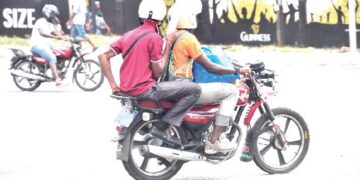
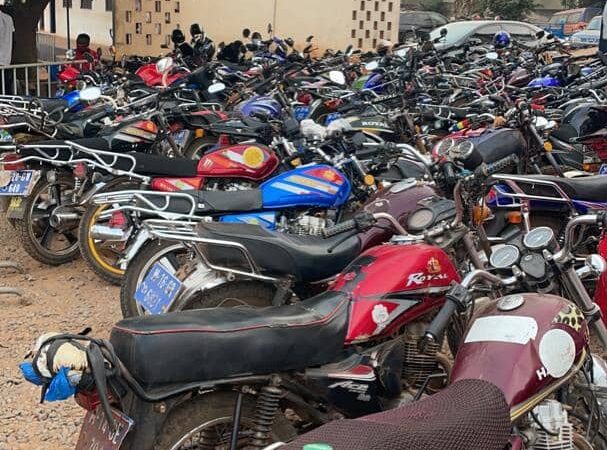
Ghana’s motorcycle boom is reshaping insecurity. They’re everywhere!, from dusty village tracks to the jammed arteries of Accra. The two-wheeled machine provides speed, convenience, and access in areas where official public transportation is either nonexistent or unreliable. A simple machine for affordable mobility has become a multi-headed security problem. There is an ominous consequence to this quick spread: in addition to the well-known road safety issue, motorcycles are subtly changing crime, smuggling, and social vulnerability patterns in ways that endanger both individual and national security.
Motorcycles were responsible for 34% of all traffic deaths in 2021, according to the National Road Safety Authority (NRSA). Studies conducted at large hospitals shows that a significant portion of trauma hospitalizations, head injuries, and long-term disability are caused by motorcycle-related incidents, many of which involve unprotected riders and indifferent helmet compliance (Addo-Lartey et al., 2025 ; graphic.com.gh).
However, concentrating just on crashes obscures other aspects of security. Authorities have noted an increasing correlation between motorcycle use and criminal behavior, including hit-and-runs, snatch-and-run robberies, and what appear to be organized theft and smuggling organizations, in recent reports on the increased prevalence of unofficial commercial motorcycles known as “okada” (thebftonline.com).
Compounding the issue is the persistent regulatory vacuum. The Road Traffic Regulations 2012 (L.I. 2180) as at December 10th 2025 prohibited using motorbikes for commercial passenger transportation, however enforcement has proven to be virtually nonexistent. As a result, there is a vast unofficial motorbike industry blurring the line between law-abiding riders and illegal operators although news have gone around that the NRSA looks to commercialise okada as at March 2025 (gbcghanaonline.com ; graphic.com.gh).
In the wave of increased motocycle use, enforcement challenges, and economic pressures on youth, the okada are becoming an unexpected vector for crime, particularly smuggling and enabling quick getaways from urban crime, providing a ready-made avenue for young people without jobs to be recruited into illegal networks. This article looks at the ongoing change, notes the flaws contributing to or ignoring this problem and its implications, and presents potential intervention methods to lessen the threat posed by motorcycles as tools of illicit activity.
Motorcycles pivotal to modern illicit networks
Due to their price, fuel efficiency, and off-road capability, motorcycles are a major logistical instrument for illicit commerce in Ghana. They successfully facilitate the transportation of contraband, including fuel, weapons, drugs, and stolen goods, by allowing smugglers to navigate challenging terrain and avoid governmental observation. This transportation method allows for small, frequent shipments, reducing detection risks and enhancing smuggling networks across regions like the Sahel and coastal West Africa (Beevor, 2023). In particular, motorcycles are utilized in fuel smuggling and the trafficking of stolen vehicles and parts, where their ease of movement and re-registration supports ongoing criminal activities in spite of law enforcement efforts (the africareport.com; Bernard, 2025). Stolen bikes are easily transported, stripped for parts, re-plated, or exported through unofficial channels; Ghanaian police for instance have reported numerous recovery of stolen bikes and the apprehension of crime syndicates that transported vehicles via inland and coastal routes. The ease with which bikes can be re-registered or sold in secondary markets sustains a theft-to-market pipeline that undercuts enforcement efforts (Bernard, 2025 ; ghanaweb.com).
The strategies that smugglers use is similar to the ones used by insurgent groups in Mali, Burkina Faso, and Niger, presenting a strategic security risk in the Sahel. These armed groups have access to the markets that supply civilians and use motorbike units for quick strikes and mobility (Beevor, 2023 ; Bernard, 2025). Recent seizures of motorcycles bound for such markets highlight this issue, with states responding by imposing bans or seizing bikes to mitigate instability. Furthermore, the integration of young, unemployed riders into smuggling chains creates a readily available labor force for both smugglers and potential armed groups making it hard to detect the diffrence between survival strategies and organized crime.
The Ghanaian Youth
Widespread unemployment have driven the youth into commercial motorcycle riding often informally and without regulation (cisanewsletter.com). For a lot of youth, okada riding offers a quick income with relatively little upfront cost, making it one of the few accessible economic lifelines. Unfortunately, the same economic vulnerability also exposes them to criminal networks (accrastreetjournal.com). Reports have shown that some young riders are ambushed, robbed, or forced into robbery or smuggling operations when they pick up dangerous passengers under the guise of legitimate rides. For instance, a 19-year-old rider was killed after gunmen posing as passengers commandeered his bike (myjoyonline.com). Since many operate under informal conditions like driving underaged, unlicensed, or without proper documentation, these riders have little protection. That makes them and those who employ them vulnerable.
Weak Regulations Enabling Crime
The regulation of motorcycles and tricycles in Ghana is characterized by historical weakness and inconsistency. Although the law banned motorcycles and tricycles for fare-paying transport, enforcement is sporadic, allowing many commercial riders to operate without valid licenses or proper registration (cisanewsletter.com ; thebftonline.com). This regulatory gap fosters criminal activity, as motorcycles with false plates or unlicensed riders are difficult to trace, benefiting thieves and organized crime. Law enforcement struggles due to loopholes, with many riders escaping crackdowns through flight or bribery. Consequently, stolen motorcycles are often re-registered or sold, hindering efforts against theft and smuggling, turning the transport sector into a permissive environment for crime (ghanaweb.com ; thebftonline.com).
Urban Street Crime
In Ghanaian cities, the rise of motorcycles is linked to an increase in street-level crime, including robberies and mobile thefts. Criminals exploit the agility of motorbikes to evade capture, with recent cases highlighting their danger, such as the murder of a commercial rider during a robbery (myjoyonline.com). Communities have taken vigilante actions against thefts associated with unregistered bikes (graphic.com.gh). The challenge for law enforcement is compounded by the proliferation of unregulated motorcycles, resulting in chaotic streets where crime flourishes, thus posing a significant threat to urban safety despite their legitimate use for transport and livelihoods (graphic.com.gh).
Implications for National Security
Armed groups in the Sahel including JNIM and IS-Sahel, use motorcycles because they enable quick attacks and evasive moves through difficult terrain. Their affordability, fuel efficiency, and ease of maintenance make them preferable to larger vehicles in rural and semi-desert regions (Beevor, 2023). What this means is that even countries not currently at war like Ghana are potentially vulnerable, because smuggling routes, trafficked motorcycles, and illicit economies respect few borders; and instability in one country can spill over into its neighbours.
Illicit economies associated with smuggling and potentially human trafficking generate substantial revenues that support armed groups and insurgencies. As these illicit markets grow, they undermine the legitimacy and capacity of formal institutions (law enforcement, customs, judiciary), weakening overall governance and making long-term security more difficult to maintain (africansecurityanalysis.org).
The porous borders across West Africa fomerly used to facilitate trade and migration have now been exploited for illicit activities and other times combatants. This erodes national border integrity and also complicates regional security. As illicit economies span multiple countries, cross-border coordination which is supposed to be an effective response is weakened. When this happens, the vacuum is exploited often creating parallel systems of informal government, protection networks, and local control, further eroding state authority (africansecurityanalysis.org ; globalinitiative.net).
The erosion of state authority gives room for increased domestic crime rates and violence which in turn leads to decreased public safety, reduced trust in security institutions, and heightened fear. The obvious consquence of such is displacement, loss of livelihoods, inter-communal making people more vulnerable to recruitment by militant groups or criminal syndicates. Over time, this situation hampers economic development and governance, as insecurity undermines investments, degrades public services, and diminishes state legitimacy (issafrica.org ).
What can be done?
Okada riders are already with us, thus a step in the right direction is to formalise and regulate their operations which the government has done by revising the Road Traffic Regulations (L.I. 2180) on December 11th 2025. Additional proposed measures include requiring riders to be part of a recognized transport union or employed by a licensed commercial company, obtaining specialized commercial licenses, and completing formal training. These regulations aim to enhance oversight, accountability, and reduce unregulated operators’ criminal involvement, while increasing the traceability of riders and vehicles for better compliance monitoring.
To add to the above point, the Driver and Vehicle Licensing Authority (DVLA) is to play a central role in issuing commercial licences after standardised tests and adherance to safety precautions. These enhance rider competence and encourage safer conduct, reducing opportunities for motorcycles to be used as instruments of crime or to evade enforcement due to lack of formal registration.
Effective policy requires synchronised action across the DVLA, Motor Traffic and Transport Department (MTTD) of the Ghana Police Service, National Road Safety Authority (NRSA), security services governmental and private, and local authorities. Stakeholder engagement and data sharing will help identify high-risk zones, target smuggling routes, and prioritise enforcement based on evidence rather than ad hoc action. A decentralised but collaborative approach also aligns with transport policy research, which shows widespread support among motorcycle users and communities for locally tailored regulation that balances mobility needs with safety and security objective (Alimo et al., 2022).
A way out that cannot be overlooked is the creation of alternative avenues of income generation for the youth. While formal education is on the rise, employemnt opprtunities unfortunately are declining so stable employment for young people are non existent. This economic pressure drives them toward illicit jobs and networks so targeted vocational programmes and access to credit or skills training , supported by local governments and development partners can offer viable alternatives outside of unregulated motorcycle work.
Conclusion
Motorcycles themselves are not the root of Ghana’s security challenges. However, they present gaps that allow them to become tools for smuggling, street crime and broader regional insecurity. Ghana’s situation reflects a governance vacuum: informal commercial operations, inadequate oversight, and limited coordination between state institutions. These gaps create an environment in which illicit actors can operate with ease which will ultimately create problems for national security. Effective governance, not the machine itself, is what shapes the security landscape. The earlier this is dealt with, the safer our country will be.
References
Addo-Lartey, A. A., Luther, V. A., & Bandoh, D. A. (2025). Prevalence of motorcycle accidents and associated factors among road traffic accident victims in Accra, Ghana. Ghana Medical Journal, 59(1), 1-9.
Adjei, S. K. (2025, November 21). Two suspected armed robbers lynched after killing 19-year-old okada rider at Awutu Mampong. myjoyonline.com.https://cedirates.com/news/two-suspected-armed-robbers-lynched-after-killing-19-year-old-okada-rider-at-awutu-mampong/
Agodoa, M. (2025, March 23). National Road Safety Authority to Legalize Okada Business in three months. gbcghanaonline.com. December 9, 2025. https://www.gbcghanaonline.com/news/politics/government/national-road-safety-authority-to-legalize-okada-business-in-three-months/2025/
Alimo, P. K., Rahim, A. B. A., Lartey-Young, G., Ehebrecht, D., Wang, L., & Ma, W. (2022). Investigating the increasing demand and formal regulation of motorcycle taxis in Ghana. Journal of Transport Geography, 103, 103398.
Beevor, E. (2023, September 5). The rebel ride: How motorbike trafficking fuels conflict in West Africa. theafricareport.com. https://www.theafricareport.com/320831/the-rebels-ride-how-motorbike-trafficking-fuels-conflict-in-west-africa/
Beevor, E. (2023). MOTORBIKES AND ARMED GROUPS IN THE SAHEL- Anatomy of a regional market. https://globalinitiative.net/wp-content/uploads/2023/08/Eleanor-Beavor-Motorbikes-and-armed-groups-in-the-Sahel-anatomy-of-a-regional-market-GI-TOC-August-2023.pdf
Bernard, A. (2025). A political economy analysis of fuel smuggling between Ghana and Burkina Faso. https://www.xcept-research.org/wp-content/uploads/2025/07/2025-07-23_Fuel-smuggling-PEA_working-paper.pdf
Boadu, S. (2025, November). Motorcycle (Okada) Business In Accra – Profits, Risks, And Regulations in 2025. accrastreetjournal.com. https://accrastreetjournal.com/2025/11/03/motorcycle-okada-business-in-accra-profits-risks-and-regulations-in-2025/
Bono East police bust notorious motorbike theft gang, recover 18 .. ghanaweb.com. (2025, August 14). https://www.ghanaweb.com/GhanaHomePage/NewsArchive/Bono-East-police-bust-notorious-motorbike-theft-gang-recover-18-stolen-bikes-1996125
https://issafrica.org/iss-today/breaking-terrorism-supply-chains-in-west-africa
https://www.graphic.com.gh/news/general-news/agona-asafo-youth-lynch-okada-thieves.html?
Issah, M. (2022, December 16). Motorcycle fatalities constitute 34 per cent of Ghana’s road traffic crashes in 2021- NRSA. gna.org.gh. December 9, 2025. https://gna.org.gh/2022/12/motorcycle-fatalities-constitute-34-per-cent-of-ghanas-road-traffic-crashes-in-2021-nrsa/
Issah, M. (2024, December 16). Motorcycle fatalities constitute 34 per cent of Ghana’s road traffic crashes in 2021- NRSA. gna.org.gh. https://gna.org.gh/2022/12/motorcycle-fatalities-constitute-34-per-cent-of-ghanas-road-traffic-crashes-in-2021-nrsa/
Ndubuisi, C. A. (2025, August 12). Unravelling the illicit economies that sustain terrorism in the Sahel. issafrica.org. https://issafrica.org/iss-today/unravelling-the-illicit-economies-that-sustain-terrorism-in-the-sahel
The ’okada’ phenomenon: To legalise or not to legalise – A view from Accra City Hall. graphic.com.gh. https://www.graphic.com.gh/features/opinion/the-okada-phenomenon-to-legalise-or-not-to-legalise-a-view-from-accra-city-hall.html
Twum, N. S. (2025, December 6). The dark side of okada operations: Security and safety risks in transport landscape. thebftonline.com. https://thebftonline.com/2025/12/02/the-dark-side-of-okada-operations-security-and-safety-risks-in-transport-landscape/