




• fr Français
  • en English
CISA NEWSLETTER
Advertisement
  • Home
  • Editions
    • August 2026
    • July 2026
    • June 2026
    • May 2026
    • April 2026
    • March 2026
    • February 2026
    • January 2026
    • 2025
      • December 2025
      • November 2025
      • October 2025
      • September 2025
      • August 2025
      • July 2025
      • June 2025
      • May 2025
      • April 2025
      • March 2025
      • February 2025
      • January 2025
    • 2024
      • December 2024
      • November 2024
      • October 2024
      • September 2024
      • August 2024
      • July 2024
      • June 2024
      • May 2024
      • April 2024
      • March 2024
      • February 2024
      • January 2024
    • 2023
      • December 2023
  • News
    • All
    • Business
    • Politics
    • Science
    • World
    Okada Operations In Ghana; Economic Necessity Or Security Risk

    Okada Operations In Ghana; Economic Necessity Or Security Risk

    Cedi Appreciation and National Security in Ghana: Currency Stability Amid Persistent Structural Risks

    Cedi Appreciation and National Security in Ghana: Currency Stability Amid Persistent Structural Risks

    The Mirror in the Politician: How Ghanaian Society Breeds the Corruption It Condemns

    The Mirror in the Politician: How Ghanaian Society Breeds the Corruption It Condemns

    Terrorism Financing in The Sahel/West Africa: Mechanisms, Drivers, And Responses

    Terrorism Financing in The Sahel/West Africa: Mechanisms, Drivers, And Responses

    The Silent Threat: Impact of Human and Sex Trafficking on National Security

    The Silent Threat: Impact of Human and Sex Trafficking on National Security

    How JNIM is dominating the terrorism landscape in the Sahel

    How JNIM is dominating the terrorism landscape in the Sahel

    Trending Tags

    • Trump Inauguration
    • United Stated
    • White House
    • Market Stories
    • Election Results
  • Tech
    Securing Africa’s Digital Future: A Call to Action on Cybersecurity.

    Securing Africa’s Digital Future: A Call to Action on Cybersecurity.

    Trending Tags

    • Nintendo Switch
    • CES 2017
    • Playstation 4 Pro
    • Mark Zuckerberg
  • Entertainment
  • Lifestyle
    • All
    • Food
    • Health
    • Travel
    Security Contagion and the Urban Poor: Begging and the Invisible Threat in Accra’s Streets

    Security Contagion and the Urban Poor: Begging and the Invisible Threat in Accra’s Streets

    ECOWAS@50: Ghana as a Stakeholder in West Africa’s Integration Aspiration

    ECOWAS@50: Ghana as a Stakeholder in West Africa’s Integration Aspiration

    The Rise of Substance Abuse Among Ghanaian Youth: A Deep Dive into Music, Media, and Mental Health

    The Rise of Substance Abuse Among Ghanaian Youth: A Deep Dive into Music, Media, and Mental Health

    Impact Of Russia’s War in Ukraine on Africa’s Agriculture and Food Security

    Impact Of Russia’s War in Ukraine on Africa’s Agriculture and Food Security

    Transforming Africa’s Agriculture to Mitigate Food Crisis

    Transforming Africa’s Agriculture to Mitigate Food Crisis

    Framing Food Insecurity as A Security Contagion

    Framing Food Insecurity as A Security Contagion

    Trending Tags

    • Golden Globes
    • Game of Thrones
    • MotoGP 2017
    • eSports
    • Fashion Week
  • Review
    Key Drivers of Voter Choices for Ghana’s 2024 General Elections – A Review

    Key Drivers of Voter Choices for Ghana’s 2024 General Elections – A Review

  • CISA Ghana
No Result
View All Result
  • Home
  • Editions
    • August 2026
    • July 2026
    • June 2026
    • May 2026
    • April 2026
    • March 2026
    • February 2026
    • January 2026
    • 2025
      • December 2025
      • November 2025
      • October 2025
      • September 2025
      • August 2025
      • July 2025
      • June 2025
      • May 2025
      • April 2025
      • March 2025
      • February 2025
      • January 2025
    • 2024
      • December 2024
      • November 2024
      • October 2024
      • September 2024
      • August 2024
      • July 2024
      • June 2024
      • May 2024
      • April 2024
      • March 2024
      • February 2024
      • January 2024
    • 2023
      • December 2023
  • News
    • All
    • Business
    • Politics
    • Science
    • World
    Okada Operations In Ghana; Economic Necessity Or Security Risk

    Okada Operations In Ghana; Economic Necessity Or Security Risk

    Cedi Appreciation and National Security in Ghana: Currency Stability Amid Persistent Structural Risks

    Cedi Appreciation and National Security in Ghana: Currency Stability Amid Persistent Structural Risks

    The Mirror in the Politician: How Ghanaian Society Breeds the Corruption It Condemns

    The Mirror in the Politician: How Ghanaian Society Breeds the Corruption It Condemns

    Terrorism Financing in The Sahel/West Africa: Mechanisms, Drivers, And Responses

    Terrorism Financing in The Sahel/West Africa: Mechanisms, Drivers, And Responses

    The Silent Threat: Impact of Human and Sex Trafficking on National Security

    The Silent Threat: Impact of Human and Sex Trafficking on National Security

    How JNIM is dominating the terrorism landscape in the Sahel

    How JNIM is dominating the terrorism landscape in the Sahel

    Trending Tags

    • Trump Inauguration
    • United Stated
    • White House
    • Market Stories
    • Election Results
  • Tech
    Securing Africa’s Digital Future: A Call to Action on Cybersecurity.

    Securing Africa’s Digital Future: A Call to Action on Cybersecurity.

    Trending Tags

    • Nintendo Switch
    • CES 2017
    • Playstation 4 Pro
    • Mark Zuckerberg
  • Entertainment
  • Lifestyle
    • All
    • Food
    • Health
    • Travel
    Security Contagion and the Urban Poor: Begging and the Invisible Threat in Accra’s Streets

    Security Contagion and the Urban Poor: Begging and the Invisible Threat in Accra’s Streets

    ECOWAS@50: Ghana as a Stakeholder in West Africa’s Integration Aspiration

    ECOWAS@50: Ghana as a Stakeholder in West Africa’s Integration Aspiration

    The Rise of Substance Abuse Among Ghanaian Youth: A Deep Dive into Music, Media, and Mental Health

    The Rise of Substance Abuse Among Ghanaian Youth: A Deep Dive into Music, Media, and Mental Health

    Impact Of Russia’s War in Ukraine on Africa’s Agriculture and Food Security

    Impact Of Russia’s War in Ukraine on Africa’s Agriculture and Food Security

    Transforming Africa’s Agriculture to Mitigate Food Crisis

    Transforming Africa’s Agriculture to Mitigate Food Crisis

    Framing Food Insecurity as A Security Contagion

    Framing Food Insecurity as A Security Contagion

    Trending Tags

    • Golden Globes
    • Game of Thrones
    • MotoGP 2017
    • eSports
    • Fashion Week
  • Review
    Key Drivers of Voter Choices for Ghana’s 2024 General Elections – A Review

    Key Drivers of Voter Choices for Ghana’s 2024 General Elections – A Review

  • CISA Ghana
No Result
View All Result
CISA NEWSLETTER
No Result
View All Result
Home ANALYSTS

Population Decline and Global Security 

Population Decline and Global Security 
Share on FacebookShare on Twitter

Introduction 

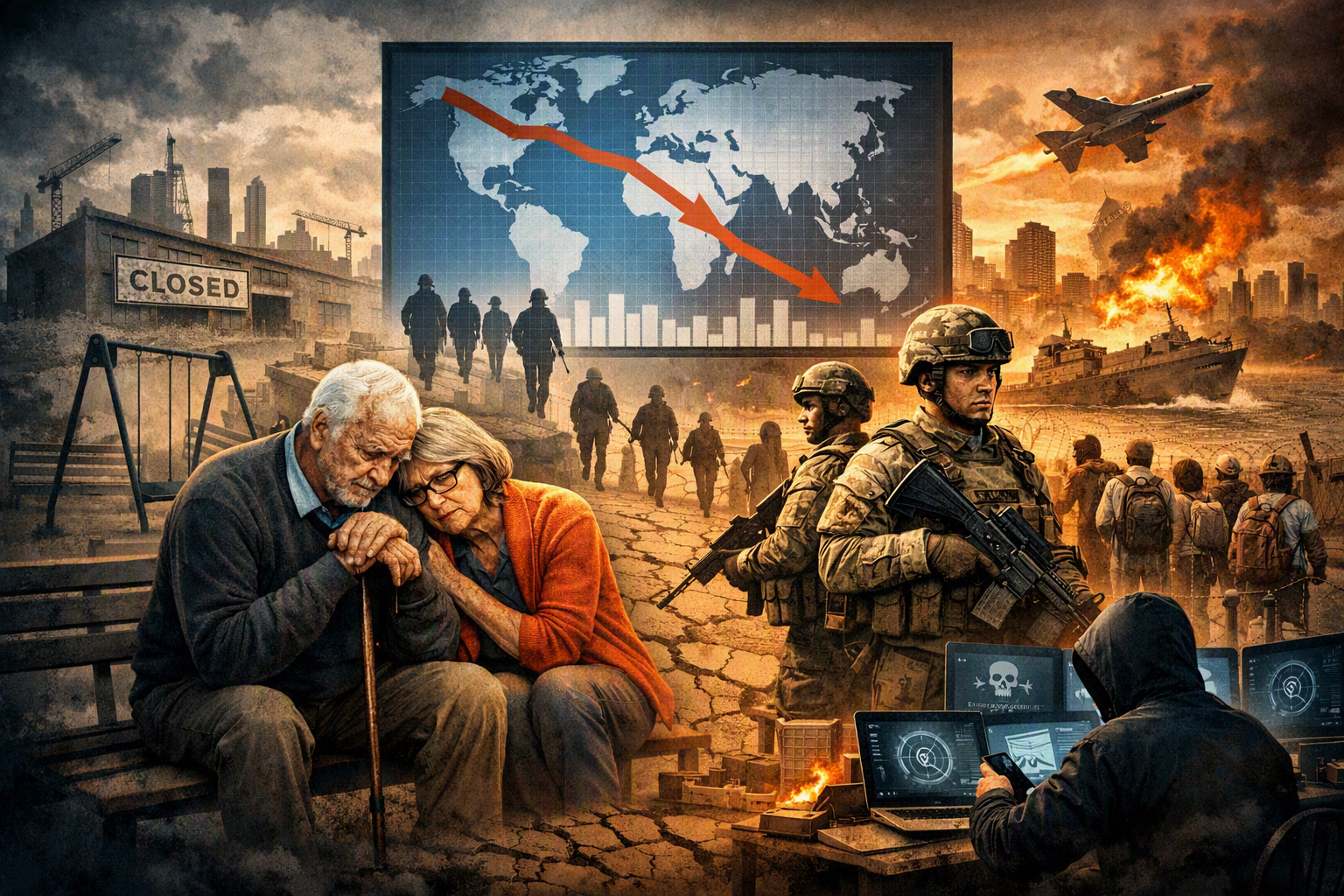
The world is entering a time of major demographic change. Global population is still growing, however, East Asia and parts of Europe are experiencing falling birth rates and rapidly ageing populations. China, Japan and South Korea are among the clearest examples. By 2024, both China and Japan experienced population declines, with South Korea’s growth nearing zero (World Bank, 2026). This is particularly acute in East Asia, where fertility has dropped far below the threshold of 2.1 children per woman necessary for population stability without immigration, indicated by the OECD. South Korea’s fertility rate stands at a staggering low of 0.7, with Japan at approximately 1.2 and China at around 1.0 (OCED, 2025). Simultaneously, life expectancy is increasing, leading to a larger proportion of older individuals. China is anticipating to see its elderly population (65 and above) grow from 14.3% in 2023 to nearly 30% by 2050 (OCED, 2025). This demographic transition poses significant challenges, as a shrinking working age population will need to support a growing elderly demographic, exerting strain on economies, public finances, and social services. 

There are multiple factors contributing to the decline in birth rates, particularly in East Asia and Europe. The UNFPA’s 2025 survey highlights financial pressures, like housing and childcare costs, as significant barriers to having desired numbers of children. Delayed marriages and family formation, linked to prolonged education and economic uncertainty, also play a role. Gender dynamics further complicate the decision for women, who face a tradeoff between career advancement and raising children. Concerns about global issues like war and climate change add to the hesitation to expand families (UNFPA, 2025). Although  many people still desire larger families, the global fertility rate shows evidence of a drop from 3.31 in 1990 to 2.25 in 2024, with over half of countries now below the replacement level of 2.1 (UN, 2024).  

The implications of these changes extend beyond social and economic realms to encompass critical long term global security issues, particularly in major powers like China, Japan, and South Korea, potentially affecting their economic strength, military capacity, and international standing. 

China and the Global Balance of Power 

China’s population decline is significant for global power dynamics. In 2025, China’s population reduced by approximately 3.4 million, with individuals aged 60 and over constituting 23% of the population (National Bureau of Statistics of China, 2026). The diminishing working age demographic is a concern. This is beecause this group is needed to support economic growth, which the International Monetary Fund (IMF) predicts will slow in the coming decades due to demographic challenges. Despite these issues, China’s global influence is not immediately threatened. The country remains a major economic, technological, and military force, experiencing a 5% economic growth in 2025 (IMF, 2026). The long-term security concern lies in a reduced number of young workers and potential military recruits, which may pressure China to sustain economic growth and fund an aging populace. China could mitigate these challenges through advancements in automation, artificial intelligence, and technology, potentially offsetting the impacts of a shrinking workforce. Thus, while demographic shifts will influence China’s competitive stance, they do not necessarily predict a decline in strength or an increase in aggression. Instead, population trends will play a critical role in shaping the future economic, military, and geopolitical landscape, especially in relation to powers like the United States and India. 

Implications 

Falling birth rates and ageing populations present economic challenges. As fewer working age individuals support an increasing number of retirees, it leads to labour shortages and heightened government expenditures on social services (IMF, 2025). Countries like Japan and South Korea have advanced technology, including AI and automation, to address workforce deficits. Japan utilizes automation to mitigate issues stemming from its aging demographic, while South Korea’s AI adoption enhances productivity (Chang et al., 2025). This suggests that, a smaller workforce can produce more. However, automation may lead to job displacement and necessitate skill development, affecting about 40% of global jobs (IMF, 2026). Countries that integrate technology with education and retraining are likely to better manage the economic impacts of an ageing population. 

A declining and ageing population poses military and national security challenges, as fewer young people are available for service. For instance, South Korea anticipates a 30% drop in its 20 year old male demographic by 2025, leading to a 20% reduction in military size (reuters.com). Japan faces similar recruitment issues due to a shrinking youth pool (reuters.com). Countries like China, Japan, and South Korea may struggle to maintain large conventional forces, though advanced technologies such as AI, drones, and robotics can mitigate personnel shortages. China leads in industrial robot installations, showing its commitment to technology in defense (iiss.org). The Ukraine war exemplifies how technology reduces manpower needs (iiss.org). Nonetheless, human personnel remain essential for operational roles. Thus, population decline may drive technologically advanced nations to intensify investments in cyber capabilities and advanced weaponry. Ultimately, it alters warfare dynamics and escalates competition among major powers. 

Wider Global Impact 

Population decline and ageing will not affect only countries such as China, Japan and South Korea; they could gradually change the balance between countries around the world. Countries with ageing populations may face shortages of workers, increasingly competing for young workers, skilled professionals and migrants from countries with younger populations. The OECD notes that migration can help ageing economies fill labour shortages, particularly in areas such as healthcare, agriculture, construction and technology (OECD, 2025).  

This could make countries with large young populations, particularly in Africa and parts of Asia, increasingly important to the global economy because they have growing pools of workers and consumers. However, this also creates challenges: if young populations in developing countries cannot find enough jobs, poverty, unemployment and migration pressures could increase. The IMF notes that many developing countries are experiencing a large youth population entering the workforce but still struggle to create enough jobs for them (IMF, 2025). At the same time, ageing is becoming a broader global trend, meaning that countries may not be able to depend on immigration forever to solve their labour shortages. The OECD estimates that the working-age population across OECD countries could fall by 8% by 2060, while the old-age dependency ratio could rise to 52%, creating greater pressure on economies and public finances (OECD, 2025). These demographic changes could therefore increase competition for talent, technology, investment and economic influence. Countries with younger populations may gain greater economic importance, while ageing countries may rely more heavily on AI, automation and international migration to maintain their economies. In this way, population change could gradually reshape global economic power and influence. This creates new relationships and potentially new tensions between countries with young and growing populations and those with older and shrinking populations. 

Conclusion 

Population decline poses long term challenges for the global economy and international security. This is particularly the case in countries like China, Japan, and South Korea, characterized by lower birth rates and ageing populations. The UN forecasts a peak global population of 10.3 billion by the mid 2080s, leading to potential economic pressures such as labor shortages and increased healthcare costs (UN, 2024). Nevertheless, population decline does not inherently weaken nations. Advancements in AI, robotics, and immigration could help mitigate some impacts. The IMF projects that enhanced health and workforce participation among older individuals could boost global GDP growth by 0.4 percentage points from 2025 to 2050 (IMF, 2025). How countries adapt through investments in technology and education will influence their economic and military strength as they navigate these demographic shifts. Hence, population decline should be viewed as a long term transformation rather than an immediate security threat. 

References 

Chang, S. J., Lee, H., Lee, S., Oh, S., Sun, Z., Xu, M. X. C., & Xu, X. (2025). Transforming the Future: The Impact of Artificial Intelligence in Korea. International Monetary Fund. 

https://data.worldbank.org/?locations=CN-JP-KR-TH-BN-SG-NZ-AU&utm

https://eeca.unfpa.org/en/news/real-fertility-crisis-what-barriers-are-preventing-people-having-number-children-they-want (Acessed 23/08/2026)

https://eeca.unfpa.org/en/news/real-fertility-crisis-why-people-arent-having-families-they-desire (Acessed 23/08/2026)

https://www.csis.org/analysis/fewer-soldiers-more-drones-what-ukraines-military-will-look-after-war (Acessed 24/08/2026).

https://www.iiss.org/online-analysis/survival-online/2026/04/strange-days-ai-and-the-next-industrial-revolution/ (Acessed 24/08/2026).

https://www.imf.org/-/media/files/publications/weo/2025/april/english/text.pdf 

https://www.imf.org/en/-/media/files/publications/weo/2025/april/english/text.pdf(Acessed 24/08/2026)

https://www.imf.org/en/news/articles/2025/02/07/mcs-020725-japan-staff-concluding-statement-of-the-2025-article-iv-mission (Acessed 24/08/2026).

https://www.imf.org/en/publications/fandd/issues/2025/03/a-place-for-human-talent-in-the-ai-age-marina-tavares (Acessed 24/08/2026).

https://www.imf.org/en/publications/fandd/issues/2025/06/sustaining-growth-in-an-aging-world-bertrand-gruss(Acessed 24/08/2026)

https://www.imf.org/en/publications/fandd/issues/2025/06/sustaining-growth-in-an-aging-world-bertrand-gruss

https://www.oecd.org/content/dam/oecd/en/publications/reports/2025/11/international-migration-outlook-2025_355ae9fd/ae26c893-en.pdf (Acessed 24/08/2026).

https://www.oecd.org/en/about/news/press-releases/2025/07/oecd-job-markets-remain-resilient-but-population-ageing-will-cause-significant-labour-shortages-and-fiscal-pressures.html

https://www.oecd.org/en/publications/oecd-employment-outlook-2025_194a947b-en.html

https://www.oecd.org/en/publications/pensions-at-a-glance-2025_e40274c1-en/full-report/fertility_ae615db2.html (Acessed 22/08/2026)

https://www.oecd.org/en/publications/society-at-a-glance-asia-pacific-2025_24fa8f05-en/full-report/component-13.html (Acessed 22/08/2026)

https://www.reuters.com/article/world/ageing-japan-military-recruiters-struggle-as-applicant-pool-dries-up-idUSKCN1LZ145/ (Acessed 24/08/2026).

https://www.reuters.com/world/asia-pacific/south-koreas-military-has-shrunk-by-20-six-years-male-population-drops-2025-08-10/ (Acessed 24/08/2026).

https://www.stats.gov.cn/english/PressRelease/202601/t20260119_1962328.html(Acessed 24/08/2026)

https://www.un.org/development/desa/pd/sites/www.un.org.development.desa.pd/files/undesa_pd_2024_wpp_2024_advance_unedited_0.pdf 

https://www.un.org/development/desa/pd/world-population-prospects-2024
https://www.un.org/en/node/219445

https://www.unfpa.org/news/fertility-fallacy-five-things-you-didn%E2%80%99t-know-about-global-fertility-rates (Acessed 23/08/2026)

https://www.unfpa.org/press/unfpa-report-links-falling-birth-rates-cost-living-sexist-norms-fear-future (Acessed 23/08/2026)

Tags: 20269th Edition 2026week3
ShareTweet
Previous Post

From Demographic Dividend to Opportunity Gap: Realizing Ghana’s Youth Potential 

Leave a Reply Cancel reply

Your email address will not be published. Required fields are marked *

  • Trending
  • Comments
  • Latest
Africa's Natural Resources: Who’s After What And What’s The Continent’s Strategy In The Scramble Game?

Africa’s Natural Resources: Who’s After What And What’s The Continent’s Strategy In The Scramble Game?

March 14, 2026
Effects of overpopulation in class on quality of education

Effects of overpopulation in class on quality of education

March 25, 2024
Slums and Security in Africa: A Growing Threat

Slums and Security in Africa: A Growing Threat

July 25, 2025
The Growing Influence Of AES On African Countries

The Growing Influence Of AES On African Countries

April 1, 2025
Integration of environmental security into Ghana’s National Security Strategy safeguards the future

Integration of environmental security into Ghana’s National Security Strategy safeguards the future

10
Border Security: A Door Left Wide Open

Border Security: A Door Left Wide Open

3
Polls close in Liberia

Liberia: Once a war-torn country, now Africa’s beacon of democracy – Lessons for Africa

1
Alliance Of Sahel States Formation: Objectives & Implications for ECOWAS

Alliance Of Sahel States Formation: Objectives & Implications for ECOWAS

1
Population Decline and Global Security 

Population Decline and Global Security 

September 16, 2026
From Demographic Dividend to Opportunity Gap: Realizing Ghana's Youth Potential 

From Demographic Dividend to Opportunity Gap: Realizing Ghana’s Youth Potential 

September 16, 2026
From the Battlefield to the Mind The Changing Character of Warfare in the Age of Artificial Intelligence 

From the Battlefield to the Mind: The Changing Character of Warfare in the Age of Artificial Intelligence 

September 15, 2026
When Inequality Turns Dangerous Class Conflict, Entitlement and the Agbero Phenomenon in Lagos

When Inequality Turns Dangerous: Class Conflict, Entitlement and the Agbero Phenomenon in Lagos 

September 8, 2026

Popular Stories

  • Africa's Natural Resources: Who’s After What And What’s The Continent’s Strategy In The Scramble Game?

    Africa’s Natural Resources: Who’s After What And What’s The Continent’s Strategy In The Scramble Game?

    0 shares
    Share 0 Tweet 0
  • Effects of overpopulation in class on quality of education

    0 shares
    Share 0 Tweet 0
  • Slums and Security in Africa: A Growing Threat

    0 shares
    Share 0 Tweet 0
  • The Growing Influence Of AES On African Countries

    0 shares
    Share 0 Tweet 0
  • The Concept of Beauty in Africa

    0 shares
    Share 0 Tweet 0

CISA Newsletter

Headlining West African News

Follow Us

Browse by Category

  • ANALYSTS
  • Business
  • ECONOMY
  • EDITORIAL
  • Environment
  • Food
  • Health
  • Lifestyle
  • News
  • Politics
  • Review
  • Science
  • Sports
  • Tech
  • Travel
  • Uncategorized
  • World

Recent News

Population Decline and Global Security 

Population Decline and Global Security 

September 16, 2026
From Demographic Dividend to Opportunity Gap: Realizing Ghana's Youth Potential 

From Demographic Dividend to Opportunity Gap: Realizing Ghana’s Youth Potential 

September 16, 2026
  • About
  • Advertise
  • Privacy & Policy
  • Contact

© 2023 CISA Ghana Newsletter - Headlines West Africa.

  • fr Français
  • en English
No Result
View All Result
  • Home
  • Editions
    • August 2026
    • July 2026
    • June 2026
    • May 2026
    • April 2026
    • March 2026
    • February 2026
    • January 2026
    • 2025
      • December 2025
      • November 2025
      • October 2025
      • September 2025
      • August 2025
      • July 2025
      • June 2025
      • May 2025
      • April 2025
      • March 2025
      • February 2025
      • January 2025
    • 2024
      • December 2024
      • November 2024
      • October 2024
      • September 2024
      • August 2024
      • July 2024
      • June 2024
      • May 2024
      • April 2024
      • March 2024
      • February 2024
      • January 2024
    • 2023
      • December 2023
  • News
  • Tech
  • Entertainment
  • Lifestyle
  • Review
  • CISA Ghana

© 2023 CISA Ghana Newsletter - Headlines West Africa.

  • English
  • Français (French)