








Algerian Civil War Series: What the Sahel and Coastal West Africa Can Learn from the Algerian Successful Counter-Terrorism Efforts
The Golden Bridge: The Strategic Utility of Amnesty and Reconciliation
Lessons from the Black Decade Part 2 of 5
Introduction
In military strategy, there is an ancient maxim attributed to Sun Tzu: “Build a golden bridge for your retreating enemy.” If you surround an enemy and offer no escape, they will fight to the death. If you offer them a way out, their resolve crumbles.
In the first part of this series, we examined how the Algerian state’s victory in the 1990s pushed radical elements southward, inadvertently creating the modern Sahelian crisis. In this second instalment, we analyse how Algeria actually achieved that domestic victory.
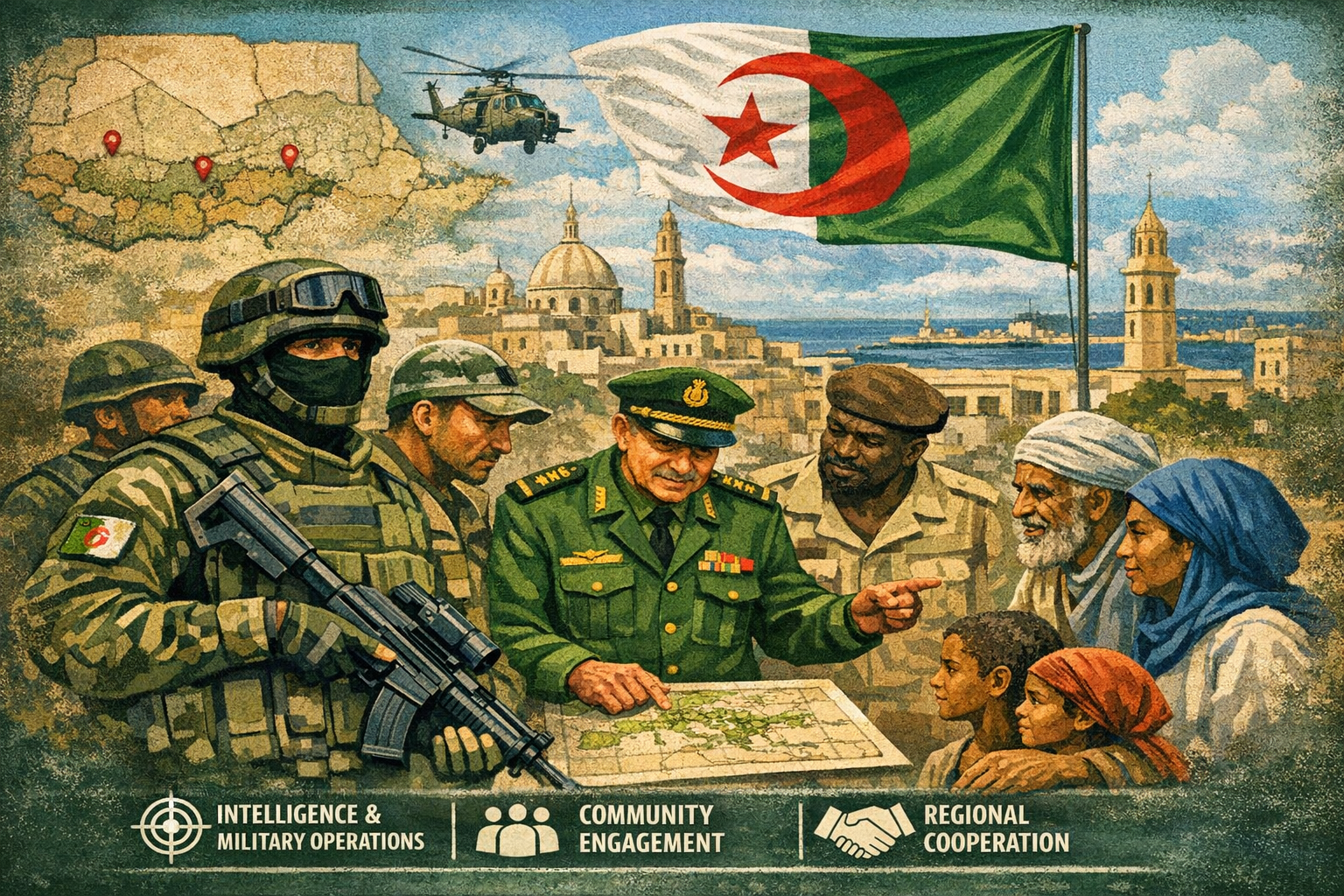
The Algerian state did not simply shoot its way out of the “Black Decade.” While it employed a relentless counter-insurgency campaign, the decisive blow against the armed groups was not purely kinetic; it was also political. By instituting a legal framework for amnesty—the Civil Concord and later the Charter for Peace—Algeria successfully fractured the insurgency. For the Sahelian states currently trapped in a cycle of endless attrition, and for Coastal West African nations looking to immunise their northern frontiers, the Algerian model of reconciliation offers a critical strategic alternative to the failing “kill-or-capture” paradigm.
The Trap of Pure Eradication
Currently, the counterterrorism approach in the central Sahel (Mali, Burkina Faso, and Niger) relies heavily on “neutralisation.” Military juntas prioritise body counts, often accused of utilising indiscriminate force or proxy militias.
Algeria attempted this purely militaristic “eradication” approach in the early to mid-1990s. The result was catastrophic. Heavy-handed military operations and mass arrests alienated the population and provided a steady stream of aggrieved recruits for the Armed Islamic Group (GIA).
When a state relies exclusively on the stick, it traps fence-sitters. Many foot soldiers in insurgencies like Jama’at Nusrat al-Islam wal-Muslimin (JNIM) or Islamic State Sahel Province (ISSP) join for pragmatic reasons—local grievances, economic desperation, or coercion—rather than ideological fervour. However, if the state’s only response is summary execution or indefinite detention, these pragmatic fighters have no choice but to remain with the terrorists and fight to the bitter end.
The Algerian Pivot: Draining the Swamp
Recognising the limits of military force, the Algerian government, under President Abdelaziz Bouteflika, initiated a paradigm shift.
- The Civil Concord (1999): This law offered a partial or full amnesty to fighters who voluntarily surrendered their weapons, provided they had not participated in massacres, rapes, or bombings in public places.
- The Charter for Peace and National Reconciliation (2005): This expanded the amnesty, seeking to legally close the chapter on the war while also shielding state security forces from prosecution.
The strategic genius of this approach was its psychological impact on the insurgency. It introduced a wedge between the ideologically committed commanders and the exhausted foot soldiers. Thousands of fighters, tired of the gruelling life in the mountains and disillusioned by the GIA’s extreme violence against civilians, took the “golden bridge.”
By absorbing these defectors, the Algerian state achieved two things:
- Intelligence Bonanza: Surrendering fighters provided invaluable intelligence on the locations, logistics, and internal fractures of the remaining holdouts.
- Isolating the Fanatics: With the pragmatists removed from the battlefield, the remaining insurgents (who would eventually form the Salafist Group for Preaching and Combat (GSPC)) were isolated, easier to identify, and deprived of their manpower base.
Application for the Sahel and Coastal West Africa
Translating this framework to West Africa requires adapting the timeline.
For the Sahel (The Active Theatre): Burkina Faso, Mali and Niger must re-introduce political off-ramps alongside military operations. The defunct Algiers Accord (2015) was flawed, but the underlying necessity of dialogue remains. Secret, localised truces (such as those previously negotiated in central Mali) should be formalized into a national demobilisation program. Without an exit strategy, military pressure will only harden the insurgency.
For Coastal West Africa (The Preventative Theatre): Nations like Ghana, Togo, Benin, and Côte d’Ivoire are in a prime position to implement “preventative amnesty” frameworks. As JNIM and other groups attempt to recruit in the under developed northern regions of these coastal states, governments must establish clear, publicised legal avenues for youth to defect before they cross the point of no return. If a recruit realises they have made a mistake, there must be a state-sponsored reintegration program ready to receive them, rather than the threat of a military tribunal.
Recommendations
- Establish a Legal Off-Ramp: Coastal West African states must draft and pass clear demobilisation and reintegration laws. These laws must clearly delineate the criteria for amnesty (e.g., surrendering prior to committing capital offenses) to encourage early defection.
- Launch Targeted Information Operations: An amnesty program is useless if the enemy doesn’t know about it. Strategic communications via local radio, social media, and tribal networks in the border regions must heavily broadcast the availability and safety of the surrender process.
- Protect the Defectors: The state must guarantee the physical security of those who surrender. Insurgent groups frequently assassinate defectors to deter others. Dedicated safe houses, relocation programs, and strict anonymity must be central to any reconciliation framework.
Conclusion
Military force can hold territory, but only political accommodation can dismantle an insurgency. The Algerian Civil War demonstrates that the most lethal weapon against a terrorist organisation is an open door. By offering an honourable exit to the pragmatic fighter, states can isolate and eliminate the irreconcilable fanatic. In the fight for West Africa’s security, the golden bridge is not a concession to terrorists; it is a calculated mechanism for their destruction.
References
Belgacem, T. (2018). “Algeria, a post-dark-decade peace process. From successful experience to reproducible model, the long way”. Research Gate
International Crisis Group. (2021). A Course Correction for the Sahel. Africa Report N°299.
UK Home Office (2008). Country of Origin Report: Algeria, UK Home Office.
Willis, M. (1996). The Islamist Challenge in Algeria: A Political History. NYU Press.