









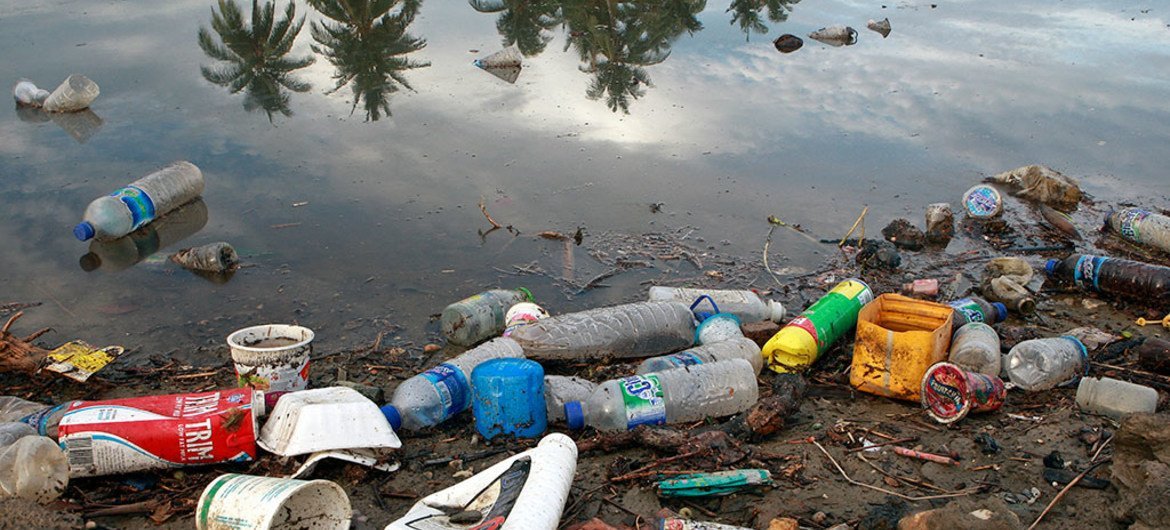
Introduction
Plastic has various advantages that led to its widespread use before environmental concerns developed. Plastic is a popular packaging material among manufacturers due to its durability, adaptability, water resistance, low cost, and lightweight nature. While these benefits contributed to an increase in plastic consumption, plastic waste management became a challenge. Plastic pollution has arisen as a significant environmental concern, particularly in aquatic environments, where it causes persistent disruptions to both aquatic health and global food security.
The ocean represents 71% of the surface of our planet, providing for 90% of the living space on Earth. Yet, every day, thousands of tons of plastic pour into the ocean from all around the globe. Plastic pollution has become a global concern as a result of rising consumption and poor waste management in many nations, harming not only aquatic life but also the environment and human health.
Plastic pollution in marine waters and on beaches is a global problem. Billions of tons of plastic can be found in swirling convergences that cover roughly 40% of the world’s ocean surface. Every year, over eight million tons of plastic trash are released into the oceans by coastal nations. That is akin to placing five garbage bags full of trash on every foot of coastline around the world. At present rates, plastic is anticipated to outweigh all fish in the oceans by 2050. This article investigates how plastics have penetrated the oceans, impacting aquatic life and compromising food security, along with sustainable strategies to mitigate plastic pollution.
Mechanisms of Subversion
The production of plastic has surged in the 21st century. In the first decade of this century, there is more plastic in the system than all the plastics ever produced in history. Plastic waste is accumulating in the oceans annually. Every year, billions of tons of plastic end up in the world’s oceans. There is a staggering amount of plastic pollution in the oceans. There are now about 51 trillion pieces of plastic in the world’s oceans, affecting. every part of the ocean. Plastic ends up in the ocean from hundreds of miles away, posing a serious threat to marine and fresh water ecology. It is estimated that up to 80% of the plastic that ends up in the world’s oceans are from land sources. Plastic ends up in the ocean through a variety of channels, though it is not always dumped there directly.
Across the globe, the practice of dumping rubbish and litter into oceans, riverbeds, and beaches is widespread. For example, in many urban places, waste-water from populated areas is not properly cleaned, resulting in the release of micro-plastics and synthetic fibers into our environments. Micro-plastics and fibers are frequently too small to be identified and caught by normal filtering systems, so they escape through treatment facilities and end up in seas, rivers, and lakes, contributing to the pollution catastrophe. Furthermore, plastics in landfills can be easily blown away by the wind, contaminating surrounding water bodies and worsening the issue. Plastics, such as plastic bags, which are extremely lightweight, can be easily picked up by the wind and carried over long distances. When these plastic goods enter the water, they frequently sink, not because they are heavy, but because of their vast surface area, which causes them to become buried.
Once these plastics find their way into the ocean, they decompose at a startlingly slow pace, frequently taking more than 400 years to see noticeable deterioration. The plastic materials break down into tiny particles called microplastics as a result of this protracted process, endangering a wide variety of marine life. Microplastics are a major problem in marine life as well as the environment. These tiny particles are frequently eaten by species that live at the base of the oceanic food chain, causing Falan alarming buildup of ingested plastic as it moves up the food chain. The consequences of this accumulation are catastrophic, particularly given that harmful compounds employed in plastic manufacture can enter the marine food web. This food web includes a variety of fish species that people frequently ingest, raising serious health problems for humans.
When poisonous components are exposed to water, they leak into the surrounding environment, making plastics significantly more harmful in marine settings than in terrestrial ecosystems. These materials can emit toxic compounds into the ocean, leading to severe impact on ecosystems, particularly damage to the endocrine systems of marine animals’ . Health implications include immune system suppression and lower reproductive rates in affected species. Furthermore, plastic garbage has the ability to absorb other toxic chemicals from existing ocean pollution, creating additional hazards to marine species that may consume it. The impacts of these plastics go beyond physical injury to damaged animal brain cells, hormone imbalances and disrupt reproductive cycles in wildlife.
Ecological Impact
Plastic waste poses a formidable threat to the environment in myriad ways. Its inherent resistance to natural decomposition often results in a protracted breakdown period, frequently spanning centuries, which leads to its relentless accumulation within ecosystems. This buildup of plastic refuse precipitates a plethora of environmental challenges: it can contaminate the soil, rendering it inhospitable for agricultural endeavors and contribute to the depletion of arable land. The incineration of plastic waste releases injurious fumes into the atmosphere, which can have deadly effects on both human health and the environment. Furthermore, the disposal of plastic waste into rivers and oceans constitutes a grave menace to marine life, resulting in entanglement, ingestion, and the destruction of vital habitats.
Plastic waste inflicts harm on wildlife in numerous ways. As wildlife increasingly encounters plastic refuse, a series of critical issues arise various species, including marine organisms, can ingest plastic debris, leading to severe digestive complications, starvation, and even mortality.
Additionally, plastic waste presents a considerable threat to human health. Exposure to plastic refuse can facilitate the entry of toxic chemicals into the human body, contributing to hormonal imbalances and developmental disorders. Microplastics, which are minuscule plastic particles, have been detected in food and water sources, resulting in human ingestion of these particles, which may lead to unknown health ramifications.
Threat to Global Food Security
As indicated earlier plastics have been beneficial in all fields. In Agriculture, Plastic products in plant production help farmers increase crop production, and enhance food quality. On the other hand, however its pollution has significantly impacted soil, water, and plants which in the long run affect crop yields and overall productivity. They are beneficial for a short time as their usage increases water productivity but threatens long-term food security.
Plastics in the oceans decline Fish Stocks. Plastic pollution, affects fish populations. Infected fish can lead to reduced catches and economic losses for communities reliant on fishing and also fish raised in polluted waters may accumulate toxins, posing health risks to consumers and affecting the safety of seafood. Furthermore, the tourism industry also loses as visitors are turned off by plastic-strewn beaches and filthy rivers, resulting in income losses and job uncertainty. Cleanup efforts and health-care costs linked with plastic-related ailments place further strain on national economies, particularly in
low- and middle-income nations.
Way Forward
Plastic pollution is a global concern, with prevalence in both developed and developing countries. Many Countries prioritize economic growth over environmental protection leading to inadequate waste management policies.
Plastic garbage increases in the ocean at alarming rates, affecting the health of aquatic organisms and humans, hence there is a need for efficient and sustainable solutions. Many countries, particularly developing ones, lack the necessary collecting mechanisms, infrastructure, and, most importantly, funding to successfully manage plastic garbage. To address this issue, they must invest in modern waste management infrastructure, such as collection, sorting, and recycling facilities. Additionally, in order to effectively manage waste in those nations, appropriate waste management techniques must be given top priority, guaranteeing that plastic waste is disposed of appropriately.
Government legislation prohibiting the use of single-use plastics should be accompanied by policies regulating manufacturing companies to transition away from the production of single-use plastics, as well as strict regulations on illegal dumping and open burning of plastics to prevent environmental contamination while promoting safe and sustainable waste disposal practices. Additionally, create and enforce marine protected areas to preserve ecosystems and marine life from plastic pollution.
Creating awareness, people must be informed about the dangers involved with indiscriminate burning, the dumping of plastics, the ripple effects on the environment if not properly managed, the dangers linked with ocean pollution and the long-term impact it has on aquatic life and humans. In addition, people must be encouraged to use other alternative sources of packaging, especially the use of biodegradable materials which can decompose easily without having any negative effect on the ecosystem.
Support for countries infected with plastic. Countries who lack the funds, skills, and resources to cope with plastic pollution must get technical and financial assistance to help them address sanitary concerns, waste management systems, and minimize plastic waste in their communities.
Every issue has a solution; The goal for the future is to create an ocean free of plastic to preserve aquatic life and safeguard human health.
References
Bethanie Carney Almroth, Hakan Eggert. Marine plastic pollution: sources impacts and policy issues. The University of Chicago Press Journals. Retrieved from www.journals.uchicago.edu
Brendan Lui, 2019. How plastics enter our oceans? Retrieved from http://www.repurpose.global
Center for Biological Diversity, Ocean plastic pollution. http://www.biologicaldiversity.org
CNN, 2023. Ocean plastic pollution reaches unprecedented levels. http://www.cnn.com
Elise Mialud, 2024. The fight agaisnt plastic pollution, protecting ocean and human health. Retrieved from www.circularinnovation,com
Emma Schmaltz, Emily Merlin, Daniel Rittschof, 2020. Plastic pollution solution, emerging technologies to prevent and collect marine plastic pollution. Environmental International. Retrieved from www.Sciencedirect.com
Environment America, 2025. How plastic in the oceans hurt animals. http://environmentamerica.org
Food and Agricultural Organization. Plastics in Agrifood systems, the good, the bad and the ugly. Retrieved from http://www.fgo.org
GGN Thushari, JDM Senevirathna, 2020. Plastic pollution in the marine environment. National Library of Medicine. http://pmc.ncbi.n/m.nih.gov
Laura Parker, 2025. The worlds plastic pollution crisis, explained. National Geographic. Retrieved from www.nationalgeographic.com/environment/article/plastic-pollution
Imran Ali Lakhiar, Haofan Yan, Jiangun Zhang, Guaging Wan. 2024. Plastic pollution in Agriculture as a threat to food security, the ecosystem and the environment : An overview. Retrieved from http://www.researchgate.com
Interreg Baltic Sea Region. Microplastic threaten global Agricultural and Food security. Retrieved from http://interreg-baltic.eu
Sulan Chen, Mirja Neuman, Murat Okumah, Christie Gerlier, 2024. Combating plastic pollution for sutainable development. United Nations Developmental programme. Retrieved from http://www.undp.org
The ocean cleanup, ocean pollution explained. http://theoceancleanup.com
Waste Trade, Consequences of plastic waste. Retrieved from http://www.wastetrade.com
Xia Zhu, Chelsea M. Rochman, Britta Denise Hardesty, Chris Wilcox, 2024. Plastic in the deep sea- A global estimate of the ocean floor reservoir. Oceanographical Research Papers. Retrieved from www.sciencedirect.com