







Introduction
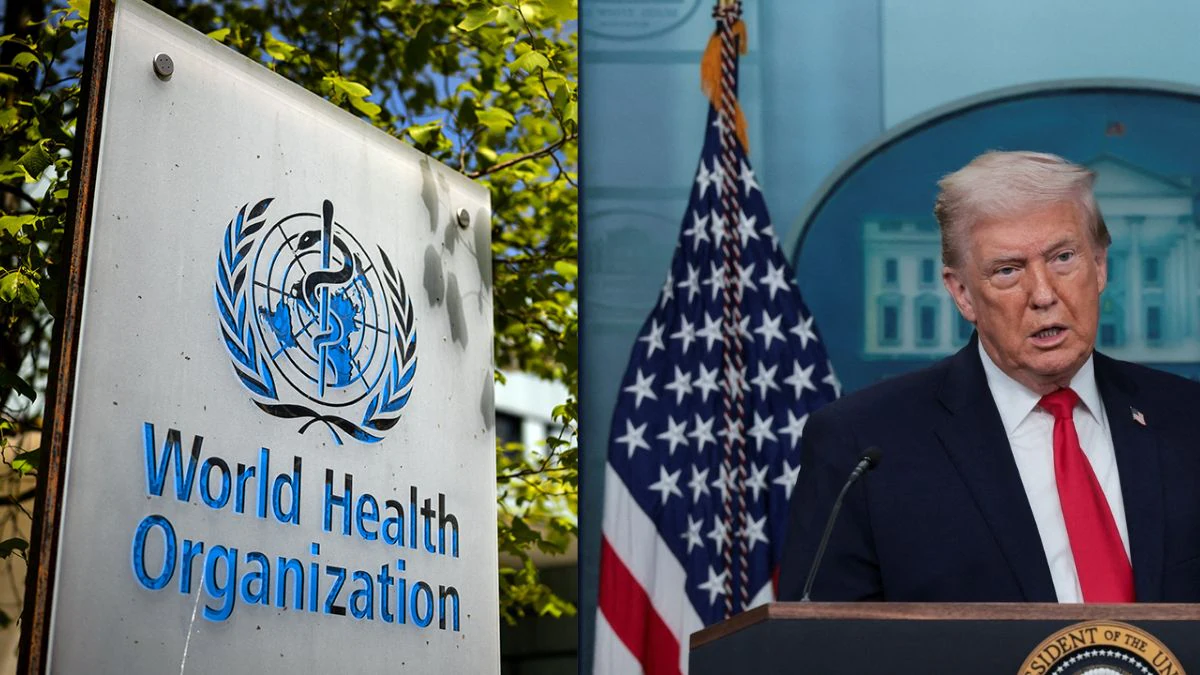
On January 22, 2026, the United States completed its withdrawal from the World Health Organization (WHO), marking the first exit of a founding member and the largest global economy from the UN agency in nearly eighty years. This decision, initiated by an executive order in January 2025, followed a mandatory one-year notice period, leading to the cessation of U.S. involvement in WHO governance, ending financial support, and recalling public health personnel engaged in WHO programs globally (cdc.gov ; bbc.com). The Trump administration justified this move by criticizing WHO’s management of the COVID-19 pandemic, citing alleged transparency issues and resistance to reform. Public health experts caution that the U.S. withdrawal significantly diminishes global capabilities to detect, prevent, and address infectious disease threats, undermines years of collaborative public health efforts, and exacerbates health disparities between affluent nations and those with vulnerable health systems (hhs.gov ; who.int).
For decades, the U.S. was the largest financial contributor to the WHO, providing significant funding that supported various functions, including disease surveillance, outbreak response, and vaccination campaigns in low- and middle-income countries. In addition to creating a large budget deficit that forced staff and program cuts, the U.S. withdrawal of funding and participation eliminates a key voice and resource in global health decision-making at a time when threat detection, vaccine distribution, and pandemic preparedness remain critical global priorities (reuters.com ; time.com).
The impacts of the withdrawal will not be felt equally. Particularly at risk are initiatives that rely significantly on WHO coordination, such as polio eradication, influenza strain, monitoring that guides the creation of yearly vaccines, and emergency responses to outbreaks like dengue or Ebola. The timely interchange of health intelligence becomes more precarious without U.S. participation in WHO technical committees and data sharing platforms, potentially delaying the identification of new dangers and impeding international responses. In nations with inadequate public health infrastructure, where WHO presence has been crucial in providing knowledge, logistics, and ongoing assistance for disease management, these consequences will be felt most keenly (Aremu et al., 2025; time.com).
There is a moral dimension to global health frameworks, where wealthy nations influence cooperation while poorer nations and vulnerable populations face the greatest health burdens. The United States’ withdrawal raises important questions about equitable responsibility in global health, who bears the risk when systems weaken? and how infectious diseases pay no heed to geopolitical boundaries.
What the U.S took with It
The United States’ withdrawal from the World Health Organization (WHO) signifies a significant loss of financial and technical support, as it was the largest contributor, providing around $1.3 billion in the 2022–2023 biennium. This funding represented 15–18% of WHO’s total budget, which is crucial for operational flexibility and global health initiatives. The exit has immediate budgetary impacts, as WHO relies on voluntary contributions to undertake its programs (who.int)
The United States provided more than just cash transfers. The United States provided crucial technical expertise and research capacity to global health programs through WHO collaborating centers hosted in the country, including several centers supported by the Centers for Disease Control and Prevention (CDC), National Institutes of Health (NIH), and major U.S. academic institutions. These centers supported laboratory diagnostics, epidemiologic research, outbreak response capacity building in partner nations, and surveillance and control of high-impact diseases including influenza and emerging pathogens (Aremu et al., 2025 ; who.int)
Furthermore, U.S. government professionals frequently participated in WHO technical working groups and advisory panels, helping to shape evidence-based recommendations on disease prevention and bolstering the health system (who.int). The official withdrawal and the recall of these employees interfere with established routes of information sharing and cooperative reaction.
Effects Of Weakened Global Health Systems
Global public health infrastructure depends on coordinated surveillance and response systems for detecting and managing infectious disease threats. The World Health Organization (WHO) is key in this process, facilitating international disease monitoring, standardizing reports, and coordinating rapid responses. This serves as an early warning system, otherwise, waves of undetected infections can go undetected until they have already crossed borders and overwhelmed local capacities (who.int).
Reductions in global funding and technical support, particularly following the U.S. withdrawal from the WHO, have led to major disruptions in health systems. A WHO survey indicated that 108 low- and middle-income countries faced widespread issues in emergency preparedness and health surveillance, with 70% reporting disruptions in outbreak detection and response. These deficiencies compromise disease tracking and containment efforts, resulting in delayed detection and increased morbidity and mortality (who.int).
The weakening of global surveillance infrastructure also threatens long-standing global efforts to monitor and respond to pandemic threats. Networks coordinated by WHO and comprising laboratories across many countries depend on sustained cooperation and data sharing to inform vaccine design and outbreak containment strategies. Interruptions in such systems reduce situational awareness and erode trust in international detection mechanisms (Ogieuhi et al., 2025).
Who Is Most Affected?
The degradation of global health systems disproportionately impacts low- and middle-income countries (LMICs), particularly those with fragile systems relying on external help. Compared to advanced nations, these populations suffer from long-standing health disparities that lead to poorer health outcomes, greater financial hardship, and a larger disease burden (who.int)
According to a 2025 World Health Organization assessment, 70% of low- and lower-middle-income countries experienced disruptions in emergency preparedness, public health surveillance, and essential services due to cuts in external assistance. Key areas affected include outbreak detection, HIV, tuberculosis, malaria services, and maternal and child health. These disruptions highlight significant health inequities; for instance, children in poorer countries are 13 times more likely to die before age five compared to wealthier nations, and 94% of global maternal deaths occur in these settings. Weakened support may exacerbate these inequities by increasing disease transmission and delaying treatment (Khorram- Manseh et al., 2025 ; Ogieuhi et al., 2025; who.int).
Practically, this illustrates the human toll. Unfortunately, this is compounded in countries where out-of-pocket health expenditures already push millions of people into poverty due to catastrophic health costs. Thus, the populations who feel the greatest impact first are those who depend most on international cooperation and external financing to sustain essential services, which is the poorest communities in the poorest settings (who.int).
Why This Does Not Stay In One Place
National boundaries wield no power when it comes to infectious illnesses; in a globalized society, a health risk that arises in one area swiftly spreads to other parts of the world. Through travel networks, trade routes, or migratory patterns, modern human mobility, trade, and ecological changes enable the rapid geographic spread of diseases, showing that no nation is exempt from global health dynamics. Previous outbreaks, like COVID-19 showed how localized infection clusters swiftly spread across international borders through air travel, necessitating coordinated measures under the International Health Regulations to stop the spread. This interrelated susceptibility is the reason behind the existence of global disease surveillance and response systems, many of which are coordinated by the World Health Organization (cdc.gov ; who.int).
A typical example is the WHO’s Global Outbreak Alert and Response Network (GOARN) , which regularly scans signals from hundreds of sources, quickly assessing risks and allocating resources within 48 hours of identification. Liu et al., (2025) reports that according to the WHO, 3013 infectious disease outbreaks were recorded between 1996- 2023. This demonstrates the frequency and scope of global health concerns that call for coordinated attention, proving that such systems are not merely theoretical (cdc.gov).
Many of these infectious diseases have been documented in nations that are far from the original hotspots, showing how diseases can spread and re-establish in far-off places due to inadequate surveillance and permeable borders (apnews.com ; cdc.gov ; lemonde.fr). This emphasizes how local health deterioration can directly translate into global risk, a reality that was brought home to policymakers during the COVID-19 pandemic and reinforced by future outbreaks.
Health risks propagate outward, affecting economies, health systems, and populations worldwide. In this sense, underinvestment or disengagement from global health mechanisms like WHO compromises collective security, making any single population, rich or poor, more vulnerable to the next emerging threat.
Conclusion
The WHO is expected to face persistent funding shortfalls and operational constrains due to the United States ceasing its contributions. This threatens the organization’s capacity to maintain critical global health services like disease surveillance and emergency response. The vacuum left may alter global leadership dynamics within the WHO and wider health arena as China and other states seek to increase their global health influence, potentially reshaping institutional priorities and the geopolitical landscape. This may spark discussions on motivations behind global health policies and lead to fragmentation in international cooperation, prompting structural reforms and new financing models. The WHO is advocating resilience in health investment, but the absence of a unified global leader risks creating disjointed agreements, hindering effective responses to global health threats like pandemics.
Reduced engagement with the WHO could limit the United States’ access to global disease surveillance and research networks essential for vaccine development and outbreak responses. This diminished influence may hinder U.S. policymakers and scientists in anticipating and managing emerging global health risks, ultimately impacting domestic health security. The consequences of this decision will reverberate well beyond the corridors of WHO headquarters in Geneva.
References
Alesse, G. U.S. Withdrawal From WHO: Global Health and Security Implications. atlasinstitute.org. January 26, 2026. https://atlasinstitute.org/u-s-withdrawal-from-who-global-health-and-security-implications/
Aremu, S. O., Adamu, A. I., Obeta, O. K., Ibe, D. O., Mairiga, S. A., Otukoya, M. A., & Barkhadle, A. A. (2025). The United States withdrawal from the world health organization (WHO), its implications for global health governance. Globalization and Health, 21(1), 48.
Foulkes, I., & Mitchell, O. US officially leaves World Health Organization. bbc.com. January 26, 2026. https://www.bbc.com/news/articles/cn9zznx8qdno
https://www.cdc.gov/field-epi-manual/php/chapters/multinational-outbreak.html
https://www.who.int/emergencies/surveillance
Khorram-Manesh, A., Burkle, F. M., & Goniewicz, K. (2025). Repercussions of a US withdrawal from WHO will severely impact future global goals and performance. Humanities and Social Sciences Communications, 12(1), 1-10.
Liu, Q., Liu, M., Liang, W., Li, X., Jing, W., Chen, Z., & Liu, J. (2025). Global distribution and health impact of infectious disease outbreaks, 1996–2023: a worldwide retrospective analysis of World Health Organization emergency event reports. Journal of Global Health, 15, 04151.
Ogieuhi, I. J., Ajekiigbe, V. O., Aremu, S. O., Okpujie, V., Bassey, P. U., Babalola, A. E., … & Bakare, I. S. (2025). Global partnerships in combating tropical diseases: assessing the impact of a US withdrawal from the WHO. Tropical Medicine and Health, 53(1), 36.
Ogieuhi, I. J., Ajekiigbe, V. O., Aremu, S. O., Okpujie, V., Bassey, P. U., Babalola, A. E., … & Bakare, I. S. (2025). Global partnerships in combating tropical diseases: assessing the impact of a US withdrawal from the WHO. Tropical Medicine and Health, 53(1), 36.
Park, A. What the U.S. Has Pulled Out of the WHO. Here’s What That Means for Public Health. time.com. January 26, 2026. https://time.com/7357180/us-withdrawal-who-world-health-organization/
Rigby, J., & Farge, E. US withdraws from the World Health Organization | Reuters. reuters.com. January 26, 2026. https://www.reuters.com/business/healthcare-pharmaceuticals/us-set-quit-world-health-organization-2026-01-22/
United States Completes WHO Withdrawal | CDC Newsroom. cdc.gov. January 26, 2026. https://www.cdc.gov/media/releases/2026/united-states-completes-who-withdrawal.html
United States Completes WHO Withdrawal | HHS.gov. hhss.gov. January 26, 2026. https://www.hhs.gov/press-room/united-states-completes-who-withdrawal.html
United States of America- partner in global health. who.int. January 26, 2026. https://cdn.who.int/media/docs/default-source/2021-dha-docs/april-2022.pdf?sfvrsn=af687ec_3
WHO statement on notification of withdrawal of the United States. who.int. January 26, 2026. https://www.who.int/news/item/24-01-2026-who-statement-on-notification-of-withdrawal-of-the-united-states