








Introduction
Across several African states, sovereignty is increasingly challenged not through outright territorial conquest but through gradual erosion in peripheral regions where state authority is weak. While many African states maintain de jure sovereignty through international recognition, their de facto sovereignty and effective control over territory and monopoly over legitimate violence remains uneven. Fragile African states and peripheral territories characterized by weak state presence become zones of alternative governance. In such areas, non-state actors gain legitimacy by providing security, justice, and economic regulation, thereby undermining the state’s authority.
State Failure and Fragility in the African Context
State failure theory suggests that fragility emerges when governments lose the capacity to control violence, deliver public goods, and maintain legitimacy (Rotberg, 2004). In Africa, fragility often manifests spatially rather than uniformly across the state. Capitals and major cities may remain under firm control, while rural and border regions experience administrative neglect.
The Fragile States Index (Fund for Peace, 2023) highlights indicators such as uneven development, security apparatus weaknesses, group grievance, and factionalized elites as central drivers of fragility. Countries such as Somalia, South Sudan, the Democratic Republic of Congo (DRC), Mali and Burkina Faso consistently rank among the most fragile states globally. Importantly, fragility in these contexts is often concentrated in peripheral territories far removed from political and economic centers.
Ungoverned Spaces in Africa
The concept of “ungoverned spaces” does not imply the absence of order. Rather, it refers to areas where the state lacks effective control, even though governance structures may still exist (Clunan & Trinkunas, 2010). In Africa, such spaces frequently emerge in borderlands, deserts, forests, and conflict-affected rural areas.
For example, in northern Mali and parts of Niger and Burkina Faso, jihadist groups linked to Jama’at Nasr al-Islam wal Muslimin (JNIM) and Islamic State affiliates have established parallel governance systems. These groups collect taxes, enforce rules, and provide dispute resolution mechanisms, especially where state courts and security forces are absent (International Crisis Group, 2022). Communities may comply not necessarily out of ideological alignment but due to the absence of viable state alternatives.
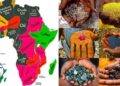
Similarly, in eastern DRC, armed militias and rebel groups regulate mining activities, collect informal taxes and provide localized security. The Congolese state retains international recognition over the territory but struggles to exert consistent authority on the ground (Stearns, 2011). These examples demonstrate that sovereignty erosion in Africa is often gradual and territorially uneven.
Mechanisms of Sovereignty Erosion
1. Security Substitution
The first mechanism through which sovereignty erodes is security substitution. When the state cannot protect citizens from violence, armed non-state actors step in to fill the vacuum. In Somalia, Al-Shabaab has maintained control over rural areas by providing predictable, albeit coercive, security and judicial systems (Menkhaus, 2014). In some regions, its courts are perceived as more efficient than state institutions.
2. Service Provision and Legitimacy
Second, non-state actors often gain legitimacy through service provision. The security-development nexus emphasizes that insecurity and underdevelopment reinforce each other (Duffield, 2001). In peripheral African regions where infrastructure, healthcare, education, and judicial systems are weak, armed groups sometimes provide basic services or regulate markets. By addressing local grievances such as land disputes or protection against banditry, they generate pragmatic acceptance among local populations.
3. Identity and Marginalization
Third, identity-based marginalization strengthens alternative authority structures. In the Sahel, Fulani communities have sometimes been targeted by state security forces or excluded from political processes. Armed groups exploit these grievances, framing themselves as defenders of marginalized populations (International Crisis Group, 2022). Sovereignty thus erodes not only because of absence but because of perceived injustice and exclusion.
4. Border Porosity and Transnational Networks
Finally, porous borders facilitate the persistence of ungoverned spaces. Many African states inherited colonial borders that cut across ethnic and ecological zones. Limited border control enables arms trafficking, smuggling, and cross-border insurgent movement. In the Lake Chad Basin, Boko Haram has leveraged cross-border mobility between Nigeria, Niger, Chad and Cameroon to evade state authority while maintaining operational capacity (Onuoha, 2014).
Layered Sovereignty in Africa
These dynamics produce what can be described as layered sovereignty. Urban centers may exhibit strong state presence, while rural or border regions experience contested or alternative governance. The result is a fragmented political order within internationally recognized boundaries. African states facing such conditions are sovereign in law but divided in practice.
Policy Implications
If sovereignty erosion stems from peripheral fragility, policy responses must extend beyond militarized counterinsurgency. While security operations are necessary, long-term sovereignty restoration requires infrastructure development, inclusive governance, decentralization reforms, and accountable security institutions. Strengthening state presence in marginalized regions through roads, schools, courts, and health services can enhance both legitimacy and control.
Conclusion
Territorial size alone does not determine sovereignty outcomes. Rather, in fragile African states, uneven governance and peripheral neglect create environments where non-state actors assume governance roles. These actors gain legitimacy by providing security and services that the state fails to deliver. Sovereignty, therefore, erodes gradually through governance substitution rather than abrupt collapse. Understanding sovereignty as spatially differentiated offers a more precise framework for analyzing fragility and designing sustainable policy interventions across Africa.
This is a good paper. I believe that it has been written very generally to reflect an overall perspective on Africa. We could perhaps enrich this further by linking the issues and conclusions reached to Ghana.
Taking issues of galamsey into perspective, we see quite clearly that the government has lost control in certain areas across the country and takes sporadic measures occasionally to assert authority.
There are many more creeping challenges across Africa, such as the reckless use of motorbikes and the failure to register and control them effectively, illegal land use and the incidence of landguards, the illegitimate use of middle men for official services etc strengthens the creeping loss of state control across Africa. Your conclusions therefore, that unless pragmatic measures are implemented that addresses joblessness, poor governance, provision of social services etc, the state would lose control becomes very strong.
References
Clunan, A. L., & Trinkunas, H. A. (2010). Ungoverned spaces? Alternatives to state authority in an era of softened sovereignty. Stanford University Press.
Duffield, M. (2001). Global governance and the new wars: The merging of development and security. Zed Books.
Fund for Peace. (2023). Fragile States Index 2023. https://fragilestatesindex.org/
International Crisis Group. (2022). The Sahel: Insurgency and governance in Mali, Niger and Burkina Faso. International Crisis Group Report.
Menkhaus, K. (2014). State failure, state-building, and prospects for a “functional failed state” in Somalia. The ANNALS of the American Academy of Political and Social Science, 656(1), 154–172.
Onuoha, F. C. (2014). Why do youth join Boko Haram? United States Institute of Peace Special Report.
Rotberg, R. I. (2004). When states fail: Causes and consequences. Princeton University Press.
Stearns, J. (2011). Dancing in the glory of monsters: The collapse of the Congo and the Great War of Africa. PublicAffairs.