








Introduction
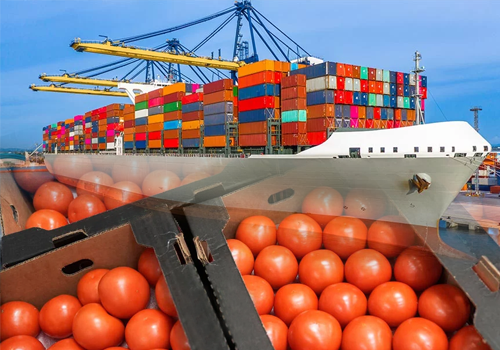
The killing of at least seven Ghanaian tomato traders near Titao in northern Burkina Faso in February 2026 represents not only a humanitarian tragedy but also a structural weakness in Ghana’s food supply system. Ghana’s annual tomato demand is estimated at about 800,000 metric tonnes, yet domestic production supplies only 300,000–400,000 tonnes, forcing traders to travel into conflict-affected Sahelian regions to secure supplies (GIRSAL, 2022). This dependence exposes traders to violence while making national food availability vulnerable to instability beyond Ghana’s borders. The Titao attack shows that what has long been treated as normal commercial activity is, in fact, a high-risk survival strategy for thousands of traders and consumers alike.
The economic cost of import dependence
Ghana’s reliance on imported tomatoes and processed products imposes significant economic losses. The Chamber of Agribusiness Ghana estimates that the country loses approximately GH¢5.7 billion annually due to import dependence, weak local production systems, and inadequate value addition. Annual spending on imported fresh tomatoes and paste ranges between GH¢650 million and GH¢760 million, while potential domestic jobs, tax revenues, and wages are lost to foreign producers (CAG, 2026). These figures illustrate that the tomato deficit is not merely an agricultural issue but a macroeconomic concern affecting employment, industrial growth, and fiscal stability.
Structural weaknesses in domestic production
Ghana’s tomato sector is dominated by smallholder farmers — more than 90,000 of them — most cultivating less than two hectares (IFPRI, 2010). Average yields remain low, at about 7.85 tonnes per hectare, significantly below global standards (FAOSTAT, 2022). Production is largely rain-fed, with limited irrigation infrastructure, making output seasonal and unpredictable. In addition, many locally grown varieties are unsuitable for industrial processing due to low brix levels, forcing factories to depend on imported concentrate. Post-harvest losses further compound the problem, with up to 30–45 per cent of output spoiling annually because of inadequate storage and transportation systems (CAG, 2026).
Security implications of cross-border trade
Heavy reliance on supplies from unstable neighbouring countries carries clear national security risks. Security consultant and professor at the Kofi Annan International Peacekeeping Training Centre (KAIPTC), Kwesi Aning, for instance, has respectively warned in various interviews with Ghanaian media that insecurity in the Sahel can spill across borders through trade networks and population movements. Prior to the Titao incident, no formal travel advisory had been issued to traders operating in high-risk zones, highlighting institutional gaps in protecting citizens engaged in cross-border commerce. Reducing dependence on imports from conflict-affected regions would therefore strengthen both food security and national security (Myjoyonline.com).
Investing in self-sufficiency
The tragedy creates urgency for a national tomato self-sufficiency strategy. Experts estimate that Ghana would need between 1.8 million and 2.2 million tonnes of fresh tomatoes annually to meet domestic needs and support processing industries (GIRSAL, 2022). Achieving this would require coordinated investment in improved seeds, mechanisation, extension services, and affordable agricultural finance. Large-scale irrigation development, particularly in northern Ghana, would enable year-round production, reduce seasonal shortages, and stabilise prices. Such investments could transform tomatoes into a reliable commercial crop rather than a seasonal commodity.
Reducing post-harvest losses through infrastructure
Infrastructure development is equally critical. Significant quantities of tomatoes rot each year due to the absence of cold storage facilities and efficient logistics systems. Establishing pre-cooling centres, refrigerated transport networks, and aggregation hubs near production zones would dramatically increase effective supply without expanding farmland. This would raise farmer incomes, reduce consumer prices, and improve market stability while cutting the country’s reliance on imports.
Reviving the processing industry
Ghana’s tomato processing factories operate below capacity because they cannot obtain sufficient quantities of suitable raw materials locally. As a result, most companies rely on imported concentrate for production. Revitalising the sector requires contract farming arrangements that guarantee farmers stable markets and processors reliable supply. The introduction of high-yield, high-brix varieties suited for industrial use would further reduce import dependence and promote domestic value addition.
A Pathway to job creation and food security
A strengthened tomato value chain could generate employment across farming, aggregation, processing, packaging, transport, and retail, particularly benefiting women and youth. This is crucial in northern Ghana, where food insecurity levels are highest. According to the World Food Programme, over two million Ghanaians currently face significant food insecurity, largely concentrated in regions bordering conflict-affected countries. Expanding domestic food production would therefore serve as both an economic development strategy and a humanitarian intervention.
From crisis to catalyst
Ghana has long been regarded as a stable country within a turbulent region, yet the Titao attack shows that economic vulnerabilities can translate into direct threats to human life. If policymakers act decisively, the tragedy could catalyse the transformation of the tomato sector into a cornerstone of rural industrialisation, food sovereignty, and national resilience. Reducing dependence on imports from unstable neighbours would protect traders, retain wealth within the economy, and strengthen long-term development prospects.
Conclusion
The deaths of Ghanaian traders near Titao should mark a turning point rather than a temporary shock. Weaning Ghana off tomato imports — especially those sourced from conflict-prone areas — is not merely an agricultural ambition but a strategic national priority. Through coordinated investment in production, irrigation, storage, and processing, Ghana can build a self-sufficient tomato economy that creates jobs, enhances food security, and ensures that no citizen must risk their life in a foreign conflict zone to supply a staple food at home. Like they say, ‘When life gives you lemons, make lemonade out of them’. As tragic as the Titao attack may seem, it might be an opportunity to whip up some gravy out of this whole tomato tragedy.
References
Agyekum, K. (2015). Vegetable Consumption Patterns in Ghana.
Chamber of Agribusiness Ghana (CAG). (2026). National Tomato Production Strategy (2026–2030).
FAOSTAT. (2022). FAO Statistical Database on Tomato Production. Food and Agriculture Organization of the United Nations.
GIRSAL. (2022). Agricultural Value Chain Financing Reports: Tomato Sub-Sector in Ghana. Ghana Incentive-Based Risk Sharing System for Agricultural Lending.
International Food Policy Research Institute (IFPRI). (2010). Tomato Production Systems in Ghana.
World Food Programme (WFP). (2025). Food Security Assessment for Ghana.
News reports (Myjoyonline.com) and official statements on the February 2026 Titao attack on Ghanaian traders in Burkina Faso.