








Introduction
In December 2025, the Alliance of Sahel States (AES), a regional bloc formed by Mali, Burkina Faso and Niger formally activated a joint military force known as the Unified Force of the Alliance of Sahel States (FU-AES). This development represents a significant shift in the Sahel’s regional security architecture. The FU-AES brings together approximately 5,000 troops from the three member states under a unified command structure, with headquarters in Niamey, Niger’s capital, and leadership assigned to a Burkinabé general (Alliance of Sahel States, 2025; Peoples Dispatch, 2025). This article explores the strategic, operational, and political implications of this transformation for the Sahel, a region long beset by armed insurgencies, state fragility, and shifting geopolitical alignments.
Origins and Structure of the FU-AES
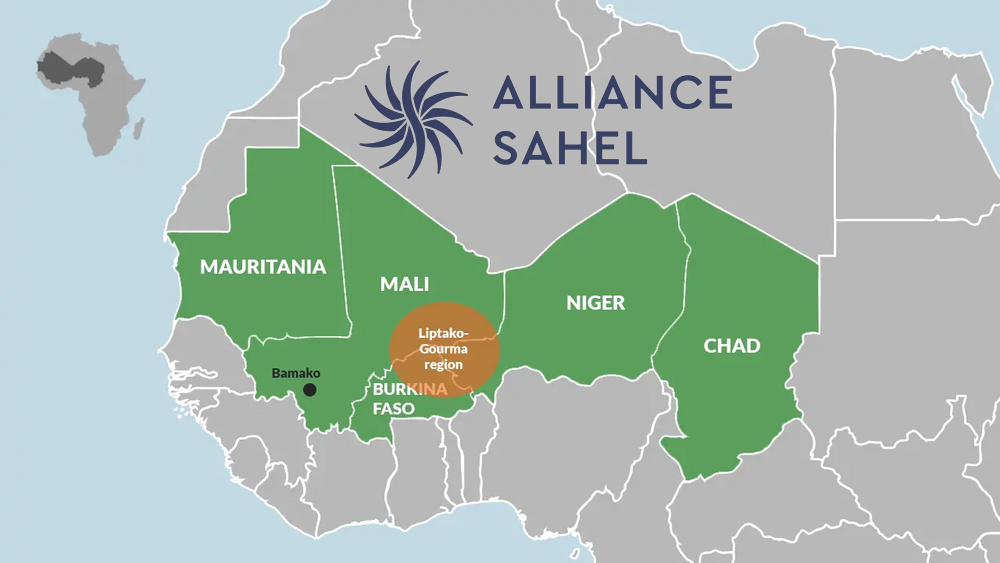
The idea of a unified military force under the AES emerged against the backdrop of escalating armed group activity across the Liptako-Gourma region, where borders of Mali, Niger, and Burkina Faso meet. These borders have been among the most volatile in the Sahel for over a decade, with jihadist groups such as Jama’at Nasr al-Islam wal Muslimin (JNIM) and Islamic State-affiliated forces conducting frequent attacks that have inflicted heavy casualties and forced widespread displacement (Alliance of Sahel States, 2025). National armies in the three countries have struggled to contain these threats independently, prompting repeated international military missions and partnerships over the years.
The FU-AES is structured as a collective defense and counterterrorism force. It integrates national contingents into a single command to synchronize activities across borders. According to reports, it draws soldiers and assets from Mali, Burkina Faso, and Niger, with responsibilities that include shared intelligence, border security operations, and joint ground and air missions (Alliance of Sahel States, 2025; Military Africa, 2025). This unified posture is intended to close gaps that armed groups have long exploited, whereby militants engaged with one army could evade pressure by moving into neighbouring territory.
Strategic Significance for the Sahel
The activation of the FU-AES holds both symbolic and practical importance. Strategically, it reflects a concerted effort by the three governments to assert greater control over their security environment through regional cooperation rather than reliance on external actors. In recent years, foreign military involvement in the Sahel, particularly by former colonial power France and its allies, diminished significantly after political ruptures with the three AES states. The new force signals an intent to craft a Sahel-centric response to shared security challenges (Peoples Dispatch, 2025).
By pooling military resources, the AES hopes to overcome limitations inherent in fragmented national campaigns. A unified command is meant to streamline decision-making, reduce response times, and enable coordinated operations wherever militants seek refuge across borders. Furthermore, the choice of headquarters in Niamey underscores Niger’s geographic centrality in the Liptako-Gourma triangle and highlights an effort to balance leadership roles among the member states.
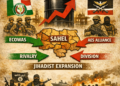
In political terms, the FU-AES strengthens the alliance’s internal cohesion while distancing it from weakened regional institutions such as the Economic Community of West African States (ECOWAS). All three members formally exited ECOWAS in early 2025, a move that underscored their desire for autonomy in defense and governance decisions (Africa Briefing, 2025). By centralising military cooperation within the AES framework, these countries are positioning themselves as architects of their own security, a departure from earlier reliance on broader West African and international military frameworks.
Challenges and Limitations
Despite its strategic promise, the FU-AES faces considerable operational challenges that may constrain its ability to deliver rapid and lasting security improvements. First, the alliance must address significant resource and logistic gaps. Coordinating intelligence across three armies that have operated independently is complex, and establishing reliable systems for real-time information sharing will be crucial. Airlift capacity and other logistical support remain limited in scale, reducing the force’s ability to project power deep into insurgent strongholds (Military Africa, 2025).
Second, the quality and readiness of the constituent national forces vary across the three countries. While a unified command can theoretically improve coordination, uneven training, equipment standards, and battlefield experience may hamper effectiveness in complex operations. Past regional initiatives, such as the G5 Sahel joint force, struggled with similar issues and were ultimately unable to achieve decisive results against adaptive militant networks.
Operational risks also include the potential for civilian harm. Joint operations in contested areas carry the risk of collateral damage, which can fuel local grievances and provide insurgent groups with recruitment opportunities. Ensuring that offensive efforts are balanced with protecting civilian populations will be a persistent challenge.
Political and Geopolitical Implications
The establishment of the FU-AES also reshapes the Sahel’s political landscape. The alliance reinforces a bloc of military-led governments that are redefining sovereignty and regional alignment. By handling their security affairs on their own terms, the member states are signalling a departure from traditional West African diplomatic structures and forging a new axis of cooperation rooted in shared geopolitical interests.
This shift has consequences beyond the Sahel. Fragmentation among West African states could open diplomatic and security gaps that armed groups might exploit. Countries outside the AES framework, and regional powers such as Nigeria and Côte d’Ivoire, have expressed caution regarding the implications of a militarised alliance that operates largely outside ECOWAS mechanisms (Africanews, 2025). Moreover, the departure of the AES from broader regional bodies complicates the prospects for coordinated economic and development strategies that are essential for long-term stability.
Externally, the alliance’s autonomy may attract new partnerships. As Western military involvement has receded, AES members have sought alternative supporters, including states willing to provide military equipment and training. How these external relationships evolve could further influence the balance of power and alignments within the Sahel and beyond.
Conclusion
The activation of the Unified Force of the Alliance of Sahel States marks a watershed moment in the Sahel’s ongoing struggle with insecurity. It is the most concrete institutional manifestation of the alliance’s objective to manage its security agenda collectively. By consolidating military capabilities and framing operations in a regional context, the AES aims to close the cross-border gaps that have long enabled militant groups to thrive.
In addition to the above, the FU-AES has significantly reduced the deterrent power of ECOWAS and consolidated disintegration efforts. Although ECOWAS continues to exist, it has a clear competitor whose effectiveness would undermine its overall legitimacy.
However, the effectiveness of the FU-AES will depend on overcoming significant operational constraints, including logistics, intelligence integration, and force readiness. Without parallel efforts to address political, social, and economic drivers of instability, even a well-coordinated military force may struggle to alter the trajectory of conflict. What is clear is that the FU-AES represents both a strategic assertion of autonomy by its member states and a test case for locally driven security cooperation in a region where conventional approaches have repeatedly fallen short.
References
Africa Briefing. (2025). Alliance of Sahel States launches joint force. https://africabriefing.com/alliance-of-sahel-states-launches-joint-force/ (africabriefing.com)
Alliance of Sahel States. (2025). In Wikipedia. https://en.wikipedia.org/wiki/Alliance_of_Sahel_States (Wikipedia)
Military Africa. (2025, December). The Sahel’s emerging “NATO”: how Burkina Faso, Mali, and Niger are rewiring regional security. https://www.military.africa/2025/12/the-sahels-emerging-nato-how-burkina-faso-mali-and-niger-are-rewiring-regional-security/ (Military Africa)
Peoples Dispatch. (2025, December 24). The Alliance of Sahel States launches unified military force and strengthens regional security. https://peoplesdispatch.org/2025/12/24/the-alliance-of-sahel-states-launches-unified-military-force-and-strengthens-regional-security/ (peoplesdispatch.org)
Africanews. (2025, December 23). Sahel alliance leaders meet in Bamako to deepen break with ECOWAS. https://www.africanews.com/2025/12/23/sahel-alliance-leaders-meet-in-bamako-to-deepen-break-with-ecowas/ (africanews.com)