








Introduction
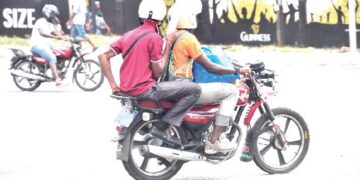
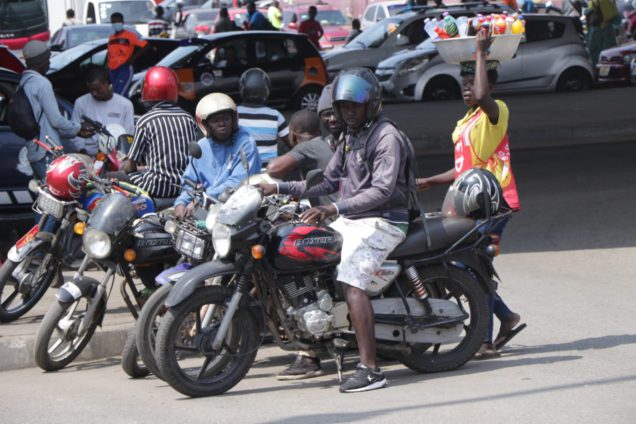
Ghana’s transportation sector has seen significant growth over the years, leading to gridlock along the major roads in the nation’s capital and regional centres. This occassioned the emergence of commercial motorcycle used popularly known as okada in response. Whiles the operation of okada was considered illegal according to the Road Traffic Regulations, the reality of the rural and urban mobility landscape, particularly the heavily populated areas and border towns, engendered a reliance on this form of transportation.
Given the high rate of unemployment among young people, many have turned to okada operations to make ends meet. The issue has become politicised with the current government legalising a trade which otherwise was illegal by law. The security and intelligence experiences from other African contexts where motorcycle taxi regulation has evolved needs to be studied for the adoption of best practices.
Okada Dynamics and Policy in Ghana
Discussions with many motorists indicate that motorcycle taxi use in Ghana has become both prevalent and contentious. Many Ghanaians support formal regulation amid continuous demand for motorcycle taxis across regions. Safety concerns have driven the support for regulation, underscoring the salience of risk perceptions.
In the Greater Accra Region, commercial riders are reported to have high risk perceptions and generally mixed safety behaviours (e.g., helmet use). Discussions by CISA analysts with riders confirmed their perception of their work as dangerous.
Visits to the some rural areas indicate a prevalence of okada, yellow-yellow /pragia services, operating on critical feeder roads which link markets and farms and facilitate the transport of goods and passengers. There is a higher incidence of this, particularly where conventional vehicles are less viable, with many riders lacking formal licences or registration for their bikes. In the case where an incident occurs, tracking the offending rider becomes extremely difficult.
Security Implications of Legalisation in the Ghanaian Context
The issue of legalisation of Okada has been discussed and the matter has been put to rest with the passage of the Road Traffic (Amendment) Bill 2025, which legalises commercial motorcycle operations, pending presidential assent. The following needs to be considered to make the operationalisation effective and to address challenges that might arise.
- Crime Mobility and Intelligence Challenges
The agility and adaptability of okada makes them attractive tools for crime and rapid evasion. Some transport experts have warned that motorcycles are frequently used in snatch-and-run thefts, mobile money robberies, and hit-and-run offences, while unregistered or falsely documented motorcycles complicate criminal identification and intelligence operations.
From an intelligence perspective, unrestricted okada operations create “blindspots” for law enforcement. Furthermore, their anonymity and poor documentation limits analytical visibility, reducing the effectiveness of criminal investigations and pattern detection.
- Enforcement Capacity and Coordination
Ghana’s primary traffic enforcement units — including the Motor Traffic and Transport Department (MTTD) and the Driver and Vehicle Licensing Authority (DVLA) — face capacity constraints in monitoring high volumes of okada without supportive digital systems and shared data protocols. Ensuring that there is support for sustained compliance and digital monitoring through institutional reforms and investment in data infrastructure is critical.
- Public Safety and Health Security Nexus
Okada operations are associated with elevated road traffic fatalities: national trend data indicate that motorcycle fatalities increased dramatically from 2.7% of road deaths in 2002 to 31.7% in 2021, making two-wheelers one of the riskiest transport modes in Ghana.
This trend places pressure on emergency response systems and health infrastructure, as severe crash injuries demand intensive medical care and long-term rehabilitation, drawing public resources that could be allocated elsewhere.
Comparative Case Studies
- Nigeria: Bans, Enforcement, and Informality
In Nigeria, particularly Lagos State, authorities have alternated between regulating okada and banning them on major roads to address perceived crime and safety burdens. These prohibitions aim to reduce accidents and opportunistic crime; yet evidence suggests that such bans often displace activity rather than eliminate it and may exacerbate informal practices, complicating intelligence efforts.
The Nigerian experience reveals that enforcement focused solely on bans can inadvertently redirect crime and economic activity into other unregulated spaces, reducing state legibility of operators and undermining data-driven policing.
- Kenya: Regulation and Technological Integration
Kenyan counties have pursued a more decentralised regulatory approach for boda-boda (motorcycle taxis), including rider registration, licensing, and proposals for tracking systems to enhance compliance. While enforcement remains uneven, initiatives to embed digital data (e.g., GPS, ride logs) have improved regulatory reach and intelligence access — though resource and compliance challenges persist.
Kenya’s case demonstrates how technology-enhanced regulation can expand state oversight, albeit contingent on enforcement resourcing and rider cooperation.
- Rwanda: Structured Formalisation and Safety Outcomes
Rwanda’s motorcycle taxi sector operates under relatively rigorous safety and regulatory expectations, with broad helmet use and app-based safety interventions. Although formalisation has not eliminated all safety risks, Rwanda shows that a structured regulatory regime — coupled with public safety campaigns — can mitigate fatalities and integrate motorcycle taxis into official transport ecosystems.
Policy Considerations for Ghana
To maximise the security and intelligence benefits of legalising okada, Ghana should adopt a multidimensional policy strategy including:
- Centralised Digital Licensing Systems: Biometric or digital rider identification systems would enhance traceability and intelligence linking individuals to incidents. Additionally, involvement of the National Road Safety Authority (NRSA) would be fundermental to ensure improved saftey.
- Mandatory Training and Safety Certification: Structured training programs would improve rider behaviour and produce compliance data useful for enforcement.
- Inter-Agency Data Integration: Shared databases between traffic, police intelligence, and licensing authorities would facilitate rapid information sharing and collaborative analysis.
- Technology-Supported Regulation: Use of GPS assistive systems and mobile reporting would enhance operational transparency.
- Community and Sector Engagement: Working with rider associations and commuter groups can help shape compliance norms and co-produce safety awareness.
Conclusion
Legalising okada in Ghana offers opportunities to formalise a pervasive transport practice. However, the security and intelligence implications are substantial. Effective policy design must prioritise identification systems, data integration, enforcement coordination, and public safety frameworks to ensure that legalisation strengthens, rather than weakens, national security and intelligence capacities.
Ghana’s regulatory shift provides a vital case for how emerging transport modes intersect with broader governance objectives and the quest for safer, more accountable urban futures.
References
Adu Jack, J. K., Amoah, E. K. S., Hope, E., & Okyere, F. (2021). Should Ghana legalize the commercial use of motor bikes and tricycles as means of public transport? A case study of five selected regions in Ghana. Asian Institute of Research.
Appiah, A. N. (2021). The perception of risk and its implications on the operations of motor taxi (Okada) in the Greater Accra Region (MPhil thesis). University of Ghana.
Nelson, J. (2016). Motorcycle taxis in the provision of rural public transport services: A case study of selected towns in the Volta Region of Ghana (Master’s thesis). KNUST.
Oteng-Ababio, M., & Agyemang, E. (2015). The Okada war in urban Ghana: A polemic issue or policy mismatch? African Studies Quarterly.
Reanalysing existing data to enhance understanding of motorcycle and three-wheeler use (2018). Research4CAP.
Investigating the increasing demand and formal regulation of motorcycle taxis in Ghana (2022). Journal of Transport Geography.
Motorized two- and three-wheeler fatalities in Ghana: Trends, risk factors, and policy implications (2026). African Transport Studies.
Frimpong, A., Babah, P. A., Mensah, R. O., Obeel, C., Acquah, A., & Acheampong, J. W. (2021). The socioeconomic significance of the okada phenomenon in Ghana and implications on politics. Journal of African Interdisciplinary Studies.
Republic of Ghana. (2012). Road Traffic Regulations, 2012 (L.I. 2180). Ghana Publishing Corporation