





Introduction
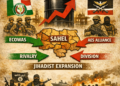
The Sahelian social media blitz refers to coordinated digital influence campaigns emerging from Sahelian military-led regimes (Burkina Faso, Mali and Niger) that seek to reshape regional opinion around themes of sovereignty, anti-imperialism and pan-African self-determination that seeks to justify the coup d’etats that have eroded the democratic gains in the region. Such conscious efforts seem to project and paint coup d’etats in very attractive terms as the only practical way to overcome the underlining developmental and security challenges in Africa. The narratives usually aim to delegitimize ECOWAS and Western partners, valorize military-led “patriotic renewal” and weaken democratic trust in liberal institutions. The main platforms used include TikTok, Facebook, X (formerly Twitter) and WhatsApp.
Key Architecture/How it Works
The propaganda architectures orchestrated by the coup-installed regimes across the Sahel manifest through multiple, interlinked modalities of information control and ideological projection. Among these are the following:
- Deployment of State-Aligned Strategic Messaging: These are discursive instruments meticulously crafted to reframe military interventions as “sovereign corrective action”, thus sovereign acts of national redemption rather than the constitutional order. These narratives seek to derail the legitimacy of governance in moral and developmental terms. They assert that liberal democracy has failed to deliver material progress or protect African dignity, thereby positioning military stewardship as a corrective pathway toward “authentic sovereignty” and accelerated development.
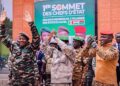
In the Burkinabè context, Captain Ibrahim Traoré’s administration has institutionalized a digital propaganda and social media team, reportedly trained by Chinese and Russian communication strategists. This unit operates under the coordination of a trusted member of Traoré’s inner circle and is tasked with disseminating the ideological doctrine colloquially branded as “Ibism” – a hybrid of revolutionary populism, anti-imperialist discourse and digitally mediated charismatic nationalism designed to consolidate Traore’s regime legitimacy and inspire regional emulation.
- Influencer Ecosystems: The influencer ecosystems underpinning Sahelian digital propaganda represent a decentralized yet highly coordinated network of content producers, both within the sub-region and across the diaspora, who serve as amplifiers of regime-aligned narratives across major social media platforms such as TikTok, X, Facebook and WhatsApp. These actors, often self-styled Pan-Africanists and entertainment figures constitute a crucial vector for the normalization and popularization of the military-led sovereignty among youth audiences.
A paradigmatic example is the U.S.-based Burkinabè digital activist known online as “ibrahimamaiga769”, who has emerged as one of the most vocal defenders and promoters of the Alliance of Sahel States (AES). Through emotionally charged videos, such influencers contribute to constructing an affective community of solidarity that transcends national borders.
In Ghana, the diffusion of these narratives has been facilitated, though often inadvertently, by high profile celebrities such as hiplife artist ”Sarkodie” and Kumawood actor “Kwadwo Nkansah Lil-Win”, whose massive digital followings lend symbolic legitimacy to Sahelian populist figures. Their portrayals of Captain Ibrahim Traoré as a contemporary embodiment of Pan-African revolutionary icons such as Kwame Nkrumah, Thomas Sankara, and Nelson Mandela, reflect the emotional and symbolic resonance of these narratives, even when such endorsements emerge from limited political awareness rather than deliberate ideological alignment.
In effect, the influencer ecosystem operates as an informal propaganda multiplier, translating state-sanctioned discourses into popular icons to reinforce the aesthetic and moral appeal of military-led “sovereign renewal” across West Africa’s digital space.
- Anti-Western Discourse: The anti-Western discourse constitutes a central ideological pillar within the Sahelian regimes’ information operations, strategically framed as a righteous struggle against neo-colonial domination and external interference in African sovereignty. This narrative architecture, often supported by Russian allies, seeks to redefine the moral landscape of power in the region by constructing the West, particularly France, as the principal antagonist in Africa’s pursuit of self-determination.
Within this rhetorical framework, anti-French and broader anti-Western slogans are deployed as populist instruments of mobilization, designed to resonate with long-standing historical grievances against colonial exploitation and post-independence dependency. Importantly, this discourse functions as a political shock absorber, activated cyclically when the regimes experience waning public approval or legitimacy crises. At such moments, leaders invoke the specter of Western subversion to re-ignite nationalist fervor and consolidate support both within their territories and across diaspora communities.
A particularly illustrative instance often used by all the junta leaders in the Sahel involves the orchestrated diffusion of disinformation across social media platforms alleging Western-sponsored coup attempts, a fabrication designed to elicit mass sympathy, re-energize patriotic sentiment, and redirect popular frustration away from internal governance failures. In this sense, the anti-Western discourse operates not merely as a defensive narrative, but as a performative strategy of political survival, blending affective manipulation, historical memory and digital propaganda into a cohesive instrument of regime endurance.
Mechanisms of Influence
The transmission of Sahelian digital narratives into Ghana occurs through several intertwined channels. Firstly, Burkina Faso’s bilingual influencers communicate via shared good English phrases, West African slang, with Pan-African motives familiar to Ghanaian youth. In other instances, English-speaking influencers are used to disseminate the message. Moreover, Meta and TikTok algorithms promote emotionally charged videos emphasizing African pride and anti-imperialist resistance. This approach leads to charged emotions which could lead to disasters. Ghana allegedly hosts one of the largest Burkinabe diaspora in the world. With these numbers, the diaspora community in the country and the broader ECOWAS youth networks could serve as bridges, sharing the AES propaganda through WhatsApp groups and student unions. This is very common particularly in the highly populated Northern communities.
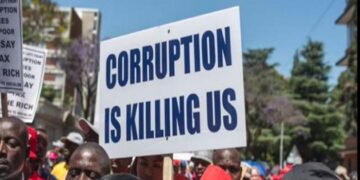
With regard to cultural resonance, Sankarist imagery, which Traore claims to represent, appeals strongly to Ghanaian youth, who identify it with Nkrumahist ideologies of sovereignty and self-reliance. This strongly appeals to the socialist movements in the country. Additionally, narratives of Western exploitation and elite corruption align with domestic frustrations about IMF dependence and inequality which attracts attention of the Ghanaian youth who believe that African leaders are corrupt and only exploit the masses.
The result is a cross-border echo online networks where anti-Western, sovereignty-based rhetoric circulates among digitally active Ghanaian youth communities, especially in universities and creative sectors.
Ramifications and Risks
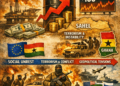
The Sahelian social media blitz poses a greater risk to the African and Ghanaian democracies with damning consequences. First is Internal Cohesion: The growing polarization between nationalist youth (influenced by the mirage Pan-African narratives) and pro-liberal elites in Ghana poses a serious challenge to the country’s long-standing culture of political moderation and consensus-building. Influenced by the rise of Sahelian “sovereignty narratives” and online campaigns glorifying military-led regimes in Burkina Faso, Mali and Niger, a segment of Ghanaian youth has begun to view liberal democracy as a Western construct that serves elite interests rather than the ordinary citizen. This ideological drift contrasts sharply with the outlook of Ghana’s pro-liberal political and intellectual class, who continue to champion democratic norms, rule of law and international cooperation. If unaddressed, this could erode the country’s historically inclusive political culture, making future public discourse more adversarial, populist and susceptible to extremist rhetoric.
In electoral politics, the spread of digital disinformation poses a significant threat to Ghana’s democratic integrity and public trust in upcoming 2028 General Elections. Detractors could adopt the Sahelian-style propaganda and foreign-backed online narratives, center on themes of corruption, elite betrayal and “sovereign independence” to infiltrate into Ghana’s digital spaces, exploiting existing frustrations with governance and inequality. If left unchecked, these narratives could distort public perceptions of political candidates, delegitimize electoral institutions, and foster widespread cynicism about the credibility of our democratic processes. This could undermine the social contract and the electoral legitimacy upon which Ghana’s democracy is built.
Furthermore, in the area of civil-military relations, the growing “romanticization” of so-called “patriotic soldiers” (the Sahel model) across social media platforms is gradually reshaping public perceptions of the military’s constitutionally defined role in Ghana’s democratic order. Influenced by the glorification of the Sahelian military leaders, particularly Captain Ibrahim Traoré and Colonel Assimi Goïta, segments of Ghanaian youth increasingly perceive the armed forces not merely as defenders of territorial integrity, but as potential agents of national “salvation” from political corruption and ineffective governance. This shift in perception, amplified through digital media risks eroding the long-standing civilian supremacy principle that has underpinned Ghana’s stable civil-military balance since the Fourth Republic, and over time, could normalize the idea that military intervention is a legitimate or even heroic response to civilian leadership failures. If unmitigated, this ideological reorientation could weaken the social and institutional barriers that have historically insulated Ghana from the coup contagion affecting other parts of the Sahel.
In terms of information security, Ghana’s open and vibrant digital ecosystem, while essential to its democratic vitality, also exposes the country to foreign influence operations orchestrated by the likes of Russian-linked networks and media outlets associated with the AES countries. These actors exploit weak digital regulation, high social media penetration and limited public awareness of online manipulation to infiltrate information spaces with disinformation, conspiracy theories and anti-Western narratives. Such hybrid tactics blur the line between legitimate political discourse and covert influence, subtly shaping public opinion and undermining confidence in state institutions. Over time, these operations could evolve into persistent hybrid threats, capable of destabilizing Ghana’s political stability, polarizing society and weakening the integrity of its democratic information environment.
Mitigating Factors and Policy Options
Media Literacy and Civil Society: Local fact-checking organizations like Fact-Check Ghana and Ghana Fact should actively debunk the Sahel-origin misinformation, whiles Universities and think tanks should increasingly discuss “digital sovereignty” and information resilience.
Institutional Resilience: Ghana should retain and strengthen its strong democratic fenders -its independent media, civil society watchdogs and a professionalized military. The National Peace Council and Electoral Commission should command robust legitimacy.
Policy Options: 1. Strategic Communication – Counter the Sahelian coup propagandists with Ghanaian-centered sovereignty narratives on patriotism and democracy.
- Cross-border Media Diplomacy – Engage AES youth movements constructively rather than antagonistically.
- Digital Literacy Programmes – Integrate civic digital education into secondary and tertiary curriculum.
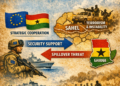
- Regional Coordination – ECOWAS must modernize its information strategy to counter hybrid narratives through short and credible social media storytelling rather than censorship.
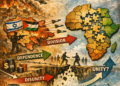
The Sahelian social media blitz represents a new frontier in regional information politics, blending youth activism, digital populism and state-driven narrative warfare. While the Sahel (Burkina Faso’s) model resonates emotionally with Ghanaian youth, its long-term adoption could erode democratic resilience. Ghana’s response must balance ideological authenticity and democratic defence, asserting an African/Ghanaian democratic sovereignty narrative that inoculates youth against external manipulation.