







1. Introduction
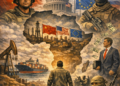
The sight of African passports found across the muddy trenches of Eastern Europe has ignited a fierce “media offensive” in the ongoing Russia-Ukraine war. While modern headlines treat the presence of African combatants as a novel scandal, historical lens reveals a more systemic and sobering reality. For centuries, African men have been utilised as an “expendable vanguard” by extra-continental powers to settle scores that hold no benefit for the African people. From the battlefields of the 19th-century Crimea to the liberation of Paris in 1944, African blood has consistently been a low-cost resource for global powers. Today, as African youth are once again lured into foreign war machines, we must confront not only the predatory tactics of foreign recruiters but also the historical whitewashing and continental failures that make such exploitation possible.
2. The Historical Pipeline: Coercion and Erasure
Pre-World War: The Imperial Footprints
The recruitment of Africans into European and Asian conflicts predates the Great Wars by decades. During the Crimean War (1853–1856), the Ottoman Empire deployed over 30,000 Egyptian and Sudanese soldiers to fight the Russian Empire. Similarly, France utilised the Tirailleurs Sénégalais (established in 1857) to consolidate its empire, even deploying them during the Franco-Prussian War (1870) on European soil. These soldiers were often selected based on “martial race” theories that viewed them as more resilient to hardship and more expendable than European troops.
The Great Wars: A “Tax in Blood”
In World War I, over 1 million Africans were mobilised. France alone recruited approximately 450,000 men, many of whom served as “shock troops” in the trenches of the Western Front. By World War II, this number surged to over 1.5 million. Units like the King’s African Rifles (KAR) and the Royal West African Frontier Force (RWAFF) were instrumental in campaigns from Ethiopia to the jungles of Burma. Unlike today’s “volunteers,” these men were colonial subjects—forced through state-sanctioned conscription and village quotas to fight for a “freedom” they were denied at home.
The Whitewashing of Victory
The most egregious example of historical erasure occurred during the 1944 Liberation of Paris. Despite the Free French forces being composed of nearly 65% Africans, Allied High Command insisted on a “whites-only” victory. African soldiers were stripped of their uniforms and replaced by white recruits so that newsreels would show a purely European liberation. This “Blanchiment” (whitening) was followed by the Thiaroye Massacre in Senegal, where French officers opened fire on returning African veterans who simply asked for their legal back-pay.
3. The Modern Dilemma: Deception vs. Force
The current recruitment of African youth into the Russia-Ukraine war presents a complex evolution of this exploitation. We must distinguish between the forced conscription of the colonial past and the predatory deception of the present.
- Deception for “Freedom”: Today, youth are lured via social media by agencies promising “lucrative jobs” in construction or security. Upon arrival, their passports are often seized, and they are funnelled into military contracts. This is a modern form of human trafficking that exploits the economic desperation of a continent whose leaders have failed to secure a brighter future for their citizens.
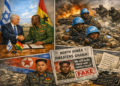
- The Dual Offensive: While Western nations that once press-ganged millions now point fingers at Russia for “exploiting” Africans, Russia reciprocates by accusing Ukraine of utilising “African mercenaries.” Reports from February 2026 indicate that over 1,400 Africans from 36 countries have been identified in the conflict, with both sides using them as geopolitical props to frame the other as neo-colonial.
- The “Ghost Veteran” Security Threat: A dangerous byproduct is emerging. Veterans of the Great Wars returned home and used their skills to champion liberation movements. In contrast, today’s returnees bring back specialised skills in drone warfare and urban combat into a polarised modern Africa. Desensitised by combat and feeling abandoned, these “Ghost Veterans” pose a significant risk of recruitment by insurgent groups or use in domestic political violence.
4. Recommendations
- Sovereign Intelligence Framework: African states, via the African Union (AU), must establish a specialised unit to objectively profile and identify citizens caught in the war machine. This unit should distinguish between those lured by fraud and those fighting for ideological reasons. Diplomatic channels must be used to demand the release of those that were deceived.
- Agency Audits & Regulations: Every African nation must immediately audit and monitor foreign recruitment agencies operating within their borders. Strict, enforceable regulations must ensure that “overseas jobs” are not frontlines in disguise.
- Educational De-Colonisation: There is an urgent need to educate the youth on our military history. They must understand that their fore bearers—who fought exceptionally well in some campaigns, remained unacknowledged—were ultimately discarded once their utility ended.
- National Reintegration Policies: States must formulate proactive policies to manage returning foreign fighters, treating them as a national security priority to prevent their radicalisation.
Conclusion
The recruitment of African youth must not be politicised by taking sides in a war that does not concern the continent. Instead, African states must assert their sovereignty above any minor benefit for the few. We cannot allow our people to remain the world’s most “disposable” soldiers. The imperative is clear: secure the future at home, or watch the youth become fuel for foreign fires once again.
References
- The Guardian (Feb 2026): “More than 1,000 Kenyans lured to fight for Russia in Ukraine war, report says.”
- Atlantic Council (Feb 2026): “As Russian battlefield losses mount, Putin is turning to Africa for soldiers.”
- IFRI Report (Jan 2026): “Russia’s Policy of Recruiting Fighters and Female Workers in Sub-Saharan Africa.”
- Africa Confidential (Feb 2026): “Cannon fodder on the front line: African recruitment drive.”
- Historical Record: Documentation of the Blanchiment of Paris (1944) and the Thiaroye Massacre (1944) as verified by the French National Archives and colonial history journals.