







Introduction
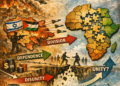
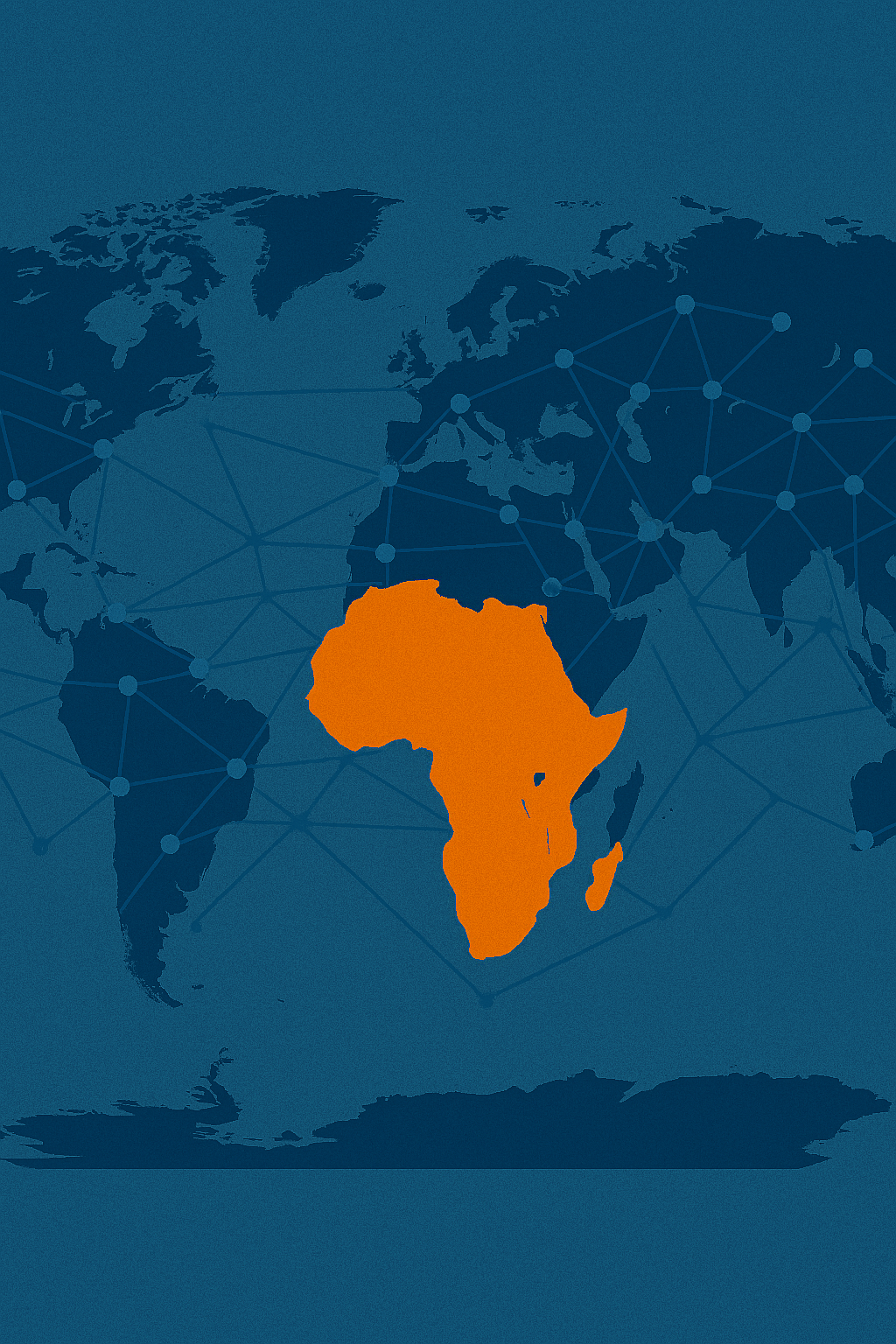
Global events of the past few years indicate that there is a significant shift in the world. These years have shown a pivotal transformation in global power relations. The post–Cold War unipolar period, dominated by the United States and Western institutions, is gradually yielding to a multipolar and contested international system characterized by the rising influence of China, resurgent great powers like Russia, and strategic autonomy efforts by Global South actors.
Recent discussions at Davos, where the Canadian Prime Minister described the global system as undergoing a rupture driven by rising great-power rivalry and economic coercion lends credence to this. This shift reflects changes in economic strength, security alignments, diplomatic influence, and institutional architecture. West Africa, a region with significant demographic, economic, and strategic assets, is both influenced by and contributing to these global transformations.
The emerging world order therefore has implications for West Africa’s political stability, security environment, economic prospects, and diplomatic orientation.
Conceptualizing the Emerging World Order
- From Unipolarity to Multipolarity
Since the end of the Cold War, there has been a shift in the global balance of power from unipolarity toward multipolarity, with regional actors and new coalitions (e.g., BRICS) gaining influence. This shift is accompanied by debates about economic governance, de-dollarization pressures, diversification of alliances, and an emphasis on south–south cooperation.
- Drivers of Change
Key drivers include:
- Economic Power Shifts: Rapid growth in Asia, notably China and India, reshaping global trade and investment flows.
- Strategic Competition: Intensifying rivalry between the U.S. and China across trade, technology, and military spheres.
- Institutional Rebalancing: Efforts by emerging economies to reshape global governance — including reforms to the IMF, UN, and other multilateral bodies.
- Regional Agency: Increasing efforts by developing regions, including Africa, to articulate independent strategic interests.
Geopolitical Realignments and West Africa
- Declining Western Dominance and New Partnerships
West Africa’s traditional security and economic architecture was deeply influenced by Western powers — notably former colonial states. However, recent years have seen:
- Withdrawal or reconfiguration of French military presence in the Sahel and broader West Africa.
- Expanding Russian access and military cooperation, including privileged naval access in the Gulf of Guinea and security pacts with regional states.
- China’s deepening economic engagement through investment and infrastructure, rivaling Western actors in influence.
These developments reflect multipolar geopolitics where West African states exercise wider choices in partnerships but also face intensified competition among great powers for influence.
- Diplomatic and Institutional Shifts
The rise of alternative coalitions and regional agency — from the African Union’s Agenda 2063 aspirations to the growth of intra-African trade via the AfCFTA — illustrates West Africa’s pursuit of strategic autonomy.
However, the fragmentation of regional organizations and uneven governance capacity limits collective bargaining power in global negotiations. It is unthinkable that the AfCFTA has still not taken significant root in trade relations across Africa. To ensure tracking, strengthened coordination is essential to avoid being drawn into great-power rivalries that do not align with regional priorities.
Security Implications
- Rising Instability and Non-State Threats
West Africa is confronting heightened insecurity, including terrorism, organised crime, and porous borders. Research identifies terrorism, drug trafficking, and governance challenges as not only critical emerging threats, but entrenched challenges as well.
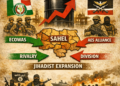
Groups like JNIM (al-Qaeda affiliated) have expanded territorial influence across the Sahel, reaching toward coastal states — driven by weak governance and gaps in counterinsurgency efforts.
- Military Coups and Political Fragility
A string of coups in the region has underscored governance fragility, challenging democratic norms and complicating regional security cooperation. ECOWAS and other mechanisms face pressure to respond effectively to these crises. The withdrawal of the AES countries from ECOWAS, and threats from other countries entrenches fragility.
- External Security Partnerships
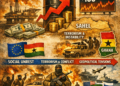
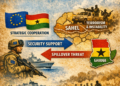
Foreign security partnerships — whether Western, Russian, or otherwise — shape domestic security policies. While alternative alliances may fill short-term gaps, they can also create new dependencies and accountability challenges, potentially reducing state autonomy in long-term security planning.
Economic Opportunities and Risks
- Resource Endowments and Strategic Value
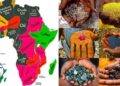
West Africa’s natural resources — minerals, hydrocarbons, and arable land — make it a key player in global economic competition. Access to critical minerals and shifting supply chains can attract diversified foreign investment, yet also expose states to predatory practices and debt pressures.
- Regional Integration and Trade
The African Continental Free Trade Area (AfCFTA) aims to boost intra-African trade, reduce dependency on external markets, and foster economic diversification. Success in expanding manufacturing and value-addition could position West African economies more favourably within the emerging global system.
- Risks of Economic Fragmentation
Competing external interests may drive infrastructure investments that favour extractive models rather than broad-based development, perpetuating patterns of dependency and the colonial legacy. Coordinated regional policy frameworks are essential to ensure that investment aligns with long-term development goals.
Policy Recommendations for West Africa
To navigate the emerging world order effectively, West African states and institutions may need to implement the following:
- Strengthen regional institutions (ECOWAS, AU) to harmonize policy responses and present unified negotiation positions.
- Diversify strategic partnerships while avoiding alignments that compromise autonomy.
- Invest in human capital and productive capacity to maximize benefits from global supply chain shifts.
- Enhance governance and democratic resilience to mitigate instability and attract sustainable investment.
Conclusion
The emerging new world order — characterized by multipolarity, contested influence, and greater agency for Global South actors — presents both opportunities and challenges for West Africa. The region’s strategic assets and demographic strength offer potential leverage in global affairs, yet political fragility, security threats, and economic vulnerabilities may constrain how fully that potential is realized.
West Africa’s future influence will depend on the ability of its states to balance external engagements with internal resilience, and to turn global transitions into equitable development pathways — rather than arenas of external competition at its expense. It is important that the challenges of the emerging world order are studied to guide the alliances that would shape the future of a key region in Africa.
References
Aning, K., & Axelrod, I. (2024). Resurgent coup d’état, democratic reversals, and geopolitical shifts in Africa. Global Governance: A Review of Multilateralism and International Organizations, 30(2), 254–272. https://doi.org/10.1163/19426720-03002007
Associated Press. (2024). What’s ahead for a 50-year-old West African bloc after three junta-led countries left the group? AP News. https://apnews.com
Associated Press. (2026). China, Russia and Iran join South Africa for naval drills as tensions run high. AP News. https://apnews.com
Global Observatory. (2025). In a changing global order, Africa is embracing its agency. International Peace Institute. https://theglobalobservatory.org
Mail & Guardian. (2025, May 14). Afro-resilience: Africa’s strategic realignment in a multipolar world. https://mg.co.za
Moderndiplomacy.eu. (2025). Africa in the emerging new world order. https://moderndiplomacy.eu
Oteghekpen, H. O., & Ukhurebor, R. A. (2025). Globalization and the emerging world order: Implications for sub-Saharan Africa. International Journal of Research and Innovation in Social Science, 9 (8), 7214–7221. https://doi.org/10.47772/IJRISS.2025.908000596
Okonkwo, A. E., & Obi, C. B. (2024). African governments and reliance on Western powers for addressing global challenges: Challenges and opportunities. International Journal of Research and Innovation in Social Science, 8(10). https://doi.org/10.47772/IJRISS.2024.8100026
Reuters. (2025, July 18). ‘We are on our own’: Africa looks within to weather growing global tariff turmoil. https://www.reuters.com
Reuters. (2025, October 15). German policy needs a decisive “Africa shift,” association says. https://www.reuters.com
Security Council Report. (2024). West Africa and the Sahel: Emerging security threats. https://www.securitycouncilreport.org
Wikipedia contributors. (2025). French military withdrawal from West Africa (2022–2025). Wikipedia. https://en.wikipedia.org/wiki/French_military_withdrawal_from_West_Africa_(2022–2025)