


• fr Français
  • en English
CISA NEWSLETTER
Advertisement
  • HOME
  • Editions
    • 2025
      • December 2025
      • November 2025
      • October 2025
      • September 2025
      • August 2025
      • July 2025
      • June 2025
      • May 2025
      • April 2025
      • March 2025
      • February 2025
      • January 2025
    • 2024
      • December 2024
      • November 2024
      • October 2024
      • September 2024
      • August 2024
      • July 2024
      • June 2024
      • May 2024
      • April 2024
      • March 2024
      • February 2024
      • January 2024
    • 2023
      • December 2023
  • News
    • All
    • Business
    • Politics
    • Science
    • World
    Okada Operations In Ghana; Economic Necessity Or Security Risk

    Okada Operations In Ghana; Economic Necessity Or Security Risk

    Cedi Appreciation and National Security in Ghana: Currency Stability Amid Persistent Structural Risks

    Cedi Appreciation and National Security in Ghana: Currency Stability Amid Persistent Structural Risks

    The Mirror in the Politician: How Ghanaian Society Breeds the Corruption It Condemns

    The Mirror in the Politician: How Ghanaian Society Breeds the Corruption It Condemns

    Terrorism Financing in The Sahel/West Africa: Mechanisms, Drivers, And Responses

    Terrorism Financing in The Sahel/West Africa: Mechanisms, Drivers, And Responses

    The Silent Threat: Impact of Human and Sex Trafficking on National Security

    The Silent Threat: Impact of Human and Sex Trafficking on National Security

    How JNIM is dominating the terrorism landscape in the Sahel

    How JNIM is dominating the terrorism landscape in the Sahel

    Trending Tags

    • Trump Inauguration
    • United Stated
    • White House
    • Market Stories
    • Election Results
  • Tech
    Securing Africa’s Digital Future: A Call to Action on Cybersecurity.

    Securing Africa’s Digital Future: A Call to Action on Cybersecurity.

    Trending Tags

    • Nintendo Switch
    • CES 2017
    • Playstation 4 Pro
    • Mark Zuckerberg
  • Entertainment
  • Lifestyle
    • All
    • Food
    • Health
    • Travel
    Security Contagion and the Urban Poor: Begging and the Invisible Threat in Accra’s Streets

    Security Contagion and the Urban Poor: Begging and the Invisible Threat in Accra’s Streets

    ECOWAS@50: Ghana as a Stakeholder in West Africa’s Integration Aspiration

    ECOWAS@50: Ghana as a Stakeholder in West Africa’s Integration Aspiration

    The Rise of Substance Abuse Among Ghanaian Youth: A Deep Dive into Music, Media, and Mental Health

    The Rise of Substance Abuse Among Ghanaian Youth: A Deep Dive into Music, Media, and Mental Health

    Impact Of Russia’s War in Ukraine on Africa’s Agriculture and Food Security

    Impact Of Russia’s War in Ukraine on Africa’s Agriculture and Food Security

    Transforming Africa’s Agriculture to Mitigate Food Crisis

    Transforming Africa’s Agriculture to Mitigate Food Crisis

    Framing Food Insecurity as A Security Contagion

    Framing Food Insecurity as A Security Contagion

    Trending Tags

    • Golden Globes
    • Game of Thrones
    • MotoGP 2017
    • eSports
    • Fashion Week
  • Review
    Key Drivers of Voter Choices for Ghana’s 2024 General Elections – A Review

    Key Drivers of Voter Choices for Ghana’s 2024 General Elections – A Review

  • CISA Ghana
  • January 2026
No Result
View All Result
  • HOME
  • Editions
    • 2025
      • December 2025
      • November 2025
      • October 2025
      • September 2025
      • August 2025
      • July 2025
      • June 2025
      • May 2025
      • April 2025
      • March 2025
      • February 2025
      • January 2025
    • 2024
      • December 2024
      • November 2024
      • October 2024
      • September 2024
      • August 2024
      • July 2024
      • June 2024
      • May 2024
      • April 2024
      • March 2024
      • February 2024
      • January 2024
    • 2023
      • December 2023
  • News
    • All
    • Business
    • Politics
    • Science
    • World
    Okada Operations In Ghana; Economic Necessity Or Security Risk

    Okada Operations In Ghana; Economic Necessity Or Security Risk

    Cedi Appreciation and National Security in Ghana: Currency Stability Amid Persistent Structural Risks

    Cedi Appreciation and National Security in Ghana: Currency Stability Amid Persistent Structural Risks

    The Mirror in the Politician: How Ghanaian Society Breeds the Corruption It Condemns

    The Mirror in the Politician: How Ghanaian Society Breeds the Corruption It Condemns

    Terrorism Financing in The Sahel/West Africa: Mechanisms, Drivers, And Responses

    Terrorism Financing in The Sahel/West Africa: Mechanisms, Drivers, And Responses

    The Silent Threat: Impact of Human and Sex Trafficking on National Security

    The Silent Threat: Impact of Human and Sex Trafficking on National Security

    How JNIM is dominating the terrorism landscape in the Sahel

    How JNIM is dominating the terrorism landscape in the Sahel

    Trending Tags

    • Trump Inauguration
    • United Stated
    • White House
    • Market Stories
    • Election Results
  • Tech
    Securing Africa’s Digital Future: A Call to Action on Cybersecurity.

    Securing Africa’s Digital Future: A Call to Action on Cybersecurity.

    Trending Tags

    • Nintendo Switch
    • CES 2017
    • Playstation 4 Pro
    • Mark Zuckerberg
  • Entertainment
  • Lifestyle
    • All
    • Food
    • Health
    • Travel
    Security Contagion and the Urban Poor: Begging and the Invisible Threat in Accra’s Streets

    Security Contagion and the Urban Poor: Begging and the Invisible Threat in Accra’s Streets

    ECOWAS@50: Ghana as a Stakeholder in West Africa’s Integration Aspiration

    ECOWAS@50: Ghana as a Stakeholder in West Africa’s Integration Aspiration

    The Rise of Substance Abuse Among Ghanaian Youth: A Deep Dive into Music, Media, and Mental Health

    The Rise of Substance Abuse Among Ghanaian Youth: A Deep Dive into Music, Media, and Mental Health

    Impact Of Russia’s War in Ukraine on Africa’s Agriculture and Food Security

    Impact Of Russia’s War in Ukraine on Africa’s Agriculture and Food Security

    Transforming Africa’s Agriculture to Mitigate Food Crisis

    Transforming Africa’s Agriculture to Mitigate Food Crisis

    Framing Food Insecurity as A Security Contagion

    Framing Food Insecurity as A Security Contagion

    Trending Tags

    • Golden Globes
    • Game of Thrones
    • MotoGP 2017
    • eSports
    • Fashion Week
  • Review
    Key Drivers of Voter Choices for Ghana’s 2024 General Elections – A Review

    Key Drivers of Voter Choices for Ghana’s 2024 General Elections – A Review

  • CISA Ghana
  • January 2026
No Result
View All Result
CISA NEWSLETTER
No Result
View All Result
Home ANALYSTS

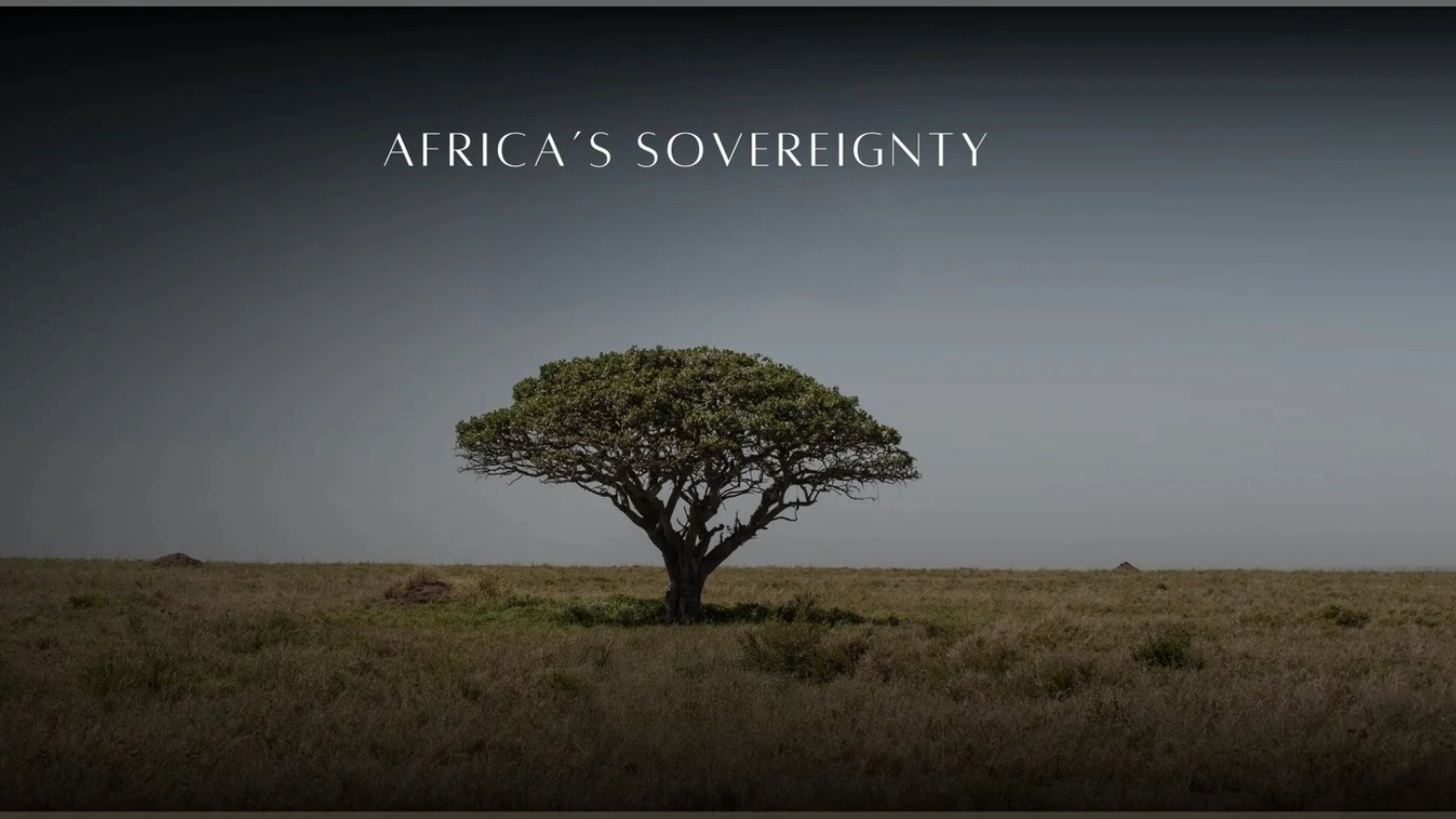
Sovereignty Under Threat and Africa’s Place in a Power-Driven World Order

Sovereignty Under Threat and Africa’s Place in a Power-Driven World Order
Share on FacebookShare on Twitter

The acceptance of the idea that a sitting head of state can be arrested by a foreign power highlights a significant crack in the foundations of the modern international system. While these actions are mostly justified in the language of justice, accountability and global security, what they do is raise far deeper questions about sovereignty, power and inequality in world politics. The case of Venezuela’s Nicolás Maduro, regardless of one’s judgment of his leadership or alleged crimes, is therefore best understood not as an isolated legal matter but as a precedent-setting moment. For Africa, a region whose states emerged from colonial domination mostly in the late 1960s into an unequal global order, this precedent carries especially grave implications. It forces a reconsideration of whether sovereignty remains a meaningful principle or has become a conditional status granted and withdrawn by powerful actors.

Sovereignty, in its classical formulation as advanced by Jean Bodin, refers to the supreme authority of the state over its territory and its political independence from external control (Engster, 1996; Wm, 1896). This principle, which was rooted in the Westphalian tradition of 1648 and codified in the United Nations Charter of 1945, was never merely abstract (Croxton, 1999). For post-colonial states, especially those in Africa who have had contact with the West since the 15th century, the concept of sovereignty served as a protective norm, one that serves as both a legal and moral barrier against renewed domination. Although it has been frequently violated in practice, it established an expectation that no external power could unilaterally override a state’s authority. The arrest of a sitting president by a foreign state directly undermines this expectation. It collapses the distinction between domestic and external jurisdiction and transforms sovereignty from an inherent right into a conditional privilege dependent on geopolitical alignment.

From a realist perspective in international relations theory, CISA analysts argue that this development reflects the enduring primacy of power over law. This is because realism holds that states pursue their interests in an anarchic international system and that legal norms function primarily as tools of the powerful (Donnelly, 2000; Piotr, 2025). Seen through this lens, the arrest of a sitting head of state is not primarily about justice or accountability but about coercion, signaling and deterrence. Legal accusations become instruments through which dominant states discipline adversaries and reinforce hierarchical order. For African states, realism offers a sobering lesson: international law will not reliably protect sovereignty unless it is backed by power, collective solidarity, or strategic leverage. In a system where enforcement is asymmetric, weak states are exposed while strong ones remain insulated. Liberal internationalist theory, which emphasises human rights, the rule of law and international institutions, presents a more morally appealing justification for such arrests. From this perspective, no leader should be above the law, and sovereignty should not serve as a shield for impunity (Eleftheriadis, 2010; Jahn, 2017). Yet liberalism encounters a fundamental contradiction when enforcement is selective. The reality that some leaders accused of severe abuses enjoy immunity due to their strategic value, while others are aggressively targeted, erodes the credibility of liberal claims. Justice that is not applied consistently ceases to function as justice and instead becomes an extension of political power. For Africa, this selectivity produces profound insecurity: adherence to norms offers no guarantee of protection, while deviation whether real or perceived can invite coercive intervention. Post-colonial theory further deepens this critique by situating such practices within a longer history of domination (Azim, 2001). From this perspective, the arrest of a sitting head of state by a foreign power represents a continuation of imperial authority through juridical and normative means rather than direct rule. As argued by Nkrumah (1965), colonial domination,   has not disappeared but has been reconfigured as legal authority, financial control and moral discourse which have replaced gunboats and governors. Sovereignty remains formally intact but substantively weakened. For African states, whose legitimacy has long been judged externally, this reinforces a structural imbalance in which authority ultimately flows outward rather than being grounded in domestic political consent.

The discourse surrounding “malign interests” illustrates how this imbalance is sustained. Concepts such as corruption, narcotics trafficking, authoritarianism and terrorism are real and damaging phenomena. However, their elevation to justifications for extraordinary external action depends less on objective harm than on political context. When similar behaviors are tolerated in allied states but criminalised in adversarial ones, malignancy becomes a strategic label rather than a neutral category. This weaponisation of norms narrows the policy space available to African governments, particularly those pursuing economic nationalism, alternative security partnerships, or non-aligned foreign policies. Decisions rooted in domestic priorities risk being reframed as threats to international order, thereby legitimising external pressure. At this point, the normative question becomes unavoidable: is it right to arrest a sitting president when viewed through the concept of sovereignty itself? A sovereignty-consistent answer must be cautious and principled. A sitting president is not merely an individual; he embodies the authority of the state. To arrest such a figure unilaterally is therefore not simply an act of law enforcement but an act against the political independence of the state. From a sovereignty-based perspective, this is fundamentally illegitimate. Sovereignty exists precisely to prevent external actors from substituting their authority for domestic jurisdiction, especially in an unequal international system. However, there are narrow and contested exceptions. Accountability may occur through domestic legal processes or through genuinely multilateral mechanisms that rest on broad consent and consistent application. Even these mechanisms, such as international tribunals, suffer from legitimacy deficits when enforcement is uneven. What sovereignty cannot accommodate, however, is unilateral arrest by a foreign power acting as judge, jury and enforcer. Such action transforms law into coercion and morality into a justification for dominance. For Africa, where power asymmetries are stark, normalizing this practice would almost certainly result in downward enforcement rather than universal accountability.

The security and governance consequences of this shift are deeply paradoxical. Leaders who perceive external arrest as a real threat are incentivised to prioritise regime survival over institutional development. This often leads to militarisation, repression, reliance on foreign security contractors, and the weakening of democratic processes. Rather than promoting accountability, the threat of external enforcement hardens regimes and destabilises governance. Africa’s recent experience with coups, foreign military presence and fragile democratic transitions especially in the Sahel suggests that such dynamics are more likely to entrench instability than to resolve it. The economic implications are equally severe. This is because sovereignty is inseparable from economic autonomy and the possibility that leadership itself may be targeted introduces profound uncertainty into investment and development planning. Long-term projects require predictability, yet politicised enforcement undermines confidence. African economies, already constrained by debt, aid conditionality, and structural dependence, become even more vulnerable to coercion. Development strategies risk being shaped less by domestic needs than by the imperative to remain geopolitically compliant.

In conclusion, the arrest of a sitting head of state such as Nicolás Maduro signals a broader transformation in the global order. It reflects a shift away from sovereignty as a universal principle toward sovereignty as a conditional status enforced through power. For Africa, this shift poses existential challenges. The issue is not the defense of individual leaders, but the defense of a principle without which political independence becomes hollow. A genuinely just international order cannot be built on selective enforcement and unilateral coercion. If sovereignty collapses under the weight of power politics, what replaces it is not accountability, but hierarchy. Africa’s future depends on resisting this transformation and insisting that law constrains power rather than serve it. In addition to protecting sovereignty, Africa must strengthen regional diplomacy and chart ways of working with great powers without compromising autonomy. Africa requires investment in collective defense now more than ever to thwart hegemonic intentions of hostile external actors. Finally, reinforcing rules-based international order that supports the limiting of unilateral action, particularly on the African soil is the way to go.

Reference

Azim, F. (2001). Post-colonial theory. In C. Knellwolf & C. Norris (Eds.), The Cambridge History of Literary Criticism (pp. 235–248). chapter, Cambridge: Cambridge University Press.

Croxton, D. (1999). The Peace of Westphalia of 1648 and the Origins of Sovereignty. The International History Review, 21(3). http://www.jstor.org/stable/40109077

Donnelly, J. (2000). Realism and International Relations. Cambridge University Press.

Eleftheriadis, P. (2010). Law And Sovereignty. Law and Philosophy, 29(5), 535–569. http://www.jstor.org/stable/40926329

Engster, D. (1996). Jean Bodin, Scepticism And Absolute Sovereignty. History of Political Thought, 17(4), 469–499. http://www.jstor.org/stable/26217042

Jahn, B. (2018). Liberal internationalism: historical trajectory and current prospects. International Affairs (Royal Institute of International Affairs 1944-), 94(1), 43–61. https://www.jstor.org/stable/48587223

Nkrumah, K. (1965). Neo-Colonialism, the Last Stage of Imperialism. London: Thomas Nelson & Sons, Ltd.

Wm. A. Dunning. (1896). Jean Bodin on Sovereignty. Political Science Quarterly, 11(1), 82–104. https://doi.org/10.2307/2139603

Source: CISA ANALYST
Tags: 20262nd Edition 2026Feb week1
ShareTweet
Previous Post

Football As A Tool For International Entertainment And Unity

Next Post

The Unified Force of the Alliance of Sahel States and Its Implications for Regional Security

Next Post
The Unified Force of the Alliance of Sahel States and Its Implications for Regional Security

The Unified Force of the Alliance of Sahel States and Its Implications for Regional Security

Leave a Reply Cancel reply

Your email address will not be published. Required fields are marked *

  • Trending
  • Comments
  • Latest
Africa's Natural Resources: Who’s After What And What’s The Continent’s Strategy In The Scramble Game?

Africa’s Natural Resources: Who’s After What And What’s The Continent’s Strategy In The Scramble Game?

July 22, 2024
Effects of overpopulation in class on quality of education

Effects of overpopulation in class on quality of education

March 25, 2024
The Growing Influence Of AES On African Countries

The Growing Influence Of AES On African Countries

April 1, 2025
The Concept of Beauty in Africa

The Concept of Beauty in Africa

May 26, 2024
Integration of environmental security into Ghana’s National Security Strategy safeguards the future

Integration of environmental security into Ghana’s National Security Strategy safeguards the future

10
Border Security: A Door Left Wide Open

Border Security: A Door Left Wide Open

3
Polls close in Liberia

Liberia: Once a war-torn country, now Africa’s beacon of democracy – Lessons for Africa

1
Alliance Of Sahel States Formation: Objectives & Implications for ECOWAS

Alliance Of Sahel States Formation: Objectives & Implications for ECOWAS

1
The Impact Of Sahel Social Media Blitz On Youth In Ghana And Its Ramifications

The Impact Of Sahel Social Media Blitz On Youth In Ghana And Its Ramifications

February 9, 2026
The Global Plastics Treaty: Plastic Credits, A High Risk Shortcut

The Global Plastics Treaty: Plastic Credits, A High Risk Shortcut

February 9, 2026
The Unified Force of the Alliance of Sahel States and Its Implications for Regional Security

The Unified Force of the Alliance of Sahel States and Its Implications for Regional Security

February 9, 2026
Sovereignty Under Threat and Africa’s Place in a Power-Driven World Order

Sovereignty Under Threat and Africa’s Place in a Power-Driven World Order

February 2, 2026

Popular Stories

  • Africa's Natural Resources: Who’s After What And What’s The Continent’s Strategy In The Scramble Game?

    Africa’s Natural Resources: Who’s After What And What’s The Continent’s Strategy In The Scramble Game?

    0 shares
    Share 0 Tweet 0
  • Effects of overpopulation in class on quality of education

    0 shares
    Share 0 Tweet 0
  • The Growing Influence Of AES On African Countries

    0 shares
    Share 0 Tweet 0
  • The Concept of Beauty in Africa

    0 shares
    Share 0 Tweet 0
  • Slums and Security in Africa: A Growing Threat

    0 shares
    Share 0 Tweet 0

CISA Newsletter

Headlining West African News

Follow Us

Browse by Category

  • ANALYSTS
  • Business
  • ECONOMY
  • EDITORIAL
  • Environment
  • Food
  • Health
  • Lifestyle
  • News
  • Politics
  • Review
  • Science
  • Sports
  • Tech
  • Travel
  • Uncategorized
  • World

Recent News

The Impact Of Sahel Social Media Blitz On Youth In Ghana And Its Ramifications

The Impact Of Sahel Social Media Blitz On Youth In Ghana And Its Ramifications

February 9, 2026
The Global Plastics Treaty: Plastic Credits, A High Risk Shortcut

The Global Plastics Treaty: Plastic Credits, A High Risk Shortcut

February 9, 2026
  • About
  • Advertise
  • Privacy & Policy
  • Contact

© 2023 CISA Ghana Newsletter - Headlines West Africa.

  • fr Français
  • en English
No Result
View All Result
  • HOME
  • Editions
    • 2025
      • December 2025
      • November 2025
      • October 2025
      • September 2025
      • August 2025
      • July 2025
      • June 2025
      • May 2025
      • April 2025
      • March 2025
      • February 2025
      • January 2025
    • 2024
      • December 2024
      • November 2024
      • October 2024
      • September 2024
      • August 2024
      • July 2024
      • June 2024
      • May 2024
      • April 2024
      • March 2024
      • February 2024
      • January 2024
    • 2023
      • December 2023
  • News
  • Tech
  • Entertainment
  • Lifestyle
  • Review
  • CISA Ghana

© 2023 CISA Ghana Newsletter - Headlines West Africa.

  • English
  • Français (French)