








Introduction
Violent extremism has become a complex security challenge across West Africa. The escalation of attacks in the Sahel, particularly in Burkina Faso, Mali and Niger, shows that military operations alone cannot prevent extremist expansion. Stability deteriorated even as troop deployments increased, because the structural roots of radicalization remained unresolved and communities were not meaningfully integrated into prevention systems (Aning & Amedzrator, 2022). For Ghana, which remains comparatively stable, the critical lesson is that security is most sustainable when communities themselves are the first line of defense.
Drivers of Extremism and the Importance of Community-Level Prevention
Extremist groups advance by taking advantage of social vulnerabilities rather than by relying solely on military confrontation. Relevant factors include economic marginalization, weak state presence, youth unemployment and local conflicts over land or traditional authority. These vulnerabilities exist in many border regions of northern Ghana (WACCE, 2022). Extremist groups exploit them by offering protection, dispute resolution and social support, gradually gaining legitimacy and acceptance. Early community awareness and resistance are therefore strategic in preventing extremist infiltration.
What Went Wrong in the Sahel
There are three key lessons from the Sahel that apply to Ghana’s security posture.
- Over-reliance on military responses.
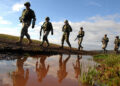
Sahelian governments prioritized kinetic operations while paying limited attention to governance gaps and community trust-building. This approach delivered tactical but not strategic successes. Civilian displacement, mistrust of the state and widespread insecurity intensified rather than weakened extremist entrenchment.
- Neglect of socio-economic vulnerability.
In the Sahel, youth unemployment, limited livelihood opportunities and low state investment created fertile ground for extremist recruitment (ILO, 2019). At the same time, small arms proliferation along trafficking routes strengthened extremist networks and enabled coercive community control.
- Weak community engagement.
Civilian actors, traditional authorities and local civic groups were often excluded from early-warning and counter-radicalization initiatives, giving extremists space to embed themselves through social assistance and conflict mediation (UNDP, 2025). Community exclusion has consistently been one of the strongest predictors of extremist penetration.
Ghana’s Current Position: A Window of Prevention
Ghana has not recorded major extremist attacks on its territory, yet regional dynamics continue to heighten risk. Spillover threats from Burkina Faso are rising and extremist cells have been linked to logistical activities along West Africa’s coastal corridor (African Union, 2022). UNDP research highlights that border regions in Ghana display early warning signs of vulnerability, including small-arms circulation, smuggling networks, local grievances and increased religious and ideological polarization. Ghana has a crucial window to reinforce prevention before extremist groups gain influence.
Features of a Community-Centered Approach to Countering Violent Extremism in Ghana
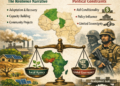
A preventive strategy should prioritize the empowerment and inclusion of community actors rather than relying primarily on military infrastructure.
- Community–security partnerships. Intentional collaboration between security agencies, traditional leaders, youth groups, women’s associations and religious authorities enables early-warning, intelligence sharing and conflict mediation. Locally trusted actors possess social influence that state institutions may lack.
- Youth development and economic inclusion. Expanding vocational support, entrepreneurship opportunities and infrastructure investment in border communities can reduce susceptibility to radicalization by providing agency, purpose and stability (ILO, 2019). Sustainable livelihoods are more effective than short-term interventions.
- Strengthening local dispute resolution. Extremist actors often capitalize on land, chieftaincy and ethnic disputes by presenting themselves as neutral mediators. Supporting traditional arbitration structures can undermine this tactic and reduce recruitment opportunities.
- Credible grassroots counter-narratives. Messaging must come from trusted voices within the community rather than distant state platforms. Teachers, religious scholars, youth leaders and women’s groups are effective conveyors of counter-narratives because they hold social and moral legitimacy.
- Inclusion of women and marginalized groups. Women frequently detect behavioral shifts and community tensions early and should be included in local early-warning and monitoring structures. Marginalized population segments contribute unique intelligence and resilience insights (UNDP, 2025).
Conclusion
The Sahel has shown that militarized responses, while necessary, cannot secure long-term stability without community involvement. Ghana can avoid the security collapse witnessed in neighboring countries by prioritizing local participation, trust-building and socio-economic support in its CVE framework. When communities are informed, resilient and empowered, extremist networks lose their ability to operate discreetly, exploit grievances and recruit. Sustainable national security begins with citizens who understand their role, trust security institutions and are supported to protect their social environment. Ghana’s most effective defense against violent extremism starts not at its borders but within its communities.
References
African Union. (2022). The contagion of violent extremism in West African coastal states.
Aning, K., & Amedzrator, L. (2022). Beneath the seeming resilience: Ghana’s vulnerabilities to threats from violent extremist groups.
International Labour Organization. (2019). Promoting decent employment for African youth.
United Nations Development Programme. (2025). Community resilience and violent extremism in Ghana.
West Africa Centre for Counter-Extremism. (2022). Ghana’s exposure to violent extremism.