








Introduction
The Gulf of Guinea has been regarded as one of the world’s most piracy-prone maritime centres in Africa. Piracy and armed robbery at sea remain persistent security threats in the Gulf of Guinea. Although regional counter-piracy operations have reduced incidents from earlier peaks, recent attacks in Ghanaian waters demonstrate that maritime insecurity continues to pose economic and strategic risks. Ghana, situated strategically along this corridor, has historically experienced fewer attacks than some neighbors but remains vulnerable due to its fishing industry, offshore petroleum assets, and expanding maritime trade.
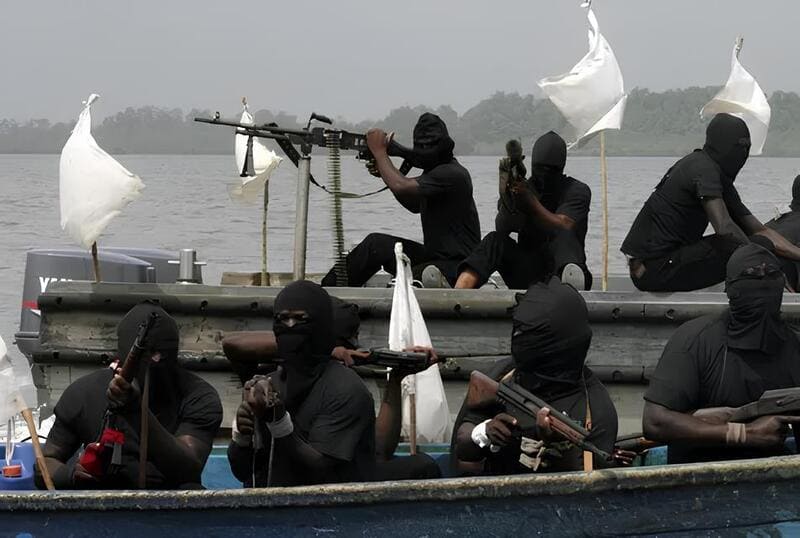
Recent incidents—including armed attacks on Ghanaian fishing vessels and kidnappings in nearby waters—signal that maritime crime networks remain active. In February 2026, the Ghana Navy rescued 71 fishermen following coordinated pirate attacks on multiple vessels off Ghana’s coast (Marine Insight, 2026). Such incidents underscore the growing incidence of offshore crime and disorder and the urgency of reinforcing maritime deterrence mechanisms.
Regional Trends: Gulf of Guinea Piracy Dynamics
While piracy incidents in the Gulf of Guinea declined after peaking around 2020–2021 due to enhanced naval cooperation, recent maritime security reports indicate renewed volatility.
Chart 1: Reported Piracy & Armed Robbery Incidents in the Gulf of Guinea
| Year | Estimated Incidents* | Notable Trend |
| 2020 | High (peak kidnapping wave) | Gulf of Guinea global hotspot |
| 2022 | Decline | Increased regional patrols |
| 2024 | Moderate stabilization | Continued surveillance efforts |
| 2025 | ~30% rise (reported surge) | Renewed attacks, including small-vessel robberies |
*Sources: Dryad Global (2025); International Maritime Bureau (2025)
According to maritime security firm Dryad Global, piracy incidents in the Gulf of Guinea increased by approximately 30% in 2025 compared to the previous year (Safety4Sea, 2025). The International Maritime Bureau also reported increased global maritime crime levels in 2025, with Africa accounting for a significant share (Seafarers’ Log, 2026).
Although Ghana is not the regional epicenter (unlike Nigeria), spillover effects and cross-border operations expose Ghanaian waters to risk. While there have been criticisms with the figures from the International Maritime Bureau by the Ghana Maritime Authority, recent incidents lend credence to the fact that piracy is a rising challenge.
Piracy Incidents in Ghanaian Waters
Recent cases illustrate both the persistence and evolution of maritime crime affecting Ghana:
- Armed robbery of four fishing vessels (2026), with equipment theft and crew abandonment (Marine Insight, 2026).
- Kidnapping of three crew members from a Ghanaian-registered vessel (Ghanaian Times, 2025).
Types of Piracy Incidents Affecting Ghana (Recent Reports)
| Incident Type | Frequency (Reported Cases) | Target Profile |
| Armed Robbery | Increasing | Artisanal fishing vessels |
| Kidnapping for Ransom | Sporadic but serious | Commercial fishing crews |
| Equipment Theft | Common | Small-scale operators |
| Hijacking | Rare but high-impact | Larger commercial vessels |
The majority of Ghana-related cases involve artisanal or mid-scale fishing vessels rather than large oil tankers. This shift suggests that pirates may be targeting “softer” maritime assets with limited onboard security.
Structural Drivers of Piracy in Ghana
- Economic Pressures and Coastal Livelihoods
Coastal communities in Ghana depend heavily on fisheries. Economic hardship, overfishing, and illegal, unreported, and unregulated (IUU) fishing reduce income opportunities, potentially increasing vulnerability to maritime criminal networks. Piracy thrives where economic alternatives are limited and enforcement capacity is stretched.
- Geographic and Strategic Exposure
Ghana’s location along major shipping lanes connecting West Africa to Europe and the Americas makes its waters strategically significant. Offshore oil and gas installations add further value targets. Long coastlines and expansive Exclusive Economic Zones (EEZs) present surveillance challenges. Besides the above, analysts at CISA believe the Ecowas Protocols that allow free movement of people across the region must be supported by effective traceable identification documentation. This weakness supports transnational crime.
- Regional Criminal Networks
Piracy in the Gulf of Guinea is frequently transnational. Networks operate across countries, particularly Nigeria, Togo and Cote d’Ivoire. This necessitates coordinated responses beyond unilateral national measures. As already indicated, the recent attacks at sea bear the hallmarks of active pirates from neigbouring countries.
Economic Impact of Maritime Insecurity
Piracy imposes direct and indirect costs:
Economic Consequences of Piracy for Ghana
| Sector | Impact Type | Consequence |
| Fisheries | Equipment loss | Reduced household income |
| Maritime Trade | Insurance premiums | Increased shipping costs |
| Oil & Gas | Security expenditure | Higher operational costs |
| National Economy | Reputational risk | Investment hesitancy |
Higher maritime insurance premiums can raise trade costs. Artisanal fishermen—who form a significant portion of Ghana’s coastal economy—are particularly vulnerable.
Policy Imperatives for Urgent Action
- Strengthen Legal Frameworks
Ghana must ensure robust anti-piracy legislation aligned with international maritime law to facilitate prosecution. Legislative clarity improves deterrence credibility.
- Expand Naval and Air Surveillance Capacity
Investment priorities should include offshore patrol vessels, fast interceptor craft, drone and satellite-assisted maritime domain awareness and Integrated coastal radar. New and effective vessel traffic management systems would be required to ensure easy identification of all vessels that are not on the system.
- Enhance Regional Cooperation
There is already intelligence sharing among the coastal states. However what is required is enhanced intelligence sharing and coordinated patrols across ECOWAS states to close the gaps that exist as criminals cross boundaries after each operation
- Integration of Coastal Communities in Intelligence
Community-based maritime reporting systems, GPS tracking for fishing fleets, and emergency communication systems can reduce vulnerability. Selected fishing boats can be given satellite phones to enhance reporting capabilities and tracking. Incident response centres must be fitted with updated equipment and areas of the highest risks mapped for heightened surveillance.
Conclusion
Piracy in Ghana has not reached the scale observed in some neighboring states, but recent incidents demonstrate that the threat is evolving rather than disappearing. The rescue of 71 fishermen in 2026 illustrates both operational risk and state response capacity.
Without sustained investment in deterrence, surveillance, legal reform, and regional coordination, piracy could regain strategic momentum. Maritime security is not only a naval issue; it is central to Ghana’s economic resilience, food security, and international credibility as a stable maritime state.
Urgent, proactive measures are therefore necessary to prevent the normalization of piracy in Ghanaian waters.
References
Ghanaian Times. (2025). Pirates kidnap 3 crew members after attacking Ghanaian fishing vessel.
Marine Insight. (2026). Ghana Navy rescues 71 fishermen after armed pirates attack their boats.
Safety4Sea. (2025). Dryad Global: Piracy in the Gulf of Guinea has surged by 30%.
Seafarers’ Log. (2026). IMB global piracy increased in 2025.
International Maritime Bureau. (2025). Piracy and armed robbery against ships annual report