








Over the past year, the Centre for Intelligence and Security Analysis (CISA, Ghana) has systematically engaged with some of the most pressing security challenges confronting the African sub-region. In 2024, the Centre’s monthly analytical outputs focused on three interrelated themes whose prevalence and intensity have continued to shape stability in the region: security contagion, misinformation and disinformation and resource management. These themes were not treated as isolated phenomena but as interconnected dynamics through which insecurity spreads across borders, narratives are manipulated to legitimise violence or political exclusion and competition over resources fuels conflict and governance failures.
These engagements resulted in a High-Level Security Conference held in November 2024, which convened intelligence and security officers, directors, and senior practitioners from across the sub-region. Discussions at the conference reinforced a critical insight: contemporary security challenges in West Africa and the Sahel can no longer be understood as discrete, nationally bounded problems. Rather, insecurity has become increasingly transnational, networked and mutually reinforcing, cutting across political boundaries and mandates of institutions. Participants widely acknowledged that conventional state-centric and sectoral approaches are insufficient for addressing the scale and complexity of emerging threats.
Building on these reflections, the Centre’s analytical focus in the latter part of 2025 shifted toward a deeper structural concern that repeatedly surfaced across discussions, field engagements and misaligned interests. This concept emerged as a cross-cutting explanation linking persistent insecurity, underdevelopment and weak governance, particularly in the Sahelian context. While multiple actors ranging from state institutions, regional bodies, external partners, to non-state groups often operate within the same security and development spaces, their objectives, incentives and temporal horizons frequently diverge. These divergences, rather than mere capacity gaps, increasingly shape outcomes on the ground.
The purpose of this article is therefore twofold. First, it seeks to develop a clear conceptual and theoretical framing of misaligned interests as an analytical lens for understanding insecurity and underdevelopment in the sub-region. Second, it aims to provide a foundational framework that can inform subsequent empirical research, policy analysis, and intelligence practice. By moving beyond the symptoms of insecurity to interrogate its structural drivers, the article contributes to a more nuanced understanding of why well-intentioned interventions often fail to produce durable security and development outcomes.
Situating Misaligned Interests in the Sahelian Political–Security Landscape
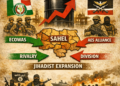
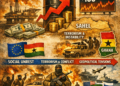
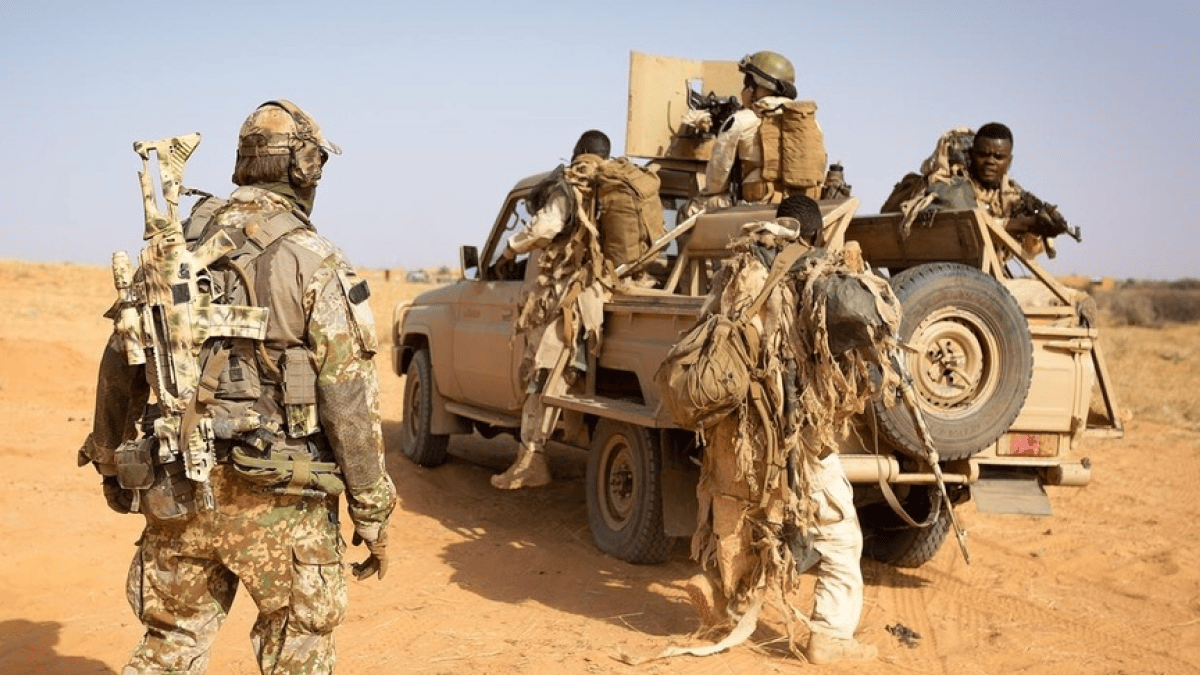
A few decades ago, the middle east was framed as the most volatile security space in the world. However, this has changed and the Sahel in recent years has come to occupy this spot in the history of mankind. This has been made possible by a succession of military coups, the expansion of violent extremist insurgencies, the proliferation of external military intervention and the worsening of governance crisis. These dynamics are often analysed in isolation: so we hear people say especially in Western media, “oh coups are failures of democratic consolidation, insurgencies are manifestations of extremism and external military presence is a way of bringing back civilisation to barbarism in the form of counterterrorism measures” However, when taken together, they reveal a more complex and entangled security environment in which authority, legitimacy and control are constantly contested. For instance, within the security landscape, multiple actors operate simultaneously with each pursuing different and mostly incompatible objectives. We have the national government having to move between regime survival, territorial control and expectation of democratic governance in an easy way. Regional bodies, especially the ECOWAS and African Union also seeking to enforce normative frameworks around constitutional order and collective security but are highly incapable due to political division and lack of enforcement capacity. External powers and security partners engaging through counterterrorism operations, military assistance, and strategic partnerships, are frequently driven by geopolitical and strategic interests that extend beyond the region itself. At the same time, non-state armed groups including insurgents, militias, and criminal networks exploit vacuums in governance, border porosity, and local grievances to entrench their influence.
In this dialectical tension, the local communities are often positioned at the intersection of these competing forces, pursuing security primarily in terms of survival, livelihoods and access to resources rather than abstract notions of state stability or regional order. Their interests and perceptions of security frequently diverge from those of both state and external actors, yet they bear the immediate consequences of policy and military decisions. The persistence of instability in the Sahel, therefore, cannot be adequately explained by weak institutional capacity or resource constraints alone. Rather, just like a game, it is increasingly shaped by divergent and competing interests among actors operating within the same security space. These misalignments manifest in contradictory strategies, fragmented interventions and policies that simultaneously aim to stabilise the region while reproducing the very conditions of insecurity they seek to resolve. Understanding the Sahel’s crisis thus requires shifting analytical attention from what actors lack to how their interests interact, collide and undermine collective security and development goals.
Defining “Misaligned Interests”: A Conceptual Clarification
In this article, misaligned interests are understood as situations in which actors pursue objectives that are formally framed as advancing security or development, but which in practice function to undermine collective stability, social cohesion, or long-term development outcomes. Crucially, misalignment does not imply malicious intent or deliberate sabotage. Rather, it reflects structural contradictions in how different actors define security, prioritise outcomes, and evaluate success within the same operational space. It is important to distinguish misaligned interests from several related but analytically distinct concepts. A conflict of interest typically refers to situations in which an actor’s personal or institutional gain directly contradicts their formal responsibilities (Resnik, 2023; Romain, 2015). Misaligned interests, by contrast, may emerge even when actors act in good faith and within their mandates. Competing priorities such as in the Prison’s dilemma or broader game-theoretic logic describe the coexistence of multiple objectives, but do not necessarily account for how the pursuit of one objective may actively undermine another actor’s goals (Mérő, 1998). Strategic ambiguity, meanwhile, involves deliberate vagueness or uncertainty in policy or strategy, whereas misaligned interests often operate openly and are embedded in institutional logics and incentive structures (Selivanovskikh et al., 2025).
Again, it is worthy to note that misaligned interests manifest across several interrelated dimensions. The temporal dimension reflects tensions between short-term security objectives such as rapid military stabilisation or regime preservation and long-term development goals, including institution-building and social trust. Interventions prioritising immediate control may inadvertently weaken the foundations required for sustainable peace. The spatial dimension captures divergences between local needs and regional or global agendas. While external and regional actors often operate at macro scales, local communities experience insecurity at the level of livelihoods, land access, and everyday safety. We have all witnessed or seen politics designed at higher scales overlooking or contradicting local priorities, generating resistance or unintended consequences. The institutional dimension highlights tensions between state security and regime survival. In fragile political contexts like Tanzania, the preservation of political authority may take precedence over inclusive governance or citizen security, leading to strategies that stabilise regimes while deepening societal fragmentation. Finally, the economic dimension concerns the misalignment between resource extraction, security financing and community livelihood, where economic interests, whether linked to natural resources, security assistance or illicit economies are prioritised over local welfare. All these dimensions tell us that misaligned interests are not episodic anomalies or something that occurs once in a very long while but it is a systemic feature of contemporary security governance in the Sahel. Conceptualising them explicitly allows analysts and practitioners to move beyond surface-level explanations of failure toward a more structural understanding of why security and development interventions often produce contradictory outcomes.
Theoretical Anchors for Understanding Misaligned Interests
To move beyond descriptive accounts of insecurity, CISA analysts argue that the concept of misaligned interests must be situated within broader theoretical traditions that explain how power, incentives and structures shape security outcomes. From a political economy perspective, security is not merely a public good but also an arena of accumulation, control and power (Dirks & Schmidt, 2024; Rajus Das, 2017). In contexts of prolonged instability as in the Sahel in recent years, insecurity has become functional for certain actors like Russia and extremist groups, creating opportunities for resource extraction, political leverage and institutional survival. Here, CISA analysts are not implying that conflict is always deliberately manufactured, but rather that systems of insecurity often generate beneficiaries alongside victims, acting like a two-edged sword. Militarisation plays a central role in this dynamic. For instance, the expansion of counterterrorism operations, security assistance and defence spending has led to significant flows of military aid, training and equipment into the Sahel. These flows can generate security rents, reinforcing incentives to prioritise military solutions over political or social reforms. As a result, interventions framed as stabilising measures may entrench dependency, distort local political economies and weaken accountability structures. Within this framework, misaligned interests emerge when security strategies serve institutional or economic interests that are disconnected from, or even contradictory to, long-term peace and development. The persistence of insecurity is thus not solely a failure of capacity, but a reflection of how security has been organised, financed, and rewarded.
Critical security studies challenge conventional assumptions about security by asking a fundamental question: whose security is being prioritised, and at what cost? Rather than treating security as a neutral or universally shared objective, this perspective highlights how security agendas are socially constructed and politically contested (see Taylor, 2024; Wojczewski, 2019). In the Sahel, governance failures such as weak service delivery, exclusionary politics and limited state presence are frequently securitised, reframed as threats requiring exceptional measures rather than structural reform. This process can marginalise civilian voices, justify coercive interventions, and shift attention away from underlying political and social grievances. External threat narratives further reinforce misaligned interests. By foregrounding terrorism and transnational crime, such narratives may obscure internal contradictions within states, including elite fragmentation, governance deficits and contested legitimacy. In this sense, securitisation becomes a mechanism through which misalignment is normalised, as interventions address symptoms while leaving structural drivers intact.
Regional systems and interdependence theories offer important insights into how misaligned interests operate across borders. Under the theme “security contagion”, CISA analysts have extensively discussed how security in the Sahel is deeply interconnected, with instability in one state quickly spilling over into neighbouring countries through displacement, armed group mobility and illicit economies. However, at the High-level security conference in November 2024, the experts revealed that this interdependence does not automatically produce coordination. They argued that when states and institutions pursue divergent interests such as unilateral security strategies, regime preservation, or external alliances, regional instability can become structurally reproduced rather than collectively managed. For example, efforts to contain insecurity in one area may displace it elsewhere, creating cycles of intervention and adaptation. The limits of regional coordination thus lie not only in institutional weakness, but in interest divergence among member states and partners. Regional frameworks may exist, but their effectiveness is undermined when collective security goals are subordinated to national or external priorities.
Postcolonial and dependency perspectives situate contemporary misaligned interests within longer historical trajectories. Colonial borders imposed artificial political units that fragmented social and economic systems while centralising authority in extractive state structures. These arrangements prioritised control over inclusion, leaving legacies that continue to shape governance and security practices. External dependency further entrenched misalignment by tying security and development trajectories to external financing, expertise, and strategic interests. Over time, this produced extractive governance logics, in which states relate to territories and populations primarily as objects of management rather than partners in governance. There are notable continuities between colonial security regimes and contemporary interventions, particularly in the emphasis on militarised control, intelligence-led governance, and exceptional measures. While the actors and justifications may have changed, the underlying structures of power remain strikingly familiar. Understanding these continuities helps explain why misaligned interests persist despite repeated cycles of reform and intervention.
Misaligned Interests and Developmental Implications
The consequences of misaligned interests extend far beyond immediate security outcomes. Over time, they profoundly shape the developmental trajectories of Sahelian states, often in ways that are difficult to reverse. When security strategies are driven by divergent and competing interests, development is not simply delayed, it is actively undermined. One of the most significant impacts is on state legitimacy. When governments prioritise regime survival, external alignment, or militarised control over inclusive governance and service delivery, public trust in state institutions erodes. Citizens increasingly perceive the state not as a provider of security and welfare, but as an extractive or coercive actor. This legitimacy deficit creates fertile ground for non-state armed groups and informal authorities to position themselves as alternative sources of order and protection.
Closely related is the erosion of social trust. Persistent insecurity, coupled with inconsistent or contradictory interventions, fragments social relations both within and between communities. Groups are compelled to rely on narrow networks for survival, reinforcing ethnic, religious, or territorial divisions. In such contexts, collective action becomes difficult, and social cohesion, an essential foundation for development, is steadily weakened. Misaligned interests also distort economic planning. This is because short-term security priorities often override long-term investment in infrastructure, education, and productive sectors. Development planning becomes reactive, shaped by crisis management rather than strategic vision. As resources are diverted toward security expenditures, states struggle to build the institutional capacity required for sustainable economic transformation.
Finally, misalignment has profound implications for resource governance. Competition over land, minerals, water, and security-related financing frequently reflects broader power struggles rather than community needs. Weak oversight and fragmented authority allow both licit and illicit extraction to flourish, reinforcing cycles of grievance and violence. In this sense, failures in resource management are both a cause and a consequence of misaligned interests. These dynamics are closely connected to the Centre’s earlier thematic work. Misinformation and disinformation often function as tools to justify misalignment, framing coercive or exclusionary policies as necessary for national or regional security. Meanwhile, persistent failures in resource management reflect deeper structural contradictions between economic extraction and social welfare. Together, these processes underscore a central argument of this article: development stagnation in the Sahel is not accidental, but structurally produced through persistent divergence of interests among key actors.
Conclusion: Towards Aligned Security and Development Futures
This article has advanced misaligned interests as a foundational concept for understanding persistent insecurity and development stagnation in the Sahel. By situating the concept within political economy, critical security studies, regional systems theory, and postcolonial perspectives, it has demonstrated that misalignment is not an anomaly but a structural feature of contemporary security governance. Addressing this challenge requires more than technical fixes or expanded security interventions. It calls for empirical validation of how misaligned interests operate in specific contexts, context-sensitive policy responses that prioritise alignment over control, and greater reflexivity among security actors regarding the consequences of their strategies and incentives. Positioned in this way, the article serves both as a conceptual reference point for future Centre publications and as a bridge between scholarship, intelligence practice, and policy engagement. By foregrounding structure over symptoms, it contributes to a deeper and more actionable understanding of how security and development futures in the Sahel might be reimagined and realigned.
References
Dirks, M. W., & Schmidt, T. (2024). Political instability and economic growth: Causation and transmission. European Journal of Political Economy, 85, 102586. https://doi.org/10.1016/j.ejpoleco.2024.102586
Mérő, L. (1998). The Prisoner’s Dilemma. In: Moral Calculations. Springer, New York, NY. https://doi.org/10.1007/978-1-4612-1654-4_3
Raju Das. (2017). David Harvey’s Theory of Accumulation by Dispossession: A Marxist Critique. World Review of Political Economy, 8(4), 590–616. https://doi.org/10.13169/worlrevipoliecon.8.4.0590
Resnik, D. (2023). Disclosing and managing non-financial conflicts of interest in scientific publications. Research Ethics, 19(2), 121-138. https://doi.org/10.1177/17470161221148387
Romain P. L. (2015). Conflicts of interest in research: looking out for number one means keeping the primary interest front and center. Current reviews in musculoskeletal medicine, 8(2), 122–127. https://doi.org/10.1007/s12178-015-9270-2
Selivanovskikh, L., Giardino, P. L., Cristofaro, M., Bao, Y., Yuan, W., & Wang, L. (2025). Strategic ambiguity: A systematic review, a typology and a dynamic capability view. Management Decision, 63(13), 123-145. https://doi.org/10.1108/md-05-2024-1021
Taylor, I. (2024). Security as a political concept. Inquiry, 1–27. https://doi.org/10.1080/0020174X.2024.2374025
Wojczewski, T. (2019). ‘Enemies of the people’: Populism and the politics of (in)security. European Journal of International Security, 5(1), 5-24. https://doi.org/10.1017/eis.2019.23