








The Centre for Intelligence and Security analysis warned about the emerging risk of foreign recruitment networks targeting African youth for participation in overseas conflicts. At the time, the discussions highlighted a worrying trend in which global conflicts were increasingly drawing manpower from economically vulnerable regions. Analysts argued that Ghana, like many countries in the Global South possessed several structural vulnerabilities that could make its citizens attractive targets for recruitment.
The issue also intersects with broader regional security concerns in West Africa, where transnational armed networks and irregular migration routes already complicate law-enforcement and intelligence cooperation among member states of the Economic Community of West African States.
In a lecture delivered on 26th April 2024 ahead of the December 2024 election, Amb. Rasheed Inusah, the CEO of the Centre, highlighted the importance of a Foreigners Fighters Act and its preventive role in mitigating the rising number of Ghanaian mercenaries and extremist recruitments. He emphasised that if preventive measures were not adopted early, Ghanaian nationals could eventually appear on distant battlefields where the country has no direct strategic interests.
Two years later, the confirmation that Ghanaian nationals have been captured while participating in the conflict in Ukraine suggests that these warnings were not merely speculative. What initially appeared as a distant geopolitical conflict has now intersected directly with the lives of Ghanaian citizens, raising pressing questions about foreign fighter recruitment, national policy preparedness, and the role of early security analysis in predicting emerging threats.
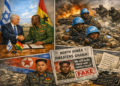
This development came to public attention following the visit of Ghana’s Minister for Foreign Affairs, Samuel Okudzeto Ablakwa, to Kyiv. During the visit, the minister confirmed that two Ghanaian nationals captured on the battlefield while fighting Russian forces are currently being held in Ukrainian custody as prisoners of war. According to the minister, Ukrainian authorities granted him rare access to the facility where the detainees are being held, an unusual diplomatic gesture given the highly sensitive nature of wartime detention sites.
In a statement issued on 26 February 2026, Ablakwa described the visit as unprecedented and expressed appreciation to Ukrainian President Volodymyr Zelenskyy and Ukraine’s Foreign Minister Andrii Sybiha for granting Ghana the opportunity to verify the condition and presence of its citizens. While the immediate concern remains the welfare and legal status of the detained Ghanaians, the incident has broader implications for Ghana’s national security architecture. Their presence on the battlefield in the ongoing Russia-Ukraine War suggests that recruitment networks targeting African nationals may already be operational, raising important questions about how Ghana can prevent its citizens from becoming entangled in foreign conflicts.
The Changing Nature of Foreign Fighter Recruitment
The ability to anticipate threats is a crucial component of modern security governance. Effective national security strategy does not simply respond to crises after they occur; it seeks to detect patterns and vulnerabilities that may generate future risks. In this regard, the current situation provides an example of how analytical foresight can accurately capture evolving global security dynamics. Historically, the phenomenon of foreign fighters has been associated with ideological motivations. During various conflicts in the twentieth and early twenty-first centuries, individuals from different parts of the world traveled to participate in wars driven by political or ideological beliefs.
The nature of foreign fighter recruitment however, has evolved significantly in recent years. Modern recruitment networks increasingly rely on economic incentives and deceptive employment offers rather than purely ideological appeals. In many documented cases globally, individuals are recruited under the promise of legitimate employment opportunities abroad such as private security work, construction jobs, or logistics roles.
Upon arrival, however, they discover that the conditions of their employment differ dramatically from what was promised. Some find themselves integrated into military structures or pressured to participate in active combat operations. These networks often operate through informal and transnational channels. Recruitment may occur through social media platforms, labor brokers, travel agents, or private intermediaries who disguise their activities as legitimate overseas employment opportunities. The growing globalisation of communication technologies has significantly expanded the reach of such networks.
A recruiter operating thousands of kilometers away can easily target potential recruits in another continent through online platforms, making detection and regulation far more challenging. For Ghana, this dynamic presents a complex challenge. The country’s young population, coupled with economic pressures and the desire for better opportunities abroad, creates an environment in which recruitment messages promising travel and employment can be particularly persuasive.
The Case for a Foreign Fighters Act in Ghana
Ghana’s existing anti-terrorism legislation focuses primarily on the prevention of terrorist financing and support to designated terrorist organisations. However, these provisions do not fully address the phenomenon of citizens travelling abroad to participate in non-terrorist armed conflicts, particularly in cases where recruitment occurs through deceptive labour networks rather than ideological extremist channels. The recent development strengthens the argument that Ghana requires a comprehensive legal framework to address the risks associated with foreign fighter recruitment. Several countries have adopted similar legal frameworks in response to foreign fighter recruitment during conflicts in the Middle East and elsewhere. Ghana could draw lessons from these experiences in crafting legislation tailored to its own context. Such legislation would serve as a preventive instrument designed to address the full spectrum of activities associated with foreign fighter recruitment.
A Ghanaian Foreign Fighters Act should include several key provisions. First, it should criminalise the recruitment, facilitation, or organisation of Ghanaian citizens for participation in foreign armed conflicts without official state authorisation. This would target the intermediaries and networks responsible for recruiting individuals under false or misleading pretenses. Secondly, the law should impose penalties on individuals who knowingly travel abroad to participate in unauthorised military operations. By clearly defining the legal consequences of such actions, the legislation would serve as a deterrent to potential recruits.
The Act should strengthen monitoring mechanisms at points of entry and exit, enabling immigration and intelligence agencies to identify suspicious travel patterns associated with recruitment networks. The law should establish formal coordination mechanisms among state institutions including immigration services, law enforcement agencies, intelligence organisations, and the Ministry of Foreign Affairs to ensure that information related to recruitment networks is effectively shared and acted upon.
Additionally, the legislation should incorporate public education initiatives aimed at raising awareness about the risks of foreign recruitment schemes. Such campaigns would be particularly important for young people seeking employment opportunities abroad.
Another important provision of a proposed Foreign Fighters Act should address the treatment of Ghanaian nationals who return from foreign conflict zones. Returnees should not simply be released back into society without any structured support or assessment. Exposure to war environments can have significant psychological, social, and behavioral consequences that may affect both the individuals involved and the communities to which they return.
Under the proposed legislation, Ghanaian nationals who return from participation in foreign conflicts should be required to undergo structured rehabilitation and monitored reintegration programs. These programs should include psychological counseling and therapy to address trauma, as well as social support mechanisms to help individuals transition back into civilian life.
In some cases, security screening and supervised reintegration may also be necessary to ensure that returnees do not pose risks to public safety. Such an approach balances national security concerns with humanitarian considerations. By combining therapeutic rehabilitation with careful monitoring, the policy would help mitigate potential security risks while also supporting the long-term reintegration of individuals affected by conflict. Incorporating rehabilitation and therapy into the framework of a Foreign Fighters Act would therefore ensure that Ghana’s response to the foreign fighter phenomenon is not only preventive but also restorative.
Conclusion
The presence of Ghanaian nationals in a distant war zone should not be viewed merely as an isolated diplomatic incident. Instead, it represents a broader warning about how global conflicts can intersect with local vulnerabilities. As international conflicts become increasingly interconnected, the traditional assumption that wars remain geographically contained is becoming less valid.
Through recruitment networks and digital communication platforms, distant battlefields can draw participants from societies far removed from the immediate conflict zone. For Ghana, the challenge moving forward is twofold. First, the government must continue diplomatic efforts to ensure the humane treatment and eventual repatriation of its citizens currently detained in Ukraine. Second, it must adopt preventive measures to ensure that similar incidents do not occur in the future. Introducing a Foreign Fighters Act, strengthening intelligence monitoring, and expanding public awareness campaigns would represent critical steps toward achieving this goal. By acting early, Ghana can prevent recruitment networks from embedding themselves within its labour migration ecosystem and protect vulnerable citizens from exploitation in foreign wars.