






Introduction
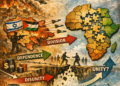
Foreign aid has long been presented as a benevolent instrument designed to alleviate poverty, promote development, and support governance in Africa. Yet beneath this humanitarian façade lies a more complex and contested reality. From its colonial origins to contemporary development cooperation, aid has frequently functioned as a geopolitical tool through which foreign powers pursue strategic, economic, and ideological interests. While aid has delivered tangible benefits in health, education, and infrastructure, it has also entrenched dependency, undermined sovereignty, reinforced elite domination, served as a conduit for siphoning national resources, and perpetuated neocolonial relationships. This article argues that foreign aid to Africa has historically operated—and continues to—operate as a mechanism of control, subtle yet powerful, shaped primarily by donor interests rather than African priorities.
Colonial Origins of Aid and the Foundations of Control
Foreign aid to Africa predates independence and is deeply rooted in the colonial project. In the late nineteenth and early twentieth centuries, European powers such as Britain, France, and Germany provided financial resources to their colonies primarily to facilitate extraction and administrative control rather than endogenous development. Infrastructure projects—ports, railways, and roads—were designed to connect mines and plantations to global markets, not to integrate African economies internally or stimulate diversified growth (Rodney, 1972).
Private American philanthropies, including the Ford and Rockefeller Foundations, also played an early role in development assistance, particularly in education and public health. While often framed as altruistic, these interventions reflected Western assumptions about modernisation and social engineering, reinforcing the belief that Africa needed to “catch up” to a Western developmental ideal (Eyben, 2014). This period entrenched a hierarchical donor–recipient relationship that persists today: the West as the model of development, Africa as the perpetual apprentice.
Cold War Aid: Buying Allegiance and Shaping Political Outcomes
The Cold War marked a decisive transformation in the function of foreign aid. As newly independent African states emerged in the 1950s and 1960s, they became strategic battlegrounds in the ideological struggle between the United States and the Soviet Union. Aid was weaponized to secure political allegiance, prop up friendly regimes, and prevent alignment with rival blocs (Lancaster, 2007).
Although many African states formally aligned with the Non-Aligned Movement, in practice they were compelled to navigate a polarized global system in which aid flows were contingent upon ideological conformity. Western donors frequently tolerated authoritarianism, corruption, and human rights abuses so long as regimes remained geopolitically loyal (Alesina & Dollar, 2000). This period cemented a central contradiction of foreign aid: the rhetoric of democracy promotion coexisting with the reality of strategic expediency.
Structural Adjustment and Economic Coercion
The most explicit use of aid as a tool of control emerged during the debt crises of the 1980s. Following the oil shocks of the 1970s and a global recession, many African states became heavily indebted. Western donors, alongside the International Monetary Fund (IMF) and the World Bank, offered loans conditional upon sweeping economic reforms known as Structural Adjustment Programs (SAPs).
These reforms mandated privatization, trade liberalization, currency devaluation, and sharp reductions in public spending—particularly on health, education, and social services (World Bank, 1981). While presented as technocratic solutions to economic inefficiency, SAPs reflected neoliberal ideology and donor priorities, emphasizing market access, debt repayment, and macroeconomic stability over human welfare. The consequences were severe: weakened state capacity, rising poverty, deteriorating public services, and widespread social unrest (Mkandawire & Soludo, 1999). SAPs thus exemplify how aid conditionalities functioned as instruments of economic coercion, eroding sovereignty and reshaping African economies to fit global capitalist structures.
Aid, Elites, and the Political Economy of Dependency
Foreign aid has also reshaped domestic power relations within African states. Large and sustained aid inflows often become a form of “unearned income” for governments, reducing incentives to tax citizens and weakening political accountability (Moore, 2004). Rather than fostering democratic responsiveness, aid can strengthen patronage networks by enabling ruling elites to distribute resources selectively to maintain loyalty.
In weak institutional environments, aid funds are frequently captured by political elites, reinforcing corruption and authoritarian rule (Bräutigam & Knack, 2004). This dynamic allows donors to maintain influence through elite alliances while ordinary citizens remain marginalized. Critics such as Moyo (2009) argue that, this system entrenches a cycle of dependency in which African states become structurally reliant on external finance, while donors retain leverage over policy direction and governance choices.
Post–Cold War Shifts: Democracy, NGOs, and Soft Power
The end of the Cold War brought renewed emphasis on democracy, human rights, and civil society. Aid was increasingly tied to political reform and channeled through non-governmental organizations (NGOs). While this shift supported democratization in some contexts—such as Ghana—it also introduced new forms of interventionism, with donors shaping domestic political agendas through funding priorities (Carothers, 1999).
Moreover, the expansion of NGO-led aid frequently bypassed state institutions, further hollowing out government capacity. Aid thus continued to shape political outcomes, albeit through softer mechanisms of influence rather than overt coercion.
Contemporary Aid Dynamics (2023–2025): Decline, Reprioritization, and Volatility
Recent policy data confirm that foreign aid to Africa remains deeply contingent on donor geopolitical priorities. According to the OECD, total Official Development Assistance (ODA) from DAC countries declined by approximately seven per cent in real terms in 2024, marking the first major contraction in global aid after years of growth (OECD, 2025). Aid flows to sub-Saharan Africa declined as donors redirected resources toward refugee hosting costs, domestic fiscal pressures, and geopolitical crises such as the war in Ukraine.
This volatility has concrete political and developmental consequences. OECD (2024) data showed that abrupt funding reductions between 2023 and 2024 disrupted long-term health, governance, and education programs across several African states. Such fluctuations reinforce aid dependency and expose African governments to external political shocks beyond their control, deepening asymmetric power relations between donors and recipients.
Aid Architecture, Networks, and Structural Influence
Beyond aid volumes, recent scholarship highlights how geopolitical power operates through control over aid architecture andnetworks. A large-scale network analysis of over ten million aid transactions demonstrates that influence within the global aid system is concentrated among a small group of donor states and multilateral institutions that act as brokers, shaping priorities, norms, and funding pathways (Fuchs et al., 2025). This structural dominance allows donors to indirectly influence policy choices in recipient states by determining which sectors, actors, and governance models receive sustained support.
Similarly, AidData’s updated geocoded datasets reveal that aid allocation frequently aligns with donor strategic interests such as security cooperation, migration management, and access to natural resources. Projects are disproportionately concentrated in geopolitically strategic regions and fragile states, underscoring that aid distribution is politically calculated rather than neutral (AidData, 2024).
Securitization of Aid and the Return of Strategic Stabilization
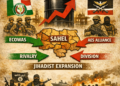
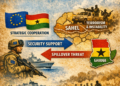
Since 2023, development assistance has increasingly been framed as a tool for stabilization, counterterrorism, and migration control, particularly in the Sahel and Horn of Africa. World Bank and European Union policy frameworks emphasize “fragility” and “security-development nexuses,” blurring the line between humanitarian aid and strategic intervention (World Bank, 2023).
Empirical evidence suggests that security-driven aid prioritizes short-term stability over democratic accountability. UNDP (2024) findings indicate that aid tied to security cooperation is less likely to strengthen institutions or citizen participation, instead reinforcing elite bargaining with external actors. This mirrors earlier Cold War dynamics, where aid served geopolitical ends under the guise of development.
Rising Powers and the Myth of “Horizontal” Cooperation
In the twenty-first century, the rise of China and other non-Western donors has transformed Africa’s aid landscape. China frames its engagement as South–South cooperation based on mutual benefit and non-interference. In practice, Chinese development finance prioritizes infrastructure, trade corridors, and resource access, echoing earlier Western growth-centered development models (Eyben, 2014).
Recent data complicate narratives of Chinese exceptionalism. AidData (2024) and World Bank (2024) show that China sharply reduced new sovereign lending to Africa between 2023 and 2024 amid debt sustainability concerns. However, this retrenchment has been accompanied by a strategic shift toward smaller, commercially oriented projects and yuan-denominated financing, preserving influence while reducing exposure. Reuters (2025) reports that Chinese lending fell by nearly 50 percent in 2024, yet diplomatic engagement and resource partnerships intensified. This evolution suggests that Chinese aid, like Western aid, remains fundamentally strategic.
Aid’s Double-Edged Reality in a Changing Financial Landscape
Despite sustained criticism, foreign aid has produced tangible benefits, saving millions of lives through vaccination programs, HIV/AIDS treatment, humanitarian relief, and education (Radelet, 2017). However, recent data show that aid is no longer Africa’s largest external financial inflow. Remittances and foreign direct investment exceeded total ODA in 2023, highlighting the declining quantitative role of aid (Mo Ibrahim Foundation, 2025).
Nevertheless, aid continues to wield disproportionate political influence because it is explicitly conditional, negotiated, and monitored. Unlike trade or remittances, aid directly shapes policy frameworks, governance reforms, and diplomatic relationships, making it a uniquely powerful geopolitical instrument (OECD, 2024).
Conclusion
Foreign aid to Africa has never been politically neutral. From colonial infrastructure projects to Cold War allegiance-building, from structural adjustment to contemporary security-oriented development cooperation, aid has consistently reflected the strategic interests of donor states. While framed in the language of development and humanitarianism, aid has often functioned as a tool of geopolitical influence, economic control, and ideological projection.
For aid to escape its neocolonial legacy, it must move beyond donor-driven agendas toward genuinely African-led development grounded in domestic accountability rather than external leverage. Until then, foreign aid will remain a double-edged sword—capable of fostering progress, yet equally capable of perpetuating dependency and manipulation.
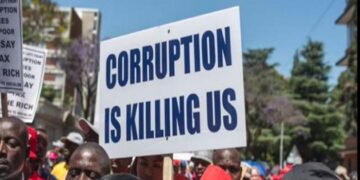
African countries, in the light of the above would need to take a bold approach to cut waste and deal with corruption. This would bridge the gap that would be occasioned by shortfalls in aid transfers that engenders dependency. The current trends towards a new world order presents an opportunity for African countries to chart new development partnerships that reflect real needs.
References
AidData. (2024). Global Chinese development finance dataset (Version 3.0). AidData Research Lab, College of William & Mary. https://www.aiddata.org
Alesina, A., & Dollar, D. (2000). Who gives foreign aid to whom and why? Journal of Economic Growth, 5(1), 33–63. https://doi.org/10.1023/A:1009874203400
Brautigam, D. (2020). The dragon’s gift: The real story of China in Africa (2nd ed.). Oxford University Press.
Bräutigam, D., & Knack, S. (2004). Foreign aid, institutions, and governance in Sub-Saharan Africa. Economic Development and Cultural Change, 52(2), 255–285. https://doi.org/10.1086/380592
Carothers, T. (1999). Aiding democracy abroad: The learning curve. Carnegie Endowment for International Peace.
Eyben, R. (2014). International aid and the making of a better world: Reflexive practice. Routledge.
Fuchs, A., Dreher, A., Nunnenkamp, P., & Parks, B. (2025). The global aid network: Power, influence, and brokerage in development finance. World Development, 176, 106517. https://doi.org/10.1016/j.worlddev.2024.106517
Lancaster, C. (2007). Foreign aid: Diplomacy, development, domestic politics. University of Chicago Press.
Mkandawire, T., & Soludo, C. C. (1999). Our continent, our future: African perspectives on structural adjustment. Africa World Press.
Mo Ibrahim Foundation. (2025). Africa and foreign aid: Rethinking dependency and self-reliance. Mo Ibrahim Foundation. https://mo.ibrahim.foundation
Moore, M. (2004). Revenues, state formation, and the quality of governance in developing countries. International Political Science Review, 25(3), 297–319. https://doi.org/10.1177/0192512104043018
Moyo, D. (2009). Dead aid: Why aid is not working and how there is a better way for Africa. Farrar, Straus and Giroux.
OECD. (2024). Development co-operation profiles. OECD Publishing. https://www.oecd.org/development
OECD. (2025). Preliminary official development assistance levels in 2024. OECD Publishing. https://www.oecd.org
Radelet, S. (2017). The great surge: The ascent of the developing world. Simon & Schuster.
Reuters. (2025, January 21). China’s Africa lending nearly halved in 2024 as strategy shifts. Reuters. https://www.reuters.com
Rodney, W. (1972). How Europe underdeveloped Africa. Bogle-L’Ouverture Publications.
UNDP. (2024). Development, security, and governance in fragile states. United Nations Development Programme. https://www.undp.org
World Bank. (1981). Accelerated development in Sub-Saharan Africa: An agenda for action. World Bank.
World Bank. (2023). Fragility, conflict, and violence: Development in an age of insecurity. World Bank. https://www.worldbank.org
World Bank. (2024). International debt statistics 2024. World Bank. https://www.worldbank.org