




• fr Français
  • en English
CISA NEWSLETTER
Advertisement
  • Home
  • Editions
    • March 2026
    • February 2026
    • January 2026
    • 2025
      • December 2025
      • November 2025
      • October 2025
      • September 2025
      • August 2025
      • July 2025
      • June 2025
      • May 2025
      • April 2025
      • March 2025
      • February 2025
      • January 2025
    • 2024
      • December 2024
      • November 2024
      • October 2024
      • September 2024
      • August 2024
      • July 2024
      • June 2024
      • May 2024
      • April 2024
      • March 2024
      • February 2024
      • January 2024
    • 2023
      • December 2023
  • News
    • All
    • Business
    • Politics
    • Science
    • World
    Okada Operations In Ghana; Economic Necessity Or Security Risk

    Okada Operations In Ghana; Economic Necessity Or Security Risk

    Cedi Appreciation and National Security in Ghana: Currency Stability Amid Persistent Structural Risks

    Cedi Appreciation and National Security in Ghana: Currency Stability Amid Persistent Structural Risks

    The Mirror in the Politician: How Ghanaian Society Breeds the Corruption It Condemns

    The Mirror in the Politician: How Ghanaian Society Breeds the Corruption It Condemns

    Terrorism Financing in The Sahel/West Africa: Mechanisms, Drivers, And Responses

    Terrorism Financing in The Sahel/West Africa: Mechanisms, Drivers, And Responses

    The Silent Threat: Impact of Human and Sex Trafficking on National Security

    The Silent Threat: Impact of Human and Sex Trafficking on National Security

    How JNIM is dominating the terrorism landscape in the Sahel

    How JNIM is dominating the terrorism landscape in the Sahel

    Trending Tags

    • Trump Inauguration
    • United Stated
    • White House
    • Market Stories
    • Election Results
  • Tech
    Securing Africa’s Digital Future: A Call to Action on Cybersecurity.

    Securing Africa’s Digital Future: A Call to Action on Cybersecurity.

    Trending Tags

    • Nintendo Switch
    • CES 2017
    • Playstation 4 Pro
    • Mark Zuckerberg
  • Entertainment
  • Lifestyle
    • All
    • Food
    • Health
    • Travel
    Security Contagion and the Urban Poor: Begging and the Invisible Threat in Accra’s Streets

    Security Contagion and the Urban Poor: Begging and the Invisible Threat in Accra’s Streets

    ECOWAS@50: Ghana as a Stakeholder in West Africa’s Integration Aspiration

    ECOWAS@50: Ghana as a Stakeholder in West Africa’s Integration Aspiration

    The Rise of Substance Abuse Among Ghanaian Youth: A Deep Dive into Music, Media, and Mental Health

    The Rise of Substance Abuse Among Ghanaian Youth: A Deep Dive into Music, Media, and Mental Health

    Impact Of Russia’s War in Ukraine on Africa’s Agriculture and Food Security

    Impact Of Russia’s War in Ukraine on Africa’s Agriculture and Food Security

    Transforming Africa’s Agriculture to Mitigate Food Crisis

    Transforming Africa’s Agriculture to Mitigate Food Crisis

    Framing Food Insecurity as A Security Contagion

    Framing Food Insecurity as A Security Contagion

    Trending Tags

    • Golden Globes
    • Game of Thrones
    • MotoGP 2017
    • eSports
    • Fashion Week
  • Review
    Key Drivers of Voter Choices for Ghana’s 2024 General Elections – A Review

    Key Drivers of Voter Choices for Ghana’s 2024 General Elections – A Review

  • CISA Ghana
No Result
View All Result
  • Home
  • Editions
    • March 2026
    • February 2026
    • January 2026
    • 2025
      • December 2025
      • November 2025
      • October 2025
      • September 2025
      • August 2025
      • July 2025
      • June 2025
      • May 2025
      • April 2025
      • March 2025
      • February 2025
      • January 2025
    • 2024
      • December 2024
      • November 2024
      • October 2024
      • September 2024
      • August 2024
      • July 2024
      • June 2024
      • May 2024
      • April 2024
      • March 2024
      • February 2024
      • January 2024
    • 2023
      • December 2023
  • News
    • All
    • Business
    • Politics
    • Science
    • World
    Okada Operations In Ghana; Economic Necessity Or Security Risk

    Okada Operations In Ghana; Economic Necessity Or Security Risk

    Cedi Appreciation and National Security in Ghana: Currency Stability Amid Persistent Structural Risks

    Cedi Appreciation and National Security in Ghana: Currency Stability Amid Persistent Structural Risks

    The Mirror in the Politician: How Ghanaian Society Breeds the Corruption It Condemns

    The Mirror in the Politician: How Ghanaian Society Breeds the Corruption It Condemns

    Terrorism Financing in The Sahel/West Africa: Mechanisms, Drivers, And Responses

    Terrorism Financing in The Sahel/West Africa: Mechanisms, Drivers, And Responses

    The Silent Threat: Impact of Human and Sex Trafficking on National Security

    The Silent Threat: Impact of Human and Sex Trafficking on National Security

    How JNIM is dominating the terrorism landscape in the Sahel

    How JNIM is dominating the terrorism landscape in the Sahel

    Trending Tags

    • Trump Inauguration
    • United Stated
    • White House
    • Market Stories
    • Election Results
  • Tech
    Securing Africa’s Digital Future: A Call to Action on Cybersecurity.

    Securing Africa’s Digital Future: A Call to Action on Cybersecurity.

    Trending Tags

    • Nintendo Switch
    • CES 2017
    • Playstation 4 Pro
    • Mark Zuckerberg
  • Entertainment
  • Lifestyle
    • All
    • Food
    • Health
    • Travel
    Security Contagion and the Urban Poor: Begging and the Invisible Threat in Accra’s Streets

    Security Contagion and the Urban Poor: Begging and the Invisible Threat in Accra’s Streets

    ECOWAS@50: Ghana as a Stakeholder in West Africa’s Integration Aspiration

    ECOWAS@50: Ghana as a Stakeholder in West Africa’s Integration Aspiration

    The Rise of Substance Abuse Among Ghanaian Youth: A Deep Dive into Music, Media, and Mental Health

    The Rise of Substance Abuse Among Ghanaian Youth: A Deep Dive into Music, Media, and Mental Health

    Impact Of Russia’s War in Ukraine on Africa’s Agriculture and Food Security

    Impact Of Russia’s War in Ukraine on Africa’s Agriculture and Food Security

    Transforming Africa’s Agriculture to Mitigate Food Crisis

    Transforming Africa’s Agriculture to Mitigate Food Crisis

    Framing Food Insecurity as A Security Contagion

    Framing Food Insecurity as A Security Contagion

    Trending Tags

    • Golden Globes
    • Game of Thrones
    • MotoGP 2017
    • eSports
    • Fashion Week
  • Review
    Key Drivers of Voter Choices for Ghana’s 2024 General Elections – A Review

    Key Drivers of Voter Choices for Ghana’s 2024 General Elections – A Review

  • CISA Ghana
No Result
View All Result
CISA NEWSLETTER
No Result
View All Result
Home ANALYSTS

Risk of Proxy Influence: How the Iran War Could Expand Rival Power Networks in Africa

Risk of Proxy Influence How the Iran War Could Expand Rival Power Networks in Africa
Share on FacebookShare on Twitter

Introduction

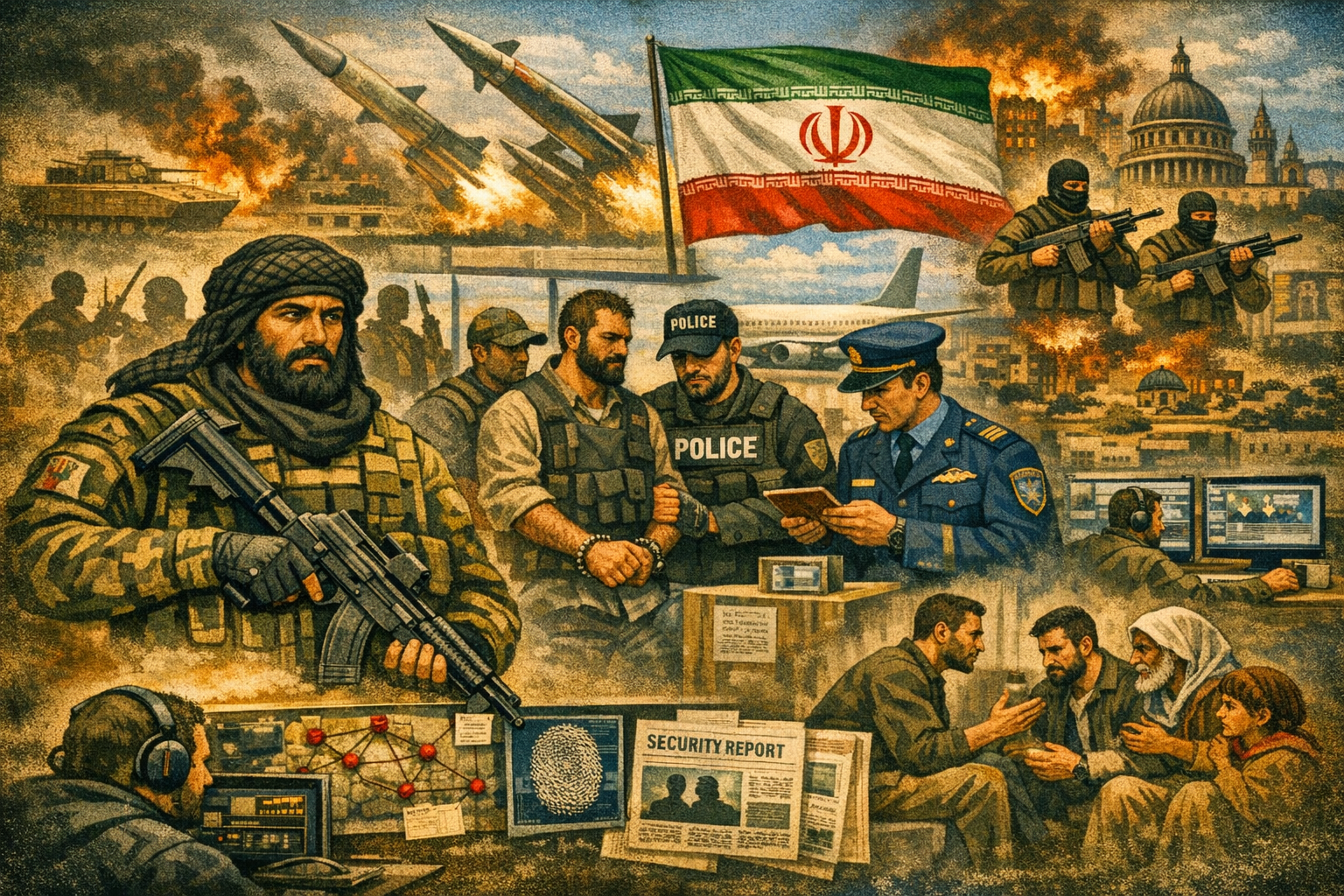
Contemporary geopolitical competition is characterized less by direct confrontation and more by indirect engagement through proxies, economic leverage, and covert influence. Conflicts involving Iran illustrate this shift, as influence is often projected through networks rather than conventional military deployment. In this context, Africa is geographically distant from such conflicts but increasingly interconnected through financial, ideological, and logistical channels.

Iran’s Existing Proxy Architecture: Why Africa Matters

Iran’s external engagement strategy has historically emphasized indirect influence, primarily coordinated through the Islamic Revolutionary Guard Corps (IRGC) and its Quds Force. These structures support non-state actors and networks that operate across multiple regions.  The IRGC is a powerful branch of Iran’s military, separate from the regular army and protects the Iranian government and its revolutionary system.  It also

controls strategic military capabilities (including missiles) and has considerable political influence internally.  The Quds Force, focuses on external operations and is a unit of the IRGC. It supports allied groups (often called proxies), trains militias and undertakes intelligence operations abroad.

Hezbollah represents one of the most established components of this architecture, with activities extending beyond the Middle East into parts of Africa. Hezbollah is a powerful political and militant organization based in Lebanon. Hezbollah means “Party of God” (from Arabic). It has a well-trained military wing, strongly armed (rockets, drones, fighters) and participates in Lebanon’s government. It holds seats in parliament with significant influence over national decisions. It is linked to Iran through the IRGC and the Quds Force.

Research indicates that Hezbollah-linked networks have operated in West Africa through diaspora communities, commercial enterprises, and informal financial systems (Levitt, 2013; Clarke, 2014). These networks have been associated with fundraising, logistics, and trade-based activities that sustain broader organizational objectives.

In addition to financial and logistical channels, Iran has pursued ideological engagement in certain African contexts. For example, the development of Shi’a movements in Nigeria has been linked to religious and educational outreach efforts (Thurston, 2016). While such activities are not inherently security threats, they illustrate the multifaceted nature of influence that combines social, religious, and political dimensions.

Africa is not a new arena of engagement but an existing secondary theatre within broader influence networks.

How War Accelerates Proxy Expansion

Periods of heightened pressure on Iran whether military, economic, or political have historically coincided with increased reliance on asymmetric strategies. These include covert operations, proxy mobilization, and expansion of transnational networks (Byman, 2012).

In an African context, such dynamics may manifest in several ways:

  • Strengthening ties with local actors or intermediaries
  • Expanding financial and logistical corridors through informal economies
  • Utilizing regions with limited state oversight for operational depth

As pressure intensifies in the Middle East, Africa can function as a strategic depth zone, enabling indirect operations that are geographically removed from primary conflict areas. This does not necessarily imply large-scale militarization but rather incremental expansion of influence networks.

 Competing External Powers: Africa as a Strategic Arena

Africa’s geopolitical relevance has grown significantly, attracting engagement from multiple external actors with distinct strategic interests.

  • United States: Focus on counterterrorism, security cooperation, and governance support
  • Russia: Expansion of security partnerships and paramilitary involvement
  • China: Emphasis on infrastructure investment and economic integration
  • Iran: Development of ideological, financial, and proxy-based networks

An escalation involving Iran could intensify these overlapping engagements. Increased scrutiny by the United States and its partners on Iranian-linked activities may prompt adaptive responses, including the diversification of operational spaces. At the same time, other global actors may deepen their engagement in Africa amid shifting geopolitical attention.

 Security Implications for Africa

The introduction or expansion of external ideological influence can interact with existing social dynamics across African states. In regions characterized by religious diversity, such influence may contribute to localized tensions, particularly where governance structures are already under strain or where mechanisms for managing intercommunal relations are limited. External actors do not necessarily create these divisions, but their involvement can shape narratives, reinforce identities, and influence the balance of social cohesion in sensitive environments (Mustapha, 2014).

Proxy networks also tend to intersect with illicit economic systems, creating what is often described as a convergence between criminal activity and politically motivated operations. In parts of Africa, this may involve participation in or facilitation of arms trafficking, narcotics trade, and the illicit extraction and commercialization of natural resources such as gold and diamonds. These overlapping activities complicate law enforcement responses, as they blur the boundaries between organized crime and proxy-driven influence. As a result, distinguishing between economic and strategic motivations becomes increasingly difficult for state authorities (Shaw & Reitano, 2013).

In addition, there is the potential for covert operations to take place on African soil as proxy networks expand. Historical cases indicate that foreign intelligence-linked activities have occurred within the continent, sometimes involving surveillance, logistical coordination, or the monitoring and targeting of foreign or diplomatic interests. While such activities are often discreet, their presence reflects the broader use of indirect operational environments outside primary conflict zones. The expansion of proxy networks could increase the likelihood of similar patterns emerging in the future (Levitt, 2013).

Strategic locations within Africa are also gaining increasing geopolitical importance, particularly corridors such as the Red Sea and parts of the Horn of Africa. These regions serve as critical nodes for global trade and maritime movement. Interest by external actors in securing access, partnerships, or influence in these areas has implications for regional stability, maritime security, and the balance of power. Even limited forms of engagement can contribute to gradual militarisation or strategic competition in these zones (Fulton, 2019).

Several structural factors further shape the extent to which African states may be exposed to external proxy influence. In some contexts, limited border control capacity allows for the movement of goods, finances, and personnel across porous frontiers. The prevalence of informal and cash-based economies can facilitate unregulated financial flows, making it easier for external networks to operate without detection. Governance gaps in certain regions, combined with ongoing instability in areas such as the Sahel and the Horn of Africa, create environments where external actors may establish or expand their presence. These conditions are not uniform across the continent, but where they exist, they can provide entry points for indirect influence and network development.

Conclusion

The evolving nature of global conflict underscores the importance of examining indirect forms of influence. Developments involving Iran are not confined to the Middle East but have the potential to shape dynamics in other regions, including Africa.

The Iran war is not only a Middle Eastern conflict. It is a catalyst that could accelerate the expansion of proxy networks into Africa, turning parts of the continent into arenas of indirect confrontation between global powers.

Understanding these dynamics is essential for policymakers, researchers, and regional institutions seeking to anticipate and manage emerging security risks.

References

Byman, D. (2012). Deadly connections: States that sponsor terrorism. Cambridge University Press.

Clarke, C. P. (2014). Terrorism in Africa: The evolution of militant Islamist groups. Praeger.

Fulton, J. (2019). China’s changing role in the Middle East. Atlantic Council Issue Brief.

Levitt, M. (2013). Hezbollah: The global footprint of Lebanon’s party of God. Georgetown University Press.

Mustapha, A. R. (2014). Sects and social disorder: Muslim identities and conflict in Northern Nigeria. James Currey.

Shaw, M., & Reitano, T. (2013). The evolution of organized crime in Africa. African Affairs, 112(448), 1–23.

Thurston, A. (2016). Salafism in Nigeria: Islam, preaching, and politics. Cambridge University Press.

Tags: 20264th Edition 2026Apr week4
ShareTweet
Previous Post

The Echoes of Conflict – Managing the Foreign Fighter Returnee Threat

Next Post

The Invisible Front Line: Reconceptualising Unconventional Warfare in the 2020s

Next Post
The Invisible Front Line Reconceptualising Unconventional Warfare in the 2020s

The Invisible Front Line: Reconceptualising Unconventional Warfare in the 2020s

Leave a Reply Cancel reply

Your email address will not be published. Required fields are marked *

  • Trending
  • Comments
  • Latest
Africa's Natural Resources: Who’s After What And What’s The Continent’s Strategy In The Scramble Game?

Africa’s Natural Resources: Who’s After What And What’s The Continent’s Strategy In The Scramble Game?

March 14, 2026
Effects of overpopulation in class on quality of education

Effects of overpopulation in class on quality of education

March 25, 2024
The Growing Influence Of AES On African Countries

The Growing Influence Of AES On African Countries

April 1, 2025
Slums and Security in Africa: A Growing Threat

Slums and Security in Africa: A Growing Threat

July 25, 2025
Integration of environmental security into Ghana’s National Security Strategy safeguards the future

Integration of environmental security into Ghana’s National Security Strategy safeguards the future

10
Border Security: A Door Left Wide Open

Border Security: A Door Left Wide Open

3
Polls close in Liberia

Liberia: Once a war-torn country, now Africa’s beacon of democracy – Lessons for Africa

1
Alliance Of Sahel States Formation: Objectives & Implications for ECOWAS

Alliance Of Sahel States Formation: Objectives & Implications for ECOWAS

1
The Invisible Front Line Reconceptualising Unconventional Warfare in the 2020s

The Invisible Front Line: Reconceptualising Unconventional Warfare in the 2020s

April 27, 2026
Risk of Proxy Influence How the Iran War Could Expand Rival Power Networks in Africa

Risk of Proxy Influence: How the Iran War Could Expand Rival Power Networks in Africa

April 27, 2026
The Echoes of Conflict – Managing the Foreign Fighter Returnee Threat

The Echoes of Conflict – Managing the Foreign Fighter Returnee Threat

April 27, 2026
Algerian Civil War Series What the Sahel and Coastal West Africa Can Learn from the Algerian Successful Counter-Terrorism Efforts

Algerian Civil War Series: What the Sahel and Coastal West Africa Can Learn from the Algerian Successful Counter-Terrorism Efforts

April 27, 2026

Popular Stories

  • Africa's Natural Resources: Who’s After What And What’s The Continent’s Strategy In The Scramble Game?

    Africa’s Natural Resources: Who’s After What And What’s The Continent’s Strategy In The Scramble Game?

    0 shares
    Share 0 Tweet 0
  • Effects of overpopulation in class on quality of education

    0 shares
    Share 0 Tweet 0
  • The Growing Influence Of AES On African Countries

    0 shares
    Share 0 Tweet 0
  • Slums and Security in Africa: A Growing Threat

    0 shares
    Share 0 Tweet 0
  • The Concept of Beauty in Africa

    0 shares
    Share 0 Tweet 0

CISA Newsletter

Headlining West African News

Follow Us

Browse by Category

  • ANALYSTS
  • Business
  • ECONOMY
  • EDITORIAL
  • Environment
  • Food
  • Health
  • Lifestyle
  • News
  • Politics
  • Review
  • Science
  • Sports
  • Tech
  • Travel
  • Uncategorized
  • World

Recent News

The Invisible Front Line Reconceptualising Unconventional Warfare in the 2020s

The Invisible Front Line: Reconceptualising Unconventional Warfare in the 2020s

April 27, 2026
Risk of Proxy Influence How the Iran War Could Expand Rival Power Networks in Africa

Risk of Proxy Influence: How the Iran War Could Expand Rival Power Networks in Africa

April 27, 2026
  • About
  • Advertise
  • Privacy & Policy
  • Contact

© 2023 CISA Ghana Newsletter - Headlines West Africa.

Social Media Auto Publish Powered By : XYZScripts.com
  • fr Français
  • en English
No Result
View All Result
  • Home
  • Editions
    • March 2026
    • February 2026
    • January 2026
    • 2025
      • December 2025
      • November 2025
      • October 2025
      • September 2025
      • August 2025
      • July 2025
      • June 2025
      • May 2025
      • April 2025
      • March 2025
      • February 2025
      • January 2025
    • 2024
      • December 2024
      • November 2024
      • October 2024
      • September 2024
      • August 2024
      • July 2024
      • June 2024
      • May 2024
      • April 2024
      • March 2024
      • February 2024
      • January 2024
    • 2023
      • December 2023
  • News
  • Tech
  • Entertainment
  • Lifestyle
  • Review
  • CISA Ghana

© 2023 CISA Ghana Newsletter - Headlines West Africa.

  • English
  • Français (French)