








The Algerian Paradox: How Domestic Victory Sowed the Seeds of a Regional Crisis
Lessons from the Black Decade Part 1 of 5
Introduction
In the annals of modern counterterrorism, few conflicts are as instructive—or as misunderstood—as the Algerian Civil War (1991–2002). Often referred to as the “Black Decade,” this conflict claimed an estimated 150,000 to 200,000 lives and remains the defining trauma of the modern Algerian state.
For security analysts observing the deteriorating situation in the Sahel today—where juntas in Mali, Burkina Faso, and Niger struggle against entrenched jihadist insurgencies—the Algerian experience is not ancient history; it is the origin story. The current hegemony of groups like Jama’at Nusrat al-Islam wal-Muslimin (JNIM) is not a spontaneous Sahelian phenomenon but the direct, evolutionary result of the Algerian state’s military victory in the late 1990s.
This inaugural article in our series, Lessons from the Black Decade, establishes the historical baseline. It explores how Algeria successfully inoculated its own population against extremism and militarily defeated the insurgency in the north, only to inadvertently displace the threat southward, creating the “strategic incubator” that plagues West Africa today.
The Timeline of Terror: From Political Crisis to Mass Hysteria
To understand the current threat landscape, we must first revisit its genesis. The war was not a linear conflict but a descent into chaotic violence marked by three distinct phases:
- The Spark (1991–1992): The conflict began as a political crisis. The Islamic Salvation Front (FIS) was poised to win the country’s first multi-party legislative elections. Fearing the creation of an Islamist state, the military intervened in January 1992, cancelling the electoral process and banning the FIS.
- The Escalation (1993–1997): The conflict quickly mutated. While the armed wing of the FIS (the AIS) targeted security forces, a more radical splinter group, the Armed Islamic Group (GIA), emerged. The GIA adopted a Takfirist ideology, expanding their target list to include journalists, intellectuals, foreigners, and eventually, the civilian population itself.
- The Climax and Resolution (1997–2005): The violence peaked with horrific village massacres in the “Triangle of Death” south of Algiers (e.g., Bentalha and Rais). These atrocities turned the population against the Islamists. Simultaneously, the state employed a dual strategy of ruthless military eradication and political amnesty (the 1999 Civil Concord and 2005 Charter for Peace), effectively ending the war by offering insurgents a “golden bridge” to surrender.
The Algerian Success: Resilience Through Trauma
Domestically, the Algerian state achieved what few others have: it defeated a fully entrenched Islamist insurgency without external military intervention. This victory created a unique sociopolitical resilience that persists to this day.
The “vaccination effect” of the Black Decade cannot be overstated. When the Arab Spring swept through North Africa in 2011, toppling regimes in Tunisia, Libya, and Egypt, Algeria remained largely stable. The collective memory of the 1990s created a tacit social contract: the Algerian public, traumatized by the anarchy of the civil war, prioritized stability and security over revolutionary upheaval. This “security-first” mindset denied the new generation of jihadists the popular support necessary to operate within Algeria’s borders.
The Unintended Consequence: Strategic Displacement
However, this domestic success came at a catastrophic regional cost. As the Algerian military (ANP) and intelligence services (DRS) successfully squeezed the insurgents in the northern mountains and coastal cities, the surviving hardliners were faced with a choice: surrender or retreat.
The most radical faction, the Salafist Group for Preaching and Combat (GSPC)—which had split from the GIA in 1998 to distance itself from the civilian massacres—chose retreat. Unable to operate in the securitized north, they were pushed south into the vast, ungoverned spaces of the Sahara and eventually across the border into northern Mali and Niger.
This phenomenon, known in security studies as “strategic displacement” or the “balloon effect,” is the root of today’s Sahelian crisis. The Algerian state effectively exported its terrorism problem.
The Mutation: From Insurgents to Narco-Jihadists
Once in the Sahel, the nature of the threat fundamentally changed. Cut off from their Algerian financial networks, these fighters, led by figures like Mokhtar Belmokhtar, adapted to their new environment by hybridizing jihad with organized crime.
- The Criminal Pivot: They seized control of trans-Saharan smuggling routes (cigarettes, fuel, and arms) and pioneered the “kidnapping economy,” targeting Western tourists for multi-million-dollar ransoms. This influx of capital allowed them to purchase heavy weaponry and Toyota technicals, transforming them from a guerrilla cell into a mobile army.
- Social Embedding: Crucially, they ceased to be “foreign” occupiers. Through strategic marriage alliances with local Tuareg and Arab tribes in northern Mali, they embedded themselves into the local social fabric.
- The Rebranding: In 2007, the GSPC rebranded as Al-Qaeda in the Islamic Maghreb (AQIM), globalizing their mission. This group eventually spawned the current dominant coalition, JNIM, which terrorizes the Sahel today.
Recommendations for Current Strategy
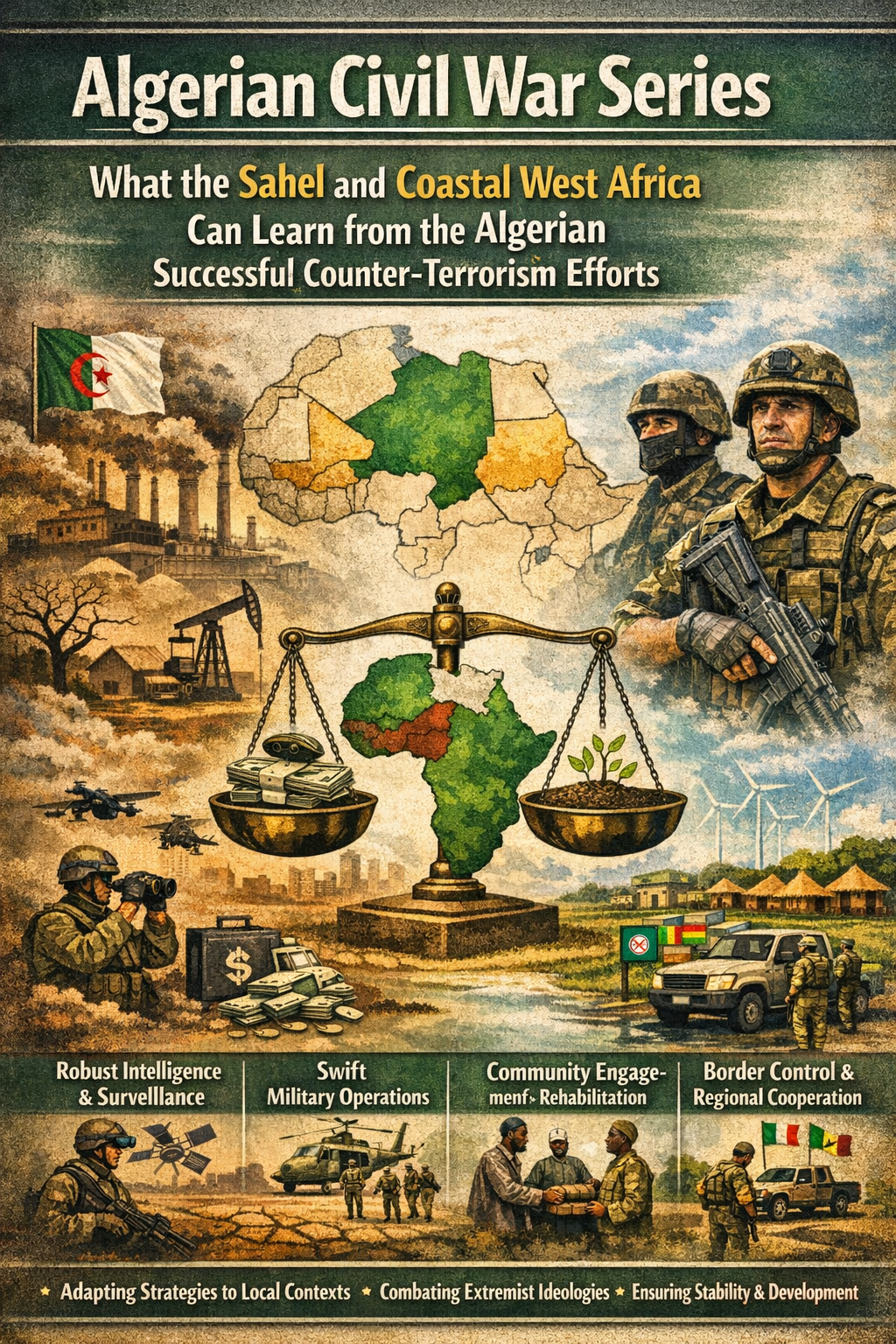
- Acknowledge the Lineage: Intelligence analysts must treat Sahelian groups not as new, isolated phenomena but as evolved continuations of the Algerian GSPC. Understanding their organizational DNA is key to predicting their behaviour.
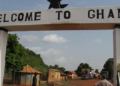
- Monitor “Safe Havens”: Military pressure without sealing escape routes merely displaces the enemy. Coastal West African states (Ghana, Benin, Togo) must anticipate that successful pushes in the Sahel will drive militants toward their northern borders, replicating the Algeria-to-Mali displacement of the late 90s.
- Disrupt the Financial/Social Nexus: The GSPC survived by becoming a financial asset to local tribes (via smuggling). Counterterrorism must focus on breaking this economic dependency, not just kinetic strikes.
Conclusion
The tragedy of the Sahel is, in many ways, the shadow of Algeria’s victory. The Algerian Civil War demonstrates that a state can defeat terrorism militarily within its own borders, but without a regional strategy, it merely displaces the threat to its neighbours.
The “Black Decade” did not end in 2002; it migrated. The terrorists fighting the Malian and Burkinabe armies today are the direct tactical and ideological descendants of the GIA cells that operated in Algiers thirty years ago.
In the next instalment of this series, The Golden Bridge: The Strategic Utility of Amnesty and Reconciliation, we will analyse the Civil Concord (1999) and the Charter for Peace (2005).
References
- International Crisis Group (ICG), “Islamism, Violence and Reform in Algeria: Turning the Page,” Report No. 29 (2004).
- Martinez, Luis. The Algerian Civil War, 1990-1998. Columbia University Press, 2000.
- “The Charter for Peace and National Reconciliation,” Official Journal of the Algerian Republic (2005).