





• fr Français
  • en English
CISA NEWSLETTER
Advertisement
  • HOME
  • Editions
    • 2025
      • December 2025
      • November 2025
      • October 2025
      • September 2025
      • August 2025
      • July 2025
      • June 2025
      • May 2025
      • April 2025
      • March 2025
      • February 2025
      • January 2025
    • 2024
      • December 2024
      • November 2024
      • October 2024
      • September 2024
      • August 2024
      • July 2024
      • June 2024
      • May 2024
      • April 2024
      • March 2024
      • February 2024
      • January 2024
    • 2023
      • December 2023
  • News
    • All
    • Business
    • Politics
    • Science
    • World
    Okada Operations In Ghana; Economic Necessity Or Security Risk

    Okada Operations In Ghana; Economic Necessity Or Security Risk

    Cedi Appreciation and National Security in Ghana: Currency Stability Amid Persistent Structural Risks

    Cedi Appreciation and National Security in Ghana: Currency Stability Amid Persistent Structural Risks

    The Mirror in the Politician: How Ghanaian Society Breeds the Corruption It Condemns

    The Mirror in the Politician: How Ghanaian Society Breeds the Corruption It Condemns

    Terrorism Financing in The Sahel/West Africa: Mechanisms, Drivers, And Responses

    Terrorism Financing in The Sahel/West Africa: Mechanisms, Drivers, And Responses

    The Silent Threat: Impact of Human and Sex Trafficking on National Security

    The Silent Threat: Impact of Human and Sex Trafficking on National Security

    How JNIM is dominating the terrorism landscape in the Sahel

    How JNIM is dominating the terrorism landscape in the Sahel

    Trending Tags

    • Trump Inauguration
    • United Stated
    • White House
    • Market Stories
    • Election Results
  • Tech
    Securing Africa’s Digital Future: A Call to Action on Cybersecurity.

    Securing Africa’s Digital Future: A Call to Action on Cybersecurity.

    Trending Tags

    • Nintendo Switch
    • CES 2017
    • Playstation 4 Pro
    • Mark Zuckerberg
  • Entertainment
  • Lifestyle
    • All
    • Food
    • Health
    • Travel
    Security Contagion and the Urban Poor: Begging and the Invisible Threat in Accra’s Streets

    Security Contagion and the Urban Poor: Begging and the Invisible Threat in Accra’s Streets

    ECOWAS@50: Ghana as a Stakeholder in West Africa’s Integration Aspiration

    ECOWAS@50: Ghana as a Stakeholder in West Africa’s Integration Aspiration

    The Rise of Substance Abuse Among Ghanaian Youth: A Deep Dive into Music, Media, and Mental Health

    The Rise of Substance Abuse Among Ghanaian Youth: A Deep Dive into Music, Media, and Mental Health

    Impact Of Russia’s War in Ukraine on Africa’s Agriculture and Food Security

    Impact Of Russia’s War in Ukraine on Africa’s Agriculture and Food Security

    Transforming Africa’s Agriculture to Mitigate Food Crisis

    Transforming Africa’s Agriculture to Mitigate Food Crisis

    Framing Food Insecurity as A Security Contagion

    Framing Food Insecurity as A Security Contagion

    Trending Tags

    • Golden Globes
    • Game of Thrones
    • MotoGP 2017
    • eSports
    • Fashion Week
  • Review
    Key Drivers of Voter Choices for Ghana’s 2024 General Elections – A Review

    Key Drivers of Voter Choices for Ghana’s 2024 General Elections – A Review

  • CISA Ghana
No Result
View All Result
  • HOME
  • Editions
    • 2025
      • December 2025
      • November 2025
      • October 2025
      • September 2025
      • August 2025
      • July 2025
      • June 2025
      • May 2025
      • April 2025
      • March 2025
      • February 2025
      • January 2025
    • 2024
      • December 2024
      • November 2024
      • October 2024
      • September 2024
      • August 2024
      • July 2024
      • June 2024
      • May 2024
      • April 2024
      • March 2024
      • February 2024
      • January 2024
    • 2023
      • December 2023
  • News
    • All
    • Business
    • Politics
    • Science
    • World
    Okada Operations In Ghana; Economic Necessity Or Security Risk

    Okada Operations In Ghana; Economic Necessity Or Security Risk

    Cedi Appreciation and National Security in Ghana: Currency Stability Amid Persistent Structural Risks

    Cedi Appreciation and National Security in Ghana: Currency Stability Amid Persistent Structural Risks

    The Mirror in the Politician: How Ghanaian Society Breeds the Corruption It Condemns

    The Mirror in the Politician: How Ghanaian Society Breeds the Corruption It Condemns

    Terrorism Financing in The Sahel/West Africa: Mechanisms, Drivers, And Responses

    Terrorism Financing in The Sahel/West Africa: Mechanisms, Drivers, And Responses

    The Silent Threat: Impact of Human and Sex Trafficking on National Security

    The Silent Threat: Impact of Human and Sex Trafficking on National Security

    How JNIM is dominating the terrorism landscape in the Sahel

    How JNIM is dominating the terrorism landscape in the Sahel

    Trending Tags

    • Trump Inauguration
    • United Stated
    • White House
    • Market Stories
    • Election Results
  • Tech
    Securing Africa’s Digital Future: A Call to Action on Cybersecurity.

    Securing Africa’s Digital Future: A Call to Action on Cybersecurity.

    Trending Tags

    • Nintendo Switch
    • CES 2017
    • Playstation 4 Pro
    • Mark Zuckerberg
  • Entertainment
  • Lifestyle
    • All
    • Food
    • Health
    • Travel
    Security Contagion and the Urban Poor: Begging and the Invisible Threat in Accra’s Streets

    Security Contagion and the Urban Poor: Begging and the Invisible Threat in Accra’s Streets

    ECOWAS@50: Ghana as a Stakeholder in West Africa’s Integration Aspiration

    ECOWAS@50: Ghana as a Stakeholder in West Africa’s Integration Aspiration

    The Rise of Substance Abuse Among Ghanaian Youth: A Deep Dive into Music, Media, and Mental Health

    The Rise of Substance Abuse Among Ghanaian Youth: A Deep Dive into Music, Media, and Mental Health

    Impact Of Russia’s War in Ukraine on Africa’s Agriculture and Food Security

    Impact Of Russia’s War in Ukraine on Africa’s Agriculture and Food Security

    Transforming Africa’s Agriculture to Mitigate Food Crisis

    Transforming Africa’s Agriculture to Mitigate Food Crisis

    Framing Food Insecurity as A Security Contagion

    Framing Food Insecurity as A Security Contagion

    Trending Tags

    • Golden Globes
    • Game of Thrones
    • MotoGP 2017
    • eSports
    • Fashion Week
  • Review
    Key Drivers of Voter Choices for Ghana’s 2024 General Elections – A Review

    Key Drivers of Voter Choices for Ghana’s 2024 General Elections – A Review

  • CISA Ghana
No Result
View All Result
CISA NEWSLETTER
No Result
View All Result
Home ANALYSTS

Analysis of the Recent Failed Coup in Benin

Analysis of the Recent Failed Coup in Benin
Share on FacebookShare on Twitter

Introduction

The failed December 7th coup in Benin underscores the convergence of political authoritarianism, military discontent and worsening insecurity that have eroded state legitimacy during President Talon’s decade in power. Although the mutiny was swiftly neutralised through loyalist resistance and unprecedented ECOWAS–Nigeria military support, its underlying drivers, including democratic backsliding, exclusionary electoral engineering, stalled public services and frontline resentment over northern jihadist violence, remain unresolved. Structural tensions within the armed forces and society are therefore likely to persist beyond the April 2026 election, even as the government consolidates short-term control. Regionally, ECOWAS’s rapid intervention marks a decisive recalibration in its deterrence posture, with implications for countries facing similar governance and security pressures across West Africa.

Background

 Since taking office in 2016, President Patrice Talon has overseen a period of macroeconomic stability and notable growth, underpinned by liberalisation reforms, infrastructure expansion and fiscal discipline.

However, this economic success has been increasingly overshadowed by concerns about democratic backsliding. Talon’s administration has systematically undermined political pluralism through controversial judicial reforms, alleged manipulation of electoral processes and a tightening grip over key institutions. His re-election in 2021 followed the exclusion of major opposition figures under a restrictive sponsorship system. As Benin prepares for the April 2026 presidential election, Talon has publicly ruled out seeking a third term. Instead, he has positioned his close ally and current Finance Minister, Romuald Wadagni, as his successor, a move widely seen as an attempt to retain influence post-transition. Opposition parties, particularly the Democrats, have accused the regime of pre-engineering the electoral outcome by disqualifying viable challengers on technical grounds, fueling perceptions of an uncompetitive and managed democracy.

In 2019 and 2023, constitutional amendments further reshaped Benin’s political architecture. While preserving the presidential two-term limit, the amendments extended both presidential and legislative terms from five to seven years and introduced a new Senate with limited direct accountability. These reforms, passed without a referendum, have been criticised for cementing the ruling coalition’s hold on power while diluting the opposition’s ability to challenge legislation or mobilise electorally. Concurrently, a growing number of Beninese have expressed frustration with rising socio-economic inequality, elite impunity and the erosion of civic freedoms. These tensions have occurred against a backdrop of mounting insecurity in the north, where jihadist groups linked to al-Qaeda and the Islamic State have intensified attacks, exploiting governance gaps in remote areas and creating a volatile security environment.

The attempted coup  highlights a convergence of long-simmering structural vulnerabilities in Benin’s political and security architecture. While the plot was foiled rapidly, the speed and coordination of the mutiny reveal underlying discontent within segments of the armed forces. The coup attempt cannot be understood in isolation from broader national and regional dynamics: a fragile democratic transition, mounting insecurity in the north, public disillusionment with governance and the emboldening effect of recent military takeovers in neighbouring states. The following analysis breaks down the operational, political and strategic factors that shaped the coup attempt, its failure and its broader implications.

Coup Attempt: Sequence and Tactical Assessment

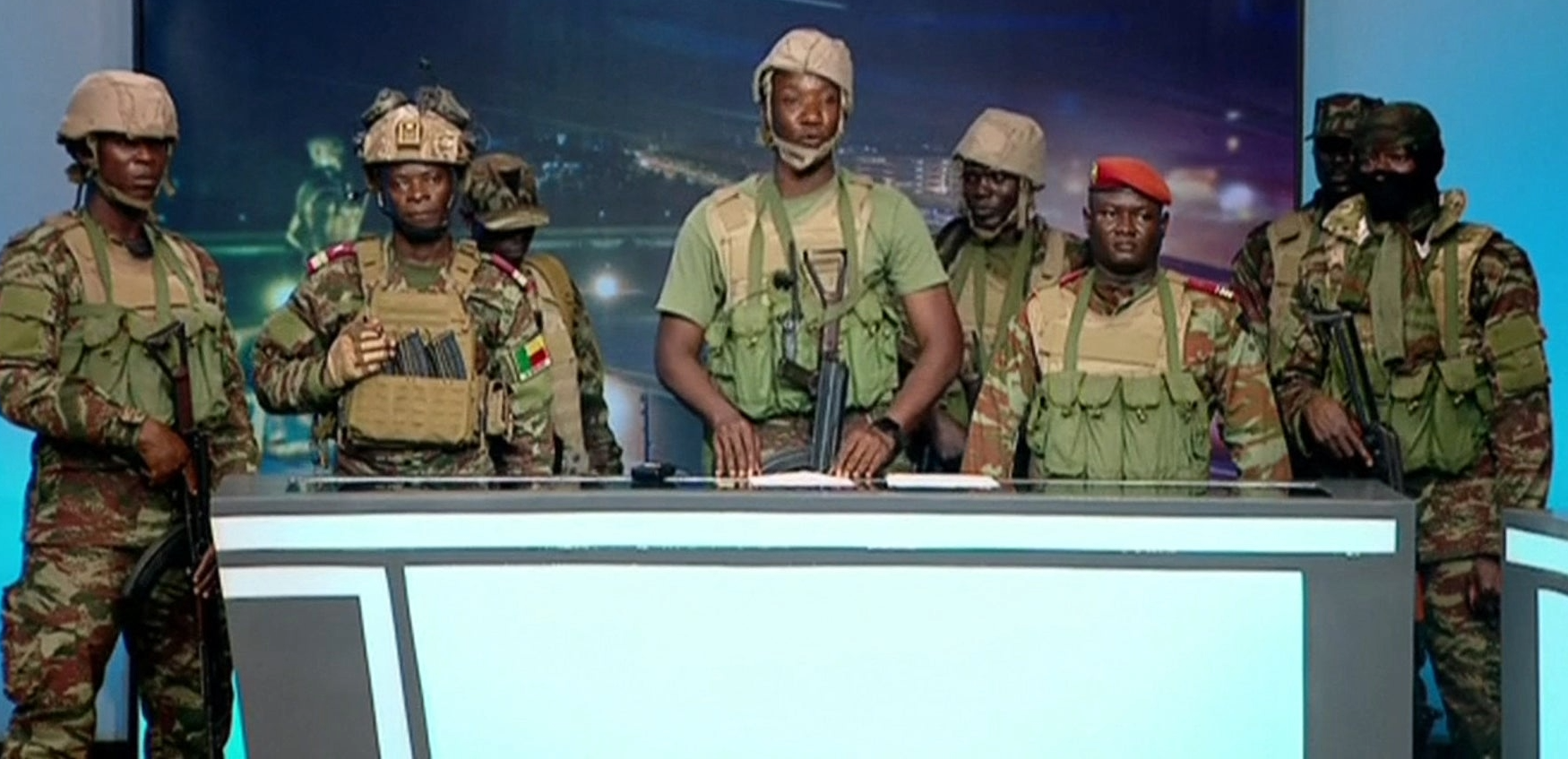
The mutiny began in the early hours of 7th December with simultaneous assaults on strategic sites in Cotonou, including the presidential residence, Camp Guezo and Benin TV. A group of soldiers, identifying themselves as the Military Committee for Refoundation (CMR), appeared live on state television, announcing the suspension of the constitution, the dissolution of state institutions and the appointment of Lieutenant Colonel Pascal Tigri as the de facto head of state. Two high-ranking officers, Chief of Army Staff Abou Issa and Colonel Faizou Gomina, were taken hostage during the operation. Reports confirmed casualties, including the wife of a senior presidential adviser. However, the plotters failed to take full control of key command centres and the television signal was cut shortly after the broadcast. The government, having issued an immediate request for assistance, was reinforced by Nigerian airstrikes and ECOWAS special operations units, who helped restore state control within hours.

Motivations of the Coup Plotters

The CMR’s public justification for the mutiny reflected both institutional grievances and broader political frustrations. In their televised statement, the soldiers cited the deteriorating security situation in northern Benin, the “neglect” of fallen comrades and their families and a perceived pattern of unjust promotions within the military hierarchy. These complaints were coupled with broader civil concerns, such as cutbacks in public healthcare, tax hikes and the exclusion of opposition candidates from the upcoming 2026 elections. The rhetoric suggested a belief that the armed forces had a duty to “restore dignity and justice” in a system they viewed as corrupt and illegitimate. While no clear political ideology was articulated, the framing of the intervention was consistent with recent regional coup narratives portraying the military as a corrective force in failing democracies.

Domestic Factors Enabling the Attempt

A number of domestic conditions created a permissive environment for the attempted coup. State legitimacy has been significantly weakened by years of political repression, judicial manipulation and the erosion of democratic checks and balances. The security and judicial sectors are widely viewed as politicised, with credible allegations of arbitrary arrests and targeted prosecutions against opposition figures. This has translated into deep public distrust, reflected in historically low voter turnouts, as low as 27% in the 2019 legislative elections. Moreover, the 2024 Afrobarometer survey indicated a rising acceptance among West Africans of military interventions in contexts of elite impunity and broken democratic systems. These sentiments, combined with the symbolic power of recent coups in Niger, Burkina Faso and Guinea-Bissau, likely emboldened the plotters to believe that a similar operation in Benin would resonate with parts of the public and gain traction within the armed forces.

Operational Gaps and Strategic Failures by the Coup Plotters

Despite its initial audacity, the coup lacked the operational depth and strategic coherence required for success. No major units or branches of the military joined the rebellion beyond the core CMR group and there was no evidence of popular support in Cotonou or other urban centres. The mutineers failed to secure the presidential palace, major military installations, or key transport infrastructure such as the airport, limiting their ability to control information and logistics. Their control of the national broadcaster was short-lived and the speed of the loyalist counter-operation, bolstered by Nigeria’s rapid deployment of air support and special forces, denied the CMR any chance of consolidation. The plotters also misjudged ECOWAS, assuming the bloc would react passively, as it had in Niger and Mali. Instead, the swift ECOWAS deployment marked a strategic shift in regional response posture, further isolating the mutineers.

Regional and International Dynamics

Regional and international dynamics played a decisive role in shaping both the coup attempt and its outcome. Nigeria’s response, prompted by two urgent requests from Talon’s government, reflected its strategic interest in preventing a contiguous bloc of military-led states along its western border. President Bola Tinubu, as current ECOWAS chair, sought to reassert the bloc’s waning credibility following its failure to intervene in the 2023 Niger crisis. This time, ECOWAS pre-authorised the deployment of standby forces from Nigeria, Ghana, Côte d’Ivoire and Sierra Leone. The African Union, France and the United Nations all issued rapid condemnations and offered intelligence and logistical support. Russia’s stance remains ambiguous, though online pro-coup messaging was observed on pro-Russian networks, consistent with narratives used to undermine Western-aligned governments in the region. The rapid and unified diplomatic response helped constrain any potential international recognition or sanctuary for the mutineers.

Conclusion

The failed coup in Benin has far-reaching implications for internal governance, civil-military relations and regional security architecture. While the Talon administration has reasserted control, the underlying causes of the mutiny, military dissatisfaction, democratic erosion and socio-political exclusion, remain unresolved. Regionally, the ECOWAS intervention marks a turning point in its crisis response doctrine, though the long-term strategic effect of this shift is yet to be determined.

For Benin’s Government and Security Services, the coup attempt has exposed significant discontent within factions of the armed forces, particularly among junior officers deployed in the north. While the rapid suppression may temporarily boost morale among loyalists, it is likely to trigger internal purges, surveillance expansion and increased pressure on perceived dissidents, both within the military and among political opponents, under the pretext of national security. This might raise the risk of overreach and deepen civil-military mistrust.

For Regional Stability, the decisive ECOWAS response re-establishes the precedent for military intervention against unconstitutional changes of government and signals a recalibrated deterrence posture, but it also raises the stakes in politically fragile states such as Togo, Côte d’Ivoire and Senegal, where contested elections or internal dissent could now trigger either pre-emptive authoritarian consolidation or attempts at military arbitration under the guise of restoring order.


Source: CISA ANALYST
Tags: 1st Edition 20262026Jan week2
ShareTweet
Previous Post

A False Dawn: Why Military Rule Is Unlikely To Solve Africa’s Deep-Seated Security And Economic Crisis

Next Post

The African Continental Free Trade Area (Afcfta) And Security In West Africa: Implications For Ghana

Next Post
The African Continental Free Trade Area (Afcfta) And Security In West Africa: Implications For Ghana

The African Continental Free Trade Area (Afcfta) And Security In West Africa: Implications For Ghana

Leave a Reply Cancel reply

Your email address will not be published. Required fields are marked *

  • Trending
  • Comments
  • Latest
Africa's Natural Resources: Who’s After What And What’s The Continent’s Strategy In The Scramble Game?

Africa’s Natural Resources: Who’s After What And What’s The Continent’s Strategy In The Scramble Game?

July 22, 2024
Effects of overpopulation in class on quality of education

Effects of overpopulation in class on quality of education

March 25, 2024
The Growing Influence Of AES On African Countries

The Growing Influence Of AES On African Countries

April 1, 2025
The Concept of Beauty in Africa

The Concept of Beauty in Africa

May 26, 2024
Integration of environmental security into Ghana’s National Security Strategy safeguards the future

Integration of environmental security into Ghana’s National Security Strategy safeguards the future

10
Border Security: A Door Left Wide Open

Border Security: A Door Left Wide Open

3
Polls close in Liberia

Liberia: Once a war-torn country, now Africa’s beacon of democracy – Lessons for Africa

1
Alliance Of Sahel States Formation: Objectives & Implications for ECOWAS

Alliance Of Sahel States Formation: Objectives & Implications for ECOWAS

1
The African Continental Free Trade Area (Afcfta) And Security In West Africa: Implications For Ghana

The African Continental Free Trade Area (Afcfta) And Security In West Africa: Implications For Ghana

January 16, 2026
Analysis of the Recent Failed Coup in Benin

Analysis of the Recent Failed Coup in Benin

January 16, 2026
A False Dawn: Why Military Rule Is Unlikely To Solve Africa’s Deep-Seated Security And Economic Crisis

A False Dawn: Why Military Rule Is Unlikely To Solve Africa’s Deep-Seated Security And Economic Crisis

January 16, 2026
The Palaeolithic Hack: Social Influence and Cognitive Warfare

The Palaeolithic Hack: Social Influence and Cognitive Warfare

January 8, 2026

Popular Stories

  • Africa's Natural Resources: Who’s After What And What’s The Continent’s Strategy In The Scramble Game?

    Africa’s Natural Resources: Who’s After What And What’s The Continent’s Strategy In The Scramble Game?

    0 shares
    Share 0 Tweet 0
  • Effects of overpopulation in class on quality of education

    0 shares
    Share 0 Tweet 0
  • The Growing Influence Of AES On African Countries

    0 shares
    Share 0 Tweet 0
  • The Concept of Beauty in Africa

    0 shares
    Share 0 Tweet 0
  • Slums and Security in Africa: A Growing Threat

    0 shares
    Share 0 Tweet 0

CISA Newsletter

Headlining West African News

Follow Us

Browse by Category

  • ANALYSTS
  • Business
  • ECONOMY
  • EDITORIAL
  • Environment
  • Food
  • Health
  • Lifestyle
  • News
  • Politics
  • Review
  • Science
  • Sports
  • Tech
  • Travel
  • Uncategorized
  • World

Recent News

The African Continental Free Trade Area (Afcfta) And Security In West Africa: Implications For Ghana

The African Continental Free Trade Area (Afcfta) And Security In West Africa: Implications For Ghana

January 16, 2026
Analysis of the Recent Failed Coup in Benin

Analysis of the Recent Failed Coup in Benin

January 16, 2026
  • About
  • Advertise
  • Privacy & Policy
  • Contact

© 2023 CISA Ghana Newsletter - Headlines West Africa.

  • fr Français
  • en English
No Result
View All Result
  • HOME
  • Editions
    • 2025
      • December 2025
      • November 2025
      • October 2025
      • September 2025
      • August 2025
      • July 2025
      • June 2025
      • May 2025
      • April 2025
      • March 2025
      • February 2025
      • January 2025
    • 2024
      • December 2024
      • November 2024
      • October 2024
      • September 2024
      • August 2024
      • July 2024
      • June 2024
      • May 2024
      • April 2024
      • March 2024
      • February 2024
      • January 2024
    • 2023
      • December 2023
  • News
  • Tech
  • Entertainment
  • Lifestyle
  • Review
  • CISA Ghana

© 2023 CISA Ghana Newsletter - Headlines West Africa.

  • English
  • Français (French)