







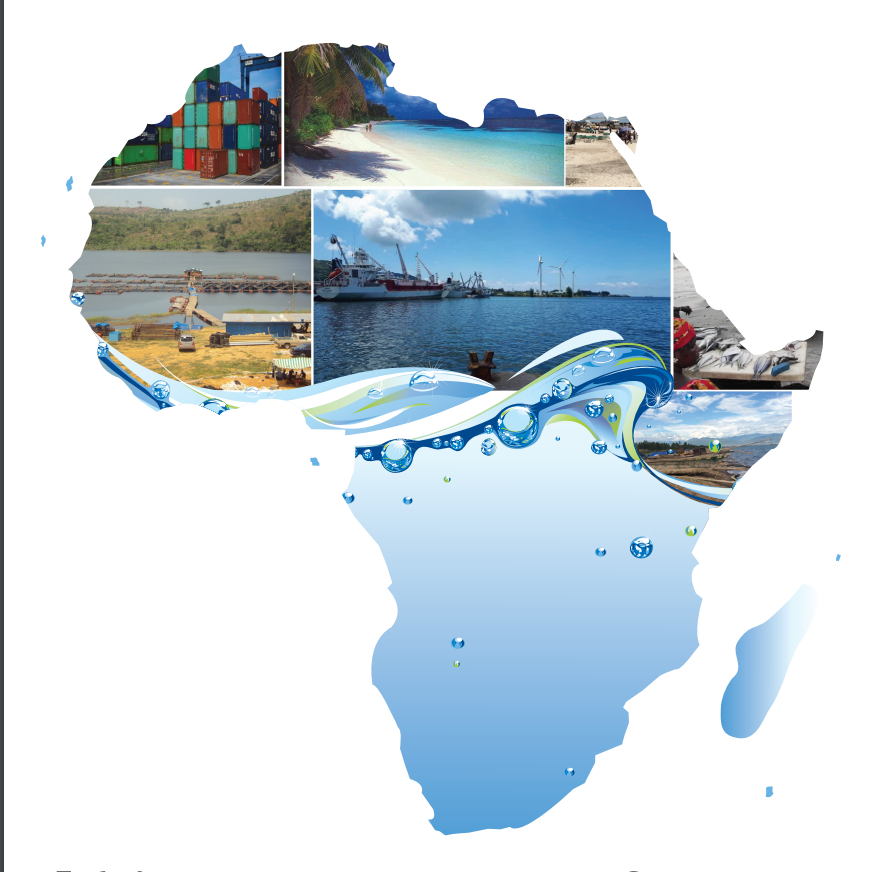
Africa’s resource riches are not only found on land. It has tonnes of riches also in its waterbodies. The continent’s marine zone has long been a vast reservoir of wealth. Its coastlines, thus, birthed some of the world’s best fisherfolk, ranging from fishermen, fishmongers and seafarers. Yet, for centuries, much of Africa’s maritime riches have been extracted not for the benefit of local communities or the state, but for the profit of foreign powers and external firms. This legacy, from colonial-era extraction to contemporary industrial overfishing, carries severe security, economic, and ecological costs.
This pattern of exploitation dates back to the colonial era and continues today under the pressure of industrial fleets and illegal, unreported and unregulated (IUU) fishing. Historically, coastal African communities sustainably harvested fish and marine products for years, drawing on Indigenous Knowledge Systems (IKS) that governed fishing seasons, gear restrictions, and ecological stewardship (Indigenous Knowledge Systems Coastal Records – Ghana and Kenya, n.d.).
Archaeological evidence from the South African coast indicates that humans relied on marine resources as far back as 164,000 years ago (Archaeological Marine Subsistence Studies, n.d.), and communities such as those around Accra in Ghana and the Digo people of Kenya exemplified long-standing marine-dependent livelihoods.
However, colonial rule disrupted these sustainable systems, favouring Western Knowledge Systems (WKS) and reorienting Africa’s marine resources towards export-oriented production (Akyeampong, 2007). European colonial authorities introduced industrial fishing technologies, trawlers and mechanised gear that enabled large-scale extraction for European markets, undermining artisanal fisheries and ecological balance.
One of the most striking examples of colonial extraction is the near depletion of hake stocks in Namibian and South African waters in the mid-20th century. By the 1950s, knowledge of abundant hake stocks attracted large European freezer trawler fleets, causing catches to peak at 1.1 million tonnes in 1972 (International Commission for the Southeast Atlantic Fisheries, 1970s–1980s).
Despite regulatory attempts such as mesh-size controls and international inspections, stocks collapsed due to overexploitation. When South Africa declared its Exclusive Economic Zone (EEZ) in 1977 (South Africa EEZ Declaration, 1977) and Namibia did so in 1990 (Namibia EEZ Declaration, 1990), foreign fleets were expelled, but surveys revealed dangerously low stock levels, demonstrating the long-term ecological damage of earlier foreign exploitation. The benefits of the fishery boom accrued almost entirely to Europe, with Namibia and South Africa gaining no meaningful economic return from decades of extraction.
The post-independence era did not end foreign exploitation; instead, it evolved into new forms. Many African countries attempted to develop industrial fishing sectors, but weak governance, limited monitoring capacity, and foreign investment arrangements enabled continued external control. Foreign industrial fleets—European, Chinese, Russian, South Korean and others—now dominate much of Africa’s marine space. West Africa, in particular, has become one of the world’s most heavily targeted regions for distant-water fishing (DWF) (West African DWF Studies). Studies estimate that IUU fishing represents no less than 37 per cent of all catches in West Africa (Zoppi, 2019), costing the continent up to USD 11 billion annually. In Ghana, for example, foreign industrial vessels reportedly account for up to 60 per cent of total catches (Ghana Fisheries Commission), despite national laws restricting them from artisanal zones, contributing to severe depletion of small pelagic species vital for local food security.
The consequences of this marine exploitation are profound. Coastal communities face declining fish stocks, reduced incomes, and increased poverty. Women fish processors—central to local fish value chains—experience socio-economic displacement as raw fish supplies dwindle due to foreign extraction. Many artisanal fishers in West Africa have reported up to 75 per cent decline in daily catches over the past decade, a trend linked directly to industrial vessels encroaching into inshore zones (African Maritime Governance Assessments). These ecological and economic losses translate into rising food insecurity as fish remains a primary protein source for millions of Africans. Environmental degradation, including habitat destruction and disruption of marine food chains, further threatens long-term sustainability.
Weak governance frameworks exacerbate these challenges. Only 30 per cent of Africa’s maritime boundaries are fully delineated, a colonial legacy that fuels jurisdictional overlaps, weakens enforcement, and creates opportunities for foreign exploitation (African Maritime Governance Assessments). Most coastal states lack adequate Monitoring, Control and Surveillance (MCS) capacity, enabling IUU vessels to operate with impunity, engage in transhipment at sea, exceed quotas, use illegal gear, and violate protected zones. In severe cases, illegal fishing is linked to other maritime crimes including forced labour, smuggling and illicit financial flows (Maritime Crime and IUU Linkages Report), further undermining state authority and maritime security.
This marine exploitation has broader implications for regional stability and security. Resource depletion fuels competition between artisanal and industrial fleets and increases the likelihood of confrontations at sea. Overlapping maritime claims—stemming from historical boundary ambiguities—risk escalating into interstate tensions, particularly where hydrocarbons or valuable fisheries are at stake. As marine resources become scarcer, socio-economic pressures in coastal communities intensify, contributing to migration, youth unemployment and susceptibility to illicit economies (Maritime Crime and IUU Linkages Report).
Amid these challenges, African states are seeking to expand their blue economy as a pillar of sustainable development. The blue economy promotes marine resources for economic growth, jobs and livelihoods while maintaining ecosystem integrity. Evidence from studies on 11 African countries—including Kenya, Namibia, Cameroon, Côte d’Ivoire, and Seychelles—shows that projects with strong community involvement and ecological stewardship outperform purely growth-driven initiatives (Blue Economy Country Studies). However, the success of Africa’s blue economy depends on governance models that prioritise citizens’ interests rather than top-down, growth-at-all-costs strategies. South Africa’s ocean economy initiative, for instance, has been criticised by NGOs and scholars for sidelining social justice and environmental sustainability in pursuit of rapid economic expansion (South Africa Ocean Economy Initiative Review), potentially undermining biodiversity and exacerbating inequality.
The governance gap is equally evident in emerging sectors such as deep seabed mining (DSM). African interest in DSM has grown, driven by the global transition to low-carbon technologies requiring critical minerals such as cobalt, nickel, and rare earths. Yet, Africa lacks coordinated regional governance, research capacity, and geological data—a weakness that risks repeating the extractive patterns seen historically with terrestrial and marine resources (African DSM Governance Review). Without strong regulatory frameworks prioritising environmental sustainability, Africa risks ceding control of seabed resources to external actors just as it did with fisheries during and after the colonial period.
Conclusion
Ultimately, the exploitation of Africa’s marine resources by Western and other foreign interests reflects a broader pattern of resource plunder that has long characterised Africa’s engagement with global economic systems. It has undermined livelihoods, weakened states, degraded ecosystems and heightened insecurity across the sub-region. To break this pattern, Africa must strengthen marine governance, assert regional cooperation, invest in monitoring capabilities, empower coastal communities, and place sustainability at the centre of its blue economy strategies. As Agenda 2063 and the UN Sustainable Development Goals emphasise, natural resources—whether on land or at sea—are catalysts for transformation only when governed with accountability, equity and long-term vision (UN SDGs, 2015; African Union, 2015). Africa’s marine wealth can fuel prosperity, but only if the continent reclaims control from external extractive forces and builds governance systems that safeguard the interests of present and future generations.
References
Akyeampong, E. (2007). African Modes of Production and Colonial Marine Economies.
International Commission for the Southeast Atlantic Fisheries (ICSEAF). (1970s–1980s). Annual Stock Assessments and Catch Statistics for Hake Fisheries in Namibian and South African Waters.
Zoppi, A. (2019). Illegal, Unreported and Unregulated Fishing in West Africa: Scale, Impacts and Policy Gaps.
Archaeological Marine Subsistence Studies (South Africa). (n.d.). Marine Resource Use Dating Back 164,000 Years.
Indigenous Knowledge Systems (IKS) Coastal Records – Ghana and Kenya. (n.d.). Ethnographic and Historical Evidence of Sustainable Marine Harvesting.
Namibia Exclusive Economic Zone (EEZ) Declaration. (1990). Government of Namibia Maritime Policy Archive.
South Africa Exclusive Economic Zone (EEZ) Declaration. (1977). Republic of South Africa Marine Living Resources Legislation.
West African Distant-Water Fishing (DWF) Studies. (n.d.). Targeting Intensity of Foreign Fleets in the Eastern Central Atlantic.
Ghana Fisheries Commission. (n.d.). Impact of Foreign Industrial Trawlers on Small Pelagic Stocks.
African Maritime Governance Assessments. (n.d.). Continental Analysis of Maritime Boundary Delimitation and MCS Capacity.
Maritime Crime and IUU Linkages Report. (n.d.). Forced Labour, Smuggling and Illicit Financial Flows in African Waters.
Blue Economy Country Studies (Kenya, Namibia, Cameroon, Côte d’Ivoire, Seychelles). (n.d.). Community Participation and Ecological Stewardship in Marine Development Projects.
South Africa Ocean Economy Initiative Review. (n.d.). NGO and Academic Critiques of “Operation Phakisa.”
African Deep Seabed Mining (DSM) Governance Review. (n.d.). Risks, Capacity Gaps and Environmental Challenges.
UN Sustainable Development Goals (SDGs). (2015). UN 2030 Agenda for Sustainable Development.
African Union. (2015). Agenda 2063: The Africa We Want.