


• fr Français
  • en English
CISA NEWSLETTER
Advertisement
  • HOME
  • Editions
    • 2025
      • December 2025
      • November 2025
      • October 2025
      • September 2025
      • August 2025
      • July 2025
      • June 2025
      • May 2025
      • April 2025
      • March 2025
      • February 2025
      • January 2025
    • 2024
      • December 2024
      • November 2024
      • October 2024
      • September 2024
      • August 2024
      • July 2024
      • June 2024
      • May 2024
      • April 2024
      • March 2024
      • February 2024
      • January 2024
    • 2023
      • December 2023
  • News
    • All
    • Business
    • Politics
    • Science
    • World
    Okada Operations In Ghana; Economic Necessity Or Security Risk

    Okada Operations In Ghana; Economic Necessity Or Security Risk

    Cedi Appreciation and National Security in Ghana: Currency Stability Amid Persistent Structural Risks

    Cedi Appreciation and National Security in Ghana: Currency Stability Amid Persistent Structural Risks

    The Mirror in the Politician: How Ghanaian Society Breeds the Corruption It Condemns

    The Mirror in the Politician: How Ghanaian Society Breeds the Corruption It Condemns

    Terrorism Financing in The Sahel/West Africa: Mechanisms, Drivers, And Responses

    Terrorism Financing in The Sahel/West Africa: Mechanisms, Drivers, And Responses

    The Silent Threat: Impact of Human and Sex Trafficking on National Security

    The Silent Threat: Impact of Human and Sex Trafficking on National Security

    How JNIM is dominating the terrorism landscape in the Sahel

    How JNIM is dominating the terrorism landscape in the Sahel

    Trending Tags

    • Trump Inauguration
    • United Stated
    • White House
    • Market Stories
    • Election Results
  • Tech
    Securing Africa’s Digital Future: A Call to Action on Cybersecurity.

    Securing Africa’s Digital Future: A Call to Action on Cybersecurity.

    Trending Tags

    • Nintendo Switch
    • CES 2017
    • Playstation 4 Pro
    • Mark Zuckerberg
  • Entertainment
  • Lifestyle
    • All
    • Food
    • Health
    • Travel
    Security Contagion and the Urban Poor: Begging and the Invisible Threat in Accra’s Streets

    Security Contagion and the Urban Poor: Begging and the Invisible Threat in Accra’s Streets

    ECOWAS@50: Ghana as a Stakeholder in West Africa’s Integration Aspiration

    ECOWAS@50: Ghana as a Stakeholder in West Africa’s Integration Aspiration

    The Rise of Substance Abuse Among Ghanaian Youth: A Deep Dive into Music, Media, and Mental Health

    The Rise of Substance Abuse Among Ghanaian Youth: A Deep Dive into Music, Media, and Mental Health

    Impact Of Russia’s War in Ukraine on Africa’s Agriculture and Food Security

    Impact Of Russia’s War in Ukraine on Africa’s Agriculture and Food Security

    Transforming Africa’s Agriculture to Mitigate Food Crisis

    Transforming Africa’s Agriculture to Mitigate Food Crisis

    Framing Food Insecurity as A Security Contagion

    Framing Food Insecurity as A Security Contagion

    Trending Tags

    • Golden Globes
    • Game of Thrones
    • MotoGP 2017
    • eSports
    • Fashion Week
  • Review
    Key Drivers of Voter Choices for Ghana’s 2024 General Elections – A Review

    Key Drivers of Voter Choices for Ghana’s 2024 General Elections – A Review

  • CISA Ghana
No Result
View All Result
  • HOME
  • Editions
    • 2025
      • December 2025
      • November 2025
      • October 2025
      • September 2025
      • August 2025
      • July 2025
      • June 2025
      • May 2025
      • April 2025
      • March 2025
      • February 2025
      • January 2025
    • 2024
      • December 2024
      • November 2024
      • October 2024
      • September 2024
      • August 2024
      • July 2024
      • June 2024
      • May 2024
      • April 2024
      • March 2024
      • February 2024
      • January 2024
    • 2023
      • December 2023
  • News
    • All
    • Business
    • Politics
    • Science
    • World
    Okada Operations In Ghana; Economic Necessity Or Security Risk

    Okada Operations In Ghana; Economic Necessity Or Security Risk

    Cedi Appreciation and National Security in Ghana: Currency Stability Amid Persistent Structural Risks

    Cedi Appreciation and National Security in Ghana: Currency Stability Amid Persistent Structural Risks

    The Mirror in the Politician: How Ghanaian Society Breeds the Corruption It Condemns

    The Mirror in the Politician: How Ghanaian Society Breeds the Corruption It Condemns

    Terrorism Financing in The Sahel/West Africa: Mechanisms, Drivers, And Responses

    Terrorism Financing in The Sahel/West Africa: Mechanisms, Drivers, And Responses

    The Silent Threat: Impact of Human and Sex Trafficking on National Security

    The Silent Threat: Impact of Human and Sex Trafficking on National Security

    How JNIM is dominating the terrorism landscape in the Sahel

    How JNIM is dominating the terrorism landscape in the Sahel

    Trending Tags

    • Trump Inauguration
    • United Stated
    • White House
    • Market Stories
    • Election Results
  • Tech
    Securing Africa’s Digital Future: A Call to Action on Cybersecurity.

    Securing Africa’s Digital Future: A Call to Action on Cybersecurity.

    Trending Tags

    • Nintendo Switch
    • CES 2017
    • Playstation 4 Pro
    • Mark Zuckerberg
  • Entertainment
  • Lifestyle
    • All
    • Food
    • Health
    • Travel
    Security Contagion and the Urban Poor: Begging and the Invisible Threat in Accra’s Streets

    Security Contagion and the Urban Poor: Begging and the Invisible Threat in Accra’s Streets

    ECOWAS@50: Ghana as a Stakeholder in West Africa’s Integration Aspiration

    ECOWAS@50: Ghana as a Stakeholder in West Africa’s Integration Aspiration

    The Rise of Substance Abuse Among Ghanaian Youth: A Deep Dive into Music, Media, and Mental Health

    The Rise of Substance Abuse Among Ghanaian Youth: A Deep Dive into Music, Media, and Mental Health

    Impact Of Russia’s War in Ukraine on Africa’s Agriculture and Food Security

    Impact Of Russia’s War in Ukraine on Africa’s Agriculture and Food Security

    Transforming Africa’s Agriculture to Mitigate Food Crisis

    Transforming Africa’s Agriculture to Mitigate Food Crisis

    Framing Food Insecurity as A Security Contagion

    Framing Food Insecurity as A Security Contagion

    Trending Tags

    • Golden Globes
    • Game of Thrones
    • MotoGP 2017
    • eSports
    • Fashion Week
  • Review
    Key Drivers of Voter Choices for Ghana’s 2024 General Elections – A Review

    Key Drivers of Voter Choices for Ghana’s 2024 General Elections – A Review

  • CISA Ghana
No Result
View All Result
CISA NEWSLETTER
No Result
View All Result
Home ANALYSTS

Accra’s Missing Gutter Covers: A Silent Threat to Pedestrian Safety

Accra’s Missing Gutter Covers: A Silent Threat to Pedestrian Safety
Share on FacebookShare on Twitter

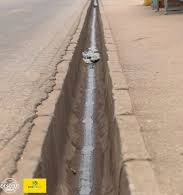
Walking is a fundamental component of sustainable cities, providing not only mobility but also fostering social interaction, health, and environmental well-being. However, Accra is quietly becoming a city where simply walking can cost you your life. Across the major busy roads of the metropolis, for example, from Nkrumah Circle through Awudome Cemetery towards Abossey Okai and from the 37 Military Hospital stretch all the way to the OmniBSIC Head Office, the metal slabs covering roadside gutters have been removed. These slabs are not decorative conveniences; they are vital urban safety infrastructure. They are what separate a pedestrian from a fatal fall into a deep and dangerous drain. Yet today, passerby after passerby walks along edges of concrete trenches, often in darkness, often with fast-moving traffic brushing past them, while the city carries on as though this daily gamble with death is normal.

The danger is not theoretical as these gutters are deep enough to swallow a person whole. In neighbourhoods without functional streetlights, which is increasingly common, a single misstep can mean skull fractures, broken spines, paralysis, or instant death. The tragedy is not only the physical threat; it is the social and institutional silence surrounding it. Everyone can see that the slabs have been removed and everyone knows the “scrap boys” have taken them, piece by piece, sometimes in broad daylight. So the real question becomes: Where are the eyes on the street? Where are the residents, the city officials, the police patrols, the community watch groups, the building managers, the traders, the buses (trotros as they are known in local parlance) and all the witnesses of everyday life? Why does a whole city watch its safety infrastructure disappear and shrug, as though this is the natural order of urban life?

Jane Jacobs in her famous book: The Life and Death of American Cities introduced the idea of “eyes on the street”, the idea that the presence, vigilance, and informal surveillance of everyday people is what makes cities safe. However, in Accra, the idea takes on a painful irony: people’s eyes see what is happening, but the city behaves as if it cannot act. Scrap metal operators know exactly where to strike, and they do so without resistance. Is it because residents have become desensitised to danger? Is it because state institutions have lost the capacity or will to intervene? Or is it because Accra’s urban design simply does not value pedestrians enough to defend the infrastructure that keeps them alive?

This problem is not limited to so-called “low-income” areas where urban neglect is stereotypically expected. Even in affluent neighbourhoods like Cantonments, pedestrian walkways are either nonexistent or designed as an afterthought. Yet these same areas host foreign embassies, luxury apartments, top-tier businesses, and some of the most expensive real estate in the country. If even the country’s wealthiest zip codes cannot guarantee simple pedestrian security, then what hope do other neighbourhoods have? The issue here is structural: Accra’s urban system prioritises vehicles or forms, not people, and it shows in every detail, the absence of continuous sidewalks, the building of overhead bridges that are non-functional, the lack of railings, the haphazard pedestrian crossings, the poorly lit streets, and now, the exposed gutters waiting to claim victims.

The danger multiplies when one considers the intensity of traffic along these routes. Pedestrians already dodge speeding vehicles, negotiate narrow road shoulders and weave between buses loading and offloading passengers. Now, they must do all of this while avoiding what are essentially open graves running along the roadside. During rush hour,  people do not walk, they squeeze, tilt, balance and endure. A moment of distraction, a slight push from the crowd, or a sudden swerve from a trotro trying to park can send someone tumbling directly into the uncovered drain. In the dark stretches from 37 to the bus stops near OmniBSIC, the situation becomes even more precarious. Dim or non-functional streetlights mean that pedestrians rely on the weak glow of passing vehicles for visibility and one blackout, one power fluctuation, or one moment of deeper darkness is all it takes.

There is a deeper urban security question here, one that Ghana rarely confronts. Security is not only about police presence or crime prevention. It is also about ensuring that the city’s physical environment does not endanger its citizens. A city where people can fall to their death while merely walking to work, going to church, returning from the market, or chasing a trotro is a city that has failed in its most basic responsibility: the preservation of life. When infrastructure is so vulnerable that it can be dismantled and sold for scrap overnight, it speaks to a breakdown in urban governance. It reveals a society where public goods are unprotected, where the commons is abandoned and where individual survival takes precedence over collective safety. What makes this crisis even more heartbreaking is the ordinariness of it. Every day, people pass these open gutters with children, with groceries, with school bags, with exhaustion on their faces. Mothers lift toddlers over the gaps; elderly people cling to whatever balance they have left; workers in suits gingerly navigate the edges and all the while, cars zoom past, honking in impatience. This intimacy with danger has become normalised, to the point where we barely pause to question it. But we must because a city that forces its residents to perform tightrope acts just to get home is not a thriving city,  it is a city collapsing in slow motion.

In reality, missing gutter covers intensify a host of public health, environmental, and social challenges. Open drains collect stagnant water, waste, and debris, creating conditions ideal for mosquito breeding and heightening exposure to diseases such as malaria, cholera, typhoid fever, and dysentery. The absence of covers also encourages indiscriminate dumping of plastic waste and household refuse into the drains, leading to frequent blockages and flooding during rains. Beyond these, exposed gutters produce foul odours, attract rats, cockroaches, and flies, and compromise the cleanliness of nearby food-vending areas. Thus, what may initially appear to be an isolated issue of physical safety is in fact a multifaceted urban problem, one that deteriorates environmental quality, endangers public health, and undermines the dignity and comfort of daily life in affected communities.

Improving the safety and livability of Accra demands far more than technical fixes, it requires the city to decide whether pedestrians truly matter and whether urban life should be safe, dignified, and humane. Addressing the dangers associated with open drains and missing gutter covers calls for an integrated set of interventions grounded in clear values, consistent priorities, and accountable governance. Fixing gutter slabs must be elevated from a routine engineering task to a civic commitment, involving coordinated action between local assemblies, security agencies, planning departments, and community members. This includes better regulation of the scrap metal trade to prevent the theft of covers, stronger enforcement of bylaws, and the restoration of streetlights that enhance visibility and safety at night.

To complement these governance reforms, metropolitan, municipal, and district assemblies should prioritise the installation of durable gutter covers across urban communities and commit to routine maintenance to prevent blockages and structural deterioration. Improved waste management, regular collection, recycling initiatives, and strict anti-littering enforcement is essential to curb the indiscriminate dumping that clogs drains. Public health agencies must intensify sanitation campaigns, educating residents about hygiene and the health risks posed by open drains, while planners and engineers redesign drainage networks to accommodate heavier rainfall and integrate green infrastructure. These technical and social interventions should be anchored in participatory governance where citizens have a voice and share responsibility for maintaining clean, safe public spaces.

Ultimately, Accra must treat public space as a human right, not an afterthought. The city deserves better than a quiet descent into preventable danger, and its residents deserve more than navigating the edges of death in their daily movements. What is needed now is leadership that sees what the public sees and acts decisively. The eyes on the street are open, and they are calling for a safer, more dignified, and more humane urban future.

Source: CISA ANALYST
Tags: 1st Edition 20262026Jan week2
ShareTweet
Previous Post

“Security Is Strongest When Communities Are the First Line of Defense”: Countering Violent Extremism in Ghana with Lessons from the Sahel

Next Post

The Blue Plunder: Historical and Contemporary Exploitation of Africa’s Marine Resources

Next Post
The Blue Plunder: Historical and Contemporary Exploitation of Africa’s Marine Resources

The Blue Plunder: Historical and Contemporary Exploitation of Africa’s Marine Resources

Leave a Reply Cancel reply

Your email address will not be published. Required fields are marked *

  • Trending
  • Comments
  • Latest
Africa's Natural Resources: Who’s After What And What’s The Continent’s Strategy In The Scramble Game?

Africa’s Natural Resources: Who’s After What And What’s The Continent’s Strategy In The Scramble Game?

July 22, 2024
Effects of overpopulation in class on quality of education

Effects of overpopulation in class on quality of education

March 25, 2024
The Growing Influence Of AES On African Countries

The Growing Influence Of AES On African Countries

April 1, 2025
The Concept of Beauty in Africa

The Concept of Beauty in Africa

May 26, 2024
Integration of environmental security into Ghana’s National Security Strategy safeguards the future

Integration of environmental security into Ghana’s National Security Strategy safeguards the future

10
Border Security: A Door Left Wide Open

Border Security: A Door Left Wide Open

3
Polls close in Liberia

Liberia: Once a war-torn country, now Africa’s beacon of democracy – Lessons for Africa

1
Alliance Of Sahel States Formation: Objectives & Implications for ECOWAS

Alliance Of Sahel States Formation: Objectives & Implications for ECOWAS

1
The Palaeolithic Hack: Social Influence and Cognitive Warfare

The Palaeolithic Hack: Social Influence and Cognitive Warfare

January 8, 2026
One Coup Too Many—or a Necessary Purge of Colonial Influence in Africa’s Struggle to Re-Invent Its Political Future?

One Coup Too Many—or a Necessary Purge of Colonial Influence in Africa’s Struggle to Re-Invent Its Political Future?

January 8, 2026
The Blue Plunder: Historical and Contemporary Exploitation of Africa’s Marine Resources

The Blue Plunder: Historical and Contemporary Exploitation of Africa’s Marine Resources

January 8, 2026
Accra’s Missing Gutter Covers: A Silent Threat to Pedestrian Safety

Accra’s Missing Gutter Covers: A Silent Threat to Pedestrian Safety

January 8, 2026

Popular Stories

  • Africa's Natural Resources: Who’s After What And What’s The Continent’s Strategy In The Scramble Game?

    Africa’s Natural Resources: Who’s After What And What’s The Continent’s Strategy In The Scramble Game?

    0 shares
    Share 0 Tweet 0
  • Effects of overpopulation in class on quality of education

    0 shares
    Share 0 Tweet 0
  • The Growing Influence Of AES On African Countries

    0 shares
    Share 0 Tweet 0
  • The Concept of Beauty in Africa

    0 shares
    Share 0 Tweet 0
  • Slums and Security in Africa: A Growing Threat

    0 shares
    Share 0 Tweet 0

CISA Newsletter

Headlining West African News

Follow Us

Browse by Category

  • ANALYSTS
  • Business
  • ECONOMY
  • EDITORIAL
  • Environment
  • Food
  • Health
  • Lifestyle
  • News
  • Politics
  • Review
  • Science
  • Sports
  • Tech
  • Travel
  • Uncategorized
  • World

Recent News

The Palaeolithic Hack: Social Influence and Cognitive Warfare

The Palaeolithic Hack: Social Influence and Cognitive Warfare

January 8, 2026
One Coup Too Many—or a Necessary Purge of Colonial Influence in Africa’s Struggle to Re-Invent Its Political Future?

One Coup Too Many—or a Necessary Purge of Colonial Influence in Africa’s Struggle to Re-Invent Its Political Future?

January 8, 2026
  • About
  • Advertise
  • Privacy & Policy
  • Contact

© 2023 CISA Ghana Newsletter - Headlines West Africa.

  • fr Français
  • en English
No Result
View All Result
  • HOME
  • Editions
    • 2025
      • December 2025
      • November 2025
      • October 2025
      • September 2025
      • August 2025
      • July 2025
      • June 2025
      • May 2025
      • April 2025
      • March 2025
      • February 2025
      • January 2025
    • 2024
      • December 2024
      • November 2024
      • October 2024
      • September 2024
      • August 2024
      • July 2024
      • June 2024
      • May 2024
      • April 2024
      • March 2024
      • February 2024
      • January 2024
    • 2023
      • December 2023
  • News
  • Tech
  • Entertainment
  • Lifestyle
  • Review
  • CISA Ghana

© 2023 CISA Ghana Newsletter - Headlines West Africa.

  • English
  • Français (French)