





As 2025 comes to an end, analysts at the Centre for Intelligence and Security Analysis (CISA) are raising critical questions about the trajectory of democratic governance across Africa. Elections, once symbols of political maturity, are increasingly marred by irregularities. Coups and attempted coups have resurfaced in regions once considered stable. Social tensions, magnified by misinformation, economic hardship, and widespread disillusionment are forcing policymakers to confront a difficult truth: the democratic gains celebrated in the early 2000s are under threat. These concerns extend beyond continental hotspots like the Sahel; they reverberate within more stable democratic enclaves such as Ghana, where digital misinformation and political polarisation are beginning to strain long-standing institutional resilience. This article examines the core question emerging from these debates: Is democracy failing in Africa, or are we witnessing a painful but necessary evolution in democratic practice? By focusing on the broader continental landscape, the write-up seeks to understand the historical roots of Africa’s democratic systems, the pressures currently reshaping them, and the forces particularly youth-driven digital activism that are generating new forms of political engagement.
The purpose of this article is therefore threefold. First, it defines democracy within its historical and philosophical origins, situating the African experience within a global tradition that stretches back to ancient political thought. Second, it offers a layered analysis of democracy in Africa from independence, through the liberalisation reforms of the 1990s and 2000s, to the turbulence of the 2020s marked by coups, contested elections, constitutional manipulations, and digital mobilizations. Third, it assesses the state of democracy in Ghana as both a symbol of resilience and as a nation grappling with new vulnerabilities such as misinformation, youth dissatisfaction, and digital political warfare.
Democracy in Africa: Key Features
Democracy is derived from two Greek words, “demos” meaning the people and “Kratos” meaning power. When the two words are put together, it literally means “power to the people.” Abraham Lincoln, the 16th president of the United States of America defined it as a system of government, for the people and by the people (Grover, 2020). Often celebrated by the West as humanity’s most legitimate form of governance, its origin in ancient Athens established the ideal that citizens, not monarchs or militaries should determine political authority (Fukuyama, 1989; Pritchard, 2015). Over time, democracy evolved from a direct civic process into modern systems of representative governance anchored in elections, constitutionalism, rule of law, separation of powers and checks on executive power. However, it is worthy to note that African democracies are shaped by a distinct political, cultural and historical context that differentiates them from Western liberal models (Edor, 2023; Fatton, 1990). While most African states operate under constitutional democracies like holding periodic elections, guaranteeing rights and establishing checks and balances, the day-to-day reality often reveals hybrid tendencies. A defining feature of African democracy is electoralism, where the holding of elections becomes the main yardstick of democratic legitimacy, even when underlying institutions remain weak (Mbaku, 2024; Teshome, 2008). Political parties frequently revolve around ethnic loyalty, patronage networks or strongmen rather than ideology which produces competitive elections, but rarely deep accountability (Agboga, 2024; Carlson, 2015)
Another core feature is the persistent tension between customary authority and modern state institutions. In many countries, chiefs, traditional councils, and religious leaders still influence political behavior, mobilisation, and dispute resolution. While this can enhance participation, it also complicates the uniform operation of democratic norms. Additionally, Africa’s democratic systems are shaped by economic constraints: high youth unemployment, slow economic diversification and heavy reliance on external financing often weaken state capacity. As a result, institutions struggle to deliver the promised dividends of democracy, leaving citizens disillusioned. Despite this, African civil society remains vibrant, demonstrated through activism, media engagement, and social movements that consistently demand transparency and justice.
Democracy in Africa from Independence to the 2010s
After independence, many African countries adopted constitutional democratic frameworks, but the early decades were marked by one-party rule, military takeovers and personalist regimes (Sharma, 1971). The burden of colonial borders, Cold War alliances and fragile economies meant states prioritised consolidation over political pluralism (Badmus, 2006; Bai, 2025). For instance, leaders like Kwame Nkrumah of Ghana, Julius Nyerere of Tanzania and Sekou Touré of Guinea championed nation-building but often suppressed opposition in the name of unity. By the 1970s and 1980s, military coups became a common mechanism for transferring power, as armies positioned themselves as defenders of national stability when civilian administrations faltered.
The 1990s ushered in a new wave of democratisation driven by internal resistance and external pressures. Structural adjustment programs, economic crises and global demands for political reform forced African states to reintroduce multiparty systems and competitive elections. Civil society groups, student movements, and independent media played a decisive role in challenging authoritarian rule. By the 2010s, most African countries had held several rounds of elections and began institutional reforms, including stronger parliaments, judicial independence and electoral commissions (Omotola, 2010; Rakner & Svåsand, 2002). Yet, the gains remained uneven. Some states consolidated democratic practices, while others leaned toward “authoritarian drift”, maintaining democratic rituals while undermining their substance through constitutional manipulation, militarisation and political patronage.
The Rise of Coups and Attempted Coups: A New Democratic Crisis
The 2020s have been a defining decade for the trajectory of African democracy. While digital connectivity has amplified citizens’ voices and enabled unprecedented transparency, the period has also exposed the fragility of democratic institutions. COVID-19 provided governments the justification to expand executive powers, postpone elections, or silence dissent. In several African countries, the shrinking of civic space intensified as journalists faced arrests, activists confronted intimidation and opposition leaders were monitored or excluded through legal technicalities (Allen & Kelly, 2022). Meanwhile, democratic legitimacy increasingly hinges on performance, not just elections. African youth, now the largest demographic group, demand jobs, fairness and dignity as a result when governments fail to address economic hardships, corruption, insecurity and social inequality, they quickly lose credibility, regardless of electoral victories. Consequently, many citizens now feel democracy has not delivered on its promises. The combination of democratic fatigue, governance failures and disillusionment with foreign partners has created fertile ground for anti-democratic sentiments, as segments of the population perceive authoritarian alternatives or military interventions as corrective measures rather than illegitimate seizures of power.
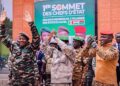
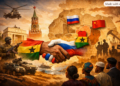
These factors have made the Sahel the epicenter of Africa’s democratic reversals. Countries such as Mali, Burkina Faso and Niger have experienced successful coups or transitions dominated by military juntas. The rise of coups in the region cannot be understood without examining the convergence of internal fragilities and external pressures. Worsening insecurity driven by jihadist insurgencies, banditry, and intercommunal conflict exposed the failures of civilian governments who struggled to reclaim territories or protect citizens. As violence escalated and states lost control, militaries began to justify interventions as necessary acts to “save the nation.” Compounding this were economic hardships, youth unemployment, and public frustration over corruption. Many Sahelians viewed civilian elites as distant, elitist, and unresponsive to local suffering. When juntas seized power, large segments of the population openly welcomed them, believing the military could restore order where politicians had failed. Geopolitics further intensified the trend. Friction between Sahelian governments and traditional partners particularly France and ECOWAS created space for new alliances with actors like Russia, often framed as symbols of sovereignty and resistance against perceived neocolonial influence. However, the return of military rule in the Sahel carries long-term risks. It destabilises regional cooperation, disrupts constitutional continuity, and weakens commitments to human rights. While the juntas claim to be transitional governments, many have postponed elections, restricted press freedoms, and consolidated power. The resurgence of coups therefore reflects not only institutional fragility but also a deeper crisis of democratic legitimacy across the region.
Elsewhere, attempted power grabs are becoming more frequent. On 7 December 2025, Benin experienced a dramatic attempted coup when soldiers led by Lieutenant Colonel Pascal Tigri declared on national television that President Patrice Talon had been overthrown, following an assault on his residence in Cotonou. While the attempt ultimately failed, its symbolism was unmistakable: even countries once considered stable are now vulnerable. Elections themselves are becoming sources of crisis. Across Africa, we see a rise in unfair electoral practices, including wrongful disqualification of political challengers, pre-election intimidation, and targeted arrests. Tanzania’s banned nationwide post-election protests framed by the government as an “attempted coup” show how states increasingly weaponise security rhetoric to suppress dissent. Additionally, constitutional revisions designed to extend presidential terms as seen in Côte d’Ivoire, Guinea (pre-coup), Rwanda, Uganda, Republic of Congo, and Togo have weakened the fundamental democratic principle of alternation of power. Democracy in many regions is becoming electoral in form, authoritarian in practice.
Ghana is still regarded as a stable democracy, one of the continent’s strongest. However its democratic health is far from guaranteed. The country mirrors many of the contradictions facing African democracies today: rising disinformation, polarised media, declining trust in institutions, and growing frustration among young people. Digital misinformation during the 2024 general elections, political vigilantism, patronage networks, weakening transparency and increased difficulty in distinguishing truth from propaganda all undermine democratic participation. Institutions work, but often slowly; civic freedoms exist, but economic hardship breeds disillusionment; public debate flourishes, yet trust in leadership is eroding. We do not see Ghana’s democracy collapsing anytime soon, but it is certainly under pressure. These pressures echo across Africa, making the nation a microcosm of a continent wrestling with both the promise and fragility of democratic governance.
The pathways of democracy in Africa reveals a complex and uneven journey marked by aspirations, contradictions and recurring cycles of progress and regression. As 2025 ends, the continent stands at a critical juncture where widespread disillusionment with democratic governance converges with rising insecurity, economic hardship, and shifting geopolitical alliances. While elections remain a central ritual of political life, they have not always translated into genuine accountability or improved living conditions. The inability of many postcolonial states to effectively manage diversity, deliver public services, or provide economic opportunities has weakened citizens’ trust in democratic institutions and created fertile ground for anti-democratic sentiments.
The resurgence of coups and attempted coups in the Sahel is not an isolated phenomenon but a symptom of deeper structural failures. Civilian governments have struggled to respond to escalating jihadist violence, climate-induced pressures, banditry, and intercommunal tensions, conditions that expose governance deficits and state fragility. In these contexts, militaries have presented themselves as corrective forces, capitalising on widespread frustration with political elites. Public support for juntas in some Sahelian states reflects not a rejection of democracy itself but a disillusionment with its unfulfilled promises. This signals a dangerous redefinition of political legitimacy, where performance in security provision can overshadow constitutional norms. Yet, democracy in Africa is not collapsing. It is being contested, renegotiated, and reshaped by new actors: youth movements, civil society networks, journalists, women’s groups, and digital communities who continue to demand transparency, fairness, and dignity. These actors are central to the continent’s democratic resilience, even when state institutions falter. Moving forward, the survival and revitalisation of African democracies will depend on the willingness of states to invest in inclusive governance, strengthen institutions and address the socio-economic realities that fuel public frustration.
The question is not whether democracy is failing in Africa, but whether African democracies can evolve to meet the complex challenges of the 21st century. The future of the continent’s political landscape will be shaped less by the persistence of coups and more by the capacity of states to rebuild trust, deliver justice and create systems that reflect the aspirations of their people. The current moment marked by turbulence and transition offers both a cautionary tale and an opportunity for reimagining the meaning and practice of democracy in Africa.
Coups in Africa have re-emerged largely because of a mix of weak governance, economic hardship, insecurity, corruption, and declining public trust in democratic institutions. For countries like Ghana—which has remained stable despite regional instability—preventing coups requires strengthening both state institutions and public confidence. Additionally, efforts need to be made to engage the youth and ensure inclusion of all citizens in governance.
Reference
Agboga, V. (2024). Testing political loyalties in Nigeria: what factors influence support for party switchers? The Round Table, 113(2), 117–130. https://doi.org/10.1080/00358533.2024.2333199
Badmus, I. A. (2006). What Went Wrong with Africa? On the Etiology of Sustaining Disarticulation of the African Nation-States. Verfassung Und Recht in Übersee / Law and Politics in Africa, Asia and Latin America, 39(3), 270–291. http://www.jstor.org/stable/43239331
Bai, Y. (2025). The Cold War: Origins,causes, and global impacts. Advances in Humanities Research, 12(6), 25-41. https://doi.org/10.54254/2753-7080/2025.26572
Carlson, E. (2015). Ethnic Voting and Accountability in Africa: A Choice Experiment in Uganda. World Politics, 67(2), 353-385. https://doi.org/10.1017/s0043887115000015
Edor, M. (2024). Navigating Democracy: Perspectives on Western-Style Democracy in Africa. https://doi.org/10.30707/etd2024.20240618063948814138.999974
Fatton, R. (1990). Liberal Democracy in Africa. Political Science Quarterly, 105(3), 455–473. https://doi.org/10.2307/2150827
Fukuyama, F. (1989). The End of History? The National Interest, 16, 3–18. http://www.jstor.org/stable/24027184
Grover H. S. (2020). “…Of the people, by the people, for the people”. Journal of Indian Society of Periodontology, 24(3), 190. https://doi.org/10.4103/jisp.jisp_149_20
Mbaku, J. M. (2024). Elections and the state of democracy in Africa | Brookings. www.brookings.edu. December 9, 2025. https://www.brookings.edu/articles/elections-and-the-state-of-democracy-in-africa/
Omotola, J. S. (2010). Elections And Democratic Transition In Nigeria Under The Fourth Republic. African Affairs, 109(437), 535–553. Http://Www.Jstor.Org/Stable/40928362
Pritchard, D. M. (2015). Democracy And War In Ancient Athens And Today. Greece & Rome, 62(2), 140–154. Http://Www.Jstor.Org/Stable/26333675
Rakner , L., & Svåsand, L. (2002). Multiparty elections in Africa’s new democracies. Bergen, Norway: Chr. Michelsen Institute Development Studies and Human Rights.
Sharma, B. S. (1971). The Military And Politics In Africa. The Indian Journal Of Political Science, 32(4), 536–550. Http://Www.Jstor.Org/Stable/41854472
Teshome B., W. (2008). Democracy and elections in Africa: Critical analysis.International Journal of Human [Online]. 5:2. Available: http://www.insanbilimleri.comSciences