








Introduction
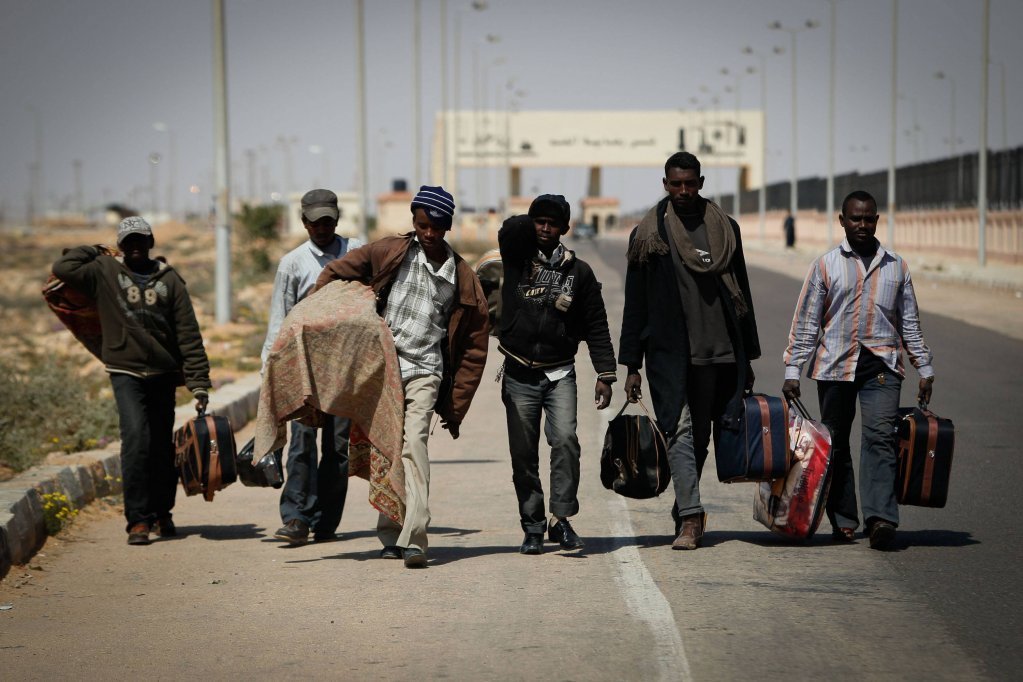
Migration has always been a defining feature of Ghana’s history, driven by regional mobility under the Economic Community of West African States (ECOWAS) protocols and international aspirations. However, the rise of unauthorised migration, the movement of people across borders outside the regulatory norms of the country, presents distinct challenges that directly impinge upon Ghana’s national security and long-term socio-economic stability.
Ghana’s porous borders, shared with Togo, Burkina Faso, and Côte d’Ivoire, combined with its political stability and robust economy (relative to its neighbours), make it both a transit and a destination country for irregular migrants (IOM, 2019). While the benefits of formal migration, particularly remittances, are significant (remittances totalled $3.54 billion in 2017), the unregulated nature of unauthorised flows creates vulnerabilities that policymakers must urgently address (IOM, 2019). This article explores the specific threats posed by irregular cross-border movement and examines the resultant effects on national security and its strain on public services and economic sectors.
National Security Implications
Unauthorised migration fundamentally challenges border security and contributes to the proliferation of transnational threats, thereby compromising Ghana’s internal stability.
1. Border Security and Transnational Crime
The reliance of irregular migrants on unapproved routes allows for the uncontrolled flow of individuals, goods, and resources. Studies have shown that immigrants who lack proper travel documents often resort to unapproved routes to avoid officials perceived as being prone to extortion, despite the associated risks (Bruni et al., 2017, cited in PMC, 2021).This vulnerability is exploited by organized criminal networks:
- Smuggling and Trafficking: Porous borders facilitate the smuggling of migrants and the trafficking of foreign nationals for forced labour and sexual exploitation, particularly involving vulnerable women and children (IOM, 2016).
- Contraband and Arms: Unmanned border posts become conduits for the movement of contraband goods, illicit arms, and narcotics. This destabilises border communities and fuels local criminal activity.
- Transnational Security: A major security concern is the potential for individuals engaged in terrorism or other transnational crimes to enter the country undetected. Ghana’s strategic position in West Africa, coupled with increasing regional instability, particularly in the Sahel, elevates the risk that porous borders may be exploited by non-state actors (KAIPTC, 2011).
2. The Galamsey Crisis and Foreign Nationals
The most palpable security and environmental threat linked to unauthorised migration in Ghana is found in the illegal small-scale mining sector (galamsey).
- Foreign Dominance and State Weakness: Foreign nationals, notably Chinese private agencies and other neighbouring countries, have historically been attracted to the galamsey sector due to a combination of weak state enforcement and the profitability of gold mining, despite laws prohibiting foreign involvement in small-scale mining (ResearchGate, 2020).
- Security Threats: These operations often involve heavily armed security personnel, leading to violent clashes with local communities, government task forces, and legitimate mining concession holders. The presence of unauthorised foreign actors, equipped with machinery and financing, creates a parallel, unregulated economy that challenges the state’s monopoly on the use of force and control over mineral resources. The widespread environmental devastation, including the pollution of water bodies and the destruction of forests, constitutes a major national security threat to Ghana’s long-term sustainability.
Socio-Economic Implications
The impact of unauthorised migration extends to Ghana’s core social and economic infrastructure, creating a burden on public services, the labour market, and urban development.
1. Strain on Public Services and Infrastructure
Irregular migrants, often lacking access to formal residency and employment, tend to concentrate in major urban centres, which strains existing services:
- Housing and Sanitation: Migrants frequently settle in informal settlements near markets or job centres due to lower affordability, leading to overcrowded conditions and pressure on limited water and sanitation facilities. Women migrants, in particular, may spend a significant portion of their irregular income on securing just a floor space to sleep, which is a daily occurrence at the Dr Kwame Nkrumah Circle and Makola, Ghana’s largest market. (PMC, 2017).
- Healthcare Vulnerability: Unauthorised status often precludes migrants from accessing formal healthcare services, making them vulnerable to illness and posing a risk to public health, especially regarding contagious diseases (Journal of Geography, 2014). The lack of data on these populations makes public health planning, particularly during crises like disease epidemics, significantly more challenging.
2. Labour Market and Unfair Competition
Unauthorised migrants predominantly seek employment in the informal sector, for example, itinerant trade, petty commerce, or low-skilled labour creates complexities in the labour market. Typical examples are the Nigerians, Togolese, and Malians, who invade the market space with several products, creating tough competition for their Ghanaian counterparts.
- Wage Depression: Willingness to work for lower wages in the informal economy can suppress the income of Ghanaian workers in similar sectors.
- Non-compliance: Operating outside the legal framework means these workers do not contribute to social security schemes (like SSNIT) or income tax, resulting in a loss of revenue for the state.
- ECOWAS Protocol Challenges: While the ECOWASProtocol on Free Movement of Persons allows for visa-free movement, it does not guarantee automatic employment rights, residency, or protection for non-skilled workers, leading many to irregular situations where they are vulnerable to exploitation.
Policy and Countermeasures in Ghana
Ghana has shown commitment to managing migration, particularly through the establishment of a comprehensive framework.
1. Institutional and Policy Framework
- National Migration Policy (2016): Ghana launched its National Migration Policy to promote the benefits of migration while mitigating its costs. This policy aims to address complex challenges, including irregular migration, human trafficking, and border management (IOM, 2016).
- Ghana Immigration Service (GIS): The GIS is the frontline agency responsible for border control, but it faces perennial challenges related to lack of modern border infrastructure and facilities, and capacity building (KAIPTC, 2011).
- Integrated Approach: Projects like the Ghana Integrated Migration Management Approach (GIMMA), supported by the European Union and IOM, have been essential in building the capacity of law enforcement and providing information outreach on safe and legal migration paths (IOM, 2016).
2. Addressing the Root Causes
The issue of unauthorised migration is often driven by internal pressures as much as external ones. Poverty, lack of economic opportunities, and the allure of perceived opportunities elsewhere, which are often reinforced by misleading information are significant drivers (ResearchGate, 2019).
- Development Linkage: Addressing irregular migration requires integrating migration management into national development planning. This means focusing on job creation, especially for the youth, and improving economic conditions in migrant-sending areas.
- Information Campaigns: While the government engages in campaigns to deter irregular migration, research suggests that simply disseminating negative risk information is insufficient, as prospective migrants often discount the risks when faced with strong socio-economic pressures and compelling success stories from peers (ResearchGate, 2019). A more nuanced approach that addresses the underlying economic and cultural factors driving the decision to migrate is necessary.
Conclusion and Future Outlook
Unauthorised migration presents a multifaceted and persistent threat to Ghana. It is not merely a border control issue but a deep-seated challenge intertwined with national security, environmental sustainability, and socio-economic equity. The specific case of foreign involvement in galamsey highlights the direct security threat posed by uncontrolled entry, while the strain on urban services demonstrates the socio-economic burden.
Ghana’s framework, including the National Migration Policy, provides a strong foundation. However, to effectively mitigate the threats, the state must transition from a reactive posture to a proactive strategy that involves greater investment in border technology, enhanced capacity building for the GIS, and strict enforcement of mining regulations. Crucially, sustained internal development that creates viable economic opportunities remains the most potent long-term countermeasure against the drivers of unauthorised migration.
References
- International Organisation for Migration (IOM). (2019). Migration in Ghana: A Country Profile 2019. IOM Publications.
- International Organisation for Migration (IOM). (2016). Ghana Launches National Migration Policy.7 IOM Ghana.
- KAIPTC. (2011). Border Security in Ghana: Challenges and Prospects. Kofi Annan International Peacekeeping Training Centre (KAIPTC).
- Nyame, F. K., & N. (2020). Golden Migrants: The Rise and Impact of Illegal Chinese Small‐Scale Mining in Ghana. ResearchGate.
- PMC. (2017). Migration, Health, and Gender and Its Effects on Housing Security of Ghanaian Women. PMC – PubMed Central.
- PMC. (2021). Cross-Border Migration of Itinerant Immigrant Retailers in Ghana. PMC – PubMed Central.
- ResearchGate. (2019). The perception of risk among unauthorized migrants in Ghana. ResearchGate.
- Tanle, A. (2014). Exploring health implications associated with irregular migration from Ghana to Libya and beyond. Ghana Journal of Geography, 6(2), 64–84.