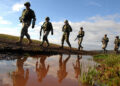









Modern defence requires more than just high-tech equipment; it demands rigorous testing of people, processes, and policies against future threats. This means moving beyond simple drills and adopting comprehensive Combat Simulation Exercises (CSE). CSE is an essential strategic tool that allows nations to stress-test their security resilience against complex, unconventional adversaries, from sophisticated cybercriminals to expanding jihadist networks.
I. What is Combat Simulation Exercise?
A combat simulation exercise is a military training activity designed to replicate combat scenarios in a controlled environment. These exercises can vary in complexity and purpose, but they generally aim to enhance the readiness and effectiveness of military personnel by providing realistic training experiences without the risks associated with live combat.
II. The Three Dimensions of Combat Simulation Exercise
Simulations are classified by how much of the “real world” they incorporate, using the standard military framework known as Live, Virtual, and Constructive (LVC) 1:
| Category | Definition | Purpose/Example |
| Live Simulation | Real people operating real systems and equipment. | Standard field exercises, where troops use their actual weapons platforms and gear to validate physical security responses and tactics. |
| Virtual Simulation | Real people operating simulated systems. | Flight simulators, or command staff exercises where leaders respond to simulated intelligence streams and alerts inside a network. |
| Constructive Simulation | Simulated people operating simulated systems (computer models). | Large-scale, high-level analysis used for modelling logistical challenges, calculating casualty rates, or simulating wide-ranging geopolitical and economic interactions. |
The ability to combine these three elements (LVC integration) is crucial for replicating the complexity of modern multi-domain conflict.
III. Advantages
- Countering Hybrid and Unconventional Threats:
Simulation is essential not only for preparing against conventional military forces but also for developing flexible responses to Irregular Warfare (IW)—which includes terrorism, insurgency, and cyber conflict.
- Stress-Testing Against Terrorism and Guerrillas:
Conventional defence systems struggle against threats that use asymmetric strategies—relying on non-military tools and avoiding direct, symmetric combat.4 Simulation helps forces prepare specifically for small tactical units, unconventional warfare forces, and guerrilla-style attacks.
- Thinking Like the Enemy (Non-State Actors):
Simulations compel decision-makers to adopt the adversary’s perspective, a critical skill known as perspective-taking.By modelling the constraints, incentives, and operational strategies of terrorist or insurgent groups, security officers can uncover their own blind spots before they lead to real-world consequences.
IV. Core Limitations of Simulation
Despite its utility, simulation must contend with several practical and human constraints:
- Fidelity vs. Cost:
Achieving total realism (high fidelity) is often expensive and can result in overly complex models that are difficult to manage and prone to failure.
- The Complexity Pitfall:
When models attempt to incorporate too many real-world variables, they can become overly complex, risking methodological failure and making it extremely difficult to interpret the results.
- Organizational Friction:
Even with common standards, differences in national resources, institutional culture, and incompatible communication technology can impede effective coordination during large-scale multinational exercises.
- The Acceptance Barrier:
Even accurate simulation results can be rejected by high-level political decision-makers if the model is too complex or if the findings are politically undesirable. Success requires transparent modelling and involving stakeholders from the very start.
V. Recommendations to Coastal West Africa Nations
Coastal West African countries face an urgent security challenge as Sahelian jihadist groups, like those linked to al Qaeda (JNIM) and Islamic State, escalate their expansionist tactics.16 Thus the following recommendations should be looked into:
- Policy Recommendation 1: Deepen Joint Inter-Agency Operational Exercises
Simulation programs although held, must be deepened to strengthen interoperability and collaborative synergy by requiring joint exercises and training involving the military, law enforcement, and intelligence agencies.This addresses the failure of organisations operating in silosby translating national policy into operational practice and ensuring seamless data sharing and communication, which is crucial for achieving effective situational awareness and counterterrorism success.
- Policy Recommendation 2: Prioritise Cognitive Fidelity in Adversary Modelling
To maximise realism and gain deeper strategic foresight, wargames and virtual simulations must prioritise cognitive fidelity in modelling the adversary’s decision making. This is best achieved by requiring the use of subject matter experts, such as intelligence operatives or analysts with up-to-date profiles of non-state actors, to play the role of the opposing force. This ensures the simulation accurately reflects the adversary’s competitive mindset and strategic goal to “win,” providing the most accurate assessment of how policy choices will influence the real-world operational response of terrorist groups. Here is where intelligence specialised institutions like CISA could be brought into the fold, given the breadth of expertise it houses.
VI. Conclusion
The escalating threat of Sahelian jihadism demands that Coastal West African nations urgently adopt Combat Simulation Exercises (CSE)—integrating Live, Virtual, and Constructive (LVC) components—as a fundamental strategic tool. While challenges like cost, complexity and organisational friction exist, the imperative to stress-test security forces against the asymmetric, hybrid tactics of groups like JNIM and Islamic State is far greater. By mandating deeper joint inter-agency exercises and prioritising cognitive fidelity in adversary modelling, these nations can move beyond reactive defence, ensure true interoperability, and transform their security architecture to become genuinely resilient and prepared to pre-empt and prevail against the forces threatening the region’s stability.
References
U.S. Department of Defense. (n.d.). Live, Virtual and Constructive (LVC) Categories. 1
Virtual Reality Applications Center (VRAC). (n.d.). LVC. Iowa State University. 2
Defense Security Cooperation Agency. (n.d.). The Essential Role of Policy, Doctrine, and Education in Irregular Warfare. Irregular Warfare Center. 3
BERNARD, M. L. (2020). Using Computational Geopolitical/Sociocultural Modelling to Assess Response Options to Information-Related Hybrid Threats. Sandia National Laboratories.4
Caudill, S. W., Packard, A. M., & Tembreull, R. M. (2014). Defending the Joint Force: Lessons Learned from Joint Base Balad. Air University Press. 5
Ojewale, O. (2023). Mali’s capital under threat from al Qaeda-linked insurgents [Video]. FRANCE 24 English. 6
Schanzer, D., Gartenstein-Ross, D., Sperling, J., Lee, V., Johanson, E., & Ross, E. (2025). Assessing the Benefits of Simulations and War Games for Homeland Security Enterprise Workforce Development. National Counterterrorism Innovation, Technology, and Education (NCITE) Centre. Omaha. 7
Boese, G. (2013). “Evaluating Simulated Military Training Exercises”. University of New Mexico. 8
JASS. (2012). Typical Pitfalls of Simulation Modeling – Lessons Learned from Armed Forces and Business. Journal of Artificial Societies and Social Simulation, 15(2). 9
UpGuard (2025) Human Factors in Cybersecurity in 2025.10