








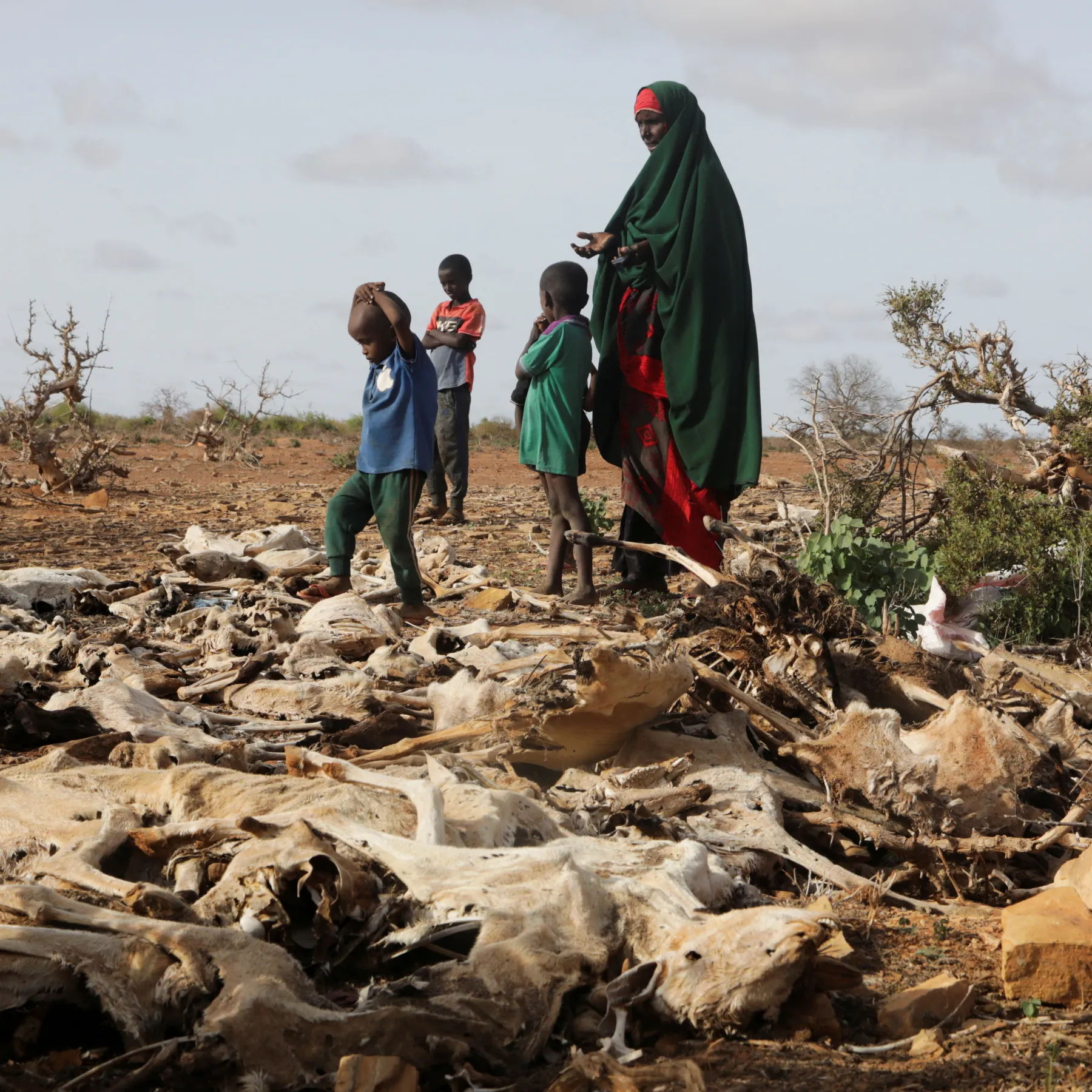
Across sub-Saharan Africa, the rhythm of rainfall has long shaped how people live, grow food, herd animals, and share space. Communities have developed finely tuned knowledge systems that track the onset of rains, anticipate dry spells, and coordinate planting and migration accordingly. Yet climate change is now unsettling these deeply rooted patterns. Even where total annual rainfall remains steady, the timing, intensity, and concentration of rainfall are shifting, creating new uncertainty and placing unprecedented pressure on livelihoods and social stability.
Recent analysis shows that roughly 60 per cent of regions with a single rainy season and 83 per cent of those with two rainy seasons have experienced shorter wet seasons, even when yearly precipitation remains unchanged (IEP, 2025). This intensification of seasonal extremes, sometimes described as amplified rainfall seasonality, is not fully captured by traditional measures of rainfall variability. While variability refers to how rainfall fluctuates, seasonality reveals when rain falls and how concentrated it is within the year. In many regions, wet seasons are becoming wetter, dry seasons are becoming drier, and seasonal transitions are increasingly unpredictable.
This unpredictability has stark implications. Human systems—agricultural calendars, pastoral migration routes, and water management practices—are built around historical expectations of seasonal stability. When those expectations break down, the resulting disruption can trigger cascading effects across food security, rural economies, mobility, and social cohesion.
Rainfall Seasonality and Conflict Risk
A striking association has emerged between regions experiencing greater rainfall seasonality and the occurrence of deadly conflict. According to the Armed Conflict Location & Event Data Project (ACLED), the world has recorded over 1.7 million conflict-related deaths since 2018, averaging 2.8 conflict fatalities per 100,000 people annually (ACLED, 2024). Yet regions where rainfall has become more seasonal suffer significantly higher rates of violent conflict, even when adjusting for population density and other factors (IEP, 2025).
At the global scale:
- Areas where rainfall seasonality has decreased or remained stable show 2.1 to 2.4 conflict deaths per 100,000 people per year.
- Areas with moderate increases in seasonality record roughly 4.6 deaths per 100,000.
- Areas with severe increases experience nearly 9.4 deaths per 100,000—more than four times the rate of stable regions (IEP, 2025).
The mechanisms behind this pattern are rooted in competition. When rainfall becomes less predictable, water points shift or shrink, grazing pastures become unevenly available, and farming cycles fail. Scarcity—perceived or real—heightens tension, particularly in regions without infrastructure to store or distribute water. In such contexts, climate stress acts as a conflict multiplier, amplifying existing grievances rather than creating new ones outright.
The Sub-Saharan Africa Exception: Population Growth as Force Multiplier
In sub-Saharan Africa, the relationship between rainfall seasonality and conflict is distinct. Increased rainfall seasonality on its own does not statistically predict higher conflict. However, when paired with rapid population growth—particularly above 2–3 per cent per year—the risk of violence rises sharply (IEP, 2025). In these settings, more seasonal rainfall is associated with up to six additional conflict deaths per 100,000 people each year.
This indicates a threshold effect: demographic pressures stretch land, water, and livelihoods, while shifting climate patterns destabilize the resource base. Where governance institutions, land tenure systems, or conflict-resolution mechanisms are weak, the likelihood of violence increases dramatically.
The Karamoja Cluster: A Case Study of Intensifying Pressure
The Karamoja Cluster, spanning northwest Kenya and northeast Uganda, provides one of the clearest examples of how rainfall seasonality interacts with fragile livelihoods. Since the mid-2000s, this region has seen the most pronounced increase in rainfall seasonality in non-desert parts of sub-Saharan Africa (IEP, 2025). Pastoral and agro-pastoral communities in the Cluster rely on predictable rainfall to sustain livestock and crops. As rainfall has become more erratic, drought and flood cycleshave intensified, undermining vegetation health and straining local food systems.
Vegetation health, measured through the Normalized Difference Vegetation Index (NDVI), is strongly linked to both food security and conflict risk. A 0.2-point increase in NDVI has been associated with a 12 per cent reduction in physical conflict the following month and measurable improvements in household nutrition outcomes (FEWS NET, 2023). When vegetation declines, both hunger and the likelihood of intercommunal violence rise.
Uneven Climate Outcomes: Emerging Zones of Relative Stability
While most of sub-Saharan Africa faces worsening rainfall seasonality, there are notable exceptions. Somaliland, Zambia, and Malawi have experienced declines in rainfall seasonality, meaning rains are becoming more evenly distributed over the year. In several subnational regions, seasonality declined by more than five per cent—a significant deviation from continental trends (IEP, 2025). These regions represent potential resilience investment corridors, where improved rainfall predictability could bolster food production, reduce conflict risk, and support climate-adaptive development.
Food Insecurity, Water Stress, and the Broader Ecological Threat Landscape
The Ecological Threat Report 2025 finds that global ecological threat levels have risen by 0.8 per cent since 2019, with Africa at the epicenter (IEP, 2025). Countries such as Niger, Burundi, Uganda, and the Democratic Republic of the Congo face converging pressures of rapid population growth, water stress, and food insecurity. The number of food-insecure people globally has increased by more than 300 million since 2019, reaching 2.3 billion, a level exacerbated by supply chain disruptions during COVID-19 and declining foreign aid.
Meanwhile, over 80 per cent of the world’s cultivated land remains rain-fed, leaving food systems highly exposed to rainfall instability. In sub-Saharan Africa, only 2 per cent of agricultural land is irrigated, despite irrigated land being twice as productive as rain-fed land (FAO, 2024).
Conclusion: The Need for Climate-Sensitive Peacebuilding
The evidence is clear: rainfall seasonality is emerging as a critical climate signal with profound implications for food security, mobility, and conflict across Africa. But climate signals alone do not determine outcomes. Governance, infrastructure, demographic dynamics, and land management systems mediate how communities experience and respond to ecological pressures.
Interventions that focus narrowly on climate adaptation without addressing resource access, dispute mediation, and livelihood diversification will likely fall short. Conversely, investments that leverage areas of climatic stability, expand irrigation and water storage, support climate-smart agriculture, and strengthen local conflict-resolution institutions may help communities chart a more stable path forward.
In a world of intensifying environmental uncertainty, the timing of the rain is no longer just a matter of agriculture—it is a matter of peace.
References:
ACLED. (2024). Armed Conflict Location & Event Data Project: Annual Conflict Report 2024. ACLED.
FAO. (2024). The State of Food and Agriculture 2024: Building Resilient Food Systems. Food and Agriculture Organization of the United Nations.
FEWS NET. (2023). Climate, Vegetation, and Conflict Dynamics in East Africa: Technical Analysis Report. Famine Early Warning Systems Network.
IEP. (2025). Ecological Threat Report 2025. Institute for Economics and Peace.
Green, T. (2023). A Cultural and Economic History of the Medieval Sahara. Cambridge University Press.
Mavhunga, C. (2023). The Metabolism of Mineral Extraction in Africa: Knowledge, Technology, and Power. MIT Press.