








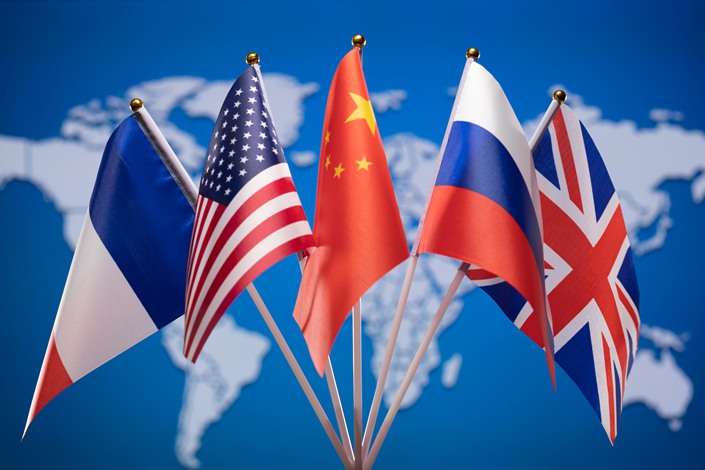
In the 21st century, summit diplomacy has emerged as the key arena through which external powers—the U.S., Europe, China, Russia, Japan, Saudi Arabia, Qatar, India, and others—project geopolitical influence. Through platforms such as Forum on China-Africa Cooperation (FOCAC), Tokyo International Conference on African Development (TICAD), the Russia–Africa Summit, U.S.–Africa Leaders Summits, and Arab-African gatherings, global actors couch engagement in the rhetoric of “partnership,” while often prioritising strategic and economic self-interest over Africa’s structural transformation (Flashpoint, 2021; Wagnsson, 2020).
Unlike the open conquest of the first Scramble for Africa, the contemporary scramble is waged through contracts, loans, security agreements, digital systems, and soft-power instruments. Although the tools have changed—from gunboats to infrastructure, training missions, and data systems—the underlying power dynamics persist. The language of reform, development, and modernisation often functions as a veneer concealing deeper strategic motives, continuing a historical pattern visible from the early colonial encounter to neoliberal restructuring in the 1980s (Rodney, 1972; Nkrumah, 1965; Brenner & Theodore, 2005).
Ahead of CISA’s Second High-Level Security Conference, this analysis examines how global powers use summit diplomacy to advance their own agendas while shaping African choices.
China: Infrastructure, Influence, and the Politics of Dependence
China’s presence—centred on FOCAC—continues to expand through infrastructure finance, digital ecosystems, clean-energy collaboration, and extensive security cooperation. At the 2024 Beijing Summit, China pledged zero-tariff treatment for Least-Developed African Countries, new Belt and Road corridors, and large-scale training for security personnel. While framed as South–South cooperation, China’s approach frequently reproduces asymmetrical dependence through debt exposure, opaque contracts, and bilateral negotiations that weaken African collective agency. The “win-win” narrative often obscures China’s strategic pursuit of minerals, markets, influence in multilateral arenas, and geostrategic footholds (Flashpoint, 2021).
Japan: Co-Creation or Strategic Counterweight?
Japan’s TICAD 9 (2025) shifted from aid-centred engagement to a market-driven, technology-focused approach. Tokyo’s pledges—including $5.5 billion via the African Development Bank (AfDB), AI training programs, and Indian Ocean–Africa connectivity—aim to present Japan as a more balanced, transparent partner. Yet this “co-creation” discourse functions partly as a counterweight to China’s influence and as a strategy to compensate for Japan’s domestic economic stagnation by expanding trade corridors and securing supply chains (Wagnsson, 2020).
Russia: Security, Multipolarity, and the Sahel Footprint
Russia relies on security partnerships, arms sales, and anti-Western narratives to consolidate influence. Following the 2023 Russia–Africa Summit, Moscow strengthened counterterrorism agreements and military training programs. Through the Africa Corps, Russia has entrenched itself in Mali, Burkina Faso, the Central African Republic, and Niger. Its discourse of multipolarity appeals to leaders disillusioned with Western conditionalities, but the result often reinforces military dependence, authoritarian consolidation, and alignment with Russia’s global conflicts (Flashpoint, 2021).
The United States: Business Diplomacy and Ideological Stakes
U.S. engagement through summits emphasises private investment, democratic governance, climate action, and digital development. The 2025 Luanda meeting alone generated $4 billion in deals. While framed as values-driven cooperation, U.S. objectives include protecting commercial interests, securing energy routes, limiting Chinese and Russian influence, and advancing ideological priorities tied to democracy promotion and counterterrorism—frequently overshadowing Africa’s industrialisation agenda (Wagnsson, 2020).
Europe and the Legacy of Conditionality
European initiatives—EU–Africa summits, Global Gateway, and NATO-linked security cooperation—continue to operate within a paternalistic framework shaped by colonial legacies. Europe’s contemporary interests include supply-chain diversification, migration management using African states as buffers, and access to critical minerals for the green transition. The language of sustainability and “good governance” often masks strategic imperatives that prioritise European stability and competitiveness (Brenner & Theodore, 2005).
Saudi Arabia, Qatar, and the Gulf: Capital, Security, and Soft Power
Gulf states have become major strategic actors on the continent. Saudi Arabia’s 2023 summit pledged $25 billion in future investment, new security cooperation, and expanded Red Sea engagement. Qatar uses financial diplomacy, sovereign wealth investments, and cultural initiatives to deepen political and economic ties. Despite rhetorical appeals to cultural affinity, Gulf engagement remains transactional, geared toward food security, economic diversification, and influence in UN voting blocs (Flashpoint, 2021).
India: Energy, Markets, and the Indian Ocean Chessboard
India’s Africa strategy—via bilateral and trilateral forums—centres on energy security, pharmaceutical and digital diplomacy, maritime protection, and counterbalancing China in the Indian Ocean. Despite invoking shared colonial histories, India’s interests remain strategic: securing trade corridors, opening African markets to Indian firms, and consolidating its leadership ambitions within the Global South (Rodney, 1972).
Malign Interests as the Logic of Summit Diplomacy
Across all actors, summit diplomacy reflects similar underlying logics:
1. Asymmetry in bargaining power — Africa’s fragmented bilateral negotiations allow external powers to shape outcomes unilaterally (Nkrumah, 1965).
2. Selective development agendas — Priorities often align with external needs such as resource extraction, energy security, or maritime access.
3. Narrative manipulation — Terms like “aid” and “capacity-building” mask geopolitical rivalry (Wagnsson, 2020).
4. Entrenched dependency — Debt, digital infrastructure, military training, and logistics systems reproduce structural dependence (Brenner & Theodore, 2005).
5. Competition disguised as partnership — The new scramble occurs through summits, financing instruments, and multilateral votes rather than colonial conquest (Flashpoint, 2021).
Conclusion: Africa Amid Global Competition
While summit diplomacy offers visibility and opportunity, without strategic coherence Africa risks deeper marginalisation. Collective negotiation—anchored in the AfCFTA, Agenda 2063, and regional bodies—would strengthen bargaining power, ensure technology transfer, protect value-added sectors, and regulate foreign involvement transparently.
External competition can benefit Africa, but only if African states define their priorities, coordinate positions, and enforce accountability. Otherwise, summit diplomacy will continue to advance the malign interests of global powers rather than the aspirations of African societies (Nkrumah, 1965; Rodney, 1972).
Africa must also have a re-awakening in recognising that it has become the most attractive ‘bride’ in the 21st century and that, unlike the past, when all manner of colonial powers raped and defiled it helplessly, it now wields enormous leverage that puts it in a very sweet position to call most of the shots – if not all. The continent can and should turn the global powers’ malign interests upside down. By so doing, Africa can pursue its own malign interests in all its dealings with the rest of the world.
This can, however, only be achieved with incorruptible leaders with integrity who think more about the continent than their selfish and parochial ends. Africa cannot and must not always be at the receiving end of whatever these global powers decide to throw at the continent. Africa has to come to a point where it can boldly and confidently say, ‘Enough is enough!’ and reverse the tide of the onslaught. The continent must not be fooled by the flattery and manipulative language of these global powers who present themselves as what they are not, all in a bid to win the heart of the ‘bride’ for their own interests and purposes that do not align in any way with the continent’s.
References:
Brenner, N., & Theodore, N. (2005). Neoliberalism and the urban condition. City, 9(1), 101–107.
Flashpoint. (2021). Global competition and influence operations in Africa. Flashpoint Intelligence Report.
Nkrumah, K. (1965). Neocolonialism: The last stage of imperialism. Thomas Nelson & Sons.
Rodney, W. (1972). How Europe underdeveloped Africa. Bogle-L’Ouverture Publications.
Wagnsson, C. (2020). Influence and perceptions in international politics: Persuasive power and strategic narratives. Routledge.