









Introduction
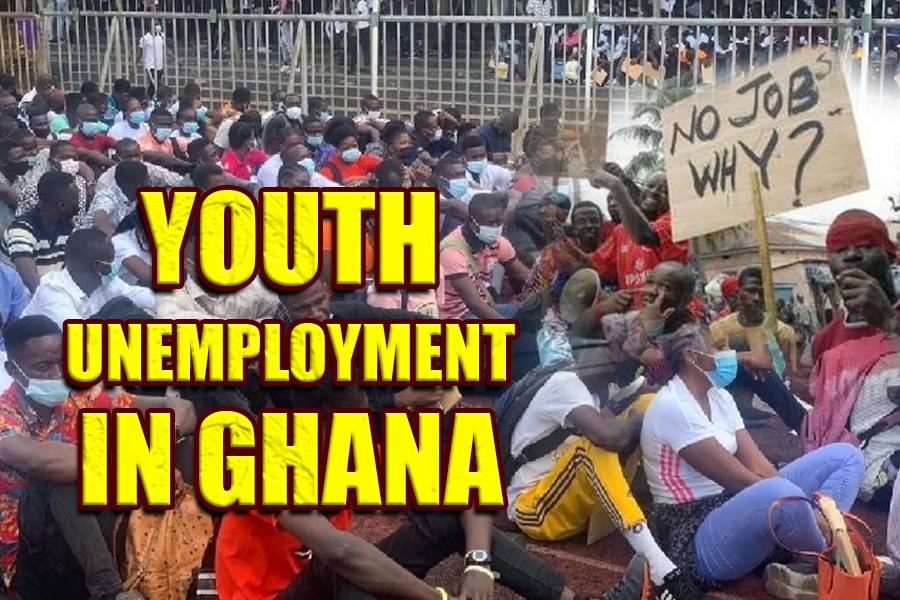
The role of the state in providing employment in Ghana has undergone a profound transformation over the last four decades, reshaping both the structure of the labour market and the aspirations of the country’s rapidly growing youth population. Before the Structural Adjustment Programmes (SAPs) in 1983, data shows that unemployment in Ghana was largely attributed to skills mismatches or limited access to tertiary education rather than a fundamental absence of jobs (Panford, 1994). The public sector dominated the employment landscape, absorbing a significant portion of secondary school leavers and graduates into stable roles across health, education, security, and civil administration. However, the neoliberal reforms implemented under IMF and World Bank guidance shifted the state’s developmental mandate dramatically. Through fiscal austerity, privatisation, downsizing of ministries as well as strict ceilings on public-sector wage bills, employment provision ceased to be a central responsibility of the government (ActionAid, 2021; Adinkra-Darko & Ahiakpor, 2024; Ghana Web, 2001). The outcomes of this policy shift are visible in the steady decline of public-sector employment. From 13% in 1992, the state’s share of total national employment dropped to 9.4% in the late 1990s, 9% in 2006, 6.3% in 2010, and finally to less than 10% by 2021 (Ghana Statistical Service, 2021). Meanwhile, unemployment has risen sharply, with GLSS7 estimating 8.4% unemployment in 2019, and the 2021 Population and Housing Census projecting 13.44% unemployment in 2022 (Ghana New Agency, 2022). These figures reflect an economy that has largely failed to expand job opportunities in proportion to population growth, tertiary enrolment, and the rapid acceleration of urbanisation.
This restructuring generated new labour-market anxieties and fundamentally altered the cultural imagination of work among Ghanaian youth. Growing up, many young people heard cautionary tales such as “You see Kofi, he studied Oceanography or Sociology in the university but is still unemployed and dependent on his parents. If you do not want to end up like him, go to nursing training, teacher training, or join the security services; within three years you will earn a stable salary.” Such narratives were not merely exaggerated family advice but grounded in observable labour-market realities. Public-sector paths such as nursing, teaching, immigration services as well as the army increasingly became seen as the only reliable avenues to stable income. Consequently, young people’s career decisions became less about vocation and passion and more about economic survival. This has produced a generation of professionals who entered their careers out of necessity rather than genuine interest, a pattern reflected in the rise of unprofessional conduct observed among certain nurses on social media, demotivated teachers in public schools who are not committed to pedagogy and police officers who appear more frustrated than disciplined. These issues are symptoms of a broader structural problem: Ghana’s labour market no longer provides adequate pathways for meaningful employment, forcing individuals into mismatched professional identities.
This article examines how neoliberal reforms have hindered the state’s capacity to provide employment and how this has shaped youth behaviour, professional misalignment, and patterns of urban hustling. It also interrogates how these dynamics manifest in large-scale recruitment crises in the security sector. Most tragically symbolised by the El-Wak Stadium stampede on the 12th November 2025, where six young women lost their lives while attempting to enlist in the Ghana Armed Forces. The article argues that economic desperation is now pushing individuals into professions, including the military, that require deep patriotic and vocational commitment, raising concerns about institutional performance and national security preparedness. The purpose of the study is therefore to analyse the political-economic roots of youth unemployment, unpack the consequences of limited state employment on public-service quality, and highlight the security implications of desperation-driven recruitment practices in Ghana.
Neoliberal Reforms and the Contraction of State Employment
The core argument is that neoliberalism fundamentally restructured the Ghanaian state, reducing its role as an employer while creating a labour market unable to absorb its youthful workforce. Structural adjustment policies demanded the reduction of public expenditure through staff retrenchment, wage ceilings, and the privatisation of state enterprises. As these reforms deepened, the government gradually shifted from being an employer of last resort to an institution constrained by external fiscal conditionalities. Recruitment into the civil service, security agencies, teaching service, and health sector became subject to hiring freezes, often extended for years. At the same time, the private sector failed to expand at the pace needed to compensate for shrinking public-sector jobs. High production costs, unstable power supply (dumsor), currency volatility as well as an influx of cheap imports contributed to the collapse of many indigenous industries such as textiles, ceramics, pharmaceuticals and leatherworks (Kusi et al., 2015; Thompson Agyapong et al., 2017). Ghana’s low national preference for locally manufactured goods further weakened domestic value chains (Bruce-Amartey et al., 2025; Opoku & Akorli, 2009). While the formal sector’s share of national employment declined, the informal sector expanded as the default absorption zone for unemployed youth resulting in the emergence of the concept ¨urban hustle¨ (Afutu-Kotey & Gough, 2022; Cieslik et al., 2021; Stasik & Klaeger 2018).
This shrinking of stable job pathways has produced a generation of young people who feel betrayed by the promise of education as a guaranteed route to employment (Pikovskaia, 2024). Universities continue to produce thousands of graduates annually far more than the formal economy can absorb, resulting in widespread underemployment and the rise of precarious urban hustles (Yamada, 2015). Many graduates now operate as ride-hailing drivers popularly known as uber drivers, mobile money agents, retail traders, online vendors or freelance micro-entrepreneurs. These activities, while economically important, offer little income security, limited benefits, and uncertain upward mobility. As formal opportunities shrink, the symbolic value of public-sector employment has intensified. Nursing training colleges, teacher training institutions, and security service recruitments are viewed as lifelines to stability. The pressure to secure such positions has reshaped professional identities, leading to the enrolment of individuals who lack intrinsic motivation for the roles they assume. This structural mismatch contributes to declining service quality across sectors.
The Military as a Site of Economic Escape
The most critical manifestation of the unemployment crisis is found in the security services, particularly the Ghana Armed Forces. The military holds a unique position as one of the few state institutions that guarantees a stable salary, accommodation, health insurance and upward mobility. In a context of intensifying unemployment, it has become a magnet for desperate job seekers rather than dedicated recruits. The El-Wak Stadium tragedy, where six young female applicants lost their lives in a stampede during recruitment screening, stands as a sobering symbol of the risks inherent in such desperation. Analysis of public reactions on TikTok and other social media platforms revealed widespread belief that many applicants were motivated not by patriotism but by economic survival. Commentators expressed cynicism about the transparency of recruitment processes, with many suggesting that the ladies “died for nothing” because selections had already been predetermined. This public sentiment reflects an erosion of trust in state institutions and a broader frustration with structural unemployment.
The national security implications of this trend are profound. The Ghana Armed Forces play a critical role in defending the state against external aggression, especially amid the escalation of extremist violence in the Sahel and the documented spillover risks into northern Ghana. A military staffed by individuals whose primary motivation is economic security rather than patriotic service may struggle to maintain the discipline, mental resilience as well as willingness to confront high-risk security threats. Desperation-driven recruitment increases the risk of training attrition, poor morale and compromised operational effectiveness. Moreover, the entry of individuals who lack passion for security work may weaken internal cohesion and institutional culture, ultimately undermining Ghana’s readiness to respond to regional insecurity. The security sector must therefore be approached not as a dumping ground for unemployed graduates, but as a strategic institution requiring a highly motivated, well-prepared and ethically grounded workforce. It is important to recognise that wearing camouflage uniforms, singing jama (moral songs) or seeking admiration from civilians is not the core responsibility of the army. At a time when insecurity is intensifying and terrorist groups in the Sahel are expanding, we must remain focused on the military’s primary mission: safeguarding national security and defending the state from both internal and external threats.
Recommendations: Reimagining Employment, Restoring Integrity, and Protecting National Security
Addressing these intertwined challenges requires a multi-dimensional policy response grounded in structural reform rather than temporary relief measures. This can be done through the following:
- Ghana must re-evaluate its long-term economic model by gradually moving away from overreliance on externally imposed austerity frameworks that limit public recruitment capacity. Strategic expansion of public-sector employment in teaching, health, civil administration, research, and security should be pursued, not as unsustainable bloating but as investment in national development and human capital.
- There should be deliberate support for indigenous industries, through procurement policies favouring local products, tax incentives, technology upgrading, and improved access to affordable credit, is critical for stimulating private-sector job creation.
- Entrepreneurship must be reframed from a survival strategy to a productive, innovation-driven ecosystem supported by mentorship, start-up financing, industrial clusters, and market protections for local producers.
- Recruitment into critical public services particularly the security forces must be shielded from political influence and strictly merit-based. Transparent digital recruitment systems, decentralised nationwide screening, independent monitoring, and post-recruitment audits should be institutionalised. The military should also intensify psychological and aptitude assessments to ensure that recruits possess the commitment required for security work.
- Youth career guidance systems must be strengthened at the SHS and university levels to prevent misalignment between academic pathways and labour-market realities. Young people should be encouraged to choose careers based on aptitude and passion rather than fear of unemployment by making the economy safe and supportive.
- The state must invest in large-scale labour-market data systems to enable evidence-based workforce planning, ensuring that higher education output aligns with national development priorities.
Ghana’s youth unemployment crisis cannot be fully understood without examining the neoliberal restructuring that weakened the state’s role as a provider of employment. The contraction of public-sector jobs, combined with slow private-sector growth and the collapse of local industries, has produced an environment in which young people are forced into professions they do not necessarily desire, weakening the quality of public service delivery and eroding institutional professionalism. The tragic deaths at the El-Wak Stadium are emblematic of the desperation that characterises contemporary youth employment struggles. They also highlight how a nation’s security architecture becomes vulnerable when economic hardship drives recruitment more than patriotic commitment. Ensuring Ghana’s developmental and security future requires rethinking the economic frameworks that shape employment opportunities, strengthening both public and private job creation, and restoring merit, integrity, and purpose to the institutions that anchor national stability.
Reference
ActionAid,. (2021). The Public Versus austerity. The wage bill constraints . ghana.actionaid.org. https://ghana.actionaid.org/sites/ghana/files/publications/POLICY%20BRIEF%20-%20The%20Public%20Vs.%20Austerity%20Wage%20Bill%20Constraints.pd
Adinkra-Darko, E., & Ahiakpor, F. (2024). Unemployment Duration and Its Covariates: Evidence From Selected Regions in Ghana. Sage Open, 14(4). https://doi.org/10.1177/21582440241287606
Afutu-Kotey, R. L., & Gough, K. V. (2022). Bricolage and informal businesses: Young entrepreneurs in the mobile telephony sector in Accra, Ghana. Futures, 135, 102487. https://doi.org/10.1016/j.futures.2019.102487
Bruce-Amartey, E., Sumalia, S. M., & Mensah, R. S. (2025). Production trends and decline in Ghana’s textile industry: Historical analysis and causative factors. Discover Global Society, 3(47), 1-23.
Cieslik, K., Barford, A., & Vira, B. (2021). Young people not in Employment, Education or Training (NEET) in Sub-Saharan Africa: Sustainable Development Target 8.6 missed and reset. Journal of Youth Studies, 25(8), 1126–1147. https://doi.org/10.1080/13676261.2021.1939287
Ghana News Agency (2022) National unemployment rate stood at 84 per cent in 2019. gna.org.gh. (2022). November 16, 2025. https://gna.org.gh/2022/03/national-unemployment-rate-stood-at-84-per-cent-in-2019employment-minister/
Ghana Web (2001) Structural Adjustment Programme has failed Ghana – TUC. www.ghanaweb.com. (2001). November 16, 2025. https://www.ghanaweb.com/GhanaHomePage/NewsArchive/Structural-Adjustment-Programme-has-failed-Ghana-TUC-19548
Kusi, A. , Narh Opata, C. & John Narh, T. (2015) Exploring the Factors That Hinder the Growth and Survival of Small Businesses in Ghana (A Case Study of Small Businesses within Kumasi Metropolitan Area). American Journal of Industrial and Business Management, 5, 705-723. doi: 10.4236/ajibm.2015.511070.
Opoku, A. R., & Akorli, P. A. K. (2009). The preference gap: Ghanaian consumers’ attitudes toward local and imported products. African Journal Of Business Management , 30(8), 350-357.
Pikovskaia, K. (2024). ‘You never get a livelihood out of going to school’: the crisis of urban modernity and the education-employment nexus in Harare, Zimbabwe. International Development Planning Review, 46(4), 349-370. https://doi.org/10.3828/idpr.2024.10
Stasik, M., & Klaeger, G. (2018). Station Waka-Waka: The Temporalities and Temptations of (Not) Working in Ghanaian Bus Stations. Africa Today, 65(2), 93–110. https://doi.org/10.2979/africatoday.65.2.07
Thompson Agyapong, G., Mmieh, F., & Mordi, C. (2017). Factors influencing the growth of SMEs: The case of Ghana. Thunderbird International Business Review, 60(4), 549-563. https://doi.org/10.1002/tie.21945 a Yamada, G. (2015). The boom in university graduates and the risk of underemployment. IZA World of Labor. https://doi.org/10.15185/izawol.165