



• fr Français
  • en English
CISA NEWSLETTER
Advertisement
  • HOME
  • Editions
    • 2025
      • November 2025
      • October 2025
      • September 2025
      • August 2025
      • July 2025
      • June 2025
      • May 2025
      • April 2025
      • March 2025
      • February 2025
      • January 2025
    • 2024
      • December 2024
      • November 2024
      • October 2024
      • September 2024
      • August 2024
      • July 2024
      • June 2024
      • May 2024
      • April 2024
      • March 2024
      • February 2024
      • January 2024
    • 2023
      • December 2023
  • News
    • All
    • Business
    • Politics
    • Science
    • World
    Okada Operations In Ghana; Economic Necessity Or Security Risk

    Okada Operations In Ghana; Economic Necessity Or Security Risk

    Cedi Appreciation and National Security in Ghana: Currency Stability Amid Persistent Structural Risks

    Cedi Appreciation and National Security in Ghana: Currency Stability Amid Persistent Structural Risks

    The Mirror in the Politician: How Ghanaian Society Breeds the Corruption It Condemns

    The Mirror in the Politician: How Ghanaian Society Breeds the Corruption It Condemns

    Terrorism Financing in The Sahel/West Africa: Mechanisms, Drivers, And Responses

    Terrorism Financing in The Sahel/West Africa: Mechanisms, Drivers, And Responses

    The Silent Threat: Impact of Human and Sex Trafficking on National Security

    The Silent Threat: Impact of Human and Sex Trafficking on National Security

    How JNIM is dominating the terrorism landscape in the Sahel

    How JNIM is dominating the terrorism landscape in the Sahel

    Trending Tags

    • Trump Inauguration
    • United Stated
    • White House
    • Market Stories
    • Election Results
  • Tech
    Securing Africa’s Digital Future: A Call to Action on Cybersecurity.

    Securing Africa’s Digital Future: A Call to Action on Cybersecurity.

    Trending Tags

    • Nintendo Switch
    • CES 2017
    • Playstation 4 Pro
    • Mark Zuckerberg
  • Entertainment
  • Lifestyle
    • All
    • Food
    • Health
    • Travel
    Security Contagion and the Urban Poor: Begging and the Invisible Threat in Accra’s Streets

    Security Contagion and the Urban Poor: Begging and the Invisible Threat in Accra’s Streets

    ECOWAS@50: Ghana as a Stakeholder in West Africa’s Integration Aspiration

    ECOWAS@50: Ghana as a Stakeholder in West Africa’s Integration Aspiration

    The Rise of Substance Abuse Among Ghanaian Youth: A Deep Dive into Music, Media, and Mental Health

    The Rise of Substance Abuse Among Ghanaian Youth: A Deep Dive into Music, Media, and Mental Health

    Impact Of Russia’s War in Ukraine on Africa’s Agriculture and Food Security

    Impact Of Russia’s War in Ukraine on Africa’s Agriculture and Food Security

    Transforming Africa’s Agriculture to Mitigate Food Crisis

    Transforming Africa’s Agriculture to Mitigate Food Crisis

    Framing Food Insecurity as A Security Contagion

    Framing Food Insecurity as A Security Contagion

    Trending Tags

    • Golden Globes
    • Game of Thrones
    • MotoGP 2017
    • eSports
    • Fashion Week
  • Review
    Key Drivers of Voter Choices for Ghana’s 2024 General Elections – A Review

    Key Drivers of Voter Choices for Ghana’s 2024 General Elections – A Review

  • CISA Ghana
No Result
View All Result
  • HOME
  • Editions
    • 2025
      • November 2025
      • October 2025
      • September 2025
      • August 2025
      • July 2025
      • June 2025
      • May 2025
      • April 2025
      • March 2025
      • February 2025
      • January 2025
    • 2024
      • December 2024
      • November 2024
      • October 2024
      • September 2024
      • August 2024
      • July 2024
      • June 2024
      • May 2024
      • April 2024
      • March 2024
      • February 2024
      • January 2024
    • 2023
      • December 2023
  • News
    • All
    • Business
    • Politics
    • Science
    • World
    Okada Operations In Ghana; Economic Necessity Or Security Risk

    Okada Operations In Ghana; Economic Necessity Or Security Risk

    Cedi Appreciation and National Security in Ghana: Currency Stability Amid Persistent Structural Risks

    Cedi Appreciation and National Security in Ghana: Currency Stability Amid Persistent Structural Risks

    The Mirror in the Politician: How Ghanaian Society Breeds the Corruption It Condemns

    The Mirror in the Politician: How Ghanaian Society Breeds the Corruption It Condemns

    Terrorism Financing in The Sahel/West Africa: Mechanisms, Drivers, And Responses

    Terrorism Financing in The Sahel/West Africa: Mechanisms, Drivers, And Responses

    The Silent Threat: Impact of Human and Sex Trafficking on National Security

    The Silent Threat: Impact of Human and Sex Trafficking on National Security

    How JNIM is dominating the terrorism landscape in the Sahel

    How JNIM is dominating the terrorism landscape in the Sahel

    Trending Tags

    • Trump Inauguration
    • United Stated
    • White House
    • Market Stories
    • Election Results
  • Tech
    Securing Africa’s Digital Future: A Call to Action on Cybersecurity.

    Securing Africa’s Digital Future: A Call to Action on Cybersecurity.

    Trending Tags

    • Nintendo Switch
    • CES 2017
    • Playstation 4 Pro
    • Mark Zuckerberg
  • Entertainment
  • Lifestyle
    • All
    • Food
    • Health
    • Travel
    Security Contagion and the Urban Poor: Begging and the Invisible Threat in Accra’s Streets

    Security Contagion and the Urban Poor: Begging and the Invisible Threat in Accra’s Streets

    ECOWAS@50: Ghana as a Stakeholder in West Africa’s Integration Aspiration

    ECOWAS@50: Ghana as a Stakeholder in West Africa’s Integration Aspiration

    The Rise of Substance Abuse Among Ghanaian Youth: A Deep Dive into Music, Media, and Mental Health

    The Rise of Substance Abuse Among Ghanaian Youth: A Deep Dive into Music, Media, and Mental Health

    Impact Of Russia’s War in Ukraine on Africa’s Agriculture and Food Security

    Impact Of Russia’s War in Ukraine on Africa’s Agriculture and Food Security

    Transforming Africa’s Agriculture to Mitigate Food Crisis

    Transforming Africa’s Agriculture to Mitigate Food Crisis

    Framing Food Insecurity as A Security Contagion

    Framing Food Insecurity as A Security Contagion

    Trending Tags

    • Golden Globes
    • Game of Thrones
    • MotoGP 2017
    • eSports
    • Fashion Week
  • Review
    Key Drivers of Voter Choices for Ghana’s 2024 General Elections – A Review

    Key Drivers of Voter Choices for Ghana’s 2024 General Elections – A Review

  • CISA Ghana
No Result
View All Result
CISA NEWSLETTER
No Result
View All Result
Home ANALYSTS

Foreign Fighters and the Global Political Economy of the Russia–Ukraine War: Rethinking Imbalanced Narratives and Hidden Recruitment Networks

December 1, 2025
in ANALYSTS
0
Foreign Fighters and the Global Political Economy of the Russia–Ukraine War: Rethinking Imbalanced Narratives and Hidden Recruitment Networks
0
SHARES
2
VIEWS
Share on FacebookShare on Twitter

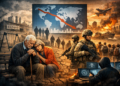
The Russia–Ukraine war, which escalated into a full-scale conflict in February 2022, did not emerge in a vacuum. Its origins lie in the geopolitical tension that followed the collapse of the Soviet Union, Ukraine’s struggle to reposition itself between Russian influence and Western integration and the unresolved tensions that solidified around the 2014 annexation of Crimea (Götz & Ekman, 2024; Manboah-Rockson, 2024).The conflict that initially appeared to be a regional dispute over territory and political identity has since transformed into a globalised war with far-reaching implications (Tian, 2024). As military, financial, and diplomatic support from dozens of countries poured into the battlefield, the war has expanded its reach beyond Eastern Europe, drawing in civilians, workers, and vulnerable migrants from distant parts of the world (Buriachenko et al., 2025; Jain et al., 2022). One of the most troubling but insufficiently examined dimensions of this global entanglement is the use and recruitment of foreign fighters. While the dominant international discourse tends to highlight Russian recruitment of foreign nationals, particularly Africans and Asians, this narrative is often presented in ways that obscure the broader reality: foreign fighters participate on both sides of the conflict, and the forces driving their recruitment are embedded in a global political economy that extends far beyond the actions of any single state.

Foreign fighters have long played complex roles in international wars. Historically, the motivations varied: ideological solidarity during the Spanish Civil War, religious radicalisation in Afghanistan and Syria, or financial incentives in private military contracting (Aldoughli, 2025; Jung, 2015; Khoirunnisa et al., 2025). In the Russia-Ukraine war, however, a different dynamic is emerging, one shaped by economic desperation, deceptive labor networks and geopolitical narratives that portray certain recruitment patterns as more legitimate or more alarming depending on where they originate. This uneven framing has created the impression that foreign recruitment is a phenomenon driven exclusively or overwhelmingly by Russia, despite the fact that Ukraine also hosts significant numbers of foreign volunteers, investors, mercenary-linked actors, and contracted fighters through the International Legion and other brigades  (Buriachenko et al., 2025). Yet these complexities rarely appear in mainstream discussions. Instead, Russia’s recruitment activities dominate headlines, while the presence of foreign fighters supporting Ukraine is treated as peripheral or unproblematic (Ratelle, 2024). This imbalance is not merely a matter of media oversight, it reveals how power, politics, and narrative control interact during wartime.

The September Newsletter of the Centre for Intelligence and Security Analysis (CISA) exposed how global conflict economies exploit vulnerable populations by merging labor deception with disinformation. Using Russia’s Alabuga Start program as a case study, analysts demonstrated how young people, particularly Africans, are lured into exploitative conditions through the promise of seemingly legitimate employment. This analysis aligns with broader revelations from Kenya in November 2025, where the government announced that more than 200 of its citizens are currently fighting for Russia in Ukraine. Recruitment agencies, operating within Kenya and abroad, continue to exploit local unemployment pressures by offering fraudulent job placements that ultimately funnel individuals into military service. Further complicating the picture, Ukraine recently disclosed that over 1,400 Africans from more than thirty countries are currently fighting alongside Russian forces, many after being deceived, trafficked or coerced. Ukrainian officials characterised these contracts as “a death sentence,” urging African governments to intervene and protect their citizens. South Africa has likewise reported that at least seventeen of its nationals have ended up in the conflict zone, believed to have been lured by financial promises and deceptive intermediaries. These cases reveal a disturbing pattern of exploitation rooted not in ideology but in economic vulnerability.

However, focusing solely on these cases risks producing a misleading conclusion: the idea that foreign fighters are exclusively a Russian phenomenon. That is not accurate. Ukraine’s International Legion has recruited volunteers from around the world, including Africa, Latin America, Europe, and Asia. Some African nationals have joined Ukraine through diplomatic channels, personal networks, or direct applications. Their stories rarely make international headlines. The result is a discourse in which African or Asian participation on the Ukrainian side is obscured, minimised, or treated as insignificant, while participation on the Russian side is amplified. The issue is not that Russia’s recruitment tactics go unrecognised, they deserve scrutiny but that the narrative becomes imbalanced when the global public is led to believe that only one side relies on foreign manpower. This imbalance does not serve truth, policy analysis or public understanding.

The experiences surfacing from India further demonstrate that the dynamics of recruitment and exploitation stretch across continents. Families in New Delhi have demanded the return of their relatives who travelled to Russia with the promise of legitimate employment, only to be coerced into military contracts written in a language they could not read. Some travelled on student visas, others on work permits, yet many were eventually pushed into combat with minimal training. These stories mirror the realities faced by Africans, revealing that the exploitation of labor for wartime purposes is not geographically isolated but occurs wherever socioeconomic vulnerability intersects with opaque recruitment networks. And yet, even here, the global narrative tends to frame the problem as entirely “Russian,” leaving unexamined the fact that Indians and other Asians have also volunteered or been contracted into the Ukrainian side though often through quieter or less-publicised pathways.

The selective visibility of foreign fighters in the Russia–Ukraine war is not accidental. It reflects geopolitical alignments, media framing and the moral expectations that underpin global politics. Western governments and media platforms often portray Ukraine as a liberal democracy defending itself against aggression. In such a framing, foreign fighters supporting Ukraine are cast as sympathetic volunteers, while those fighting for Russia are depicted as exploited victims or dangerous mercenaries. Regardless of one’s political position, this narrative asymmetry poses analytical problems: it obscures the socio-economic drivers of foreign fighter participation, it weakens efforts to regulate labor recruitment pathways and it prevents African and Asian governments from gaining a full understanding of where, how, and why their citizens end up in conflict zones.

Beyond narrative framing, the presence of foreign fighters has profound implications for national security across the Global South. Nations whose citizens join the war, whether willingly or through deception may face reintegration challenges, unresolved trauma, or security vulnerabilities when these individuals return. Families who lose their breadwinners to this conflict experience deep economic and psychological strain. The diplomatic relationship between developing countries and Russia or Ukraine may also be strained by incidents of exploitation or misinformation.

In conclusion, the central issue is not which side recruits foreign fighters or which side is morally justified. The core concern is that global discourse selectively highlights foreign fighter recruitment in ways that obscure the full picture, distort public understanding and prevent meaningful policy responses. A balanced and honest reflection requires acknowledging that foreign fighters exist on both sides of the Russia–Ukraine war, even if the scale, method, or motivation differs. Only with such clarity can governments, analysts, and civil society organisations develop effective strategies to protect vulnerable populations, regulate labor mobility, and confront the global political economy that enables exploitation during wartime. The government of Ghana must protect its citizens against these exploitation in both Ukraine and Russia through destination monitoring, working with airlines to flag recruitment transit routes, public awareness programmes, reinforcing  laws on mercenary activities, diplomatic engagements among others. In addition, returnees could also become problematic for the country and some rehabilitation  measures and national security preparedness must be put in place to properly integrate them back into their communities.

Reference

Aldoughli, R. (2025). Fighting beyond borders: Unravelling the complex drivers of Syrian fighters in foreign conflicts. Critical Military Studies, 1-27. https://doi.org/10.1080/23337486.2025.2516888

Buriachenko, O., Somak, O., Golubytskyi, S., Kravchenko, N., & Kravchenko, O. (2025). International Support for Ukraine: Evaluating the Impact of Military, Economic, and Diplomatic Aid. Revista De Cercetare Si Interventie Sociala, (88), 151-168. https://doi.org/10.33788/rcis.88.10

Götz, E., & Ekman, P. (2024). Russia’s War Against Ukraine: Context, Causes, and Consequences. Problems of Post-Communism, 71(3), 193-205. https://doi.org/10.1080/10758216.2024.2343640

Jain, N., Prasad, S., Bordeniuc, A., Tanasov, A., Shirinskaya, A. V., Béla, B., Cheuk, C. P., Banica, D. C. N., Panag, D. S., Świątek, D., Savchenko, E., Platos, E., Lolita, J., Betka, M. M., Phiri, M., Patel, S., Czárth, Z. C., Krygowska, A. M., Jain, S., & Reinis, A. (2022). European Countries Step-up Humanitarian and Medical Assistance to Ukraine as the Conflict Continues. Journal of primary care & community health, 13, 21501319221095358. https://doi.org/10.1177/21501319221095358

Jung, D. (2015). Foreign Fighters: Comparative reflections on Syria and Spain. Middle East Insights. https://doi.org/10.23976/ins.2015132

Khoirunnisa, K., Matthew, B., Jubaidi, D., & Nugroho, A. Y. (2025). The Ukraine-Russia conflict: An international humanitarian law review of the involvement of foreign fighters. Social Sciences & Humanities Open, 11, 101340. https://doi.org/10.1016/j.ssaho.2025.101340

Manboah-Rockson, J. K., Adjuik, R. Y., & Dawda, T. D. (2024). Geopolitics of the Russian-Ukrainian War: Implications for Africa in International Relations. European Journal of Development Studies, 4(4), 14-24. https://doi.org/10.24018/ejdevelop.2024.4.4.197

Ratelle, J.-F. Foreign Fighters in Ukraine Pose Growing, Unaddressed Threat to .. www.ponarseurasia.org. November 18, 2025. https://www.ponarseurasia.org/foreign-fighters-in-ukraine-pose-growing-unaddressed-threat-to-western-security/

Tian, L. (2024). The Impact of the Russia-Ukraine Conflict on Global Economic Stability and Political Security. Advances in Economics, Management and Political Sciences, 120(1). https://doi.org/10.54254/2754-1169/120/20242466

Source: CISA ANALYST
Tags: 12 Edition 20252025week1
Previous Post

Galamsey as a Wicked Problem: Understanding Its Complexities and Charting a Sustainable Path Forward

Next Post

How the West’s Economic & Geopolitical Interests in Africa Have Evolved 

Next Post
How the West’s Economic & Geopolitical Interests in Africa Have Evolved 

How the West’s Economic & Geopolitical Interests in Africa Have Evolved 

Leave a Reply Cancel reply

Your email address will not be published. Required fields are marked *

Stay Connected test

  • 23.9k Followers
  • 99 Subscribers
  • Trending
  • Comments
  • Latest
Africa's Natural Resources: Who’s After What And What’s The Continent’s Strategy In The Scramble Game?

Africa’s Natural Resources: Who’s After What And What’s The Continent’s Strategy In The Scramble Game?

July 22, 2024
Effects of overpopulation in class on quality of education

Effects of overpopulation in class on quality of education

March 25, 2024
The Growing Influence Of AES On African Countries

The Growing Influence Of AES On African Countries

April 1, 2025
The Concept of Beauty in Africa

The Concept of Beauty in Africa

May 26, 2024
Integration of environmental security into Ghana’s National Security Strategy safeguards the future

Integration of environmental security into Ghana’s National Security Strategy safeguards the future

10
Border Security: A Door Left Wide Open

Border Security: A Door Left Wide Open

3
Polls close in Liberia

Liberia: Once a war-torn country, now Africa’s beacon of democracy – Lessons for Africa

1
Alliance Of Sahel States Formation: Objectives & Implications for ECOWAS

Alliance Of Sahel States Formation: Objectives & Implications for ECOWAS

1
How the West’s Economic & Geopolitical Interests in Africa Have Evolved 

How the West’s Economic & Geopolitical Interests in Africa Have Evolved 

December 1, 2025
Foreign Fighters and the Global Political Economy of the Russia–Ukraine War: Rethinking Imbalanced Narratives and Hidden Recruitment Networks

Foreign Fighters and the Global Political Economy of the Russia–Ukraine War: Rethinking Imbalanced Narratives and Hidden Recruitment Networks

December 1, 2025
Galamsey as a Wicked Problem: Understanding Its Complexities and Charting a Sustainable Path Forward

Galamsey as a Wicked Problem: Understanding Its Complexities and Charting a Sustainable Path Forward

December 1, 2025
Youth Agitations for Jobs in Ghana: Risks, Drivers, and Lessons from the Ayalolo Bus Terminal and El-Wak Stadium

Youth Agitations for Jobs in Ghana: Risks, Drivers, and Lessons from the Ayalolo Bus Terminal and El-Wak Stadium

December 1, 2025

Recent News

How the West’s Economic & Geopolitical Interests in Africa Have Evolved 

How the West’s Economic & Geopolitical Interests in Africa Have Evolved 

December 1, 2025
Foreign Fighters and the Global Political Economy of the Russia–Ukraine War: Rethinking Imbalanced Narratives and Hidden Recruitment Networks

Foreign Fighters and the Global Political Economy of the Russia–Ukraine War: Rethinking Imbalanced Narratives and Hidden Recruitment Networks

December 1, 2025
Galamsey as a Wicked Problem: Understanding Its Complexities and Charting a Sustainable Path Forward

Galamsey as a Wicked Problem: Understanding Its Complexities and Charting a Sustainable Path Forward

December 1, 2025
Youth Agitations for Jobs in Ghana: Risks, Drivers, and Lessons from the Ayalolo Bus Terminal and El-Wak Stadium

Youth Agitations for Jobs in Ghana: Risks, Drivers, and Lessons from the Ayalolo Bus Terminal and El-Wak Stadium

December 1, 2025

CISA Newsletter

Headlining West African News

Follow Us

Browse by Category

  • ANALYSTS
  • Business
  • ECONOMY
  • EDITORIAL
  • Environment
  • Food
  • Health
  • Lifestyle
  • News
  • Politics
  • Review
  • Science
  • Sports
  • Tech
  • Travel
  • Uncategorized
  • World

Recent News

How the West’s Economic & Geopolitical Interests in Africa Have Evolved 

How the West’s Economic & Geopolitical Interests in Africa Have Evolved 

December 1, 2025
Foreign Fighters and the Global Political Economy of the Russia–Ukraine War: Rethinking Imbalanced Narratives and Hidden Recruitment Networks

Foreign Fighters and the Global Political Economy of the Russia–Ukraine War: Rethinking Imbalanced Narratives and Hidden Recruitment Networks

December 1, 2025
  • About
  • Advertise
  • Privacy & Policy
  • Contact

© 2023 CISA Ghana Newsletter - Headlines West Africa.

  • fr Français
  • en English
No Result
View All Result
  • HOME
  • Editions
    • 2025
      • November 2025
      • October 2025
      • September 2025
      • August 2025
      • July 2025
      • June 2025
      • May 2025
      • April 2025
      • March 2025
      • February 2025
      • January 2025
    • 2024
      • December 2024
      • November 2024
      • October 2024
      • September 2024
      • August 2024
      • July 2024
      • June 2024
      • May 2024
      • April 2024
      • March 2024
      • February 2024
      • January 2024
    • 2023
      • December 2023
  • News
  • Tech
  • Entertainment
  • Lifestyle
  • Review
  • CISA Ghana

© 2023 CISA Ghana Newsletter - Headlines West Africa.

  • English
  • Français (French)