








Introduction
Youth unemployment in Ghana continues to pose a significant threat to national cohesion and democratic stability. CISA sees this as a critical national security challenge that requires consistent monitoring. As a sequel to others on this subject, CISA examines the structural drivers of youth unemployment and analyzes two major incidents—the takeover of the Ayalolo Bus Terminal by National Democratic Congress (NDC) youth and the 2025 El-Wak Stadium military recruitment stampede that resulted in six deaths and multiple injuries. By situating both incidents within broader patterns of youth agitation, this article seeks to highlight the dangers of unaddressed unemployment and offers policy recommendations aimed at job creation, depoliticised recruitment, safety reforms, and stronger institutional governance.
Youth unemployment in Ghana has long contributed to social agitation, political tension, and periodic unrest. Scholars note that persistent structural barriers, coupled with fragile institutional arrangements, have deepened frustrations among young people (Baah-Boateng, 2016). These frustrations manifest in different ways—from politically motivated facility takeovers to desperate mass turnout for recruitment exercises.
Two events illustrate the severity of the problem: The first, is the takeover of the Ayalolo Bus Terminal by NDC-aligned youth following a change in political power and the 2025 military recruitment stampede at El-Wak Stadium, where multiple young job seekers lost their lives.
Both incidents demonstrate how economic desperation, unmet expectations, and politicized job access can create dangerous flashpoints with a capacity to explode and overwhelm security forces.
Background and Context: Youth Unemployment in Ghana
Youth unemployment in Ghana has remained persistently high due to economic limitations, inadequate industrialization, skills mismatches, and limited private-sector absorption (Aryeetey & Baah-Boateng, 2015). Political patronage systems further distort access to jobs, creating perceptions of unfairness and deepening youth frustrations (Gyimah-Boadi, 2020). These structural and political dynamics combine to make young people vulnerable to agitation.
The Ayalolo Bus Terminal Takeover
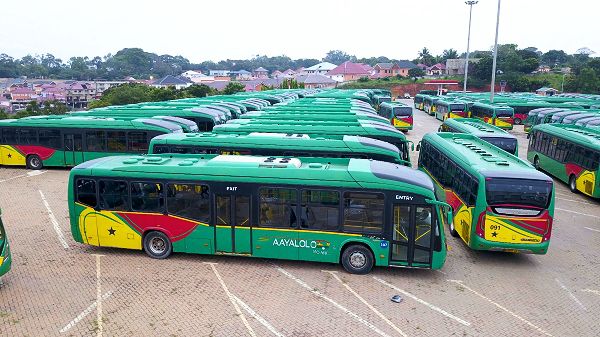
Following a national political transition, some NDC youth forcibly seized the Ayalolo Bus Terminal, claiming entitlement to employment within the facility. The action disrupted operations, intimidated workers, and highlighted how partisan youth groups often act as pressure blocs attempting to control public assets for job access.
The roots of this agitation lie in perceived exclusion from opportunities, economic desperation, and the normalization of political patronage in state institutions.
The El-Wak Stadium Recruitment Stampede: Job Desperation and Loss of Life
In November 2025, at least six young people died during a stampede at El-Wak Sports Stadium. These young people were attending a Ghana Armed Forces recruitment exercise (Pulse Ghana, 2025; Today Ghana News, 2025).
Reports indicate that overcrowding, poor crowd control, and rushed entry attempts triggered a deadly crush, with victims transported to the 37 Military Hospital for emergency care (Ghana Sentinel, 2025; The Chronicle, 2025).
Sadly, six young ladies lost their lives with an additional number of young persons enduing various degrees of injury. This tragedy demonstrates the intense desperation for jobs among young people in Ghana.
Broader Patterns of Youth Agitation
Across Ghana, youth have engaged in similar actions—including seizing toll booths, NHIS offices, district assemblies, and other public facilities. Such actions have often justified by expectations of reward for political participation (Osei-Assibey et al., 2016). Combined with tragedies like the El-Wak stampede, these incidents reveal the multidimensional nature of youth agitation: political entitlement, economic desperation, and institutional fragility.
Dangers if Youth Unemployment Is Not Addressed
The Ayalolo and El-Wak cases together illustrate several risks:
- Escalation of Political Vigilantism
- Loss of Life and Public Safety Risks
- Erosion of Institutional Credibility
- Investor and Public Confidence Decline
- Potential for Large-Scale Social Unrest
- Normalization of Patronage and Entitlement
Policy Recommendations
- It is crucial that studies be undertaken to identify critical skill areas required by the country and encourage the youth to focus on those areas
- It is necessary to Strengthen Job Creation and Skills Development, particularly in technical and vocational education and training as well as apprenticeship programmes;
- The Recruitment into the Public Services requires significant transformation with a heavy reliance on the use of technology
- Enforcement of the Rule of law in the light of forceful takeovers by the youth in politically related encounters. Ghana is almost at the tipping point with relation to this and it must be done as a matter of urgency.
- Strengthening of institutions is paramount. This must be demonstrated by the leadership of all institutions and could also be done in partnership with institutions such as CISA.
Conclusion
The takeover of the Ayalolo Bus Terminal and the tragic El-Wak Stadium stampede illustrate two sides of Ghana’s youth unemployment crisis: politicized entitlement and deadly desperation. Addressing unemployment, reforming recruitment processes, and strengthening institutions are crucial to preventing further unrest and safeguarding Ghana’s stability. Without comprehensive reforms, the country risks repeating incidents that undermine both democracy and public safety. The two incidents CISA has referred to demonstrate that the nation is at its tipping point. The security services need to have intelligence and undertake predictive model analysis of what could be happening in order to effectively counter any challenges the nation might face. To do this effectively, it must collaboratively work with other key institutions outside of the public sector.
References
Aryeetey, E., & Baah-Boateng, W. (2015). Understanding Ghana’s employment landscape. Institute of Statistical, Social and Economic Research.
Baah-Boateng, W. (2016). The youth unemployment challenge in Africa: What are the drivers? Economic and Labour Relations Review, 27(4), 413–431.
Ghanamma. (2025, November 13). Youth ministry mourns El-Wak stadium victims; vows safety reforms. https://www.ghanamma.com
Ghana Sentinel. (2025, November 12). Recruitment stampede at El-Wak stadium leaves casualties. https://ghanasentinel.com
Ghana Web ‘We need to eat’ – Alleged party boys ‘fight’ National Security at Aayalolo bus terminal
Gyampo, R., Graham, E., & Asare, B. (2017). Political vigilantism and democratic governance in Ghana. African Review, 44(2), 112–135.
Gyimah-Boadi, E. (2020). Democratic erosion and corruption in Ghana. Journal of Democracy, 31(4), 140–154.
Osei-Assibey, E., Danquah, M., & Osei, R. (2016). Youth employment and political patronage in Ghana. African Centre for Economic Transformation.
Pulse Ghana. (2025, November 12). Death toll rises in El-Wak military recruitment stampede. https://www.pulse.com.gh
The Chronicle. (2025, November 12). Several feared dead in El-Wak recruitment stampede. https://thechronicle.com.gh
Today Ghana News. (2025, November 12). Six dead in stampede at El-Wak stadium during GAF recruitment. https://today.com.gh